Mobile Phones Google series Pixel 10
prices on 5 models |
2025Pixel 10camera phonelong battery life120 HzNFCno microSDwater protectionfast chargewireless chargingbypass chargestereo speakersstock AndroidAndroid 16satelliteUSB-C ≥ 5Gbpsno 3.5 mmWi-Fi 7LTPOUFS 4.0no charger Screen:6.8 ", OLED (LTPO), 2992x1344, 482 ppi, 120 Hz Camera:3 modules, 50 MP, + 48 MP, and 48 MP Video:fullHD 60 fps, 4K, stabilization, slow motion Memory size:256 GB, UFS 4.0 CPU (GPU):Tensor G5 (PowerVR DXT-48-1536) RAM:16 GB, LPDDR5X Battery:5200 mAh Body:glass, 232 g, depth 8.5 mm 256 GB512 GB | Colour: Price from $799.99 up to $1,300.00 Compare prices and buy Google Pixel 10 Pro XL 256 GB 2 stores 13 offers Loading online stores list. |
 |
2025Pixel 10long battery life120 HzNFCno microSDwater protectionfast chargewireless chargingbypass chargestereo speakersstock AndroidAndroid 16satelliteUSB-C ≥ 5Gbpsno 3.5 mmWi-Fi 6EUFS 3.1no charger Screen:6.3 ", OLED, 2424x1080, 421 ppi, 120 Hz Camera:3 modules, 48 MP, + 13 MP, and 10.8 MP Video:fullHD 60 fps, 4K, stabilization, slow motion Memory size:128 GB, UFS 3.1 CPU (GPU):Tensor G5 (PowerVR DXT-48-1536) RAM:12 GB, LPDDR5X Battery:4970 mAh Body:glass, 204 g, depth 8.6 mm 128 GB256 GB | Colour: Price from $369.00 up to $889.00 Compare prices and buy Google Pixel 10 128 GB 2 stores 21 offer Loading online stores list. |
 |
2026Pixel 10120 HzNFCno microSDwater protectionfast chargewireless chargingbypass chargestereo speakersAndroid 16satelliteUSB-C ≥ 5Gbpsno 3.5 mmWi-Fi 6EUFS 3.1no charger Screen:6.3 ", OLED (polymer), 2424x1080, 421 ppi, 120 Hz Camera:2 modules, 48 MP, + 13 MP Video:fullHD 60 fps, 4K, stabilization Memory size:128 GB, UFS 3.1 CPU (GPU):Tensor G4 (Mali-G715) RAM:8 GB, LPDDR5X Battery:5100 mAh Body:plastic, 183 g, depth 9 mm 128 GB256 GB | Colour: Price from $329.99 up to $499.00 Compare prices and buy Google Pixel 10a 128 GB 3 stores 16 offers Loading online stores list. |
 |
2025Pixel 10120 HzNFCno microSDwater protectionfast chargewireless chargingbypass chargestereo speakersstock AndroidAndroid 16satelliteUSB-C ≥ 5Gbpsno 3.5 mmWi-Fi 7LTPOUFS 4.0no charger Screen:6.3 ", OLED (LTPO), 2856x1280, 497 ppi, 120 Hz Camera:3 modules, 50 MP, + 48 MP, and 48 MP Video:fullHD 60 fps, 4K, stabilization, slow motion Memory size:256 GB, UFS 4.0 CPU (GPU):Tensor G5 (PowerVR DXT-48-1536) RAM:16 GB, LPDDR5X Battery:4870 mAh Body:glass, 207 g, depth 8.5 mm 128 GB256 GB | Colour: Price from $760.00 up to $1,399.00 Compare prices and buy Google Pixel 10 Pro 256 GB 2 stores 5 offers Loading online stores list. |
 |
2025Pixel 10fold120 HzNFCno microSDwater protectionfast chargewireless chargingbypass chargestereo speakersstock AndroidAndroid 16satelliteUSB-C ≥ 5Gbpsno 3.5 mmWi-Fi 7UFS 4.0ultrathinno charger Screen:8 ", OLED, 2152x2076, 374 ppi, 120 Hz Camera:3 modules, 48 MP, + 10.5 MP, and 10.8 MP Video:fullHD 60 fps, 4K, stabilization, slow motion Memory size:256 GB, UFS 4.0 CPU (GPU):Tensor G5 (PowerVR DXT-48-1536) RAM:16 GB, LPDDR5X Battery:5015 mAh Body:glass, 258 g, depth 5.2 mm 256 GB512 GB | Colour: Price from $1,099.99 up to $1,899.00 Compare prices and buy Google Pixel 10 Pro Fold 256 GB 3 stores 5 offers Loading online stores list. |
Google Pixel 10
At the end of summer, Google introduced the annual, this time milestone, tenth update to the Google Pixel smartphone lineup. The series includes four smartphones: Pixel 10, Pixel 10 Pro, Pixel 10 Pro XL, and Pixel 10 Pro Fold. Despite the price differences, all the new models have a lot in common in terms of features and functionality. For instance, the entire "pixel" quartet is equipped with the same version of the 8-core Tensor G5 processor with integrated PowerVR DXT-48-1536 graphics, and fast UFS 4.0 memory. The only difference is the amount of RAM — the base version has 12 GB of LPDDR5X, while the three more advanced versions of the smartphone come with 16 GB.
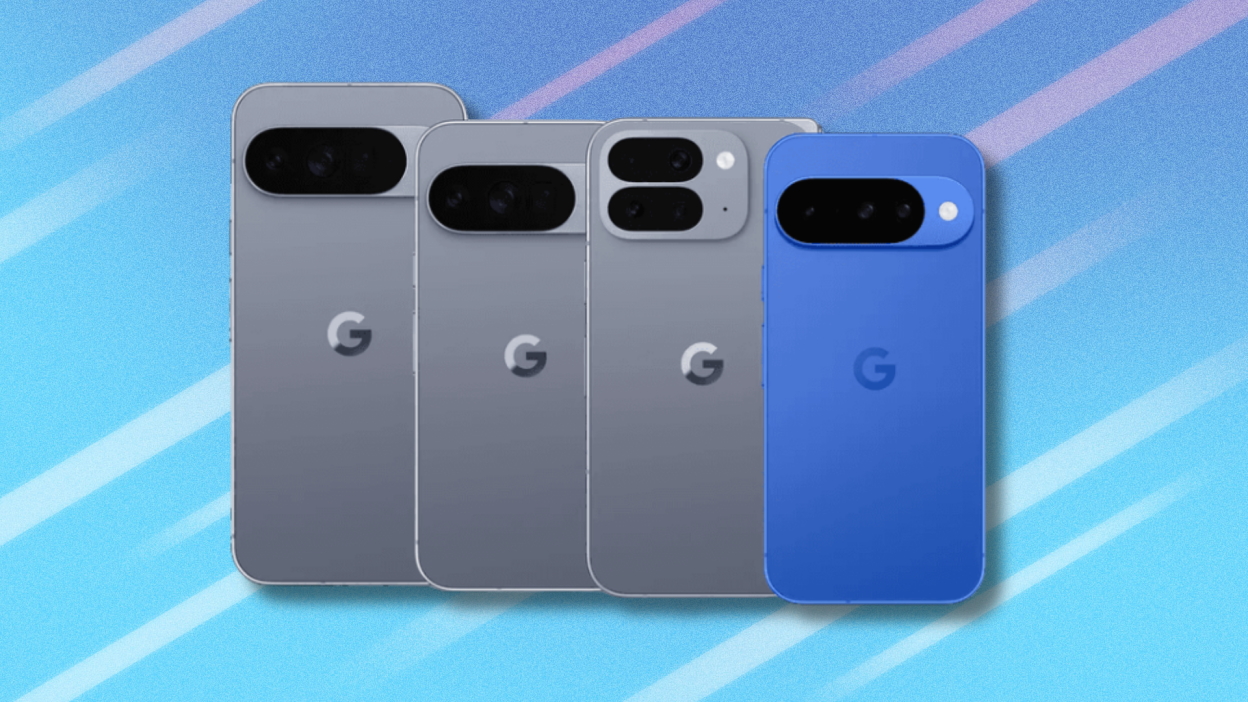 |
All smartphones feature high-quality OLED displays with a 120Hz refresh rate and Gorilla Glass Victus 2 protective glass. Meanwhile, the Pixel 10 Pro and Pixel 10 Pro XL use LTPO technology, and their maximum brightness is 10% higher. All smartphones, including the basic Pixel, are equipped with triple cameras (main module, ultra-wide, and telephoto) with optical stabilization and video recording in "4K + 60 FPS" mode. The difference is that the higher-end Pixel 10 Pro and Pixel 10 Pro XL have higher resolution and aperture levels, offer 8K video recording, and support Night Sight and Super Res Zoom modes.
As for additional features, this time Google introduced the second version of the Pixelsnap Qi2 wireless charging, an updated ultrasonic under-display fingerprint scanner, and reintroduced the color temperature sensor, which adjusts the screen's white balance depending on the lighting. The latter can be considered a conditional analogue to Apple's True Tone. Additionally, both Pixel 10 Pro and Pixel 10 Pro XL models include a temperature sensor and an Ultra-Wideband module. By tradition, all smartphones in the updated lineup will operate on the latest 16th version of Android OS and, according to the manufacturer, will receive regular updates for seven years.