Drones DJI series Mavic Air
prices on 4 modelsDJI Mavic Air
The Air series occupies a unique niche in DJI's lineup as an intermediary between the flagship Mavic and compact Mini models. Launched in January 2018 with the original Mavic Air, this lineup was designed for enthusiasts who want advanced shooting capabilities in a more compact and affordable package than the top-tier Mavic Pro. After a temporary hiatus, the series gained a second wind: from Mavic Air (2018) through Mavic Air 2 and Air 2S (2020-2021) to the modern Air 3 (2023) and Air 3S (2024), which are now released under a simplified name without the "Mavic" prefix.
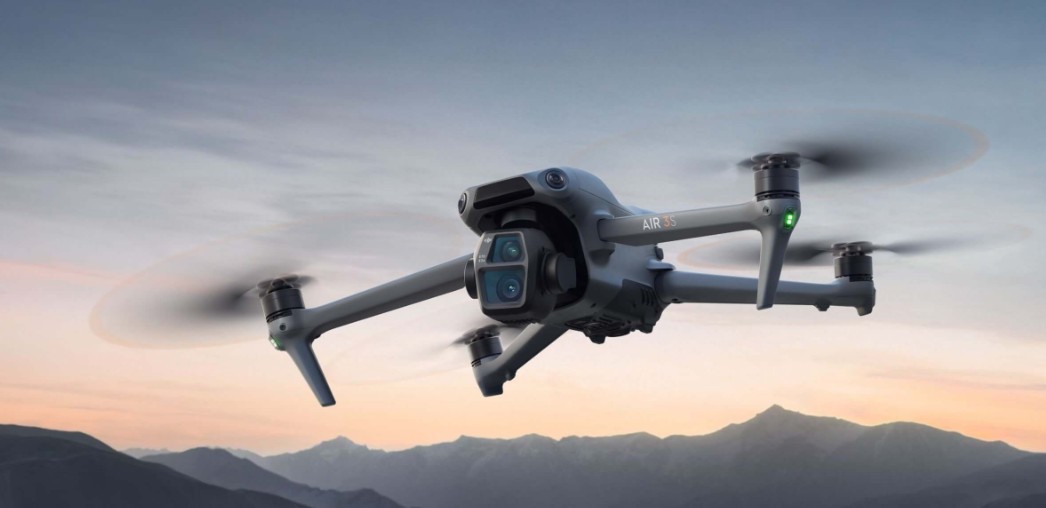 |
The philosophy of the series is built around balancing size, functionality, and price, offering serious capabilities in the mid-price range. The modern Air 3 and Air 3S models feature a dual-camera system: an ultra-wide camera with a 1-inch CMOS sensor and a 70mm telephoto lens with a 1/1.3" sensor. The Air 3S supports video shooting in 4K/120fps, has a flight time of up to 45 minutes, and 42GB of built-in memory. Weighing around 720-724 grams, the drones require registration but provide excellent stability and professional shooting quality with a dynamic range of up to 14 stops.
Technically, the modern Air series presents an advanced solution while maintaining compactness. The Air 3S is equipped with LiDAR for improved obstacle detection, omnidirectional obstacle recognition, support for 10-bit video transmission, and new features like Free Panorama. The series is successfully positioned as a "travel-ready powerhouse" for serious photographers and videographers who need professional quality without the bulk and price of the flagship Mavic. As of July 2025, the Air 3 and especially the fresh Air 3S remain relevant, considered one of the best drones in its class for travel and aerial photography.