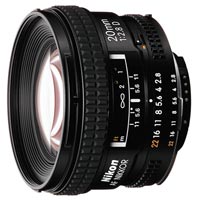
Nikon 20mm f/2.8D AF Nikkor
 | When you make a purchase through links on our site, we may receive a affiliate commission. Buy! Nikon 1415 AF FX NIKKOR 20mm f/28D Fixed Zoom Lens with Auto Focus for DSLR Cameras BlackAmazon.comDelivery: to Redlands Report |

Nikon 20mm f/2.8D AF Nikkor | |||||||||||||||||||||||||||||||||||||
| |||||||||||||||||||||||||||||||||||||

. A fixed lens designed for full-frame (full frame) Nikon cameras with F-mounts. In terms of focal length, it belongs to wide-angle — it is 20 mm. Aperture — f / 2.8, the minimum aperture value — 22. Autofocus is provided by a "screwdriver" drive.
The information in the model description is for reference purposes.
Always clarify the specifications and configuration of the product with the online store manager before purchasing.
Catalog Nikon 2026 - new arrivals, bestsellers, and the most relevant models Nikon.
Always clarify the specifications and configuration of the product with the online store manager before purchasing.
Catalog Nikon 2026 - new arrivals, bestsellers, and the most relevant models Nikon.

Model overview based on user reviews
The Nikon 20mm f/2.8D AF Nikkor lens is highly regarded for its performance in landscape, architecture, and artistic photography, offering excellent detail and clarity, especially in the center of the frame. Geometric distortions are easily corrected, and it performs well against sunlight. However, users find it uncomfortable to hold due to its small size, and the rotating sharpness ring can be inconvenient during auto-focusing. Sharpness at f/2.8 is limited to the center, making edge reframing challenging. While it excels on full-frame sensors, its benefits are less pronounced on DX sensors. The lens is well-built, with a smooth rotation and features like a screwdriver socket and autofocus motor. Despite its strengths, it may not offer significant improvements over kit lenses for some users and is best suited for specific tasks.
Pros
Cons
After a year of use, I think I should have tensed up and taken 17-55/2.8. It’s convenient to work with the 20th only if you have a second camera with a different lens at hand, otherwise you’ll quickly get tired of changing it. There are no noticeable differences in this focus from 18-70 and 16-85. It’s just a completely different approach to filming with him, sometimes giving very good results, because... all sorts of zooms and other bells and whistles do not interfere with focusing on the main thing. Very good for landscape, genre, architecture, artistic experiments. Geometric distortions can be easily removed. The detail is excellent, the pictures are clear and crisp. Against the sun - good. Too small. It's not comfortable to hold. Also, the always-rotating sharpness ring under your fingers during auto-aiming gets in the way. It is not convenient to aim manually - small details are difficult to see. You can't use it without a lens hood - your fingers will definitely get on the front lens. At 2.8, sharpness is only in the center of the frame, i.e. It is impossible to reframe the object to the edges of the frame - there is soap there. The portraits turn out ugly and distorted, but some people like it.  Nikolay: use Nikon 20mm f/2.8D AF Nikkor more than year Nikolay: use Nikon 20mm f/2.8D AF Nikkor more than year |
Expensive to buy just like that. But it will work for a narrow task. Model specific landscape, architecture. There is almost nothing between infinity and 2 meters; you can also capture close-up shots. Fully revealed on the FX matrix. The optimal aperture is 5.6-8 on crop. There is a socket for a screwdriver and an autofocus motor on the body. There is a lever for the diaphragm for the carcass. Heavy, high-quality assembly and smooth rotation. On a DX matrix (d3100) it does not provide fundamental improvements from a kit lens. The angle and narrow range of optimal apertures decreases; at ff it is wider towards 22. The presence of f2.8 is compensated by poor-quality shooting at the edges at 2.8  Pavel: use Nikon 20mm f/2.8D AF Nikkor week Pavel: use Nikon 20mm f/2.8D AF Nikkor week |
Add Review
Video reviews

Nikon 20mm f2.8D Lens Overview
2 December 201232 241 view

Nikon Df with 20mm f/2.8 lens samples
9 November 201613 015 view
We recommendCompare using chart →

wide, 18 mm, f/8, Canon EF-S, Canon EF, Fujifilm X, Leica SL, Nikon F, Sony E, manual focus, dustproof & waterproof
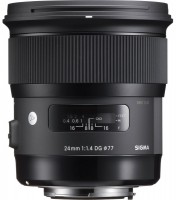
wide, landscape, 24 mm, f/1.4, Canon EF-S, Canon EF, Nikon F, Sigma SA, ultrasonic, internal focus (IF)
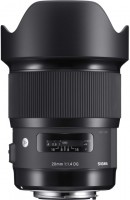
wide, landscape, 20 mm, f/1.4, Canon EF-S, Canon EF, Nikon F, Pentax K, Sony A, ultrasonic