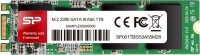
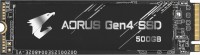
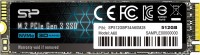
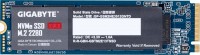
Gigabyte M.2 NVMe SSD GP-GSM2NE3512GNTD 512 GB
 | Compare prices 2 → When you make a purchase through links on our site, we may receive a affiliate commission.
|
Gigabyte GP-GSM2NE3512GNTD 256 GB512 GB | |||||||||||||||||||||||||||||||||||||||||
| |||||||||||||||||||||||||||||||||||||||||

Always clarify the specifications and configuration of the product with the online store manager before purchasing.
Catalog Gigabyte 2026 - new arrivals, bestsellers, and the most relevant models Gigabyte.
0 0 5 1 |
Samsung is not needed a very fast drive in its class, strictly recommended for laptops the temperature sensor shows incorrectly, 10-15 degrees colder than the truth  Dmiriy: use Gigabyte GP-GSM2NE3512GNTD few months Dmiriy: use Gigabyte GP-GSM2NE3512GNTD few months |
Bought it for a budget build of a work PC system. Overall satisfied. Neat assembly, good packaging. The speed approximately matches the stated one. When installing the system, the boot sector of the disk would not show up in the UEFI BIOS at all, and therefore it was impossible to boot from it. Although the Windows installer could see it and write files to it. In the system booted from the old SATA disk, it also displayed correctly and could be worked with. The boot sector also displayed. Only formatting this disk with AOMEI Partition version 8.8 helped. Only after this was it possible to install Windows on it and boot up.  Alexey Borysevych: use Gigabyte GP-GSM2NE3256GNTD less than month Alexey Borysevych: use Gigabyte GP-GSM2NE3256GNTD less than month |
The declared speeds in the tests show. In real life, I have nothing to load it so that it works at maximum speeds. And since I do not load it to the maximum, then it does not heat up. Let's see how long it works. Price promised by twb I do not know use Gigabyte GP-GSM2NE3100TNTD less than month |
Gigabyte M.2 NVMe SSD GP-GSM2NE3512GNTD configurations
| Price for Gigabyte M.2 NVMe SSD GP-GSM2NE3512GNTD | ||||
|---|---|---|---|---|
 | Gigabyte M.2 NVMe SSD GP-GSM2NE3256GNTD 256 GB | from $88.00 | 2 offers | |
 | Gigabyte M.2 NVMe SSD GP-GSM2NE3512GNTD 512 GB | from $128.00 | 2 offers | |









Between two fires
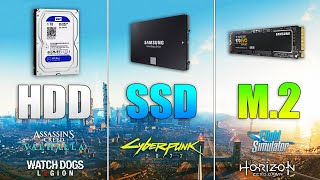
For SSD drives, the SATA bus has become a hard limiter that keeps their potential in check, preventing them from accelerating to their full capacity. Yes, being “5 times faster than a regular HDD” was once cool, but time does not stand still. Current progress has brought us to an interesting point in history, when regular SATA SSD and large-capacity M.2 SSD are almost equal in price. A great illustration of this fact is the Gigabyte M.2 2080, which can now be found for a modest $83. This is slightly more expensive than popular SATA SSDs like the Patriot P200 and Samsung 860 EVO.
The price tag is at the same level as regular SATA SSDs, the speed is much higher
Yes, it does not tear the veins when it comes to linear read and write operations, that is, when copying large and very large files. In the case of reading, we are talking about 1700 MB/s, and writing is carried out at a speed of 1550 MB/s. According to these indicators, it is 3 times faster than a regular SATA SSD, but 2 times slower than reference M.2 SSDs such as Samsung EVO. However, Samsung is much more expensive, so the comparison is not entirely relevant. But when it comes to non-linear recording of many small files, then the SSD from Gigabyte forces itself to be respected. The write IOPS is 340 thousand, the read IOPS is 270 thousand. These figures are close to the reference ones, which is good news considering the price.
Five-year warranty
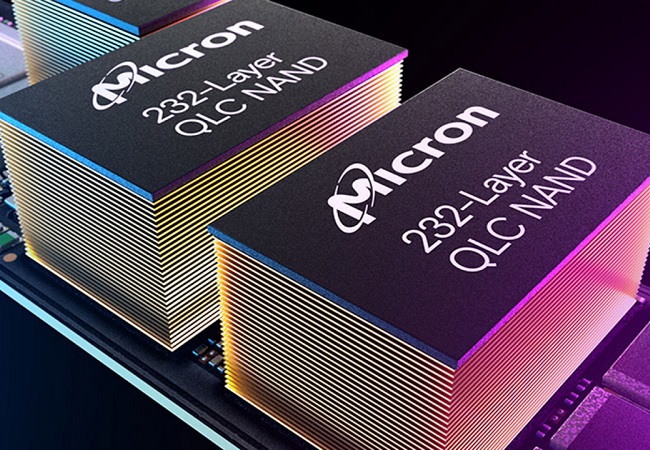
The key element in the drive is the four-channel Phison PS5008-E8-10 controller. This 40 nm controller is used in budget-level drives, so it was not a surprise to see it here. It is not a surprise that the Gigabyte M.2 PCIe SSD 256 GB and the use of TLC memory are not surprising. Actually, it was precisely this combination that provided the drive with an affordable price tag. But what came as a surprise was that in all benchmarks without exception, it showed figures close to those declared by the manufacturer on the box. For budget controllers the picture is often the opposite. Another pleasant surprise was the five-year warranty, which is usually given for SSDs of a higher class, but for budget models it is limited to two to three years.