The best video cards costing up to 15,000 hryvnia
We independently test the products and technologies that we recommend.
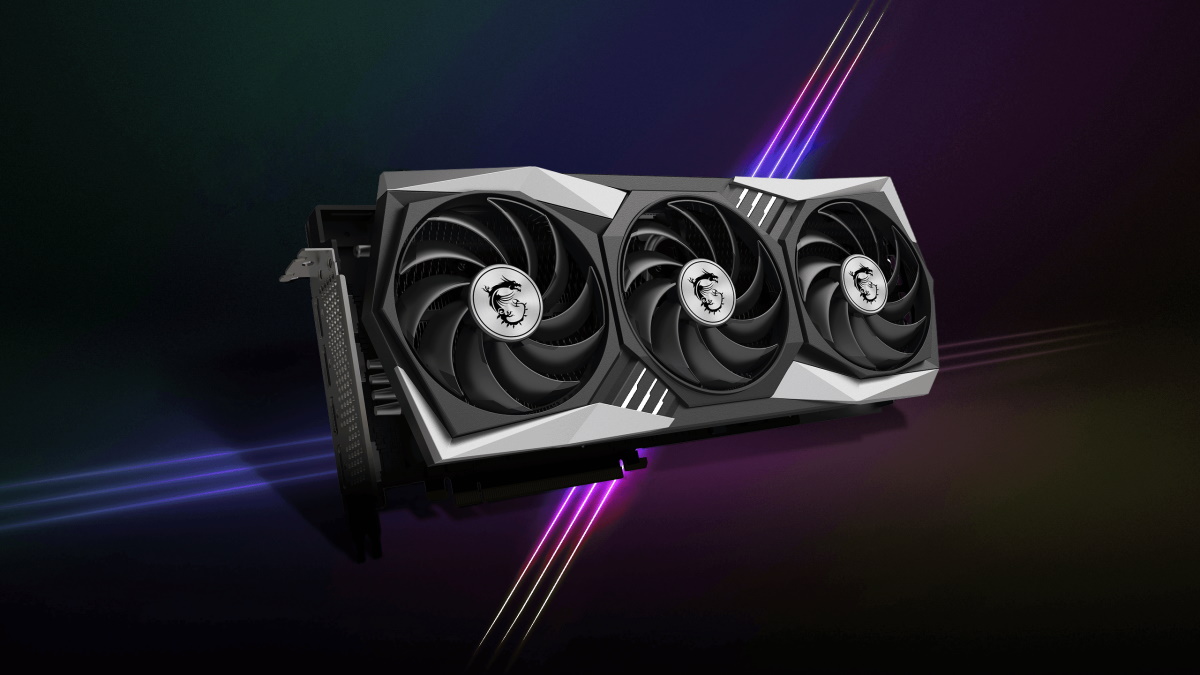
You can compare the technical specifications of graphics cards from the review in this table and choose a model yourself in a separate section.

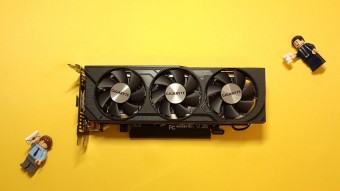
Gigabyte GeForce RTX 3060 GAMING OC LHR 12G is an extremely popular mid-range graphics card from the NVIDIA Ampere family, succeeding the entry-level hits GeForce RTX 1660 and 2060. The accelerator is based on the high-performance GA106 graphics processor with 3584 stream processors, factory overclocking up to 1837 MHz, and support for DirectX 12 Ultimate.
Unlike most standard RTX 3060 modifications in this model the memory subsystem has been expanded — instead of 8 GB GDDR6, there are 12 GB installed, with data exchange conducted through a 192-bit bus, which is quite important given how significantly modern games' VRAM demands have grown. In terms of memory, our test RTX 3060 even outpaces the higher-end GeForce RTX 3080, which has 10 GB onboard. This allows it to feel more confident when increasing the gaming resolution from 1080p to 1440p. Although frame rates in demanding games like Cyberpunk 2077 and RDR2 will drop from around 70 to 45 FPS, the game won't crash, and gameplay remains relatively smooth and comfortable. If more performance is needed, DLSS can always be enabled.
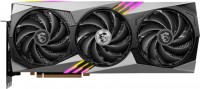
The increase in memory volume led to a larger printed circuit board, so instead of the standard cooling system with a couple of fans, there's an advanced Windforce version with three fans, a massive radiator, and a bunch of heat pipes, usually found in more high-end graphics card modifications from Gigabyte. The graphics card looks monumental — a cast shroud, sturdy frame, and wide backplate provide the necessary rigidity — but its length is almost 30 cm, so some free space will be needed in the case.

| Amazon.com | $779.00 | To Store |
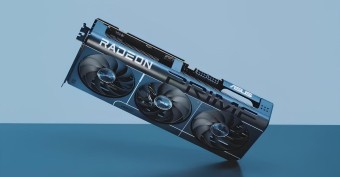
Radeon RX 6700 XT is quite an interesting mid-range graphics card based on the AMD Navi 22 chip, which didn't launch very successfully in 2021 but gained a new lease of life due to price cuts 2 years later. When compared to network competitors, the RX 6700 XT is most often pitted against the GeForce RTX 4060 Ti. Both cards mostly show roughly similar performance at resolutions 1080 and 1440p, with variations usually not exceeding 5-6%.
The RX 6700 XT has 4 GB more video memory and a wider data exchange bus (192 versus 128 bits) than the GeForce RTX 4060. This factor is already felt in some games, and it will play an even more important role in the future. Meanwhile, the GeForce RTX 4060 can surge ahead in games with high-quality ray tracing implementation and can gain a good FPS boost using DLSS 3.0 with an integrated frame generation system, which on paper, and in practice, provides a significant FPS increase, especially with ray tracing. Considering the Radeon RX 6700 XT is now priced much lower than the recommended $479 and almost 30% cheaper than the GeForce RTX 4060 Ti, we would recommend it for a mid-level gaming build.
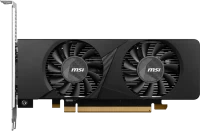
The version from PowerColor deserves special commendation for its cooling system. The reference Radeon sample quickly heated up the chip, and the fans were noisier than even the higher-end Radeon RX 6800 model. In this case, we have a more compact yet quieter option with a pair of active fans and a slightly increased power consumption limit that allowed the video accelerator to breathe fully. At the same time, the card lacks unnecessary things like lighting, which many users don't need, and other secondary stuff that doesn't affect performance. Its modest length of 23 cm simplifies installation in compact PCs.

The 6000 series of video accelerators from Radeon brought the Reds back into the game and prevented them from sinking under the onslaught of the Greens' ray tracing and DLSS technologies with an embedded frame generation system. To stay on gamers' radars in 2022, Radeon released an updated version of the popular RX 6700 XT accelerator called the 6750 XT. The new product is based on the same Navi 22 chip (7 nm, RDNA 2 microarchitecture) and is equipped with the same 12 GB GDDR6 memory (192-bit bus).
However, due to faster core and memory speeds (2638 MHz and 18000 MHz respectively), the Radeon RX 6750 XT outperforms its predecessor by an average of 4-5% in games. In modern games, it is much faster than previous generation graphics cards and can be a good option for upgrading the video sub-system. In comparison with competitors from the green camp, the first one that comes to mind is the GeForce RTX 3070. Both devices can provide comfortable gameplay in 2023 blockbusters at maximum graphics settings and resolution up to QHD. At the same time, the RTX 3070 costs slightly more due to supplementary cores for hardware ray tracing. And Radeon, true to form, has more video memory — 12 GB versus 8 GB.
The Radeon RX 6750 XT is intended for owners of 2K monitors who would like to enjoy maximum graphics settings while having the ability to turn on ray tracing without being horrified by frames per second dropping to zero. It is also quite possible to play in 4K with it, but most likely you'll need to use FidelityFX Super Resolution (FSR) technologies, which are a free alternative to NVIDIA DLSS. If you plan to play in 1080p, in our opinion, its performance is excessive and for these tasks, the junior models like the RX 6600 or RX 6700 will be more than sufficient.
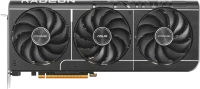
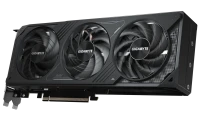
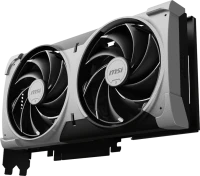
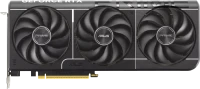
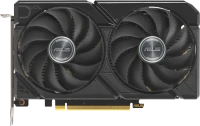
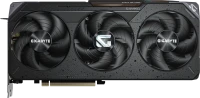
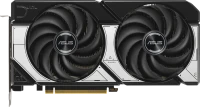
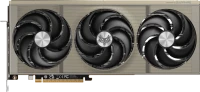

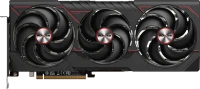
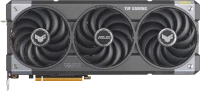
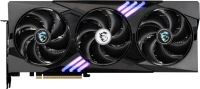
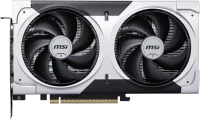
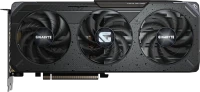
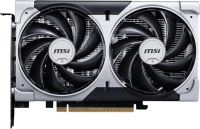

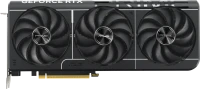

NVIDIA RTX 3060 is still an extremely popular mid-range graphics card with support for ray tracing, built-in DLSS 2.0 image smoothing/upscaling system, and other features of the progressive Ampere microarchitecture. Despite being almost two years old and the launch of the new RTX 4000 family, the GeForce RTX 3060 remains a very popular option among gamers.
This accelerator has found the optimal balance between price, performance, and support for new technologies. It turns out that most gamers are not ready to overpay for a 10% performance boost and DLSS 3.0 support provided by the newer RTX 4060. Meanwhile, it doesn't make sense to be stingy and buy something cheaper either because the lower GTX 3050 turns out to be significantly slower and struggles with AAA blockbusters of 2023 even in 1080p.
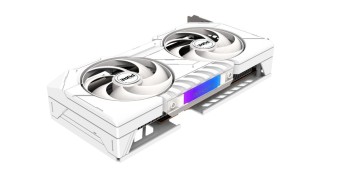
ZOTAC GeForce RTX 3060 Ti Twin Edge is equipped with a compact second-generation IceStorm cooling system consisting of a pair of fans and a radiator with heat pipes, adapted to the architecture of Ada Lovelace. The IceStorm cooling offers 2 alternative operating modes, one of which is optimized for creating optimal acoustic comfort during operation, while the second ensures maximum speed in games. Both modes are embedded in the BIOS and can be switched on the fly without rebooting the system.
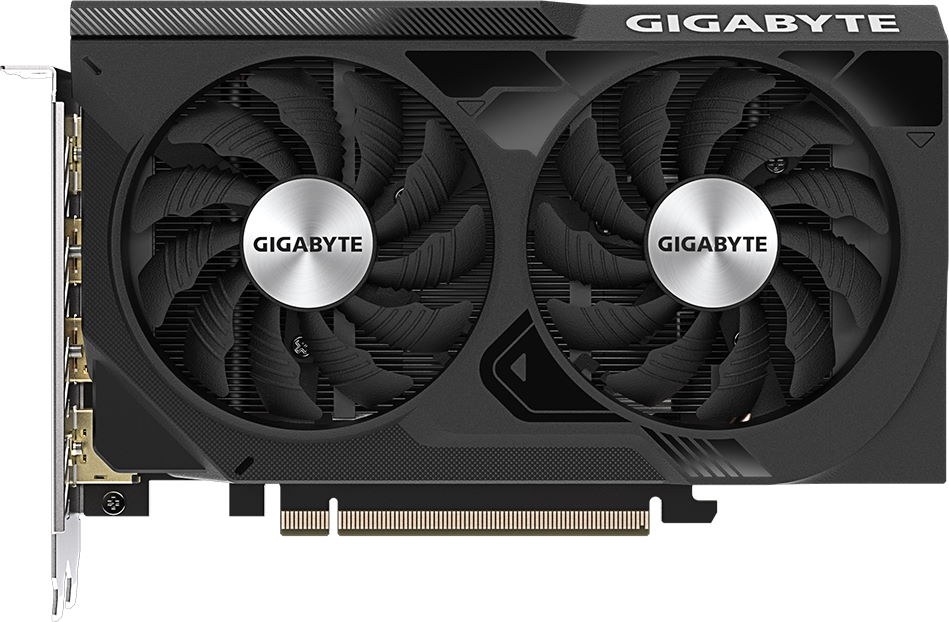
The Gigabyte GeForce RTX 4060 WINDFORCE OC 8G is the optimal (according to NVIDIA) mid-range graphics card for owners of 2K monitors. It is a direct replacement for past-generation GPUs like the GTX 1660, RTX 2060, and RTX 3060 with a more modern GPU and memory, as well as improved auxiliary blocks for ray tracing and the DLSS 3.0 AI upscaling system. NVIDIA places particular emphasis on the latter as DLSS is now not only able to dynamically adjust resolution to increase FPS but also generate full game frames, which sounds quite impressive.
The RTX 4060 demonstrates excellent performance in most modern AAA games released between 2020 and 2023, providing 70 to 100 FPS on high/maximum graphics settings in Elden Ring, GOW Ragnarok, Baldur’s Gate 3, and Cyberpunk 2077 Phantom Liberty. The performance increase compared to the predecessor RTX 3060 is between 15% and 20% depending on the resolution. Add DLSS to this and it becomes quite an interesting option for 1440p gaming. Unfortunately, it only has 8 GB of video memory. Meanwhile, the Ada Lovelace GPU power consumption has been significantly reduced: RTX 4060 consumes about 115-120 watts at peak load, so the user won’t need to overpay for an expensive and powerful power supply; a regular model with a power of 450-500 watts will suffice.
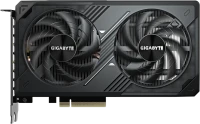
As for the version from Gigabyte, it is a typical model for the Windforce series with a pair of active fans, a fairly large radiator, composite copper heat pipes, and a minimum of trimmings like the Aorus series cards. The core is slightly overclocked to 2475 MHz, providing a small speed increase compared to the reference specimen. Meanwhile, its length is a modest 19 cm, occupying 2 slots in the motherboard, making it an interesting option for installation in compact gaming and work PCs.

Articles, reviews, useful tips
All materials