
Comparison Doogee V30 Pro 512 GB vs Doogee V30T 256 GB
Add to comparison | 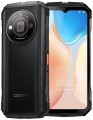 | 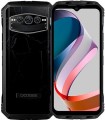 |
|---|---|---|
| Doogee V30 Pro 512 GB | Doogee V30T 256 GB | |
from $309.99 | from $299.99 | |
| User reviews | ||
| TOP sellers | ||
RAM expansion function up to 15 GB. Customizable side button. | ||
| Operating system | Android 13 | Android 12.0 |
Display | ||
| Main display | 6.58 " 2408х1080 (20:9) 401 ppi IPS 120 Hz Gorilla Glass v5 | 6.58 " 2408х1080 (20:9) 401 ppi IPS 120 Hz Gorilla Glass v5 |
| Brightness | 480 nit | 480 nit |
| Display-to-body ratio | 71 % | 71 % |
Hardware | ||
| Processor (graphics) | Dimensity 7050 (Mali-G68) | Dimensity 1080 (Mali-G68) |
| CPU frequency | 2.6 GHz | 2.4 GHz |
| CPU cores | 8 | 8 |
| Processor rating AnTuTu | 27 | 25 |
| RAM | 12 GB | 12 GB |
| RAM type | LPDDR5 | LPDDR5 |
| Memory storage | 512 GB | 256 GB |
| Storage type | UFS 3.1 | UFS 3.1 |
| Memory card slot | microSD | microSD |
| Max. memory card storage | 2048 GB | 2048 GB |
| Liquid cooling |  |  |
Test results | ||
| AnTuTu Benchmark Test | 506 000 points | |
| Geekbench Test | 2303 points | |
| Sling Shot Extreme (OpenGL ES 3.1 / METAL) | 4188 points | |
Main camera | ||
| Lenses | 3 modules | 3 modules |
| Main lens | 200 MP | 108 MP f/1.8 90 ° Samsung S5KHM2SP03 |
| Ultra wide lens | 16 MP | 16 MP f/2.2 130 ° |
| Additional lens | 24 MP, f/1.8 | |
| Full HD (1080p) | 30 fps | 30 fps |
| 4K video recording | 30 fps | 30 fps |
| Flash | | |
Front camera | ||
| Form factor | teardrop | teardrop |
| Main selfie lens | 32 MP | 32 MP |
| Aperture | f/1.8 | f/2.0 |
| Field of view | 90 ° | 90 ° |
| Full HD (1080p) | 30 fps | 30 fps |
| Ultra HD (4K) | 30 fps | 30 fps |
Connections and communication | ||
| Cellular technology | 5G CDMA | 5G CDMA |
| SIM card type | nano-SIM | nano+e-SIM |
| SIM slots | 2 SIM | 2 SIM |
| Connectivity technology | Wi-Fi 5 (802.11ac) Bluetooth v5.2 NFC | Wi-Fi 6 (802.11ax) Bluetooth v5.2 NFC |
| Inputs & outputs | USB-C | USB-C |
Features and navigation | ||
| Features | side fingerprint scanner stereo FM receiver notification indicator gyroscope light sensor | side fingerprint scanner stereo FM receiver notification indicator gyroscope light sensor |
| Navigation | aGPS GPS module Dual GPS GLONASS Galileo digital compass | aGPS GPS module Dual GPS GLONASS Galileo digital compass |
Power supply | ||
| Battery capacity | 10800 mAh | 10800 mAh |
| Battery life (PCMark) | 16.82 h | |
| Fast charging technology | Power Delivery | Power Delivery 3.0 |
| Charger power | 33 W | 66 W |
| Fast charging time | 20% in 10 min, 35% in 15 min, 55% in 30 min | |
| Wireless charging technology | Qi EPP (up to 15 W) | |
| Wireless charging | 15 W | |
General | ||
| Waterproof | IP68/IP69K | IP68/IP69K |
| Shockproof | MIL-STD-810 | MIL-STD-810 |
| Bezel/back cover material | plastic/leather | plastic/leather |
| What's in the box? | screen protector charger | screen protector charger |
| Dimensions (HxWxD) | 178.5x83.1x17.9 mm | 178.4x83.1x18.3 mm |
| Weight | 376 g | |
| Color | ||
| Added to E-Catalog | october 2023 | july 2023 |


Compare Doogee V30 Pro and V30T
When comparing the Doogee V30 Pro and Doogee V30T, it can be noted that both models have similar displays with a diagonal of 6.58 inches and a resolution of 2408x1080. However, the V30 Pro offers a more powerful Dimensity 7050 processor with a frequency of 2.6 GHz, while the V30T uses the Dimensity 1080 with a frequency of 2.4 GHz. In terms of cameras, the V30 Pro stands out with a 200 MP main camera, whereas the V30T has a 108 MP camera. Both devices have the same battery capacity of 10800 mAh, but the V30T supports faster charging at 66W. Users note that the V30 Pro is better suited for those seeking maximum performance and photo quality, while the V30T may be a more attractive option for those who value fast charging and good performance at a lower price.
You may be interested in
Doogee V30 Pro often compared


Doogee V30T often compared


Glossary
Operating system
The term “operating system” in this case refers to all types of firmware — both full-fledged operating systems such as iOS and Android used in smartphones, and software platforms for regular phones (non-smartphones). The main difference between these two categories is that a full-fledged OS initially has a more extensive set of functions and also allows users to install and remove various applications — from games and social media clients to specialized tools such as photo and video editors.
Among modern smartphones, two operating systems are the most widespread — Android and iOS. Here is a more detailed description of each:
— Android. A free open-source OS by Google. It is used by almost all modern manufacturers except Apple; it is available on the market in numerous versions — in particular, the current ones are Android 14, Android 15, Android 16, Android 17. It should be noted that one OS version may have been installed when the device was released, while by the time of sale it may have been updated to a newer one. Functionally, this OS is notable primarily for full multitasking support and an extensive selection of available apps — in both respects, it surpasses iOS; on the other hand, Android apps generally have somewhat lower quality due to less stri...ngent requirements. Android initially has close integration with Google services — the Google Play app and content store, Gmail email, Google Drive cloud storage, etc.; however, exceptions to this rule are possible. Note that the latest versions of this OS can be found on the market both in their original form and in one of two specific editions:
— iOS. Apple's proprietary operating system, used only in this manufacturer's gadgets. The main advantages of iOS over Android are primarily careful optimization for specific devices (allowing good performance with relatively modest RAM capacities), overall ease and security of use, as well as high app quality. In addition, iOS updates are released regularly and are available for all devices (except clearly outdated ones that can no longer handle new system versions). On the other hand, this OS does not support multitasking and is as closed to the user as possible: in particular, apps can only be installed from the proprietary store, there is no access to the file system, and memory cards are not supported in principle.
— Harmony OS. A universal operating system by Huawei, also known as Hongmeng. It supports a wide range of devices: smart home ecosystem equipment, smartwatches, smartphones, and tablets. Harmony OS is a kind of overlay on top of Android without Google services. The app store for devices running Harmony OS is called AppGallery.
— Flyme OS. A modified version of the Android operating system used as the software platform for Meizu smartphones. The OneMind engine is responsible for OS stability. Flyme OS has no app menu, and all program icons are distributed across home screens. Distinctive features of the platform include advanced file management tools, the Aicy voice assistant, flexible mEngine vibration adjustment, Family Guardian parental control options, and a structured gallery with a convenient visual editor.
— Proprietary. This term most often refers to basic firmware installed in a regular phone (not a smartphone), usually a button phone. Such firmware has a more modest set of pre-installed programs than full-fledged operating systems; at best, this set can be expanded with universal Java-based mobile apps, while additional apps are often not supported at all. However, this cannot be called a disadvantage, given the specifics of traditional phone use.
Note that devices with other operating systems besides those described above can also be found on sale. However, most of these are either outdated models or devices with rare and uncommon types of firmware.
Among modern smartphones, two operating systems are the most widespread — Android and iOS. Here is a more detailed description of each:
— Android. A free open-source OS by Google. It is used by almost all modern manufacturers except Apple; it is available on the market in numerous versions — in particular, the current ones are Android 14, Android 15, Android 16, Android 17. It should be noted that one OS version may have been installed when the device was released, while by the time of sale it may have been updated to a newer one. Functionally, this OS is notable primarily for full multitasking support and an extensive selection of available apps — in both respects, it surpasses iOS; on the other hand, Android apps generally have somewhat lower quality due to less stri...ngent requirements. Android initially has close integration with Google services — the Google Play app and content store, Gmail email, Google Drive cloud storage, etc.; however, exceptions to this rule are possible. Note that the latest versions of this OS can be found on the market both in their original form and in one of two specific editions:
- - Go Edition. A modification of Android designed for affordable smartphones with “weak” hardware. Both the OS itself and standard apps (Assistant, Gmail, etc.) have been redesigned in this edition to ensure reliable operation even with low processing power. At the same time, developers have tried to preserve the functionality of full Android as much as possible — nevertheless, some specific features are still unavailable in Go Edition (for example, standard maps do not support turn-by-turn navigation, and compatibility with the Wear OS system on smartwatches is not provided).
- - HMS. An edition of Android used in Huawei smartphones. Due to US sanctions against China, this company cannot fully cooperate with Google — in particular, it cannot use Google services (Google Mobile Services — GMS) in its Android smartphones. HMS — Huawei Mobile Services — was introduced as a replacement. These services include a Huawei ID user identifier, the AppGallery app store, proprietary equivalents of Google's main services (assistant, browser, cloud storage, music/video, etc.), as well as tools for app developers.
- - Android 13. A popular operating system for mobile devices, the 13th version of which was released in 2022. No radical innovations were implemented in Android 13, but the OS introduced a number of useful features and changes. In particular, the Material You workspace design concept can now select primary colors from installed wallpapers or themes and apply them to icon display throughout the system. User data privacy has reached a new level — Android 13 allows configuring individual permissions and selecting specific images from the Gallery that an app can access. Users can choose the default interface language for each program. The system has also become more energy-efficient, while the clipboard and barcode scanner have been improved.
- - Android 13 Go. A lightweight version of the Android 13 operating system designed for installation on low-power smartphones. A distinctive feature of the OS is a special algorithm that optimizes the smartphone's processing power. The system also lacks some hardware-demanding functions. Android 13 Go introduced the Material You interface design concept, allowing the menu color scheme to be adapted to the installed wallpaper. The Go version inherited from the full Android 13 system the ability to grant apps permission to send notifications and the option to change the language for specific programs.
- - Android 14. An operating system for mobile devices released in 2023. Frankly, there are few system changes in the 14th version of Android, with the main focus placed on flexible interface customization. Among the new features, it is important to mention notification display via the flash or screen: a flashlight blinking pattern can now be set for each app, while a color palette for notifications can be selected for the screen. The operating system also introduced a useful option for adjusting screenshot capture, added a widget for displaying battery charge and a list of active connections, and implemented a system-level app cloning option. System fonts in the OS can be increased up to 200% of their standard size, with non-linear scaling — it is primarily applied to small text. Other improvements include enhanced system energy efficiency and cosmetic interface changes with more rounded elements.
- - Android 14 Go. A lightweight version of the Android 14 operating system for budget smartphones with limited hardware resources. The Go Edition distribution includes simplified standard apps while providing basic Android functionality with minimal performance and power consumption requirements. Despite its “lightweight” nature, Android 14 Go supports improved notifications, new controls, and privacy settings that debuted in the full 14th edition of Google's OS. However, smartphones with the lightweight Go version are not compatible with Wear OS smartwatches — this should be taken into account.
- - Android 15. The Android 15 operating system was released in 2024. Notable innovations include native support for satellite communication (for contacting emergency services or sending SOS signals), the ability to record and share only a specific app window rather than the entire screen, updated hardware extensions for camera control, enhanced control over messages, and flexible volume adjustment. The system has also traditionally received improved security features and increased energy efficiency.
- -Android 16. The 2025 version, where one of the main innovations is Live Updates dynamic notifications — they show delivery progress, trip status, or another process without requiring the app to be constantly opened. The system also automatically groups notifications from the same app, received an enhanced Advanced Protection mode, and improved hearing aid controls.
- -Android 17. The next generation of Android was officially released on June 16, 2026. The main focus is on multitasking: apps can be opened in floating Bubbles windows, quickly switched between, and expanded to full screen. It introduced improved screen recording with user reactions, an optimized gaming interface for foldable devices, and external controller button remapping. The system also received stricter access control for location and contacts, enhanced stolen smartphone locking, and memory management to improve stability and battery life.
— iOS. Apple's proprietary operating system, used only in this manufacturer's gadgets. The main advantages of iOS over Android are primarily careful optimization for specific devices (allowing good performance with relatively modest RAM capacities), overall ease and security of use, as well as high app quality. In addition, iOS updates are released regularly and are available for all devices (except clearly outdated ones that can no longer handle new system versions). On the other hand, this OS does not support multitasking and is as closed to the user as possible: in particular, apps can only be installed from the proprietary store, there is no access to the file system, and memory cards are not supported in principle.
— Harmony OS. A universal operating system by Huawei, also known as Hongmeng. It supports a wide range of devices: smart home ecosystem equipment, smartwatches, smartphones, and tablets. Harmony OS is a kind of overlay on top of Android without Google services. The app store for devices running Harmony OS is called AppGallery.
— Flyme OS. A modified version of the Android operating system used as the software platform for Meizu smartphones. The OneMind engine is responsible for OS stability. Flyme OS has no app menu, and all program icons are distributed across home screens. Distinctive features of the platform include advanced file management tools, the Aicy voice assistant, flexible mEngine vibration adjustment, Family Guardian parental control options, and a structured gallery with a convenient visual editor.
— Proprietary. This term most often refers to basic firmware installed in a regular phone (not a smartphone), usually a button phone. Such firmware has a more modest set of pre-installed programs than full-fledged operating systems; at best, this set can be expanded with universal Java-based mobile apps, while additional apps are often not supported at all. However, this cannot be called a disadvantage, given the specifics of traditional phone use.
Note that devices with other operating systems besides those described above can also be found on sale. However, most of these are either outdated models or devices with rare and uncommon types of firmware.
Processor (graphics)
The most popular nowadays are chips from Qualcomm and MediaTek, CPUs from Unisoc are slightly less common. Qualcomm has several processors of each series, namely Snapdragon 7 Gen 1, Snapdragon 7+ Gen 2, Snapdragon 7s Gen 2, Snapdragon 7 Gen 3, Snapdragon 7+ Gen 3, Snapdragon 7s Gen 4, Snapdragon 7 Gen 4, Snapdragon 8 Gen 1, Snapdragon 8+ Gen 1, Snapdragon 8 Gen 2, Snapdragon 8 Gen 3, Snapdragon 8s Gen 3, Snapdragon 8s Gen 4,Snapdragon 8 Elite. And Mediatek has a low cost series MediaTek Helio P and a line of advanced chipsets MediaTek Dimensity (Dimensity 1000, Dimensity 7000, Dimensity 8000, Dimensity 9000).
Knowing the name of the CPU model installed in the smartphone, you can find detailed dat...a on a particular CPU and evaluate its level and general capabilities. This is especially true in light of the fact that these capabilities depend not only on the number of cores and clock speed, but also on the specific nuances of the design.
The model of GPU used in the mobile phone is listed in parentheses. This module is responsible for all tasks related to graphics; accordingly, its specs directly affect the efficiency of processing a particular picture. This is especially noticeable in the example of modern 3D games. Therefore, the presence of a powerful video adapter is especially important for gaming smartphones. And knowing the model of the GPU, you can find detailed data about it and evaluate its capabilities.
Knowing the name of the CPU model installed in the smartphone, you can find detailed dat...a on a particular CPU and evaluate its level and general capabilities. This is especially true in light of the fact that these capabilities depend not only on the number of cores and clock speed, but also on the specific nuances of the design.
The model of GPU used in the mobile phone is listed in parentheses. This module is responsible for all tasks related to graphics; accordingly, its specs directly affect the efficiency of processing a particular picture. This is especially noticeable in the example of modern 3D games. Therefore, the presence of a powerful video adapter is especially important for gaming smartphones. And knowing the model of the GPU, you can find detailed data about it and evaluate its capabilities.
CPU frequency
The clock frequency of the CPU that the device is equipped with. For multi-core processors, which are standard in modern smartphones, the frequency of each individual core is implied; and if the processor has cores with different frequencies (see "Number of cores") — usually, the maximum indicator is given.
In general, high performance smartphones have high frequency of the processor. However, note that this parameter itself is not directly related to the capabilities of the CPU: many other features of the chip affect the actual performance, and often a low cost solution with a higher clock speed turns out to be less performant than an expensive one, and at the same time, presumably, more "slow" processor. In addition, the overall performance of the system directly depends on a whole set of other factors — primarily the amount of RAM. Therefore, when evaluating a smartphone, it is worth focus not so much on the frequency of the processor, but on the general specs of the system and visual indicators like the results in tests (see below).
In general, high performance smartphones have high frequency of the processor. However, note that this parameter itself is not directly related to the capabilities of the CPU: many other features of the chip affect the actual performance, and often a low cost solution with a higher clock speed turns out to be less performant than an expensive one, and at the same time, presumably, more "slow" processor. In addition, the overall performance of the system directly depends on a whole set of other factors — primarily the amount of RAM. Therefore, when evaluating a smartphone, it is worth focus not so much on the frequency of the processor, but on the general specs of the system and visual indicators like the results in tests (see below).
Processor rating AnTuTu
End-to-end processor rating (regardless of chipset manufacturer) for Android smartphones. It is based on a set of maximum performance indicators of the processor itself, the memory bus, the graphics core, etc. Processor ratings can be useful to enable comparison and easy selection of similar models.
Memory storage
The volume of storage installed in the phone.
This volume directly determines how much data can be stored on the phone without using removable memory cards. This indicator is especially important for models that don't have memory card slots. However, even if memory cards are supported, built-in storage is still preferable: at least it works faster, and it usually has fewer restrictions on its use (in particular, most smartphones allow you to install applications only on storage).
As for specific volumes, the actual minimum for a modern smartphone is 32 GB; less “capacious” devices are becoming increasingly rare these days. 64 GB is considered a comfortable minimum, 128 GB is considered average indicator, 256 GB - above average. Some high-end devices are equipped with 512 GB and even 1 TB< /a>.
We also note that the actual amount of memory available to the user will inevitably be somewhat less than the total, since part of the drive is occupied by operating system files.
This volume directly determines how much data can be stored on the phone without using removable memory cards. This indicator is especially important for models that don't have memory card slots. However, even if memory cards are supported, built-in storage is still preferable: at least it works faster, and it usually has fewer restrictions on its use (in particular, most smartphones allow you to install applications only on storage).
As for specific volumes, the actual minimum for a modern smartphone is 32 GB; less “capacious” devices are becoming increasingly rare these days. 64 GB is considered a comfortable minimum, 128 GB is considered average indicator, 256 GB - above average. Some high-end devices are equipped with 512 GB and even 1 TB< /a>.
We also note that the actual amount of memory available to the user will inevitably be somewhat less than the total, since part of the drive is occupied by operating system files.
Liquid cooling
The water cooling system of the smartphone is designed to increase the efficiency of heat dissipation. Good cooling allows the smartphone to perform properly at peak loads, without freezes or lags. The use of a liquid radiator makes it possible to improve cooling by an average of 4-6 °C compared to passive coolers. Water cooling is used in high-performance smartphones equipped with a performant CPU and GPU and multiple artificial intelligence co-processors.
Water cooling of a smartphone can have various design implementations. The concept of a radiator filled with refrigerant has gained the greatest popularity. In such a cooler, the liquid evaporates as it heats up and condenses in a separate heat exchanger, after which the liquid again enters the cooling radiator. Of course, if you want to increase cooling efficiency, that will increase the dimensions of the smartphone.
Test results
The test results are specified either by a younger model in a line or a particular model, made for a better understanding performance of phone models if you compare phones against these parameters. For example, the 128 GB model has test results, and the 256 GB model has no information on the network, and in both models you will see the same value that will give an understanding of the overall performance of the device. But if the editorial office has information for each model individually, then each model will have its test results filled out, and the model with bigger RAM will have bigger values.
AnTuTu Benchmark Test
The result shown by a device when undergoing a performance test (benchmark) in AnTuTu Benchmark.
AnTuTu Benchmark is a comprehensive test designed specifically for mobile devices, primarily smartphones and tablets. It evaluates the efficiency of the processor, memory, graphics, and input/output systems, providing a clear impression of the system's capabilities. The higher the performance, the more points are awarded. Smartphones that score over 1.5M points are considered high-performance according to the AnTuTu ranking.
Like any benchmark, this test does not provide absolute precision: the same device can show different results, usually with deviations within 5-7%. These deviations depend on various factors unrelated to the system itself, such as the device's load from third-party programs and the ambient temperature during testing. Therefore, significant differences between two models can only be noted when the gap in their scores exceeds this margin of error.
AnTuTu Benchmark is a comprehensive test designed specifically for mobile devices, primarily smartphones and tablets. It evaluates the efficiency of the processor, memory, graphics, and input/output systems, providing a clear impression of the system's capabilities. The higher the performance, the more points are awarded. Smartphones that score over 1.5M points are considered high-performance according to the AnTuTu ranking.
Like any benchmark, this test does not provide absolute precision: the same device can show different results, usually with deviations within 5-7%. These deviations depend on various factors unrelated to the system itself, such as the device's load from third-party programs and the ambient temperature during testing. Therefore, significant differences between two models can only be noted when the gap in their scores exceeds this margin of error.
Geekbench Test
The result shown by a device when undergoing a performance test (benchmark) in Geekbench.
Geekbench is a specialized benchmark designed for processors. Since version 4.0, it also includes tests for graphics processors, and by the end of 2019, version 5 of the benchmark was released. Typically, the specifications for portable gadgets include data specifically for the CPU. During testing, Geekbench simulates workloads that occur during real-world tasks, evaluating both single-core performance and the efficiency of multi-core operations. This provides a solid overview of the processor's capabilities in everyday use. Additionally, Geekbench is cross-platform, allowing for comparisons between the CPUs of different devices (smartphones, tablets, laptops, PCs). In reference materials, only the multi-core test results for the processor are usually provided.
Geekbench is a specialized benchmark designed for processors. Since version 4.0, it also includes tests for graphics processors, and by the end of 2019, version 5 of the benchmark was released. Typically, the specifications for portable gadgets include data specifically for the CPU. During testing, Geekbench simulates workloads that occur during real-world tasks, evaluating both single-core performance and the efficiency of multi-core operations. This provides a solid overview of the processor's capabilities in everyday use. Additionally, Geekbench is cross-platform, allowing for comparisons between the CPUs of different devices (smartphones, tablets, laptops, PCs). In reference materials, only the multi-core test results for the processor are usually provided.