
Comparison Yamaha RX-A870 vs Yamaha RX-A860
Add to comparison |  | 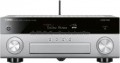 |
|---|---|---|
| Yamaha RX-A870 | Yamaha RX-A860 | |
| Outdated Product | from $1,064.00 up to $1,331.00 | |
| TOP sellers | ||
| Device type | AV Receiver | AV Receiver |
CPU | ||
| Auto sound calibration |  | |
| Auto level | | |
| Surround sound in headphones | | |
| Ultra HD | 4K | 4K |
| Upscaling | Ultra HD (4K) | Ultra HD (4K) |
| HDR | HDR10, Dolby Vision | |
| 3D | | |
| Multi Zone | | |
Tech specs | ||
| Number of channels | 7.1 | 7.1 |
| Power per channel | 100 W | 100 W |
| Signal to noise ratio | 110 dB | 110 dB |
| Acceptable acoustic impedance | 4 Ohm | 4 Ohm |
| Frequency range | 10 – 100000 Hz | 10 – 100000 Hz |
| Bi/Tri-amping | | |
Media player and tuner | ||
| Tuner and playback | AM/FM radio USB drive network streaming audio internet radio | AM/FM radio USB drive network streaming audio internet radio |
| Playable formats | FLAC, DSD, AIF, WAV, ALAC, MP3, MPEG-AAC, WMA | FLAC, DSD, AIF, WAV, ALAC, MP3, MPEG-AAC, WMA |
Communications (interface) | ||
| Interfaces | AirPlay Wi-Fi Bluetooth LAN RS-232 DLNA Remote control negotiation | AirPlay Wi-Fi Bluetooth LAN RS-232 DLNA Remote control negotiation |
Decoder support | ||
| Decoders | Dolby Atmos Dolby Digital Dolby Digital Plus Dolby TrueHD Dolby Pro Logic II Dolby Pro Logic IIx Dolby Digital EX DTS DTS Express DTS 96/24 DTS-HD High Resolution Audio DTS-HD Master Audio DTS ES Matrix 6.1 DTS ES Discrete 6.1 DTS Neo:6 DTS X | Dolby Atmos Dolby Digital Dolby Digital Plus Dolby TrueHD Dolby Pro Logic II Dolby Pro Logic IIx Dolby Digital EX DTS DTS Express DTS 96/24 DTS-HD High Resolution Audio DTS-HD Master Audio DTS ES Matrix 6.1 DTS ES Discrete 6.1 DTS Neo:6 |
Inputs | ||
| RCA | 3 pairs | 5 pairs |
| Coaxial S/PDIF | 2 pcs | 2 pcs |
| Optical | 2 шт | 2 шт |
| HDMI | 8 шт | 8 шт |
| HDMI version | v 2.1 | v 2.1 |
| Composite | 1 шт | 5 шт |
| Component | 1 шт | 2 шт |
| Phono | | |
| Control input (IR) | | |
Outputs | ||
| RCA | 1 pairs | 1 pairs |
| HDMI | 2 шт | 2 шт |
| Composite | 1 шт | 1 шт |
| Component | 1 шт | 1 шт |
| On headphones | 6.35 mm (Jack) | 6.35 mm (Jack) |
| Preamplifier (Pre-Amp) | | |
| Control output (IR) | | |
| Trigger output | 1 шт | 1 шт |
Front panel | ||
| Headphone output | | |
| USB port | | |
| HDMI input | | |
| Linear | | |
| Composite | | |
General | ||
| Power consumption | 300 W | 300 W |
| Standby consumption | 0.1 W | 0.1 W |
| Smartphone control | | |
| Dimensions (WxDxH) | 435x382x171 mm | 435x382x171 mm |
| Weight | 10.5 kg | 10.5 kg |
| Color | ||
| Added to E-Catalog | july 2017 | september 2016 |


Compare Yamaha RX-A870 and RX-A860
You may be interested in
My comparisons
Yamaha RX-A870 often compared

Yamaha RX-A860 often compared


Glossary
HDR
Receiver support for HDR technology; this clause may also specify the specific supported HDR format.
HDR stands for High Dynamic Range. This technology allows you to expand the range of brightness reproduced simultaneously on the screen; to put it simply, the viewer will see brighter whites and darker blacks. In practice, this means a significant improvement in color quality: colors are more vibrant and at the same time more faithful than without HDR. However, to use this function, in addition to the receiver, a TV/projector that supports the appropriate HDR format and content recorded in this format is required.
In terms of specific formats, the most popular options these days are basic HDR10, advanced HDR10+, and high-end Dolby Vision. Here are their features:
- HDR10. Historically the first of the consumer HDR formats, less advanced than the options described below but extremely widespread. In particular, HDR10 is supported by almost all streaming services that provide HDR content at all, and it is also common for Blu-ray discs. Allows you to work with a color depth of 10 bits (hence the name). At the same time, devices of this format are also compatible with content in HDR10 +, although its quality will be limited by the capabilities of the original HDR10.
- HDR10+. Improved version of HDR10. With the same color depth (10 bits), it uses the so-called dynamic metadata,...which allows transmitting information about the color depth not only for groups of several frames, but also for individual frames. This results in an additional improvement in color reproduction.
Dolby Vision. An advanced standard used particularly in professional cinematography. Allows you to achieve a color depth of 12 bits, uses the dynamic metadata described above, and also makes it possible to transmit two image options at once in one video stream - HDR and normal (SDR). At the same time, Dolby Vision is based on the same technology as HDR10, so in modern video technology this format is usually combined with HDR10 or HDR10+.
HDR stands for High Dynamic Range. This technology allows you to expand the range of brightness reproduced simultaneously on the screen; to put it simply, the viewer will see brighter whites and darker blacks. In practice, this means a significant improvement in color quality: colors are more vibrant and at the same time more faithful than without HDR. However, to use this function, in addition to the receiver, a TV/projector that supports the appropriate HDR format and content recorded in this format is required.
In terms of specific formats, the most popular options these days are basic HDR10, advanced HDR10+, and high-end Dolby Vision. Here are their features:
- HDR10. Historically the first of the consumer HDR formats, less advanced than the options described below but extremely widespread. In particular, HDR10 is supported by almost all streaming services that provide HDR content at all, and it is also common for Blu-ray discs. Allows you to work with a color depth of 10 bits (hence the name). At the same time, devices of this format are also compatible with content in HDR10 +, although its quality will be limited by the capabilities of the original HDR10.
- HDR10+. Improved version of HDR10. With the same color depth (10 bits), it uses the so-called dynamic metadata,...which allows transmitting information about the color depth not only for groups of several frames, but also for individual frames. This results in an additional improvement in color reproduction.
Dolby Vision. An advanced standard used particularly in professional cinematography. Allows you to achieve a color depth of 12 bits, uses the dynamic metadata described above, and also makes it possible to transmit two image options at once in one video stream - HDR and normal (SDR). At the same time, Dolby Vision is based on the same technology as HDR10, so in modern video technology this format is usually combined with HDR10 or HDR10+.
Decoders
A decoder can be broadly described as a standard in which digital audio (often multi-channel) is recorded. For normal playback of such sound, it is necessary that the corresponding decoder is supported by the device. The first signs of multi-channel decoding were Dolby Digital and DTS, gradually improving and introducing new features. The final stage for 2020 is Dolby Atmos and DTS X decoders. And the intermediate ones were Dolby TrueHD, Dolby Pro Logic II, DTS-HD, DTS ES, DTS Neural: X, DTS Neo (6, X).
Dolby Atmos. A decoder that does not use a rigid distribution of sound across channels, but the processing of audio objects, due to which it can be used with almost any number of channels on a reproducing system — the sound will be divided between channels so that each audio object is heard as close as possible to its proper place. When using Dolby Atmos, in-ceiling speakers (or speakers facing the ceiling) are highly desirable. However, in extreme cases, you can do without them.
— DTS X . An analogue of the Dolby Atmos described above, when the sound is distributed not through individual channels, but through audio objects. The...digital signal contains information about where (according to the director's intention) the object audible to the user should be and how it should move, and the processor of the reproducing device processes this information and determines exactly how the sound should be distributed over the available channels in order to achieve the required localization. Thanks to this, DTS X is not tied to a specific number of audio channels — there can be as many as you like, the system will automatically divide the sound into them, achieving the desired sound. Also note that this decoder allows you to separately adjust the volume of dialogues.
— IMAX Enhanced. The IMAX Enhanced Mark of Conformity is awarded to equipment that meets the audio certification requirements of IMAX Corporation. Combined with DTS audio technology to deliver signature IMAX theater-like sound in the home. The most accurate reproduction of such audio is possible in systems with a large number of channels (5.1 or more). Note that for a fully immersive experience, IMAX Enhanced certification must also apply to video equipment for playing content (TV, projector, etc.).
Dolby Atmos. A decoder that does not use a rigid distribution of sound across channels, but the processing of audio objects, due to which it can be used with almost any number of channels on a reproducing system — the sound will be divided between channels so that each audio object is heard as close as possible to its proper place. When using Dolby Atmos, in-ceiling speakers (or speakers facing the ceiling) are highly desirable. However, in extreme cases, you can do without them.
— DTS X . An analogue of the Dolby Atmos described above, when the sound is distributed not through individual channels, but through audio objects. The...digital signal contains information about where (according to the director's intention) the object audible to the user should be and how it should move, and the processor of the reproducing device processes this information and determines exactly how the sound should be distributed over the available channels in order to achieve the required localization. Thanks to this, DTS X is not tied to a specific number of audio channels — there can be as many as you like, the system will automatically divide the sound into them, achieving the desired sound. Also note that this decoder allows you to separately adjust the volume of dialogues.
— IMAX Enhanced. The IMAX Enhanced Mark of Conformity is awarded to equipment that meets the audio certification requirements of IMAX Corporation. Combined with DTS audio technology to deliver signature IMAX theater-like sound in the home. The most accurate reproduction of such audio is possible in systems with a large number of channels (5.1 or more). Note that for a fully immersive experience, IMAX Enhanced certification must also apply to video equipment for playing content (TV, projector, etc.).
RCA
The number of analogue stereo RCA inputs provided in the design of the AV receiver. The more such inputs there are, the more transmitting devices can be simultaneously connected to the receiver. Thanks to this, when choosing between them, you do not have to reconnect cables — just set the signal source in the receiver settings.
By itself, the RCA connector (colloquially — "tulip") can be used in different interfaces. However, in this particular case, we are talking about a linear audio input responsible for an analogue audio signal. RCA is the most popular connector used in modern audio equipment for such inputs; it allows you to connect the receiver to an external audio source such as a CD player.
Note that connectors of this type are usually counted in pairs; in other words, one input consists of two RCA connectors. This is due to the fact that in this case only one channel of analogue audio can be transmitted over one wire; accordingly, two RCA jacks are required for stereo transmission.
By itself, the RCA connector (colloquially — "tulip") can be used in different interfaces. However, in this particular case, we are talking about a linear audio input responsible for an analogue audio signal. RCA is the most popular connector used in modern audio equipment for such inputs; it allows you to connect the receiver to an external audio source such as a CD player.
Note that connectors of this type are usually counted in pairs; in other words, one input consists of two RCA connectors. This is due to the fact that in this case only one channel of analogue audio can be transmitted over one wire; accordingly, two RCA jacks are required for stereo transmission.
Composite
The number of composite inputs provided in the design of the receiver.
Note that in this case, we do not mean a full-size composite interface that uses three sockets (video and two stereo sound channels), but only one connector — video. This is due to the fact that the sound can be output through standard RCA audio connectors. The video output also uses an RCA type connector, usually a characteristic yellow colour.
Due to the fact that all image data is transmitted over a single cable, the composite interface is somewhat inferior to the component (see above) in terms of video quality, and the bandwidth allows you to work only with a standard definition signal (not HD); and there is no talk of volumetric sound. On the other hand, this connection method has long been used in video technology and can be useful for connecting outdated devices (such as VHS VCRs).
As for the quantity, the presence of several inputs allows you to connect several signal sources to the receiver at once with the corresponding outputs and switch between them through software settings without fiddling with switching cables.
Note that in this case, we do not mean a full-size composite interface that uses three sockets (video and two stereo sound channels), but only one connector — video. This is due to the fact that the sound can be output through standard RCA audio connectors. The video output also uses an RCA type connector, usually a characteristic yellow colour.
Due to the fact that all image data is transmitted over a single cable, the composite interface is somewhat inferior to the component (see above) in terms of video quality, and the bandwidth allows you to work only with a standard definition signal (not HD); and there is no talk of volumetric sound. On the other hand, this connection method has long been used in video technology and can be useful for connecting outdated devices (such as VHS VCRs).
As for the quantity, the presence of several inputs allows you to connect several signal sources to the receiver at once with the corresponding outputs and switch between them through software settings without fiddling with switching cables.
Component
The number of component inputs provided in the design of the receiver.
This interface (also known as YPbPr) is designed to transmit analogue video. Its name comes from the fact that the three main video components (brightness data and two colour difference channels) are carried over three separate cables. Accordingly, each individual component input is a set of three connectors. Usually, a built-in cable with RCA connectors (“tulip”) is used for connection, while the cables for component and composite (see below) interfaces are quite interchangeable.
The component interface stands out for its high signal transmission quality: splitting the video into three separate channels significantly reduces distortion compared to the same composite format, and the bandwidth is comparable to the above-described HDMI and allows you to work even with HD video. However, a component connection does not provide audio, and you will need to use a separate cable for this purpose.
As for the quantity, the presence of several inputs allows you to connect several signal sources to the receiver at once with the corresponding outputs and switch between them through software settings without fiddling with switching cables.
This interface (also known as YPbPr) is designed to transmit analogue video. Its name comes from the fact that the three main video components (brightness data and two colour difference channels) are carried over three separate cables. Accordingly, each individual component input is a set of three connectors. Usually, a built-in cable with RCA connectors (“tulip”) is used for connection, while the cables for component and composite (see below) interfaces are quite interchangeable.
The component interface stands out for its high signal transmission quality: splitting the video into three separate channels significantly reduces distortion compared to the same composite format, and the bandwidth is comparable to the above-described HDMI and allows you to work even with HD video. However, a component connection does not provide audio, and you will need to use a separate cable for this purpose.
As for the quantity, the presence of several inputs allows you to connect several signal sources to the receiver at once with the corresponding outputs and switch between them through software settings without fiddling with switching cables.