
Comparison Yamaha RX-A860 vs Yamaha RX-A850
Add to comparison | 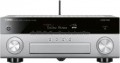 | 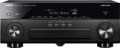 |
|---|---|---|
| Yamaha RX-A860 | Yamaha RX-A850 | |
from $1,064.00 up to $1,331.00 | from $981.48 up to $1,213.80 | |
| TOP sellers | ||
| Device type | AV Receiver | AV Receiver |
CPU | ||
| Auto sound calibration |  | |
| Auto level | | |
| Surround sound in headphones | | |
| Ultra HD | 4K | 4K |
| Upscaling | Ultra HD (4K) | Ultra HD (4K) |
| 3D | | |
| Multi Zone | | |
Tech specs | ||
| Number of channels | 7.1 | 7.1 |
| Power per channel | 100 W | 100 W |
| Signal to noise ratio | 110 dB | 110 dB |
| Acceptable acoustic impedance | 4 Ohm | 4 Ohm |
| Frequency range | 10 – 100000 Hz | 10 – 100000 Hz |
| Bi/Tri-amping | | |
Media player and tuner | ||
| Tuner and playback | AM/FM radio USB drive network streaming audio internet radio | AM/FM radio USB drive network streaming audio internet radio |
| Playable formats | FLAC, DSD, AIF, WAV, ALAC, MP3, MPEG-AAC, WMA | FLAC, DSD, AIF, WAV, ALAC, MP3, MPEG-AAC, WMA |
Communications (interface) | ||
| Interfaces | AirPlay Wi-Fi Bluetooth LAN RS-232 DLNA Remote control negotiation | AirPlay Wi-Fi Bluetooth LAN RS-232 DLNA Remote control negotiation |
Decoder support | ||
| Decoders | Dolby Atmos Dolby Digital Dolby Digital Plus Dolby TrueHD Dolby Pro Logic II Dolby Pro Logic IIx Dolby Digital EX DTS DTS Express DTS 96/24 DTS-HD High Resolution Audio DTS-HD Master Audio DTS ES Matrix 6.1 DTS ES Discrete 6.1 DTS Neo:6 | Dolby Atmos Dolby Digital Dolby Digital Plus Dolby TrueHD Dolby Pro Logic II Dolby Pro Logic IIx Dolby Digital EX DTS DTS Express DTS 96/24 DTS-HD High Resolution Audio DTS-HD Master Audio DTS ES Matrix 6.1 DTS ES Discrete 6.1 DTS Neo:6 |
Inputs | ||
| RCA | 5 pairs | 5 pairs |
| Coaxial S/PDIF | 2 pcs | 2 pcs |
| Optical | 2 шт | 2 шт |
| HDMI | 8 шт | 8 шт |
| HDMI version | v 2.1 | |
| Composite | 5 шт | 5 шт |
| Component | 2 шт | 2 шт |
| Phono | | |
| Control input (IR) | | |
Outputs | ||
| RCA | 1 pairs | 1 pairs |
| HDMI | 2 шт | 2 шт |
| Composite | 1 шт | 1 шт |
| Component | 1 шт | 1 шт |
| On headphones | 6.35 mm (Jack) | 6.35 mm (Jack) |
| Preamplifier (Pre-Amp) | | |
| Control output (IR) | | |
| Trigger output | 1 шт | 1 шт |
Front panel | ||
| Headphone output | | |
| USB port | | |
| HDMI input | | |
| Linear | | |
| Composite | | |
General | ||
| Power consumption | 300 W | 300 W |
| Standby consumption | 0.1 W | 0.1 W |
| Smartphone control | | |
| Dimensions (WxDxH) | 435x382x171 mm | 435x382x171 mm |
| Weight | 10.5 kg | 10.6 kg |
| Color | ||
| Added to E-Catalog | september 2016 | november 2015 |


Compare Yamaha RX-A860 and RX-A850
You may be interested in
My comparisons
Yamaha RX-A860 often compared


Glossary
HDMI version
HDMI interface version supported by the receiver. Usually, all HDMI connectors available in the device correspond to this version — both inputs (see above) and outputs (see below). Here are the current options:
— v 1.4. The oldest of the current versions, released in 2009. However, it supports 3D video capable of working with resolutions up to 4096x2160 at 24 fps, and in Full HD resolution, the frame rate can reach 120 fps. In addition to the original v.1.4, there are also improved modifications — v.1.4a and v.1.4b; they are similar in terms of basic features, in both cases the improvements affected mainly work with 3D content.
-v 2.0. Significant update to HDMI introduced in 2013. In this version, the maximum frame rate in 4K has increased to 60 fps, and the audio bandwidth has increased to 32 channels and 4 separate streams simultaneously. Also from the innovations, we can mention support for the ultra-wide format 21:9. In the v.2.0a update, HDR support was added to the interface capabilities, in v.2.0b this feature was improved and expanded.
— v 2.1. Despite the similarity in name to v.2.0, this version, released in 2017, was a very large-scale update. In particular, it added support for 8K and even 10K at speeds up to 120 fps, as well as further expanded the possibilities for working with HDR. Under this version, its own cable was released — HDMI Ultra High Speed, all v.2.1 features are available only when using cables of this standard,...although basic functions can be used with simpler cords.
— v 1.4. The oldest of the current versions, released in 2009. However, it supports 3D video capable of working with resolutions up to 4096x2160 at 24 fps, and in Full HD resolution, the frame rate can reach 120 fps. In addition to the original v.1.4, there are also improved modifications — v.1.4a and v.1.4b; they are similar in terms of basic features, in both cases the improvements affected mainly work with 3D content.
-v 2.0. Significant update to HDMI introduced in 2013. In this version, the maximum frame rate in 4K has increased to 60 fps, and the audio bandwidth has increased to 32 channels and 4 separate streams simultaneously. Also from the innovations, we can mention support for the ultra-wide format 21:9. In the v.2.0a update, HDR support was added to the interface capabilities, in v.2.0b this feature was improved and expanded.
— v 2.1. Despite the similarity in name to v.2.0, this version, released in 2017, was a very large-scale update. In particular, it added support for 8K and even 10K at speeds up to 120 fps, as well as further expanded the possibilities for working with HDR. Under this version, its own cable was released — HDMI Ultra High Speed, all v.2.1 features are available only when using cables of this standard,...although basic functions can be used with simpler cords.