
Comparison Pioneer VSX-835 vs Onkyo TX-SR494
Add to comparison |  | 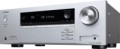 |
|---|---|---|
| Pioneer VSX-835 | Onkyo TX-SR494 | |
from $499.00 | from $449.00 | |
| TOP sellers | ||
| Device type | AV Receiver | AV Receiver |
CPU | ||
| DAC frequency | 384 kHz | 384 kHz |
| Audio DAC | 32 bit | 32 bit |
| Auto sound calibration |  | |
| eARC | |  |
| Ultra HD | 8K | 4K |
| Upscaling | Ultra HD (8K) | Ultra HD (4K) |
| HDR | HDR10, Dolby Vision | HDR10, Dolby Vision |
| 3D | | |
| Multi Zone | | |
Tech specs | ||
| Number of channels | 7.2 | 7.2 |
| Power per channel | 80 W | 160 W |
| Signal to noise ratio | 109 dB | |
| Acceptable acoustic impedance | 4 Ohm | 4 Ohm |
| Frequency range | 20 — 20000 Hz | 10 – 100000 Hz |
| Bi/Tri-amping | | |
Media player and tuner | ||
| Tuner and playback | AM/FM radio USB drive | AM/FM radio |
Communications (interface) | ||
| Interfaces | Bluetooth | Bluetooth |
Decoder support | ||
| Decoders | Dolby Atmos Dolby Digital Dolby Digital Plus Dolby TrueHD DTS DTS Express DTS 96/24 DTS-HD High Resolution Audio DTS-HD Master Audio DTS ES Matrix 6.1 DTS ES Discrete 6.1 DTS Neural:X DTS X IMAX Enhanced | Dolby Atmos Dolby Digital Plus Dolby TrueHD DTS 96/24 DTS-HD Master Audio DTS Neural:X DTS X |
Inputs | ||
| RCA | 3 pairs | 3 pairs |
| Coaxial S/PDIF | 1 pcs | 1 pcs |
| Optical | 1 шт | 1 шт |
| HDMI | 4 шт | 4 шт |
| HDMI version | v 2.1 | v 2.1 |
Outputs | ||
| RCA | 1 pairs | |
| HDMI | 1 шт | 1 шт |
| On headphones | 6.35 mm (Jack) | |
| Preamplifier (Pre-Amp) | | |
| More features | to the subwoofer | |
Front panel | ||
| Headphone output | | |
General | ||
| Power consumption | 490 W | 480 W |
| Standby consumption | 0.2 W | 0.2 W |
| Dimensions (WxDxH) | 435x321x148 mm | 435x328x160 mm |
| Weight | 8.4 kg | 8.2 kg |
| Color | ||
| Added to E-Catalog | january 2024 | june 2019 |


Compare Pioneer VSX-835 and Onkyo TX-SR494
You may be interested in
Pioneer VSX-835 often compared


Onkyo TX-SR494 often compared


Glossary
eARC
The audio receiver supports eARC, an enhanced version of the Audio Return Channel (ARC) used with an HDMI connection (see below).
By itself, the audio return channel allows you to "swap" the HDMI output of the AV receiver and the HDMI input of the TV or other external device — thus, this device turns into an audio signal source, and the receiver starts to work as a receiver. Such functionality is designed mainly for those cases when the TV receives a signal not from the receiver, but from another source (built-in tuner, media player, flash drive, etc.), however, the soundtrack must be output to external speakers through the receiver. Without ARC, you would have to use an additional connection (for example, via an optical interface), while the audio return channel eliminates the need for extra wires: the same HDMI cable is used both for transmitting video / audio from the receiver to the TV and for transmitting audio from TV to receiver. Also, the advantages of ARC over traditional audio interfaces are higher bandwidth, as well as the ability to use the CEC function (control of connected devices from one remote control).
Specifically, eARC was introduced simultaneously with the HDMI 2.1 standard and received a number of improvements compared to conventional ARC. Here are the main ones:
— Up to 40x more bandwidth, allowing uncompressed 5.1 and 7.1 surround sound, HD audio and Dolby Atmos and DTS:X "object-orie...nted" multi-channel codecs (see Decoders).
— Technology Lip Sync Correct, eliminating desynchronization between video and sound.
— Proprietary protocol to automatically detect audio formats supported by both connected devices and select the best option.
Of course, in order to use eARC, both the receiver and the TV it is connected to must support it.
By itself, the audio return channel allows you to "swap" the HDMI output of the AV receiver and the HDMI input of the TV or other external device — thus, this device turns into an audio signal source, and the receiver starts to work as a receiver. Such functionality is designed mainly for those cases when the TV receives a signal not from the receiver, but from another source (built-in tuner, media player, flash drive, etc.), however, the soundtrack must be output to external speakers through the receiver. Without ARC, you would have to use an additional connection (for example, via an optical interface), while the audio return channel eliminates the need for extra wires: the same HDMI cable is used both for transmitting video / audio from the receiver to the TV and for transmitting audio from TV to receiver. Also, the advantages of ARC over traditional audio interfaces are higher bandwidth, as well as the ability to use the CEC function (control of connected devices from one remote control).
Specifically, eARC was introduced simultaneously with the HDMI 2.1 standard and received a number of improvements compared to conventional ARC. Here are the main ones:
— Up to 40x more bandwidth, allowing uncompressed 5.1 and 7.1 surround sound, HD audio and Dolby Atmos and DTS:X "object-orie...nted" multi-channel codecs (see Decoders).
— Technology Lip Sync Correct, eliminating desynchronization between video and sound.
— Proprietary protocol to automatically detect audio formats supported by both connected devices and select the best option.
Of course, in order to use eARC, both the receiver and the TV it is connected to must support it.
Ultra HD
The ability of the receiver to work with a video signal of ultra-high definition - Ultra HD. Various versions are available. The most popular are 4K and 8K. The resolution of such video is 4 and 8 times higher than that of Full HD, respectively, which allows you to achieve even greater image clarity and degree of detail (compared to FullHD). However, you will also need a 4K or 8K TV/projector to view it. And the cost of such systems (in particular 8K) can be expensive.
Upscaling
The ability to increase the resolution of the video signal processed by the receiver - if the original video resolution is lower. Depending on the capabilities of the receiver, in particular its HDMI ports, upscaling to Ultra HD 4K and upscaling to Ultra HD 8K may occur.
The principle of upscaling is that a relatively low-resolution video is supplemented with the required number of pixels using special algorithms. Due to this, when playing such a video, the quality of the “picture” is noticeably higher than without upscaling (although somewhat lower than that of content originally recorded in UltraHD). It makes sense to specifically look for a receiver with this function if you plan to use it with a 4K or 8K screen.
The principle of upscaling is that a relatively low-resolution video is supplemented with the required number of pixels using special algorithms. Due to this, when playing such a video, the quality of the “picture” is noticeably higher than without upscaling (although somewhat lower than that of content originally recorded in UltraHD). It makes sense to specifically look for a receiver with this function if you plan to use it with a 4K or 8K screen.
Multi Zone
The possibility of using the receiver for simultaneous transmission of signals from different sources to screens and speakers located in different places (zones). For example, in a large house, you can simultaneously stream a movie from a Blu-ray player to a screen in a large room, a TV show to a TV in the kitchen, and a radio programme to speakers in a library. Another option for using Multi-Zone is entertainment centers with several rooms of different types (for example, a cinema hall, a roller skating rink and a cafe).
Power per channel
the maximum sound power that can be delivered by the power amplifier (if the receiver has one, see "Type") per speaker channel. It is worth noting here that in this case it is customary to indicate the so-called RMS (Rated Maximum Sinusoidal), or rated power. Rated is considered the highest power that the amplifier is guaranteed to be able to produce without interruption for an hour without any failures or breakdowns. Short-term jumps in the signal level can significantly exceed this value, but the main indicator is still the rated power.
The power of the amplifier largely determines the sound volume of the speaker system connected to the device. In fact, the loudness also depends on the characteristics of the speakers — sensitivity, impedance, etc.; however, other things being equal, the same acoustics on a more powerful amplifier will sound louder. In addition, this parameter also affects the compatibility of the speakers and the amplifier — it is believed that the difference in the nominal powers of these components should not exceed 10-15% (and ideally, the powers should generally match). And since different rooms require speakers of different power, this also affects the choice of amplifier for a particular environment; specific recommendations on the ratio of room characteristics and acoustic power can be found in special sources.
Also note that if the amplifier can operate with a load of different resistance (see..."Permissible acoustic impedance"), then for different options the power per channel will be different — the lower the resistance, the higher the power. In the characteristics, in this case, the maximum value of this parameter is usually indicated — that is, the power at the minimum allowable resistance.
The power of the amplifier largely determines the sound volume of the speaker system connected to the device. In fact, the loudness also depends on the characteristics of the speakers — sensitivity, impedance, etc.; however, other things being equal, the same acoustics on a more powerful amplifier will sound louder. In addition, this parameter also affects the compatibility of the speakers and the amplifier — it is believed that the difference in the nominal powers of these components should not exceed 10-15% (and ideally, the powers should generally match). And since different rooms require speakers of different power, this also affects the choice of amplifier for a particular environment; specific recommendations on the ratio of room characteristics and acoustic power can be found in special sources.
Also note that if the amplifier can operate with a load of different resistance (see..."Permissible acoustic impedance"), then for different options the power per channel will be different — the lower the resistance, the higher the power. In the characteristics, in this case, the maximum value of this parameter is usually indicated — that is, the power at the minimum allowable resistance.
Signal to noise ratio
This indicator determines the amount of extraneous noise that accompanies the sound output by the receiver's amplifier. It is convenient because it takes into account almost all possible significant noise — both created by the device itself and due to external causes. The higher the signal-to-noise ratio, the lower the noise volume compared to the main signal, the cleaner the amplifier will sound. A reading of 70-80 dB is considered normal for most consumer electronics, but in AV receivers, which are usually premium devices, this can only be called satisfactory. In the most advanced models, this figure can significantly exceed 100 dB.
Frequency range
The range of sound frequencies that the receiver is capable of outputting (this parameter can also be specified for models without their own amplifier, see “Number of channels” for more details). The completeness of the transmitted sound depends on this parameter; of course, the sound quality in general is highly dependent on a number of other factors (for example, frequency response), but the wider the frequency range, the less risk that the amplifier will completely “cut off” some part of the sound. On the other hand, it should be taken into account here that the normal hearing range of the human ear is approximately 16 – 20,000 Hz, and deviations from these limits are rather small. And although many modern receivers provide a much wider frequency range, however, this is more of a marketing ploy than a really significant indicator (or some kind of "side defect" in the design of a high-quality amplifier).
It is also worth considering that in order to reproduce the full frequency of the amplifier, you will need speakers with the appropriate characteristics.
It is also worth considering that in order to reproduce the full frequency of the amplifier, you will need speakers with the appropriate characteristics.
Tuner and playback
— AM/FM radio. The presence of a built-in tuner that allows you to receive AM and FM radio broadcasts without additional devices (except perhaps an antenna is required, and then not always). In FM, it is possible to realize the transmission of high-quality stereo sound, however, the waves propagate only within the line of sight (10-20 km); therefore, most of the stations in this range are classified as "urban music". In AM, the transmission range is already measured in hundreds of kilometers, but the sound quality is noticeably lower; therefore, such stations usually specialize in talk programs (particularly news).
— USB stick. The ability to connect a USB drive to the receiver — for example, a "flash drive" or an external hard drive — and play content from it directly. This requires a USB connector. Most often, in models with this function, it is located on the front panel (see below) — this provides ease of connection; at the same time, there are exceptions. Also note that the very presence of USB does not necessarily imply the possibility of playing from external media — this interface can be used for service purposes, for example, to update the firmware or play from a PC (see "Advanced (inputs) — USB Type B").
— Network audio streaming. The ability to play streaming audio over a local network or the Internet (including from services like Grooveshark o...r Last.Fm). The name "streaming" is due to the fact that each song is played directly from the network, without being written to the receiver's own permanent storage. This function, by definition, requires connection to computer networks; most often, a Wi-Fi module is used for this purpose (see "Interfaces") or a LAN connector.
— Internet radio. The ability to use the receiver to receive and play Internet radio broadcasts. This feature is similar in many ways to the network audio described above — in particular, it requires a network connection to work, and the data is streamed; however, in the case of network audio, the user himself chooses what and when to listen, here the broadcast is similar to conventional radio transmissions and is controlled from the radio station. Actually, many major stations broadcast their programs not only on the traditional air, but also via the Internet; There are also specialized projects broadcasting only on the Web. In general, the choice of programs is much more extensive than for conventional radio broadcasting — after all, Internet radio has no range restrictions. And the receivers themselves may provide additional tools for managing such broadcasting — for example, catalogs, search by genres, languages, etc.
— USB stick. The ability to connect a USB drive to the receiver — for example, a "flash drive" or an external hard drive — and play content from it directly. This requires a USB connector. Most often, in models with this function, it is located on the front panel (see below) — this provides ease of connection; at the same time, there are exceptions. Also note that the very presence of USB does not necessarily imply the possibility of playing from external media — this interface can be used for service purposes, for example, to update the firmware or play from a PC (see "Advanced (inputs) — USB Type B").
— Network audio streaming. The ability to play streaming audio over a local network or the Internet (including from services like Grooveshark o...r Last.Fm). The name "streaming" is due to the fact that each song is played directly from the network, without being written to the receiver's own permanent storage. This function, by definition, requires connection to computer networks; most often, a Wi-Fi module is used for this purpose (see "Interfaces") or a LAN connector.
— Internet radio. The ability to use the receiver to receive and play Internet radio broadcasts. This feature is similar in many ways to the network audio described above — in particular, it requires a network connection to work, and the data is streamed; however, in the case of network audio, the user himself chooses what and when to listen, here the broadcast is similar to conventional radio transmissions and is controlled from the radio station. Actually, many major stations broadcast their programs not only on the traditional air, but also via the Internet; There are also specialized projects broadcasting only on the Web. In general, the choice of programs is much more extensive than for conventional radio broadcasting — after all, Internet radio has no range restrictions. And the receivers themselves may provide additional tools for managing such broadcasting — for example, catalogs, search by genres, languages, etc.
Decoders
A decoder can be broadly described as a standard in which digital audio (often multi-channel) is recorded. For normal playback of such sound, it is necessary that the corresponding decoder is supported by the device. The first signs of multi-channel decoding were Dolby Digital and DTS, gradually improving and introducing new features. The final stage for 2020 is Dolby Atmos and DTS X decoders. And the intermediate ones were Dolby TrueHD, Dolby Pro Logic II, DTS-HD, DTS ES, DTS Neural: X, DTS Neo (6, X).
Dolby Atmos. A decoder that does not use a rigid distribution of sound across channels, but the processing of audio objects, due to which it can be used with almost any number of channels on a reproducing system — the sound will be divided between channels so that each audio object is heard as close as possible to its proper place. When using Dolby Atmos, in-ceiling speakers (or speakers facing the ceiling) are highly desirable. However, in extreme cases, you can do without them.
— DTS X . An analogue of the Dolby Atmos described above, when the sound is distributed not through individual channels, but through audio objects. The...digital signal contains information about where (according to the director's intention) the object audible to the user should be and how it should move, and the processor of the reproducing device processes this information and determines exactly how the sound should be distributed over the available channels in order to achieve the required localization. Thanks to this, DTS X is not tied to a specific number of audio channels — there can be as many as you like, the system will automatically divide the sound into them, achieving the desired sound. Also note that this decoder allows you to separately adjust the volume of dialogues.
— IMAX Enhanced. The IMAX Enhanced Mark of Conformity is awarded to equipment that meets the audio certification requirements of IMAX Corporation. Combined with DTS audio technology to deliver signature IMAX theater-like sound in the home. The most accurate reproduction of such audio is possible in systems with a large number of channels (5.1 or more). Note that for a fully immersive experience, IMAX Enhanced certification must also apply to video equipment for playing content (TV, projector, etc.).
Dolby Atmos. A decoder that does not use a rigid distribution of sound across channels, but the processing of audio objects, due to which it can be used with almost any number of channels on a reproducing system — the sound will be divided between channels so that each audio object is heard as close as possible to its proper place. When using Dolby Atmos, in-ceiling speakers (or speakers facing the ceiling) are highly desirable. However, in extreme cases, you can do without them.
— DTS X . An analogue of the Dolby Atmos described above, when the sound is distributed not through individual channels, but through audio objects. The...digital signal contains information about where (according to the director's intention) the object audible to the user should be and how it should move, and the processor of the reproducing device processes this information and determines exactly how the sound should be distributed over the available channels in order to achieve the required localization. Thanks to this, DTS X is not tied to a specific number of audio channels — there can be as many as you like, the system will automatically divide the sound into them, achieving the desired sound. Also note that this decoder allows you to separately adjust the volume of dialogues.
— IMAX Enhanced. The IMAX Enhanced Mark of Conformity is awarded to equipment that meets the audio certification requirements of IMAX Corporation. Combined with DTS audio technology to deliver signature IMAX theater-like sound in the home. The most accurate reproduction of such audio is possible in systems with a large number of channels (5.1 or more). Note that for a fully immersive experience, IMAX Enhanced certification must also apply to video equipment for playing content (TV, projector, etc.).