
Comparison Onkyo TX-SR494 vs Sony STR-DH790
Add to comparison | 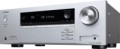 | 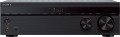 |
|---|---|---|
| Onkyo TX-SR494 | Sony STR-DH790 | |
from $449.00 | Compare prices 4 | |
| User reviews | ||
| TOP sellers | ||
| Device type | AV Receiver | AV Receiver |
CPU | ||
| DAC frequency | 384 kHz | |
| Audio DAC | 32 bit | |
| Auto sound calibration |  | |
| Auto level |  | |
| Surround sound in headphones | | |
| eARC | | |
| Ultra HD | 4K | 4K |
| Upscaling | Ultra HD (4K) | |
| HDR | HDR10, Dolby Vision | HDR10, Dolby Vision |
| 3D | | |
Tech specs | ||
| Number of channels | 7.2 | 7.2 |
| Power per channel | 160 W | 90 W |
| Signal to noise ratio | 109 dB | |
| Acceptable acoustic impedance | 4 Ohm | 6 Ohm |
| Frequency range | 10 – 100000 Hz | |
| Bi/Tri-amping | | |
Media player and tuner | ||
| Tuner and playback | AM/FM radio | AM/FM radio |
Communications (interface) | ||
| Interfaces | Bluetooth | Bluetooth |
Decoder support | ||
| Decoders | Dolby Atmos Dolby Digital Plus Dolby TrueHD DTS 96/24 DTS-HD Master Audio DTS Neural:X DTS X | Dolby Atmos Dolby Digital Dolby Digital Plus Dolby TrueHD Dolby Pro Logic II DTS DTS Express DTS 96/24 DTS-HD High Resolution Audio DTS-HD Master Audio DTS X |
Inputs | ||
| RCA | 3 pairs | 4 pairs |
| Coaxial S/PDIF | 1 pcs | 1 pcs |
| Optical | 1 шт | 1 шт |
| HDMI | 4 шт | 4 шт |
| HDMI version | v 2.1 | v 2.1 |
Outputs | ||
| HDMI | 1 шт | 1 шт |
| On headphones | 6.35 mm (Jack) | |
| Preamplifier (Pre-Amp) | | |
Front panel | ||
| Headphone output | | |
General | ||
| Power consumption | 480 W | 200 W |
| Standby consumption | 0.2 W | 0.3 W |
| Dimensions (WxDxH) | 435x328x160 mm | 430x297x133 mm |
| Weight | 8.2 kg | 7.4 kg |
| Color | ||
| Added to E-Catalog | june 2019 | january 2018 |




Compare Onkyo TX-SR494 and Sony STR-DH790
Price comparison
You may be interested in
My comparisons
Onkyo TX-SR494 often compared


Sony STR-DH790 often compared


Glossary
DAC frequency
A digital-to-analogue converter (DAC) is an indispensable element of any system designed to reproduce digital sound. The DAC is an electronic module that translates sound information into pulses that are sent to the speakers. The technical features of such a conversion are such that the higher the sampling frequency, the better the signal at the output of the DAC, the less it is distorted during conversion. The most popular option in receivers today is 192 kHz — it corresponds to a very high sound quality (DVD-Audio) and at the same time avoids unnecessary increase in the cost of devices.
Audio DAC
Another indicator that determines the overall quality of the digital-to-analogue audio converter. For details on the converter, see "Audio DAC Sampling Rate"; here we note that the bit depth is standardly expressed in bits, and the higher it is, the more accurately the signal at the output of the DAC corresponds to the original signal and the less distortion is introduced into it. Today, it is believed that a 16-bit indicator provides quite acceptable signal quality, and 24-bit DACs are suitable even for premium-level equipment.
Auto level
This function automatically adjusts the volume level of the sound when it changes abruptly. Such a need is associated, for example, with the fact that one film can contain both dialogue and intense special effects; as a result, at low volume, conversations can sometimes be hard to hear, and at high volume, the sound can periodically “beat on the ears” and disturb others. In addition, while watching TV, many have probably come across commercials that sound noticeably louder than the main programme. Automatic level control boosts the volume at low audio levels and lowers it at high levels, thus helping to avoid the discomfort of too loud sound while maintaining normal hearing.
Surround sound in headphones
Possibility to simulate multi-channel (for example, 5.1) sound in traditional two-channel headphones. For this, a Dolby Headphone decoder is usually used, which processes the sound in such a way that the sound heard in the headphones is perceived as multi-channel — in particular, the intended position of its sources can be determined much more accurately. And considering that modern Hi-Fi class headphones are not inferior in sound quality to acoustics (and are significantly cheaper), this feature may well come in handy even for demanding audiophiles.
eARC
The audio receiver supports eARC, an enhanced version of the Audio Return Channel (ARC) used with an HDMI connection (see below).
By itself, the audio return channel allows you to "swap" the HDMI output of the AV receiver and the HDMI input of the TV or other external device — thus, this device turns into an audio signal source, and the receiver starts to work as a receiver. Such functionality is designed mainly for those cases when the TV receives a signal not from the receiver, but from another source (built-in tuner, media player, flash drive, etc.), however, the soundtrack must be output to external speakers through the receiver. Without ARC, you would have to use an additional connection (for example, via an optical interface), while the audio return channel eliminates the need for extra wires: the same HDMI cable is used both for transmitting video / audio from the receiver to the TV and for transmitting audio from TV to receiver. Also, the advantages of ARC over traditional audio interfaces are higher bandwidth, as well as the ability to use the CEC function (control of connected devices from one remote control).
Specifically, eARC was introduced simultaneously with the HDMI 2.1 standard and received a number of improvements compared to conventional ARC. Here are the main ones:
— Up to 40x more bandwidth, allowing uncompressed 5.1 and 7.1 surround sound, HD audio and Dolby Atmos and DTS:X "object-orie...nted" multi-channel codecs (see Decoders).
— Technology Lip Sync Correct, eliminating desynchronization between video and sound.
— Proprietary protocol to automatically detect audio formats supported by both connected devices and select the best option.
Of course, in order to use eARC, both the receiver and the TV it is connected to must support it.
By itself, the audio return channel allows you to "swap" the HDMI output of the AV receiver and the HDMI input of the TV or other external device — thus, this device turns into an audio signal source, and the receiver starts to work as a receiver. Such functionality is designed mainly for those cases when the TV receives a signal not from the receiver, but from another source (built-in tuner, media player, flash drive, etc.), however, the soundtrack must be output to external speakers through the receiver. Without ARC, you would have to use an additional connection (for example, via an optical interface), while the audio return channel eliminates the need for extra wires: the same HDMI cable is used both for transmitting video / audio from the receiver to the TV and for transmitting audio from TV to receiver. Also, the advantages of ARC over traditional audio interfaces are higher bandwidth, as well as the ability to use the CEC function (control of connected devices from one remote control).
Specifically, eARC was introduced simultaneously with the HDMI 2.1 standard and received a number of improvements compared to conventional ARC. Here are the main ones:
— Up to 40x more bandwidth, allowing uncompressed 5.1 and 7.1 surround sound, HD audio and Dolby Atmos and DTS:X "object-orie...nted" multi-channel codecs (see Decoders).
— Technology Lip Sync Correct, eliminating desynchronization between video and sound.
— Proprietary protocol to automatically detect audio formats supported by both connected devices and select the best option.
Of course, in order to use eARC, both the receiver and the TV it is connected to must support it.
Upscaling
The ability to increase the resolution of the video signal processed by the receiver - if the original video resolution is lower. Depending on the capabilities of the receiver, in particular its HDMI ports, upscaling to Ultra HD 4K and upscaling to Ultra HD 8K may occur.
The principle of upscaling is that a relatively low-resolution video is supplemented with the required number of pixels using special algorithms. Due to this, when playing such a video, the quality of the “picture” is noticeably higher than without upscaling (although somewhat lower than that of content originally recorded in UltraHD). It makes sense to specifically look for a receiver with this function if you plan to use it with a 4K or 8K screen.
The principle of upscaling is that a relatively low-resolution video is supplemented with the required number of pixels using special algorithms. Due to this, when playing such a video, the quality of the “picture” is noticeably higher than without upscaling (although somewhat lower than that of content originally recorded in UltraHD). It makes sense to specifically look for a receiver with this function if you plan to use it with a 4K or 8K screen.
Power per channel
the maximum sound power that can be delivered by the power amplifier (if the receiver has one, see "Type") per speaker channel. It is worth noting here that in this case it is customary to indicate the so-called RMS (Rated Maximum Sinusoidal), or rated power. Rated is considered the highest power that the amplifier is guaranteed to be able to produce without interruption for an hour without any failures or breakdowns. Short-term jumps in the signal level can significantly exceed this value, but the main indicator is still the rated power.
The power of the amplifier largely determines the sound volume of the speaker system connected to the device. In fact, the loudness also depends on the characteristics of the speakers — sensitivity, impedance, etc.; however, other things being equal, the same acoustics on a more powerful amplifier will sound louder. In addition, this parameter also affects the compatibility of the speakers and the amplifier — it is believed that the difference in the nominal powers of these components should not exceed 10-15% (and ideally, the powers should generally match). And since different rooms require speakers of different power, this also affects the choice of amplifier for a particular environment; specific recommendations on the ratio of room characteristics and acoustic power can be found in special sources.
Also note that if the amplifier can operate with a load of different resistance (see..."Permissible acoustic impedance"), then for different options the power per channel will be different — the lower the resistance, the higher the power. In the characteristics, in this case, the maximum value of this parameter is usually indicated — that is, the power at the minimum allowable resistance.
The power of the amplifier largely determines the sound volume of the speaker system connected to the device. In fact, the loudness also depends on the characteristics of the speakers — sensitivity, impedance, etc.; however, other things being equal, the same acoustics on a more powerful amplifier will sound louder. In addition, this parameter also affects the compatibility of the speakers and the amplifier — it is believed that the difference in the nominal powers of these components should not exceed 10-15% (and ideally, the powers should generally match). And since different rooms require speakers of different power, this also affects the choice of amplifier for a particular environment; specific recommendations on the ratio of room characteristics and acoustic power can be found in special sources.
Also note that if the amplifier can operate with a load of different resistance (see..."Permissible acoustic impedance"), then for different options the power per channel will be different — the lower the resistance, the higher the power. In the characteristics, in this case, the maximum value of this parameter is usually indicated — that is, the power at the minimum allowable resistance.
Signal to noise ratio
This indicator determines the amount of extraneous noise that accompanies the sound output by the receiver's amplifier. It is convenient because it takes into account almost all possible significant noise — both created by the device itself and due to external causes. The higher the signal-to-noise ratio, the lower the noise volume compared to the main signal, the cleaner the amplifier will sound. A reading of 70-80 dB is considered normal for most consumer electronics, but in AV receivers, which are usually premium devices, this can only be called satisfactory. In the most advanced models, this figure can significantly exceed 100 dB.
Acceptable acoustic impedance
The lowest impedance of the loudspeakers of the speaker system, with which the amplifier is able to work normally. The nominal impedance of the speakers, also referred to as the term "impedance", is one of the key parameters in the selection of audio system components: for normal operation, it is necessary that the speaker impedance match the characteristics of the amplifier. If the speaker impedance is greater, the sound volume will decrease significantly, if it is less, distortion will appear in it, and in the worst case, even overloads and breakdowns are possible. Therefore, in the characteristics of receivers, it is usually the minimum resistance that is indicated — after all, connecting a load of too low impedance is fraught with more serious consequences than too high.