
Comparison Blackview BV8200 256 GB vs Blackview BV8100 256 GB
Add to comparison | 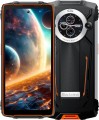 |  |
|---|---|---|
| Blackview BV8200 256 GB | Blackview BV8100 256 GB | |
| Compare prices 1 | from $255.00 | |
| TOP sellers | ||
Powerful double flashlight on the top end of the body (up to 170 lm). The maximum video recording resolution of the main camera is 2K (1440p). Operating mode with gloves. Customizable side button. | Operating mode with gloves. Powerful, customizable flashlight (170 lm). Customizable side button. RAM expansion function up to 16 GB. Graphite cooling system. The video resolution of the main camera is 1440p (2K). | |
| Operating system | Android 14 | Android 14 |
Display | ||
| Main display | 6.5 " 2400x1080 (20:9) 405 ppi IPS 120 Hz Gorilla Glass v5 | 6.5 " 2400x1080 (20:9) 405 ppi IPS 120 Hz Gorilla Glass v5 |
| Brightness | 500 nit | 440 nit |
| Display-to-body ratio | 72 % | 72 % |
| Additional (external) display |  |  |
Hardware | ||
| Processor (graphics) | Helio G100 (Mali-G57) | Helio G99 (Mali-G57) |
| CPU frequency | 2.2 GHz | 2.2 GHz |
| CPU cores | 8 | 8 |
| Processor rating AnTuTu | 19 | |
| RAM | 12 GB | 8 GB |
| RAM type | LPDDR4X | LPDDR4X |
| Memory storage | 256 GB | 256 GB |
| Storage type | UFS 2.2 | UFS 2.1 |
| Memory card slot | microSD | microSD |
| Max. memory card storage | 2048 GB | 1024 GB |
Test results | ||
| AnTuTu Benchmark Test | 431 000 points | 409 000 points |
Main camera | ||
| Lenses | 2 modules | 2 modules |
| Main lens | 50 MP f/1.88 | 50 MP |
| Ultra wide lens | 13 MP 120 ° | 13 MP 120 ° |
| Full HD (1080p) | 30 fps | 30 fps |
| 2K video recording | 30 fps | 30 fps |
| Image stabilization | optical | optical |
| Flash | | |
Front camera | ||
| Form factor | in display | in display |
| Main selfie lens | 32 MP | 32 MP |
| Full HD (1080p) | 30 fps | 30 fps |
Connections and communication | ||
| Cellular technology | 4G (LTE) CDMA | 4G (LTE) |
| SIM card type | nano-SIM | nano-SIM |
| SIM slots | SIM + SIM/microSD | SIM + SIM/microSD |
| Connectivity technology | Wi-Fi 5 (802.11ac) Bluetooth v5.1 NFC | Wi-Fi 5 (802.11ac) Bluetooth v5.0 NFC |
| Inputs & outputs | USB-C | USB-C |
Features and navigation | ||
| Features | side fingerprint scanner FM receiver torch light sensor | side fingerprint scanner gyroscope light sensor |
| Navigation | aGPS GPS module GLONASS Galileo digital compass | aGPS GPS module GLONASS Galileo digital compass |
Power supply | ||
| Battery capacity | 8800 mAh | 8800 mAh |
| Battery type | Li-ion (graphite) | Li-ion (graphite) |
| Fast charging technology | Power Delivery | Power Delivery 3.0 |
| Charger power | 45 W | 45 W |
| Fast charging time | 70% in 77 minutes | |
General | ||
| Waterproof | IP68/IP69K | IP68/IP69K |
| Shockproof | MIL-STD-810 | MIL-STD-810 |
| Bezel/back cover material | plastic | plastic |
| What's in the box? | charger | charger |
| Dimensions (HxWxD) | 174.6x81.1x16.5 mm | 175.8x81.2x18.15 mm |
| Weight | 370 g | 360 g |
| Added to E-Catalog | december 2024 | april 2024 |



Compare Blackview BV8200 and BV8100
Comparing Blackview BV8200 and Blackview BV8100, several key aspects can be highlighted. Both devices have similar sizes and protection standards of IP68/IP69K, but the BV8200 offers a more powerful configuration with 12 GB of RAM versus 8 GB in the BV8100, providing better multitasking. Both smartphones are equipped with a 50 MP main camera and a 32 MP front camera, however, the BV8200 has an additional 13 MP ultra-wide lens. In terms of performance, the BV8200, powered by the Helio G100 processor, shows results in AnTuTu of about 431,000 points, while the BV8100 with Helio G99 reaches 409,000 points. Both models have identical batteries with a capacity of 8800 mAh, but the BV8200 supports faster charging. Overall, the BV8200 looks like a more attractive choice for those who seek performance and multitasking capabilities, while the BV8100 may be suitable for users with lower demands.
Price comparison
You may be interested in
My comparisons
Blackview BV8200 often compared


Glossary
Brightness
The maximum brightness in nits provided by the smartphone display.
The brighter the display, the more readable the picture remains on it under intense ambient light (for example, outdoors on a clear sunny day). Also, high brightness is important for the correct displaying of HDR content. However, a large amount of brightness affects the cost and power consumption of the screen. Manufacturers can specify standard, maximum, and peak brightness values. At the same time, an equal sign cannot be put between the maximum and peak brightness. The first indicates the ability of the screen to produce the specified brightness over its entire area, while the peak one — in a limited area and for a short time (mainly for HDR content).
The brighter the display, the more readable the picture remains on it under intense ambient light (for example, outdoors on a clear sunny day). Also, high brightness is important for the correct displaying of HDR content. However, a large amount of brightness affects the cost and power consumption of the screen. Manufacturers can specify standard, maximum, and peak brightness values. At the same time, an equal sign cannot be put between the maximum and peak brightness. The first indicates the ability of the screen to produce the specified brightness over its entire area, while the peak one — in a limited area and for a short time (mainly for HDR content).
Additional (external) display
Second display, in addition to the main one. Features of such a display depend on a number of specs of the device itself. For example, in foldable phones, an additional screen allows you to receive notifications about received messages, incoming calls, etc., without opening the phone once again and without wearing out the rotary mechanism. And in modern smartphones, the second display can be "electronic paper"; it is used for simple tasks like reading books or mail, though it can significantly save battery power. At the same time, foldable phones are practically out of use today, and installing a second screen in a smartphone significantly complicates the design and increases its cost. Therefore, this feature is not very popular.
Processor (graphics)
The most popular nowadays are chips from Qualcomm and MediaTek, CPUs from Unisoc are slightly less common. Qualcomm has several processors of each series, namely Snapdragon 7 Gen 1, Snapdragon 7+ Gen 2, Snapdragon 7s Gen 2, Snapdragon 7 Gen 3, Snapdragon 7+ Gen 3, Snapdragon 7s Gen 4, Snapdragon 7 Gen 4, Snapdragon 8 Gen 1, Snapdragon 8+ Gen 1, Snapdragon 8 Gen 2, Snapdragon 8 Gen 3, Snapdragon 8s Gen 3, Snapdragon 8s Gen 4,Snapdragon 8 Elite. And Mediatek has a low cost series MediaTek Helio P and a line of advanced chipsets MediaTek Dimensity (Dimensity 1000, Dimensity 7000, Dimensity 8000, Dimensity 9000).
Knowing the name of the CPU model installed in the smartphone, you can find detailed dat...a on a particular CPU and evaluate its level and general capabilities. This is especially true in light of the fact that these capabilities depend not only on the number of cores and clock speed, but also on the specific nuances of the design.
The model of GPU used in the mobile phone is listed in parentheses. This module is responsible for all tasks related to graphics; accordingly, its specs directly affect the efficiency of processing a particular picture. This is especially noticeable in the example of modern 3D games. Therefore, the presence of a powerful video adapter is especially important for gaming smartphones. And knowing the model of the GPU, you can find detailed data about it and evaluate its capabilities.
Knowing the name of the CPU model installed in the smartphone, you can find detailed dat...a on a particular CPU and evaluate its level and general capabilities. This is especially true in light of the fact that these capabilities depend not only on the number of cores and clock speed, but also on the specific nuances of the design.
The model of GPU used in the mobile phone is listed in parentheses. This module is responsible for all tasks related to graphics; accordingly, its specs directly affect the efficiency of processing a particular picture. This is especially noticeable in the example of modern 3D games. Therefore, the presence of a powerful video adapter is especially important for gaming smartphones. And knowing the model of the GPU, you can find detailed data about it and evaluate its capabilities.
Processor rating AnTuTu
End-to-end processor rating (regardless of chipset manufacturer) for Android smartphones. It is based on a set of maximum performance indicators of the processor itself, the memory bus, the graphics core, etc. Processor ratings can be useful to enable comparison and easy selection of similar models.
RAM
The parameter determines the overall performance of the smartphone: the more RAM, the faster the device works and the better it copes with an abundance of tasks and / or resource-intensive applications (ceteris paribus). This is even more true in light of the fact that large amounts of "RAM" are usually combined with powerful advanced processors. However, only devices with identical operating systems can be directly compared with each other, and in the case of Android, with the same versions and editions of this OS (for more on all this, see "Operating system"). This is due to the fact that different operating systems and even different versions of the same OS can differ markedly in terms of RAM requirements. For example, iOS, thanks to good optimization for specific devices, is able to work efficiently with 3 GB of RAM. For modern versions of Android in the regular edition (not Go Edition), the mentioned 3 GB is actually the required minimum. Under such an OS, it is better to have at least 4 GB or 6 GB of RAM. In high-end devices with powerful electronic "stuffing" you can also find more impressive numbers - 8 GB or even 12 GB or more.
Storage type
The type of the phone's storage.
The specification determines, first of all, the speed of the memory, and, accordingly, the performance of the device as a whole (especially when working with large amounts of data or resource-intensive applications). Nowadays, there are two basic specifications — eMMC and UFS; each of them has several versions. In general, storages with UFS 3.1 and UFS 4.0 are the fastest and most advanced today, but they cost accordingly, and therefore are used mainly in premium smartphones. A more detailed description of these standards looks like this:
— eMMC. One of the simplest and most affordable standards for solid state memory — for example, this specification is used by most flash drives. In smartphones and other portable gadgets, this standard was generally accepted until 2016, when the introduction of UFS began; however, even now it is very popular — mainly due to its low cost and low power consumption. But the speeds of eMMC are noticeably lower than those of UFS. So, in the latest version of eMMC 5.1A (2019), the read speed is up to 400 MB/s, and the earlier and more common version of eMMC 5.1 provides up to 250 MB/s in read mode, up to 125 MB/s in sequential write mode and all only up to 7.16 MB/s with random writes (in other words, in application mode).
— UFS. A solid state drive standard designed to be a faster, more advanced successor to eMM...C. In addition to the increased data exchange speeds, the format of work has also been changed in UFS — it is fully duplex, that is, reading and writing can be performed simultaneously (whereas in eMMC these processes were performed in turn). Also, efficiency in random read and write mode has been significantly improved, which has a positive effect on the quality of work with applications. Specific data exchange rates and features of work depend on the version of UFS, nowadays you can find the following options:
The specification determines, first of all, the speed of the memory, and, accordingly, the performance of the device as a whole (especially when working with large amounts of data or resource-intensive applications). Nowadays, there are two basic specifications — eMMC and UFS; each of them has several versions. In general, storages with UFS 3.1 and UFS 4.0 are the fastest and most advanced today, but they cost accordingly, and therefore are used mainly in premium smartphones. A more detailed description of these standards looks like this:
— eMMC. One of the simplest and most affordable standards for solid state memory — for example, this specification is used by most flash drives. In smartphones and other portable gadgets, this standard was generally accepted until 2016, when the introduction of UFS began; however, even now it is very popular — mainly due to its low cost and low power consumption. But the speeds of eMMC are noticeably lower than those of UFS. So, in the latest version of eMMC 5.1A (2019), the read speed is up to 400 MB/s, and the earlier and more common version of eMMC 5.1 provides up to 250 MB/s in read mode, up to 125 MB/s in sequential write mode and all only up to 7.16 MB/s with random writes (in other words, in application mode).
— UFS. A solid state drive standard designed to be a faster, more advanced successor to eMM...C. In addition to the increased data exchange speeds, the format of work has also been changed in UFS — it is fully duplex, that is, reading and writing can be performed simultaneously (whereas in eMMC these processes were performed in turn). Also, efficiency in random read and write mode has been significantly improved, which has a positive effect on the quality of work with applications. Specific data exchange rates and features of work depend on the version of UFS, nowadays you can find the following options:
- 2.0. The earliest of the versions found in modern smartphones; was released back in 2013. Provides data transfer rates up to 1.2 GB/s, the maximum available in this version. The newer version 2.1 has the same speeds, but it is supplemented with a number of important innovations. Therefore, UFS 2.0 memory is rarely used in mobile phones.
- 2.1. The first of the versions that are widely used in smartphones; was released in 2016. In terms of speed, it does not differ from version 2.0 described above, and the main differences are in some improvements. In particular, UFS 2.1 introduced storage status indicator (“health”), the ability to remotely update the firmware, as well as a number of solutions aimed at improving overall reliability.
- 2.2. An evolution of the UFS 2.x standard introduced in Summer 2020. A key improvement is the introduction of the WriteBooster feature (originally introduced in UFS 3.1); this feature allows you to significantly increase the write speed and, accordingly, the overall performance in tasks like running applications.
- 3.0. A version released in 2018 and implemented in hardware a year later. The throughput was increased to 2.9 GB/s per two lines (1.45 GB/s per one), new versions of the M-PHY electronic protocol (physical layer) and UniPro based on it were introduced, the reliability of working with data and the temperature mode of operation of the controllers has been expanded (theoretically, it can range from -40 °С to 105 °С). UFS 3.0 is used mainly in fairly advanced smartphones, although in the future we can expect this specification to be extended to more modest models.
- 3.1. The successor to the UFS 3.0 standard, officially introduced in early 2020. It is positioned as a specification created specifically for high-performance mobile devices and aimed at increasing speed while minimizing power consumption. To do this, UFS 3.1 has a number of innovations: a non-volatile Write Booster cache to speed up writing; special DeepSleep power saving mode for relatively simple and inexpensive systems; as well as the Performance Throttling Notification feature, which allows the drive to send overheating signals to the control system. In addition, this standard may additionally provide support for the HPB extension, which improves reading speed.
- 4.0. UFS 4.0 doubled the throughput per lane (23.2 Gbps per lane) and improved energy efficiency by about 46% (compared to the previous 3.1 specification). UFS 4.0 standard memory modules provide maximum read speed up to 4200 MB/s, write speed up to 2800 MB/s. The high bandwidth makes the memory standard ideal for 5G smartphones.
Max. memory card storage
The largest volume of memory card with which the phone supports. For more information about the cards themselves, see "Memory Card Slot"; here we note that capacious cards often use advanced technologies that are not supported by all devices, and sometimes phones simply do not have enough power to process large amounts of data. Therefore, for the convenience of choosing in our catalog, the maximum supported volume is indicated.
In fact, there are cases when some devices may exceed the claimed characteristics. However, it is worth focusing on official data, because, if officially supported volume is exceeded, normal operation of the card is not guaranteed.
In fact, there are cases when some devices may exceed the claimed characteristics. However, it is worth focusing on official data, because, if officially supported volume is exceeded, normal operation of the card is not guaranteed.
Test results
The test results are specified either by a younger model in a line or a particular model, made for a better understanding performance of phone models if you compare phones against these parameters. For example, the 128 GB model has test results, and the 256 GB model has no information on the network, and in both models you will see the same value that will give an understanding of the overall performance of the device. But if the editorial office has information for each model individually, then each model will have its test results filled out, and the model with bigger RAM will have bigger values.
AnTuTu Benchmark Test
The result shown by a device when undergoing a performance test (benchmark) in AnTuTu Benchmark.
AnTuTu Benchmark is a comprehensive test designed specifically for mobile devices, primarily smartphones and tablets. It evaluates the efficiency of the processor, memory, graphics, and input/output systems, providing a clear impression of the system's capabilities. The higher the performance, the more points are awarded. Smartphones that score over 1.5M points are considered high-performance according to the AnTuTu ranking.
Like any benchmark, this test does not provide absolute precision: the same device can show different results, usually with deviations within 5-7%. These deviations depend on various factors unrelated to the system itself, such as the device's load from third-party programs and the ambient temperature during testing. Therefore, significant differences between two models can only be noted when the gap in their scores exceeds this margin of error.
AnTuTu Benchmark is a comprehensive test designed specifically for mobile devices, primarily smartphones and tablets. It evaluates the efficiency of the processor, memory, graphics, and input/output systems, providing a clear impression of the system's capabilities. The higher the performance, the more points are awarded. Smartphones that score over 1.5M points are considered high-performance according to the AnTuTu ranking.
Like any benchmark, this test does not provide absolute precision: the same device can show different results, usually with deviations within 5-7%. These deviations depend on various factors unrelated to the system itself, such as the device's load from third-party programs and the ambient temperature during testing. Therefore, significant differences between two models can only be noted when the gap in their scores exceeds this margin of error.