
Comparison Meizu M3s 16 GB vs Meizu M2 Mini 16 GB
Add to comparison | 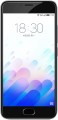 | 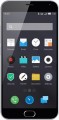 |
|---|---|---|
| Meizu M3s 16 GB | Meizu M2 Mini 16 GB | |
from $131.92 up to $134.92 | from $125.96 up to $159.04 | |
| User reviews | ||
| TOP sellers | ||
Fingerprint scanner. Metal case. This version comes with only 2 GB of RAM. One of the SIM slots is combined (SIM card or microSD). | Wi-Fi module with 2.4 GHz and 5 GHz bands. USB On The Go support. The second SIM slot is also used for a microSD card, it is not possible to use DualSIM and a memory card at the same time. | |
| Operating system | Android 5.1 | Android 5.1 |
Display | ||
| Main display | 5 " 1280х720 (16:9) 294 ppi IPS | 5 " 1280х720 (16:9) 294 ppi IPS |
| Display-to-body ratio | 70 % | 71 % |
Hardware | ||
| CPU frequency | 1.5 GHz | 1.3 GHz |
| CPU cores | 8 | 4 |
| RAM | 2 GB | 2 GB |
| Memory storage | 16 GB | 16 GB |
| Memory card slot | microSD | microSD |
| Max. memory card storage | 256 GB | 128 GB |
Test results | ||
| AnTuTu Benchmark Test | 37 000 points | 31 000 points |
Main camera | ||
| Main lens | 13 MP | 13 MP |
| Full HD (1080p) | 30 fps | 30 fps |
| Flash |  | |
Front camera | ||
| Main selfie lens | 5 MP | 5 MP |
Connections and communication | ||
| Cellular technology | 4G (LTE) | 4G (LTE) |
| SIM card type | nano-SIM | |
| SIM slots | SIM + SIM/microSD | SIM + SIM/microSD |
| Connectivity technology | Wi-Fi 4 (802.11n) Bluetooth v4.0 | Wi-Fi 4 (802.11n) Bluetooth v4.0 |
| Inputs & outputs | microUSB mini-jack (3.5 mm) | microUSB mini-jack (3.5 mm) |
Features and navigation | ||
| Features | front fingerprint scanner gyroscope light sensor | noise cancellation light sensor |
| Navigation | aGPS GPS module GLONASS digital compass | aGPS GPS module GLONASS digital compass |
Power supply | ||
| Battery capacity | 3020 mAh | 2500 mAh |
| Battery type | Li-ion (graphite) | Li-ion (graphite) |
General | ||
| Bezel/back cover material | metal/metal | plastic |
| Dimensions (HxWxD) | 141.9x69.9x8.3 mm | 140.1x68.9x8.7 mm |
| Weight | 138 g | 131 g |
| Added to E-Catalog | june 2016 | july 2015 |


Compare Meizu M3s and M2 Mini
Comparing the Meizu M3s and Meizu M2 Mini, it can be noted that both devices have similar features, such as a 5-inch screen with a resolution of 1280x720 and 2 GB of RAM. However, the M3s is equipped with a more powerful Mediatek MT6750 processor with 8 cores and an ARM Mali-T860 graphics processor, which provides better performance compared to the 4-core Mediatek MT6735 in the M2 Mini. Users note that the M3s has a higher-quality metal body and a convenient fingerprint scanner, while the M2 Mini is praised for the convenient Flyme interface and good build quality. However, the M2 Mini has drawbacks in the camera and speaker, which are also mentioned in reviews. Overall, the M3s appears to be a more modern and efficient option, but the M2 Mini may be attractive due to its price and user-friendly interface.
You may be interested in
My comparisons
Meizu M3s often compared


Glossary
Display-to-body ratio
The ratio of the screen area to the total front panel area of the phone. Simply put, this spec describes how much of the front panel is occupied by the screen; the rest is the bezels.
This indicator is given exclusively for smartphones with touch screens — it is for them that it is most relevant. The larger the percentage of the body is occupied by the screen, the thinner are the bezels, the neater the smartphone looks and the more convenient it is to work with it with one hand. As for specific numbers, the average values are 80 – 85 %, the higher values allow us to talk about a thin bezel, and more than 90 % — about a “bezel less” design.
Separately, we note that this parameter has nothing to do with the aspect ratio of the screen. The aspect ratio describes only the display itself — its proportions, the ratio between the larger and smaller side of the rectangle.
This indicator is given exclusively for smartphones with touch screens — it is for them that it is most relevant. The larger the percentage of the body is occupied by the screen, the thinner are the bezels, the neater the smartphone looks and the more convenient it is to work with it with one hand. As for specific numbers, the average values are 80 – 85 %, the higher values allow us to talk about a thin bezel, and more than 90 % — about a “bezel less” design.
Separately, we note that this parameter has nothing to do with the aspect ratio of the screen. The aspect ratio describes only the display itself — its proportions, the ratio between the larger and smaller side of the rectangle.
CPU frequency
The clock frequency of the CPU that the device is equipped with. For multi-core processors, which are standard in modern smartphones, the frequency of each individual core is implied; and if the processor has cores with different frequencies (see "Number of cores") — usually, the maximum indicator is given.
In general, high performance smartphones have high frequency of the processor. However, note that this parameter itself is not directly related to the capabilities of the CPU: many other features of the chip affect the actual performance, and often a low cost solution with a higher clock speed turns out to be less performant than an expensive one, and at the same time, presumably, more "slow" processor. In addition, the overall performance of the system directly depends on a whole set of other factors — primarily the amount of RAM. Therefore, when evaluating a smartphone, it is worth focus not so much on the frequency of the processor, but on the general specs of the system and visual indicators like the results in tests (see below).
In general, high performance smartphones have high frequency of the processor. However, note that this parameter itself is not directly related to the capabilities of the CPU: many other features of the chip affect the actual performance, and often a low cost solution with a higher clock speed turns out to be less performant than an expensive one, and at the same time, presumably, more "slow" processor. In addition, the overall performance of the system directly depends on a whole set of other factors — primarily the amount of RAM. Therefore, when evaluating a smartphone, it is worth focus not so much on the frequency of the processor, but on the general specs of the system and visual indicators like the results in tests (see below).
CPU cores
The number of cores in the processor of a mobile phone.
The core in this specific case refers to the part of the processor that executes one thread of commands. Accordingly, the presence of multiple cores allows you to work with multiple threads simultaneously, which has a positive effect on performance. At the same time multi-core CPUs are now found even in the most inexpensive modern smartphones — even chips with 8 cores are not uncommon among them, not to mention simpler quad -core and six-core solutions. And some modern processors can have up to 10 cores.
Theoretically, more cores can improve processor efficiency. However, in fact, the performance of the CPU (and the smartphone itself, eventually) depends on many additional factors. Thus the number of cores is purely a reference parameter. For example, a high-end quad-core processor may be much more performant than an inexpensive eight-core one. So you really should focus on overall level of performance and the results shown in various tests (see below)
It is also worth mentioning that individual cores of mobile CPUs may vary in clock speed, performance and power consumption. The classic version is 8 cores working according to the “4 + 4” scheme: 4 relatively “weak” and power efficient cores are responsible for simple tasks like Internet surfing, and ano...ther 4 – more powerful ones - turn on when high performance is required (for example, in games with advanced graphics). This scheme of work allows you to achieve the optimal balance between performance and energy efficiency of CPU.
The core in this specific case refers to the part of the processor that executes one thread of commands. Accordingly, the presence of multiple cores allows you to work with multiple threads simultaneously, which has a positive effect on performance. At the same time multi-core CPUs are now found even in the most inexpensive modern smartphones — even chips with 8 cores are not uncommon among them, not to mention simpler quad -core and six-core solutions. And some modern processors can have up to 10 cores.
Theoretically, more cores can improve processor efficiency. However, in fact, the performance of the CPU (and the smartphone itself, eventually) depends on many additional factors. Thus the number of cores is purely a reference parameter. For example, a high-end quad-core processor may be much more performant than an inexpensive eight-core one. So you really should focus on overall level of performance and the results shown in various tests (see below)
It is also worth mentioning that individual cores of mobile CPUs may vary in clock speed, performance and power consumption. The classic version is 8 cores working according to the “4 + 4” scheme: 4 relatively “weak” and power efficient cores are responsible for simple tasks like Internet surfing, and ano...ther 4 – more powerful ones - turn on when high performance is required (for example, in games with advanced graphics). This scheme of work allows you to achieve the optimal balance between performance and energy efficiency of CPU.
Max. memory card storage
The largest volume of memory card with which the phone supports. For more information about the cards themselves, see "Memory Card Slot"; here we note that capacious cards often use advanced technologies that are not supported by all devices, and sometimes phones simply do not have enough power to process large amounts of data. Therefore, for the convenience of choosing in our catalog, the maximum supported volume is indicated.
In fact, there are cases when some devices may exceed the claimed characteristics. However, it is worth focusing on official data, because, if officially supported volume is exceeded, normal operation of the card is not guaranteed.
In fact, there are cases when some devices may exceed the claimed characteristics. However, it is worth focusing on official data, because, if officially supported volume is exceeded, normal operation of the card is not guaranteed.
Test results
The test results are specified either by a younger model in a line or a particular model, made for a better understanding performance of phone models if you compare phones against these parameters. For example, the 128 GB model has test results, and the 256 GB model has no information on the network, and in both models you will see the same value that will give an understanding of the overall performance of the device. But if the editorial office has information for each model individually, then each model will have its test results filled out, and the model with bigger RAM will have bigger values.
AnTuTu Benchmark Test
The result shown by a device when undergoing a performance test (benchmark) in AnTuTu Benchmark.
AnTuTu Benchmark is a comprehensive test designed specifically for mobile devices, primarily smartphones and tablets. It evaluates the efficiency of the processor, memory, graphics, and input/output systems, providing a clear impression of the system's capabilities. The higher the performance, the more points are awarded. Smartphones that score over 1.5M points are considered high-performance according to the AnTuTu ranking.
Like any benchmark, this test does not provide absolute precision: the same device can show different results, usually with deviations within 5-7%. These deviations depend on various factors unrelated to the system itself, such as the device's load from third-party programs and the ambient temperature during testing. Therefore, significant differences between two models can only be noted when the gap in their scores exceeds this margin of error.
AnTuTu Benchmark is a comprehensive test designed specifically for mobile devices, primarily smartphones and tablets. It evaluates the efficiency of the processor, memory, graphics, and input/output systems, providing a clear impression of the system's capabilities. The higher the performance, the more points are awarded. Smartphones that score over 1.5M points are considered high-performance according to the AnTuTu ranking.
Like any benchmark, this test does not provide absolute precision: the same device can show different results, usually with deviations within 5-7%. These deviations depend on various factors unrelated to the system itself, such as the device's load from third-party programs and the ambient temperature during testing. Therefore, significant differences between two models can only be noted when the gap in their scores exceeds this margin of error.
SIM card type
The type of SIM card used in the mobile phone. The term SIM here means all types of cards for identification in mobile networks, including 3G networks, CDMA, etc. (although formally such cards may have other names). The type of such a card is primarily described by its form factor. Here are the most common options:
— micro SIM. The largest type of sim cards widely used in modern devices: its' size is 15x12 mm. It was introduced back in 2010, nowadays it is being replaced by more compact and advanced nano-SIM and eSIM. Keep in mind that a microSIM card can be made by simply cutting a larger mini-SIM to the dimensions mentioned above. However this is associated with a certain risk and requires accuracy, so it is better to contact your mobile carrier to replace the SIM card with a suitable one.
— Nano-SIM. The smallest form factor of classic (replaceable) SIM-cards is 12x9 mm. In such cards the frames are cut off almost to the very chip. This standard appeared back in 2012, but it is still extremely common. Like microSIM, a card for a slot of this format can be made by cutting a larger SIM card, but this requires extreme accuracy and is not recommended.
— e-SIM. This type of SIM card is an electronic module that is built directly into the device and cannot be replaced. To authorize in the network of a mobile carrier, you need to make the appropriate settings in the eSIM. Those m...odules are able to save several sets of settings at once, which makes it easy to switch between different carriers — no need to bother with the physical replacement of the SIM card, just change the profile in the settings. Another advantage of such modules is compactness. However, before buying a phone with an eSIM, you should clarify whether this technology is supported by your mobile carrier — even nowadays, not every network is compatible with such modules.
— nano+eSIM. An option found in smartphones with two SIM cards. The built-in eSIM module in such a device is complemented by a slot for a replaceable nanoSIM card. The features of each of these card types are detailed above. It is convenient to keep the main phone number (s) on eSIM, and use replacement cards for temporary numbers. Such scenario may come in handy if you travel abroad a lot — you can install cards from local carriers in the traditional nanoSIM slot.
— micro SIM. The largest type of sim cards widely used in modern devices: its' size is 15x12 mm. It was introduced back in 2010, nowadays it is being replaced by more compact and advanced nano-SIM and eSIM. Keep in mind that a microSIM card can be made by simply cutting a larger mini-SIM to the dimensions mentioned above. However this is associated with a certain risk and requires accuracy, so it is better to contact your mobile carrier to replace the SIM card with a suitable one.
— Nano-SIM. The smallest form factor of classic (replaceable) SIM-cards is 12x9 mm. In such cards the frames are cut off almost to the very chip. This standard appeared back in 2012, but it is still extremely common. Like microSIM, a card for a slot of this format can be made by cutting a larger SIM card, but this requires extreme accuracy and is not recommended.
— e-SIM. This type of SIM card is an electronic module that is built directly into the device and cannot be replaced. To authorize in the network of a mobile carrier, you need to make the appropriate settings in the eSIM. Those m...odules are able to save several sets of settings at once, which makes it easy to switch between different carriers — no need to bother with the physical replacement of the SIM card, just change the profile in the settings. Another advantage of such modules is compactness. However, before buying a phone with an eSIM, you should clarify whether this technology is supported by your mobile carrier — even nowadays, not every network is compatible with such modules.
— nano+eSIM. An option found in smartphones with two SIM cards. The built-in eSIM module in such a device is complemented by a slot for a replaceable nanoSIM card. The features of each of these card types are detailed above. It is convenient to keep the main phone number (s) on eSIM, and use replacement cards for temporary numbers. Such scenario may come in handy if you travel abroad a lot — you can install cards from local carriers in the traditional nanoSIM slot.
Features
Additional features and capabilities of the device.
In modern mobile phones (especially smartphones) a very extensive amount of additional features can be provided. These can be both already familiar features, many of which are directly related to the original purpose of the device, as well as fairly new and/or unusual ones. The first category includes an emergency call button(often found on phones for the elderly), noise cancellation, FM receiver, notification light and a light sensor. The second category includes a face and fingerprint scanner (the latter can be located on the back cover, side panel, front and even right under the screen), gyroscope, advanced full-fledged flashlight, stereo sound, 3D surround sound, Hi-Res Audio and even such exotics as a barometer. Here is a more detailed description of each of these options:
— 3D face scanner. A special...technology for recognizing the user's face — not just by photographing, but by building a three-dimensional model of the face based on data from a special module on the front panel. This technology is constantly being improved, nowadays it is able to take into account the change of hairstyles and facial hair, the presence of glasses, makeup, etc. At the same time, the recognition of twins and children's faces still remains weak points (they have fewer individual features than adults ). The main use of a face scanner is authentication when unlocking a smartphone, entering applications, making payments, etc. At the same time, other, more original use cases are possible. For example, in some applications, the face scanner reads the user's facial expressions, and then this facial expression is repeated by an emoji on the phone screen.
— Fingerprint scanner. Fingerprint reader. It is mainly used for user authorization - for example, when unlocking the device, entering certain applications or accounts, confirming payments, etc. As for placement options, fingerprint scanners are increasingly moving from the back cover of the device to the surface of the side power / unlock button - to You can touch the sensor on the side with your thumb without releasing the smartphone from your hands and practically without changing your grip. Some time ago, sensors on the front of the case were quite popular - in particular, thanks to Apple, which was the first to tightly implement fingerprint recognition in its gadgets. However, such placement inevitably increases the size of the bottom frame, so the front fingerprint scanner is rare in modern smartphones. A good alternative to it is scanners right on the screen (more precisely, under the display matrix), which do not take up extra space on the front panel.
— Stereo sound. The ability to play full stereo sound through your phone's own speakers, without external audio devices. There must be at least two speakers for this task. This complicates the design and increases its cost, but it has a positive effect on the sound quality: the sound is more expressive and detailed than when using a single speaker, it has a volume effect, as well as a higher volume.
– 3D surround sound. The mechanics of spatial surround sound with localization of sound sources in three-dimensional space allows you to deeply immerse yourself in the atmosphere of films, enjoy listening to audio tracks, or completely immerse yourself in mobile gameplay. Algorithms for implementing 3D sound in smartphones differ in terms of software and hardware support, but they are all aimed at achieving the effect of realistic sound stage. Note that support for 3D surround sound can mean both commonly used technologies such as Dolby Atmos or DTS:X Ultra, as well as proprietary solutions from individual audio brands that have a hand in the sound subsystem of a mobile device (AKG, JBL, Harman, Huawei / Honor Histen, etc.).
– Hi-Res Audio. Mobile device support for high-resolution audio Hi-Res Audio - a digital signal with parameters from 96 kHz / 24 bits. Audio tracks in this format sound as close as possible to the original ideas of the authors of the compositions. The result is a sound that is as close as possible to what was recorded in the studio.
— FM receiver. Built-in module for receiving radio stations broadcasting in the FM band. Some devices also support other bands, but FM is the most popular nowadays (due to the ability to transmit stereo sound), it is in it that music radio stations usually broadcast. Note that some devices for reliable reception may require the connection of wired headphones — their cable plays the role of an external antenna.
— Notification indicator. Physically separate light beacon, pulsating or being constantly lighted up in response to incoming notifications of missed calls and received messages (including the ones from instant messengers and social network clients). Also, the indicator light usually signals a low remaining battery level and lights up during the battery recharging. The implementation of the notification indicator can be different: for some phones it is single-colour, for others it has colour coding of signals, flexibly adjustable for certain events through the settings menu. The light beacon allows you to visually comprehend the presence of incoming notifications without having to turn on the smartphone screen.
— Emergency call button. A separate button designed for use in critical situations. The specific features of such a button may be different, depending on the model: sending “alarming” SMS to selected numbers, automatically receiving calls from these numbers or calling them in turn, turning on the siren, etc. Anyway, the “emergency” button is usually clearly visible, and its presence is especially useful if the phone is used by an elderly person (in fact, in specialized devices designed for elderly, this button is almost mandatory).
— Noise suppression. An electronic filter that cleans the user's voice from extraneous noise (sounds of the street, the rumble of the wind in the microphone grille, etc.). Thus, the person at the other end of the line hears only the voice, with virtually no extra sounds. Of course, no noise reduction system is perfect; however, in most cases, this feature significantly improves the quality of the speech transmitted by the phone to the other person.
— Gyroscope. A device that tracks the rotation of a mobile phone in space. Modern gyroscopes, usually, work on all three axes and are able to recognize both the angle and the rate of turn; in addition, this feature almost necessarily means the presence of an accelerometer, which allows (among other things) to detect tremors and sharp movements of the device.
— Full-fledged flashlight. The presence of an advanced flashlight in the phone — more powerful than the usual one. The specific design and capabilities of such a flashlight may be different. So, in some devices, a separate LED (or a set of LEDs) is provided on the upper end, and this light source is used only as a flashlight. In others (mainly smartphones), we are talking about a special design of the flash: it consists of several LEDs, and only a part of them is usually used to illuminate when shooting, and all at once to work in flashlight mode. And the additional features of such a light source may include a laser pointer, beam focus, brightness control, etc. Anyway, most models with this feature are rugged devices with increased resistance to dust, moisture and shock (however, there are exceptions).
— Light sensor. A sensor that monitors the level of ambient light. It is mainly used to automatically adjust the brightness of the screen: in bright ambient light, it increases so that the image remains visible, and in twilight and darkness it decreases, which saves battery power and reduces eye fatigue.
— Barometer. Sensor for measuring atmospheric pressure. By itself, the barometer only determines this pressure at the current time, but the methods of using such data may be different, depending on the software installed on the phone. For example, some navigation applications can determine the elevation difference between individual points on the ground by the difference in atmospheric pressure at these points; and in weather programs, barometer data can improve the accuracy of weather forecasts. Also, this feature will be useful for weather-sensitive people: it signals a change in the weather, allowing you to more accurately determine the cause of ailments and take measures to eliminate them.
In modern mobile phones (especially smartphones) a very extensive amount of additional features can be provided. These can be both already familiar features, many of which are directly related to the original purpose of the device, as well as fairly new and/or unusual ones. The first category includes an emergency call button(often found on phones for the elderly), noise cancellation, FM receiver, notification light and a light sensor. The second category includes a face and fingerprint scanner (the latter can be located on the back cover, side panel, front and even right under the screen), gyroscope, advanced full-fledged flashlight, stereo sound, 3D surround sound, Hi-Res Audio and even such exotics as a barometer. Here is a more detailed description of each of these options:
— 3D face scanner. A special...technology for recognizing the user's face — not just by photographing, but by building a three-dimensional model of the face based on data from a special module on the front panel. This technology is constantly being improved, nowadays it is able to take into account the change of hairstyles and facial hair, the presence of glasses, makeup, etc. At the same time, the recognition of twins and children's faces still remains weak points (they have fewer individual features than adults ). The main use of a face scanner is authentication when unlocking a smartphone, entering applications, making payments, etc. At the same time, other, more original use cases are possible. For example, in some applications, the face scanner reads the user's facial expressions, and then this facial expression is repeated by an emoji on the phone screen.
— Fingerprint scanner. Fingerprint reader. It is mainly used for user authorization - for example, when unlocking the device, entering certain applications or accounts, confirming payments, etc. As for placement options, fingerprint scanners are increasingly moving from the back cover of the device to the surface of the side power / unlock button - to You can touch the sensor on the side with your thumb without releasing the smartphone from your hands and practically without changing your grip. Some time ago, sensors on the front of the case were quite popular - in particular, thanks to Apple, which was the first to tightly implement fingerprint recognition in its gadgets. However, such placement inevitably increases the size of the bottom frame, so the front fingerprint scanner is rare in modern smartphones. A good alternative to it is scanners right on the screen (more precisely, under the display matrix), which do not take up extra space on the front panel.
— Stereo sound. The ability to play full stereo sound through your phone's own speakers, without external audio devices. There must be at least two speakers for this task. This complicates the design and increases its cost, but it has a positive effect on the sound quality: the sound is more expressive and detailed than when using a single speaker, it has a volume effect, as well as a higher volume.
– 3D surround sound. The mechanics of spatial surround sound with localization of sound sources in three-dimensional space allows you to deeply immerse yourself in the atmosphere of films, enjoy listening to audio tracks, or completely immerse yourself in mobile gameplay. Algorithms for implementing 3D sound in smartphones differ in terms of software and hardware support, but they are all aimed at achieving the effect of realistic sound stage. Note that support for 3D surround sound can mean both commonly used technologies such as Dolby Atmos or DTS:X Ultra, as well as proprietary solutions from individual audio brands that have a hand in the sound subsystem of a mobile device (AKG, JBL, Harman, Huawei / Honor Histen, etc.).
– Hi-Res Audio. Mobile device support for high-resolution audio Hi-Res Audio - a digital signal with parameters from 96 kHz / 24 bits. Audio tracks in this format sound as close as possible to the original ideas of the authors of the compositions. The result is a sound that is as close as possible to what was recorded in the studio.
— FM receiver. Built-in module for receiving radio stations broadcasting in the FM band. Some devices also support other bands, but FM is the most popular nowadays (due to the ability to transmit stereo sound), it is in it that music radio stations usually broadcast. Note that some devices for reliable reception may require the connection of wired headphones — their cable plays the role of an external antenna.
— Notification indicator. Physically separate light beacon, pulsating or being constantly lighted up in response to incoming notifications of missed calls and received messages (including the ones from instant messengers and social network clients). Also, the indicator light usually signals a low remaining battery level and lights up during the battery recharging. The implementation of the notification indicator can be different: for some phones it is single-colour, for others it has colour coding of signals, flexibly adjustable for certain events through the settings menu. The light beacon allows you to visually comprehend the presence of incoming notifications without having to turn on the smartphone screen.
— Emergency call button. A separate button designed for use in critical situations. The specific features of such a button may be different, depending on the model: sending “alarming” SMS to selected numbers, automatically receiving calls from these numbers or calling them in turn, turning on the siren, etc. Anyway, the “emergency” button is usually clearly visible, and its presence is especially useful if the phone is used by an elderly person (in fact, in specialized devices designed for elderly, this button is almost mandatory).
— Noise suppression. An electronic filter that cleans the user's voice from extraneous noise (sounds of the street, the rumble of the wind in the microphone grille, etc.). Thus, the person at the other end of the line hears only the voice, with virtually no extra sounds. Of course, no noise reduction system is perfect; however, in most cases, this feature significantly improves the quality of the speech transmitted by the phone to the other person.
— Gyroscope. A device that tracks the rotation of a mobile phone in space. Modern gyroscopes, usually, work on all three axes and are able to recognize both the angle and the rate of turn; in addition, this feature almost necessarily means the presence of an accelerometer, which allows (among other things) to detect tremors and sharp movements of the device.
— Full-fledged flashlight. The presence of an advanced flashlight in the phone — more powerful than the usual one. The specific design and capabilities of such a flashlight may be different. So, in some devices, a separate LED (or a set of LEDs) is provided on the upper end, and this light source is used only as a flashlight. In others (mainly smartphones), we are talking about a special design of the flash: it consists of several LEDs, and only a part of them is usually used to illuminate when shooting, and all at once to work in flashlight mode. And the additional features of such a light source may include a laser pointer, beam focus, brightness control, etc. Anyway, most models with this feature are rugged devices with increased resistance to dust, moisture and shock (however, there are exceptions).
— Light sensor. A sensor that monitors the level of ambient light. It is mainly used to automatically adjust the brightness of the screen: in bright ambient light, it increases so that the image remains visible, and in twilight and darkness it decreases, which saves battery power and reduces eye fatigue.
— Barometer. Sensor for measuring atmospheric pressure. By itself, the barometer only determines this pressure at the current time, but the methods of using such data may be different, depending on the software installed on the phone. For example, some navigation applications can determine the elevation difference between individual points on the ground by the difference in atmospheric pressure at these points; and in weather programs, barometer data can improve the accuracy of weather forecasts. Also, this feature will be useful for weather-sensitive people: it signals a change in the weather, allowing you to more accurately determine the cause of ailments and take measures to eliminate them.
Battery capacity
The capacity of the battery that the mobile phone is equipped with.
Theoretically, the high capacity of the battery allows the device to work longer on one charge. However, actual battery life time will also depend on the power consumption of the gadget — and it is determined by the hardware specs, the operating system, special solutions provided in the design, etc. So in fact, phones with capacious batteries in general have "long battery life”, however, the actual battery life can differ markedly even for two models with similar specifisations. Therefore, for an accurate assessment, it is better to focus not on the battery capacity, but on the operating time in different modes directly claimed by the manufacturer (see below).
Theoretically, the high capacity of the battery allows the device to work longer on one charge. However, actual battery life time will also depend on the power consumption of the gadget — and it is determined by the hardware specs, the operating system, special solutions provided in the design, etc. So in fact, phones with capacious batteries in general have "long battery life”, however, the actual battery life can differ markedly even for two models with similar specifisations. Therefore, for an accurate assessment, it is better to focus not on the battery capacity, but on the operating time in different modes directly claimed by the manufacturer (see below).