Xiaomi Redmi Note 7 Pro 128 GB
 |


the upgraded version of the pioneering model from the Redmi brand, sent on its independent journey by Xiaomi at the dawn of 2019. The smartphone mimics the form factor of the classic "seven" in the Note series, resembling a glass "sandwich" with a dominant screen on the front panel. The gadget's display features a 19.5:9 ratio, resulting in a vertically stretched resolution of 2340x1080 pixels.
Keeping up with popular trends in smartphone construction, the screen of the Xiaomi Redmi Note 7 Pro 128GB has a teardrop-shaped notch for the 13 MP selfie camera. This camera, by the way, is part of the AI Face Unlock facial recognition system. The device is also equipped with a more powerful chipset (11-nanometer Snapdragon 675 instead of the 660 in the standard Redmi Note 7), as well as a 48 MP Sony IMX586 image sensor as the main one on the rear panel. It is assisted by a 5 MP sensor to create a bokeh effect. The device includes an IR port, a classic fingerprint scanner, a USB-C port for connectivity and fast charging of the 4000 mAh battery. As expected, there is no NFC chip.
|
| |||||||||||||||||||||||||||||||||||||||||||||||||||||||||||||||||||||||||||||||||||||||||||||||||||||||||||||||||||||||||||||||


Always clarify the specifications and configuration of the product with the online store manager before purchasing.
Catalog Xiaomi 2026 - new arrivals, bestsellers, and the most relevant models Xiaomi.































1 0 3 2 |
In a word, I recommend that before purchasing, this dialer is worth its money 100% The first thing is that regardless of the fact that this model has been out for more than 4+ years, it still performs as needed, and if something isn't handled, the phone automatically resets the app, meaning it doesn't freeze, and you don't need to reboot it. The multifunctionality of the power button, the ability to install additional software, system openness, and control of other devices like a TV or air conditioner. App cloning, for example, I used up to 3 Viber apps on it without any issues. The possibility to customize the home screen, icons, hide banking apps, files, photos, etc. The practicality of the phone book, the ability to keep call logs (mine hasn't been deleted for 4 years), and the ability to record calls. The battery lasts quite sufficiently. In addition to advantages, there are also disadvantages, which in principle are not significant, but at least for me, they interfered with work: - when answering a call and putting it to the ear, for some reason the alarm would open, - demanding apps heat up the phone and, as a result, cause fast battery drain, - the camera is of poor quality, there was even a moment when it did not save a photo, - not setting the alarm adequately, it might not go off, - unclear data synchronization with multiple Google accounts, - notes do not function properly, - the recorder is configured unclearly.  Igor: use Xiaomi Redmi Note 7 Pro 128GB more than year Igor: use Xiaomi Redmi Note 7 Pro 128GB more than year |
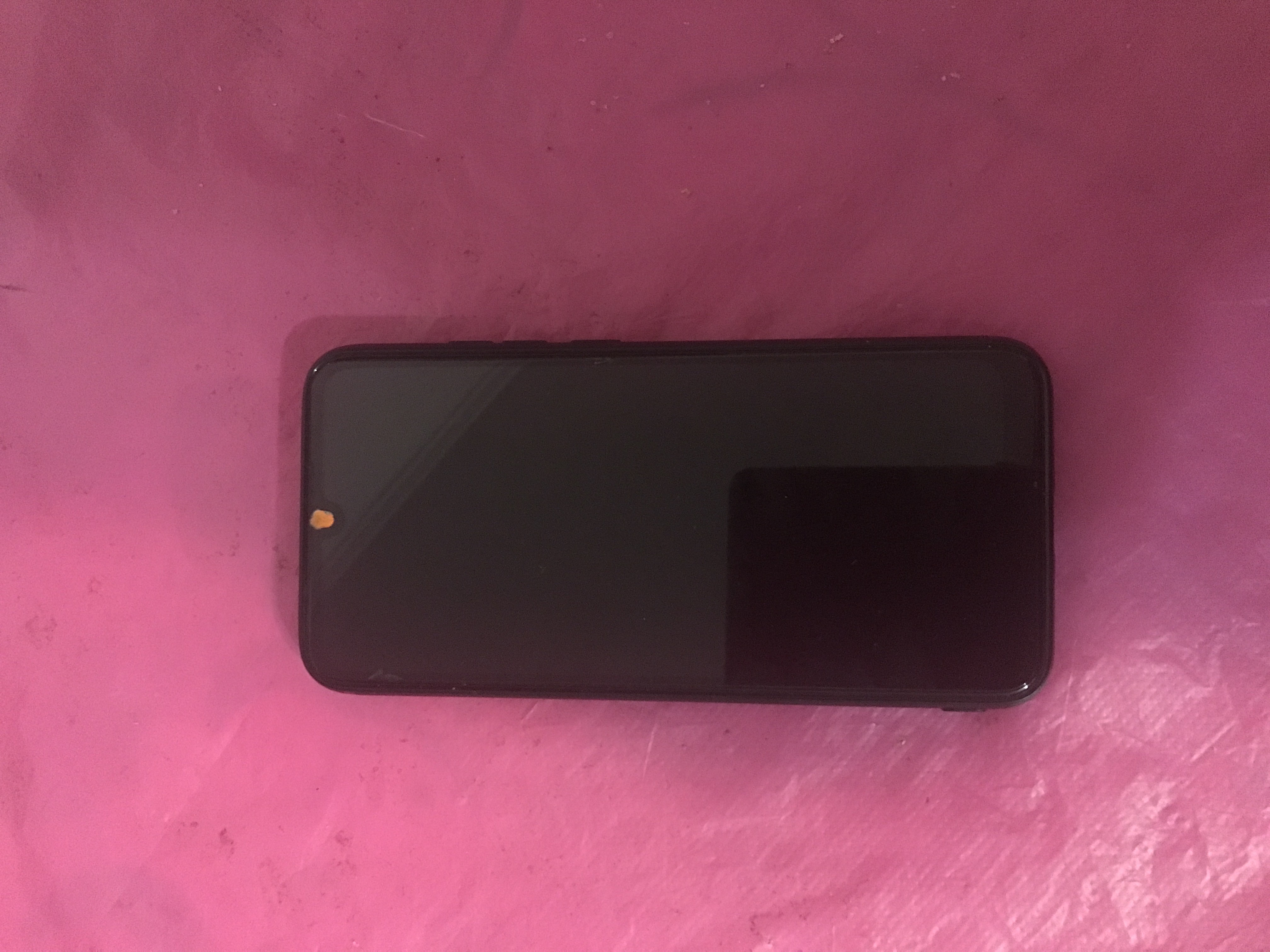
Super cheap Mi9T with a notch and without NFC, stabilization, and so on below. If you have the option to get a used Mi9T instead of this smartphone - go for the Mi9T! The camera module is the same IMX586, but at least the lenses are decent, and it has stabilization in 4K (in Google Camera and third-party apps) (I'm attaching photo samples on rn7pro). 1) Camera - The IMX586 from Sony is much better than GM1/GM2 from Samsung! Photos with Google Camera Burial 9.2 (with settings, of course) are beyond praise! 2) Smartphone thickness - It's surprising, but during the era of thick Redmi Note 8T / Mi Note 10 and other "chunky" phones, this smartphone is as thin as the iPhone 8 Plus (excluding the camera and the protective plastic screen protrusion). 3) Front camera - I haven't found better in the budget range. With the same Google Camera Burial 9.2 (additional white balance settings from Pixel 4 + Sabre activation), I take shots comparable to my second Pixel! (though it's still inferior) 4) The largest number of custom firmware of all Xiaomi (the only comparable number of firmwares is for Redmi Note 4/4X). 1) Lack of NFC, and it's not about the price of the device, but rather about the division of brands into budget and flagship categories, so we were deprived of NFC to show that we're using a budget model. 2) Frame material - plastic. It's impossible to use the phone without a case or some other form of protection. 3) COMPLETE lack of stabilization in video. Stabilization doesn't work above 1080p30fps! 4K30fps is very high-quality on this smartphone (especially if you set the bitrate to 100 instead of 35Mbps), but rolling shutter and lack of stabilization completely kill the potential! 4) Battery life! A lousy 4 hours of screen time on MIUI 12 and 5.5 hours on Pixel Experience Q(10). The battery is worn to a state of 96%, so it's definitely not the battery!  realisthw: use Xiaomi Redmi Note 7 Pro 128GB more than year realisthw: use Xiaomi Redmi Note 7 Pro 128GB more than year |




The phone is good, I specifically got the Pro since it has 6 GB, thinking that might not be enough, but usually 2.8-3.5 is used. I don't really play games, but whatever I launched ran smoothly. A notable feature is choosing the right screen protector glass; you need to pick one with a cutout for the front camera, otherwise dust and debris accumulate between the glass and the camera. Dead pixels appeared twice; one went away, the other is still persistent. Price, quality Protruding camera that gets scratched (a protective glass is a must for it) If you set the preferred network type to 4G, some people can't reach you immediately; if you set it to 3G, the problem is solved. Spectre 944: use Xiaomi Redmi Note 7 Pro 128GB more than year |
Top performance in its class
According to the always useful, if not always unambiguous AnTuTu benchmark measurements, Redmi Note 7 Pro is in the top 3 most performant smartphones under $200. According to the results of the tests, he scored an impressive 215K points for this class, quite a bit behind other robust men in the face of Redmi Note 8 Pro and Realme 5 Pro. At the same time, both leaders will cost $ 30 more than Redmi Note 7 Pro.
6 GB RAM and 128 GB storage
As always in such cases, well-chosen components and well-optimized software are to be thanked for good results. In the first case, we are talking about a bunch of eight-core Snapdragon 675, Adreno 612 graphics core and as many as 6 GB of RAM. The same amount was in the almost flagship OnePlus 6T, released at the end of 2018. Ah, how quickly time has flown by. Throw in 128GB of storage with memory card slots and you've got the power of a mid-range laptop. Fantastic for a "pipe" for $200.
Great dual camera
Among other features of the smartphone, we highlight a high-quality IPS display with a diagonal of 6.3" at a resolution of 2340x1080. In terms of design, a glass lid was added in place of the plastic lid. Traditionally, there is a fast charge. Well, the camera is a cut above all that we have seen in smartphones under $200. The Sony IMX586 sensor tries to jump above its head when shooting 48 MP, but if you drop the resolution to an adequate 12 MP, then we get a picture of quite a flagship level. Rather, the younger flagship. Separately, we note intelligent image processing software that performs a very large amount of work, fights noise efficiently, gently smoothes areas with uniform brightness and colour, and slightly emphasizes the contours of objects.
Without NFC
The Achilles' heel of the smartphone, as fans of the brand have probably guessed, was the sawn-out NFC module. It is clear that this is not particularly necessary for the Chinese market, but why not add it for Europe? Fortunately, Chinese sales indicated that this smartphone would become a hit, and Xioami itself has repeatedly pulled off the trick of adding “tubes” for the Western market. The sound quality in the speakers is traditionally not very good either. Actually, these are all cons. If NFC is more important to you than performance, then we recommend paying attention to the excellent Samsung Galaxy A30 and Huawei P Smart 2019. If not, then for its $190 Redmi Note 7 Pro is akin to a gift.