Laptop Alternative: The Best Tablets for Work

We independently test the products and technologies that we recommend.
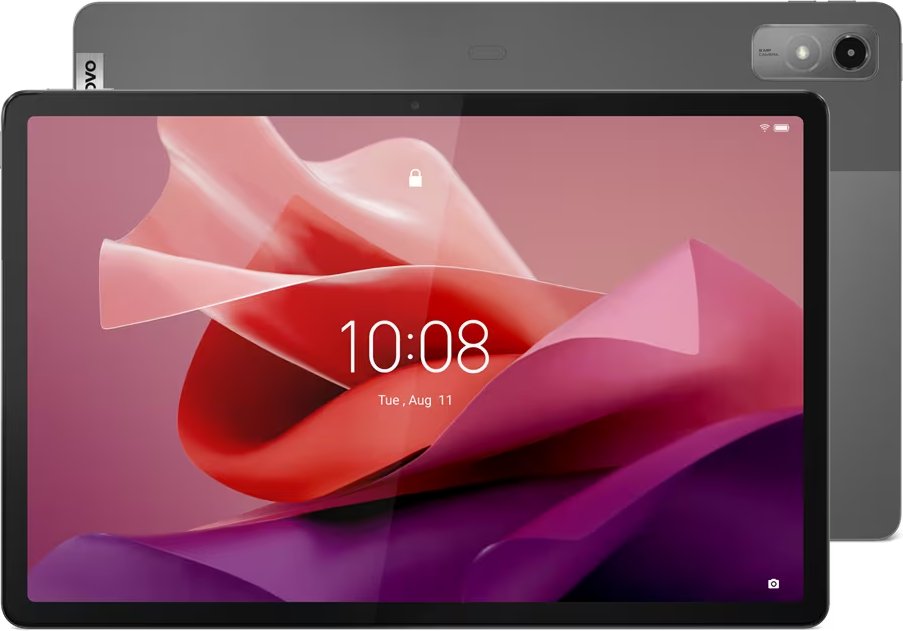
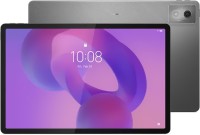
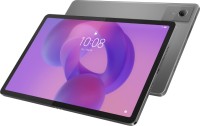
The large Lenovo Tab P12 tablet allows combining work, study, and leisure in a single package. The model was released in mid-summer 2023 and is positioned in the solid mid-range segment of tablet computers.
The front panel of the device is covered by a 12.7-inch LTPS screen with a coverage of about 96% of the DCI-P3 gamut. The image on the gadget's display is transmitted in a resolution of 2944x1840 pixels, but its refresh rate is ordinary – 60 Hz. This is unexpectedly disappointing as panels with a higher refresh rate have long become the industry standard. However, the model's screen supports working with the included Lenovo Tab Pen Plus stylus, which recognizes 4096 levels of pressure. The stylus is usually supplied with the device as standard, which cannot be said about the keyboard – it will need to be purchased separately in any case.
Lenovo Tab P12 is unlikely to be a performance leader, but it definitely doesn't lag behind. At the helm of the tablet is a balanced "iron" combination of the eight-core MediaTek Dimensity 7050 chipset and 8 GB of LPDDR4X RAM. The internal storage of the device is 128 GB, plus the tablet has an expandable memory slot for a microSD card (up to 1 TB included).
Around the perimeter of the device's body is spread a quartet of stereo speakers from JBL with Dolby Atmos. The model's extras include Wi-Fi 6 and a side fingerprint scanner. Its autonomous operation is supported by a 10200 mAh battery with slightly accelerated wired charging power of 20 W. Additionally, the model features a pre-installed software business mode – in it, the tablet changes orientation to landscape, launches windowed mode, and imitates a laptop (assuming a connection to an external keyboard and mouse).

| Samsung.com | $699.99 | To Store |
| BestBuy.com | $699.99 | To Store |
| Newegg.com | $489.99 | To Store |
| BestBuy.com | $733.38 | To Store |
| BestBuy.com | $755.99 | To Store |
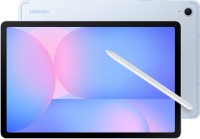
The original tablets of the Samsung Galaxy Tab S family have excessive power for basic tasks. For work tasks, web surfing, and entertainment, the more accessible device Tab S10 FE Plus from the Fan Edition league will suffice.
The model features a large PLS screen measuring 13.1 inches diagonally and a high resolution of 2880x1800 pixels. The display's refresh rate is increased to 90 Hz, and in addition, the panel is suitable for drawing with the proprietary S Pen stylus, which is included as standard. A detachable keyboard can be purchased separately – with it, the device turns into a semblance of a compact laptop. Along with the keyboard, the tablet interface is automatically switched to desktop mode DeX.
The tablet is equipped with the proprietary Exynos 1580 processor, borrowed from the mid-range smartphone Samsung Galaxy A56. The performance is sufficient for any everyday tasks. The tablet can even handle games on medium graphical settings. The base configuration of the model has 8 GB of RAM and disk storage of 128 GB. The device's software platform is enriched with Galaxy AI functions.
Samsung Galaxy Tab S10 FE Plus is equipped with AKG stereo speakers, a 13-megapixel rear camera with autofocus, and a 12 MP front camera, a large 10,900 mAh battery with 45-watt wired charging. The tablet's body thickness is exactly 6 mm, and it's reliably protected against dust and water according to the IP68 standard.

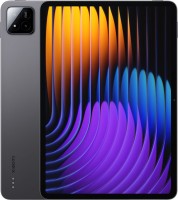
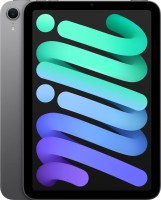
Xiaomi has long moved beyond the budget segment and set its sights on competing with top tablet manufacturers. The Xiaomi Pad 6S Pro is just intended to compete with such "heavyweights" as Apple iPad Pro and Samsung Galaxy Tab S9 Plus, while it costs less than its rivals.
It seems Xiaomi decided to add everything that can be used in tablets here. There's a large screen, a total of 6 speakers with Dolby Atmos support, powerful internal components, and a capacious battery with fast charging. To go in order, the model looks quite good, without unnecessary design elements, but with a slightly protruding camera block. The tablet is quite thin (about 6.3 mm) and weighs 590 g. The sturdy metal case easily withstands active daily use. The large 12.4-inch screen has the following characteristics: resolution of 3048x2032 pixels, pixel density of 295 PPI, screen refresh rate of 144 Hz, HDR10 and Dolby Vision support. In practice, this means high image quality, good color reproduction, and comfortable work both indoors and outdoors in a sunny day, as well as smooth scrolling. TÜV Rheinland certification indicates that the gadget is suitable for reading and safe for the eyes.
The presence of the flagship Snapdragon 8 Gen 2 processor and Adreno 740 graphics means the tablet is designed for any tasks: work, study, watching videos, and gaming (and at maximum settings). These are confirmed by high results in performance tests in various benchmarks. There's enough memory for ordinary use and content work – 8 GB RAM and 256 GB ROM in the basic version. The device operates on the proprietary HyperOS operating system based on Android. The 10000 mAh battery supports 120 W fast charging, which many modern smartphones would envy. One charge is enough for a whole day of active work, and it takes just 35 minutes for a full recharge.
Usually, a camera in a tablet is not the most necessary and important thing. But Xiaomi didn't compromise and added a dual main camera (50 MP and 2 MP depth sensor) and a 32 MP front camera with an interesting FocusFrame function. The front camera tracks the user during video calls and keeps them in the center even when they move around the room. Overall, the cameras are pretty good, but in this case, not too necessary: shooting outdoors with a large tablet is inconvenient, but for calls and quality document shots, something simpler would suffice.
The manufacturer's generosity doesn't end with cameras, so Xiaomi Pad 6S Pro has almost everything needed for convenient work: fingerprint scanner, Wi-Fi 7, Bluetooth 5.3, USB-C port, compatibility with proprietary stylus, wireless keyboard, and a case stand. There's even NFC, but not for contactless payment, but for quick synchronization with a smartphone. It lacks SIM card slots, a memory card, and a 3.5mm audio jack, but these are already quite rare in modern tablets.









| Clove-technology.com | $760.00 | To Store |
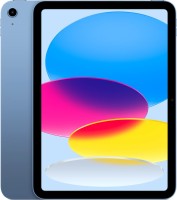
Microsoft Surface Go 4 is a model from the business segment of 2-in-1 tablets. It is intended to be used both as a tablet computer and as a small notebook on Windows 11 Pro.
Windows system fits optimally into the concept of "notebook" operation. The tablet is supplied "out-of-the-box" with a keyboard block and a screen stand. Additionally, a mouse can be connected. The screen of the model is relatively small – its diagonal dimensions are 10.5 inches, resolution 1920x1280 pixels, refresh rate 60 Hz. The display supports interaction with styluses from Microsoft.
The hardware platform of the tablet is led by a quad-core Intel N200 processor with a frequency of up to 3.7 GHz, which has 32 execution units of integrated graphics. All configurations provide 8 GB of LPDDR5 RAM, and the disc space capacity in this version is 128 GB. Additionally, a slot for a microSD card is available to the user.
The device is armed with an 8 MP rear camera and a 5 MP selfie module with Windows Hello face unlock. The sound of the tablet is provided by stereo speakers with Dolby Audio Premium, and the voice transmission by long-range microphones with Voice Clarity technology. The model's battery lasts over 12 hours (depending on the specific tasks performed). Finally, the tablet will please with its light weight (521 g) and repairable design.

| Amazon.com | $1,215.16 | To Store |
| eBay.com | $1,049.74 | To Store |
| eBay.com | $1,089.99 | To Store |
| eBay.com | $1,249.00 | To Store |
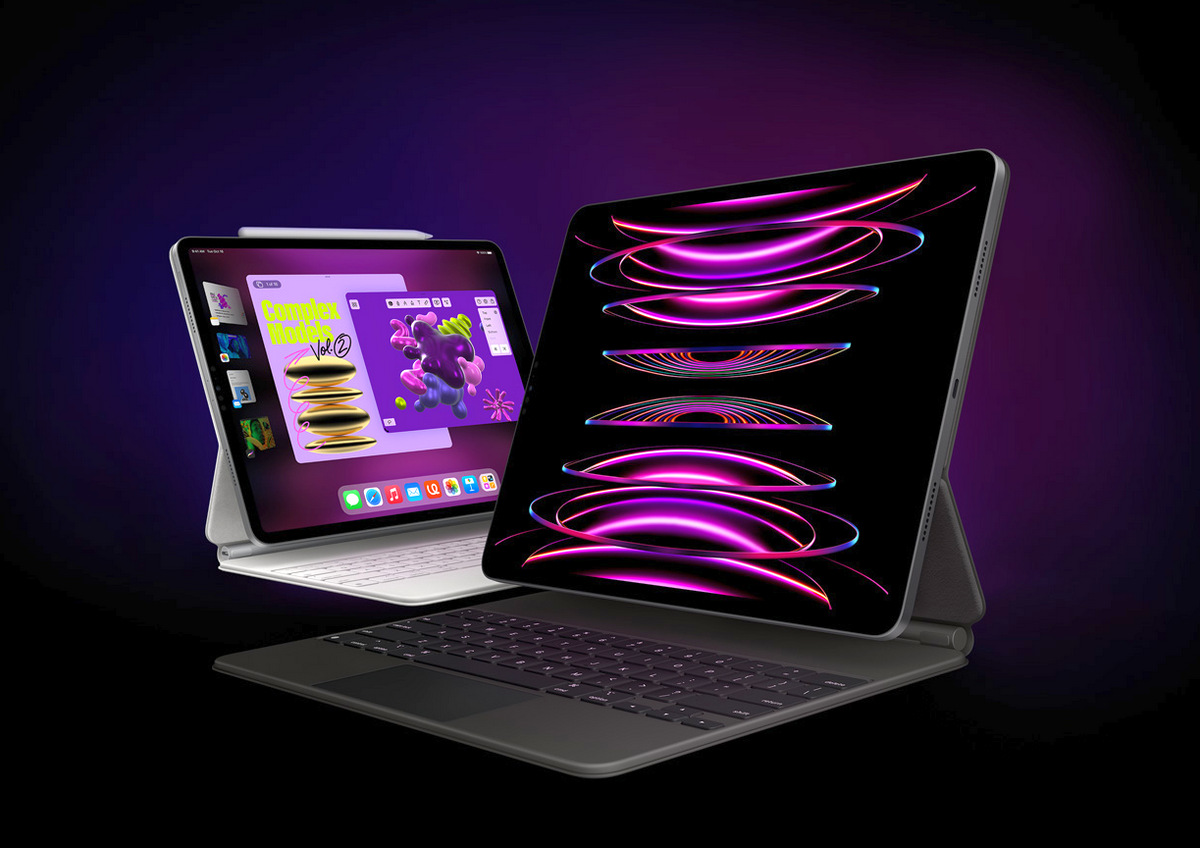
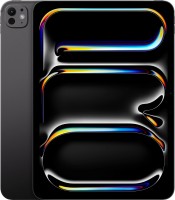
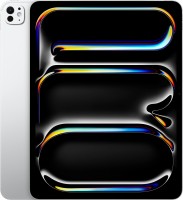
Unlike previous generations of iPad Pro, the 2024 version brought several major changes. To start with, Apple decided to leapfrog one evolutionary step and installed the new Apple M4 processor in the iPad Pro instead of the recent M3. This is a 3-nanometer chip which, according to Apple, works one and a half times faster than the M2 processor used in the last-generation iPad Pro. Plus, it handles AI and machine learning tasks much faster. Apple released the M4 in two modifications: 9-core is used in iPad Pro with memory capacity of 256 GB and 512 GB, and the more powerful 10-core chip is intended for top-end "pros" with 1 TB and 2 TB memory.
Serious updates have touched the screen: iPad Pro 2024 became the company's first tablet with an OLED screen called Ultra Retina XDR in Apple tradition. In addition to the 13-inch version, a similar 11-inch screened model also went on sale. Both versions are equipped with a built-in lighting sensor, support HDR10 with Dolby Vision, and boast a 120 Hz refresh rate, full DCI-P3 color spectrum coverage, and peak brightness of 1000 nit (note: or 1600 nit in HDR mode). The screen impresses with its specifications and looks equally impressive in real life, leaving little else to be added.
Otherwise, it's the familiar iPad Pro with FaceID, Wi-Fi 6E, high-quality stereo speakers, stylus support, USB4 and Thunderbolt. With the difference being that the front camera is now located on the side panel for more convenient video communication, and the main camera no longer has a wide-angle module. Apple also boasted that, thanks to the use of the OLED matrix, the metal body has become even thinner and lighter (thickness 5.1 mm, weight 579 g) and it's arguably the thinnest iPad in the brand's history. For comparison, the thickness of the 2022 iPad Pro was 6.4 mm.

Articles, reviews, useful tips
All materials