
Comparison Dreame D9 Max vs Dreame L10 Pro
Add to comparison | 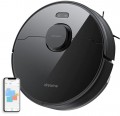 | 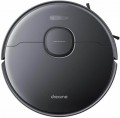 |
|---|---|---|
| Dreame D9 Max | Dreame L10 Pro | |
| Compare prices 2 | from $199.95 | |
| User reviews | ||
| TOP sellers | ||
Object recognition system using a stereoscopic camera. Lidar navigation. Dry and wet cleaning. | ||
| Type | robot vacuum cleaner | robot vacuum cleaner |
| Cleaning | dry and wet side brush turbo brush wiping with a cloth | dry and wet side brush turbo brush wiping with a cloth |
| Water supply adjustment |  | |
Robot vacuum cleaner | ||
| Suction power | 4000 Pa | 4000 Pa |
| Dust container capacity | 570 ml | 570 ml |
| Water tank capacity | 270 ml | 270 ml |
| Power auto-adjustment | | |
| Fine filter | HEPA | HEPA |
| Building a room map | rangefinder (laser) | rangefinder + camera |
| Cleaning area limitation | via the app | via the app |
Features | ||
| Control via smartphone | | |
| Voice assistant | Amazon Alexa | Amazon Alexa |
| Scheduled cleaning | | |
| Object recognition |  | |
Battery | ||
| Battery capacity | 5.2 Ah | 5.2 Ah |
| Operating time | 150 min | 150 min |
General | ||
| Cleaning area | 250 m² | 250 m² |
| Threshold clearance | 20 mm | 20 mm |
| Noise level | 65 dB | 65 dB |
| Dimensions (HxWxD) | 9.7x35x35 cm | 9.68x35.3x35 cm |
| Weight | 3.8 kg | 3.7 kg |
| Added to E-Catalog | september 2021 | may 2021 |



Compare Dreame D9 Max and L10 Pro
Both robot vacuums, Dreame D9 Max and Dreame Bot L10 Pro, offer similar features, such as dry and wet cleaning, 4000 Pa suction power, and the ability to connect to a smartphone. However, the Bot L10 Pro stands out with its object recognition system using a stereoscopic camera and navigation with lidar, which can enhance its efficiency in complex spaces. Both devices have the same dustbin capacity (0.57 L) and water tank (0.27 L), and they can operate for up to 150 minutes on a single charge. In reviews, users note that both vacuums perform well in cleaning, but the L10 Pro may be preferable for more challenging tasks due to its improved navigation.
Price comparison
You may be interested in
My comparisons
Dreame D9 Max often compared


Dreame L10 Pro often compared


Glossary
Building a room map
Map building allows the robot vacuum to remember the layout of the room, track covered areas, and plan a consistent cleaning route. The method used to create the map affects its accuracy, orientation speed, and the device’s ability to detect obstacles.
— With sensors. The robot creates an approximate map based on data from the gyroscope, motion sensors, wheels, and collisions with obstacles. This system is more affordable, but determines the exact position of walls and furniture less accurately, and accumulated errors may lead to repeated passes or missed areas.
— With a rangefinder. A laser rangefinder, or LiDAR, measures the distance to surrounding objects and creates an accurate map of the room before completing a full pass around it. It works reliably in low light, confidently detects walls and furniture, and supports room division and no-go zones.
— With a camera. The camera analyzes the surroundings and navigates using visual objects, helping refine the robot’s position and the room layout. Its advantage is the ability to distinguish individual objects, although performance depends more heavily on lighting.
— With a rangefinder and camera. The combined system uses LiDAR for accurate distance measurement and map building, and a camera to detect small objects on the floor. Such a robot not only navigates rooms confidently in any lighting, but also avoids cable...s, shoes, toys, and pet bowls more effectively.
— With sensors. The robot creates an approximate map based on data from the gyroscope, motion sensors, wheels, and collisions with obstacles. This system is more affordable, but determines the exact position of walls and furniture less accurately, and accumulated errors may lead to repeated passes or missed areas.
— With a rangefinder. A laser rangefinder, or LiDAR, measures the distance to surrounding objects and creates an accurate map of the room before completing a full pass around it. It works reliably in low light, confidently detects walls and furniture, and supports room division and no-go zones.
— With a camera. The camera analyzes the surroundings and navigates using visual objects, helping refine the robot’s position and the room layout. Its advantage is the ability to distinguish individual objects, although performance depends more heavily on lighting.
— With a rangefinder and camera. The combined system uses LiDAR for accurate distance measurement and map building, and a camera to detect small objects on the floor. Such a robot not only navigates rooms confidently in any lighting, but also avoids cable...s, shoes, toys, and pet bowls more effectively.
Object recognition
A function in which the robot vacuum uses a camera and analysis algorithms to determine exactly what is on the floor. The device can distinguish cables, shoes, toys, pet bowls, and other small obstacles, then chooses a safe route around them. Compared to conventional sensors, object recognition does not simply detect an obstacle but identifies its type, reducing the risk of getting stuck, collisions, and cables wrapping around the brush.