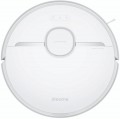
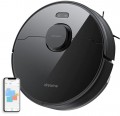
Comparison Dreame D9 Max vs Dreame D9
Add to comparison | ![]() | ![]() |
|---|---|---|
| Dreame D9 Max | Dreame D9 | |
from $259.99 | from $263.34 up to $397.96 | |
| User reviews | ||
| TOP sellers | ||
Dry and wet cleaning. Nidec brushless motor. Automatic power increase on carpets. Drawing up maps of different floors. Support for Amazon Alexa voice assistant. | ||
| Type | robot vacuum cleaner | robot vacuum cleaner |
| Cleaning type | dry and wet | dry and wet |
| Water supply control | ||
| Dust collector | container | container |
Specs | ||
| Suction power | 40 W | 40 W |
| Suction force | 4000 Pa | 3000 Pa |
| Dust collector capacity | 0.57 L | 0.57 L |
| Water tank capacity | 0.27 L | 0.27 L |
| Smartphone connection | ||
| Power adjustment | + | + |
| Automatic power control | ||
| Fine filter | HEPA | HEPA |
Robot vacuum cleaner | ||
| Robot features | scheduled cleaning anti-fall function obstacle sensor | scheduled cleaning anti-fall function obstacle sensor |
| Mapping system | rangefinder (laser) | rangefinder (laser) |
| Cleaning area limit | app | app |
| multi-map memory | ||
| Voice assistant | Amazon Alexa | Amazon Alexa |
| Crossing threshold | 20 mm | 20 mm |
Nozzles included | ||
| Nozzle functions | side brush turbobrush | side brush turbobrush |
Docking station | ||
| Charging station | + | + |
Power source | ||
| Source of power | battery | battery |
| Battery voltage | 14.4 В | 14.4 В |
| Battery type | Li-Ion | Li-Ion |
| Battery capacity | 5.2 Ah | 5.2 Ah |
| Battery run time | 150 min | 150 min |
More specs | ||
| Cleaning area | 250 m² | 250 m² |
| Noise level | 65 dB | 65 dB |
| Dimensions (HxWxD) | 9.7x35x35 cm | 9.7x35x35 cm |
| Weight | 3.8 kg | 3.8 kg |
| Color | ||
| Added to E-Catalog | september 2021 | november 2023 |
Compare Dreame D9 Max and D9
Both robot vacuum cleaners, Dreame D9 Max and Dreame D9, offer dry and wet cleaning functions and utilize a cyclone dust collection system. However, the main difference between them is in suction power: the D9 Max has a power of 4000 Pa, while the D9 has 3000 Pa, making it more effective for cleaning. Both devices support smartphone control and have similar sizes and runtime (150 minutes). The D9 also stands out for its ability to remember maps of multiple floors, which can be useful for multi-level spaces. Both vacuums are compatible with the Amazon Alexa voice assistant, adding convenience to their use. In general, if you need higher suction power, it is better to choose the D9 Max, while the D9 is suitable for less demanding tasks.
You may be interested in
Dreame D9 Max often compared
Dreame D9 often compared
Glossary
Suction force
The suction force provided by the vacuum cleaner. It is indicated by the maximum vacuum (negative pressure) that the unit can create at the working nozzle.
Note that this parameter is sometimes confused with the suction power described above, which is indicated in watts. Yes, suction force to some extent determines the efficiency of the unit. However, this efficiency also depends on the performance (airflow). And the suction power, indicated in watts, takes into account both of these parameters — it is determined by multiplying the suction force by the performance (see above for more details). For this reason, there is no strict relationship between this force and suction power: for example, a vacuum of 25,000 Pa can be found in models with 250 W, 200 W and even 150 W of power.
As for the practical significance of this spec, in general, a higher suction force allows you to work more efficiently with high resistance. For example, when processing carpets with a long pile. On the other hand, more pascals (with the same number of watts) means less airflow and, accordingly, less efficiency for large amounts of work at low resistance (for example, cleaning large rooms with parquet floors). Thus, it makes sense to pay attention to this indicator mainly in cases where high suction force is fundamental for you. In other cases, it is worth evaluating the capabilities of the vacuum cleaner in terms of suction power in watts.
Note that for a number of...reasons, the suction power is most often specified for robot vacuum cleaners (see “Produc type”). For such models, a value of 1500 Pa and below is considered very small, 1500 – 2000 Pa — medium, 2000 – 2500 Pa — high, more than 2500 Pa — very high.
It is also worth mentioning that the indication of suction force is often used as a publicity trick — to improve the impression of the product. For example, the suction power of 150 watts in itself is quite modest. But at the same time, the suction force of such a vacuum cleaner can be 25,000 Pa — a very impressive figure, especially for an inexperienced buyer, but having a very indirect relation to real efficiency. Especially often, such tricks are used among upright models and the already mentioned robots — these varieties initially do not differ in high power in watts. For many of these units, the characteristics only indicate the vacuum in pascals without specifying the suction power. It further enhances the impression: for example, in the specs of a modest robot, the figure "3000 Pa" looks much more impressive than "40 W". However, such figures have a very weak relation to the real capabilities of the unit and if they are not supplemented by data on suction power in watts, they should be considered solely as bait for a not particularly sophisticated buyer.
Note that this parameter is sometimes confused with the suction power described above, which is indicated in watts. Yes, suction force to some extent determines the efficiency of the unit. However, this efficiency also depends on the performance (airflow). And the suction power, indicated in watts, takes into account both of these parameters — it is determined by multiplying the suction force by the performance (see above for more details). For this reason, there is no strict relationship between this force and suction power: for example, a vacuum of 25,000 Pa can be found in models with 250 W, 200 W and even 150 W of power.
As for the practical significance of this spec, in general, a higher suction force allows you to work more efficiently with high resistance. For example, when processing carpets with a long pile. On the other hand, more pascals (with the same number of watts) means less airflow and, accordingly, less efficiency for large amounts of work at low resistance (for example, cleaning large rooms with parquet floors). Thus, it makes sense to pay attention to this indicator mainly in cases where high suction force is fundamental for you. In other cases, it is worth evaluating the capabilities of the vacuum cleaner in terms of suction power in watts.
Note that for a number of...reasons, the suction power is most often specified for robot vacuum cleaners (see “Produc type”). For such models, a value of 1500 Pa and below is considered very small, 1500 – 2000 Pa — medium, 2000 – 2500 Pa — high, more than 2500 Pa — very high.
It is also worth mentioning that the indication of suction force is often used as a publicity trick — to improve the impression of the product. For example, the suction power of 150 watts in itself is quite modest. But at the same time, the suction force of such a vacuum cleaner can be 25,000 Pa — a very impressive figure, especially for an inexperienced buyer, but having a very indirect relation to real efficiency. Especially often, such tricks are used among upright models and the already mentioned robots — these varieties initially do not differ in high power in watts. For many of these units, the characteristics only indicate the vacuum in pascals without specifying the suction power. It further enhances the impression: for example, in the specs of a modest robot, the figure "3000 Pa" looks much more impressive than "40 W". However, such figures have a very weak relation to the real capabilities of the unit and if they are not supplemented by data on suction power in watts, they should be considered solely as bait for a not particularly sophisticated buyer.
multi-map memory
Advanced models of robotic vacuum cleaners can havemulti-map memory. Thanks to this feature, when moving the robot to another floor, it does not need to reacquaint itself with the premises and build a new map. As a result, cleaning will be done faster and better.