
Comparison Dreame D9 Max Gen 2 vs Dreame D9 Max
Add to comparison | 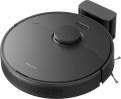 | 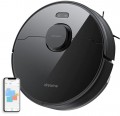 |
|---|---|---|
| Dreame D9 Max Gen 2 | Dreame D9 Max | |
from $127.49 | Compare prices 2 | |
| User reviews | ||
| TOP sellers | ||
| Type | robot vacuum cleaner | robot vacuum cleaner |
| Cleaning | dry and wet side brush turbo brush wiping with a cloth | dry and wet side brush turbo brush wiping with a cloth |
| Water supply adjustment |  | |
Robot vacuum cleaner | ||
| Suction power | 6000 Pa | 4000 Pa |
| Dust container capacity | 570 ml | 570 ml |
| Water tank capacity | 240 ml | 270 ml |
| Power auto-adjustment | | |
| Fine filter | HEPA | HEPA |
| Building a room map | rangefinder (laser) | rangefinder (laser) |
| Cleaning area limitation | via the app | via the app |
Features | ||
| Control via smartphone | | |
| Voice assistant | Google Assistant, Amazon Alexa, Apple Siri | Amazon Alexa |
| Scheduled cleaning | | |
| Memory of several maps (floors) | |  |
Battery | ||
| Battery capacity | 5.2 Ah | 5.2 Ah |
| Operating time | 285 min | 150 min |
| Charging time | 6 h | |
General | ||
| Cleaning area | 250 m² | 250 m² |
| Threshold clearance | 20 mm | 20 mm |
| Noise level | 65 dB | 65 dB |
| Dimensions (HxWxD) | 9.7x35x35 cm | 9.7x35x35 cm |
| Weight | 3.8 kg | 3.8 kg |
| Added to E-Catalog | november 2024 | september 2021 |



Compare Dreame D9 Max Gen 2 and D9 Max
Dreame D9 Max Gen 2 and Dreame D9 Max robot vacuums have similar characteristics, but there are key differences. The D9 Max Gen 2 has a higher suction power — 6000 Pa versus 4000 Pa for the D9 Max, which provides more effective cleaning. Both devices support dry and wet cleaning, have the same dustbin volume (0.57 l) and water tank capacity (0.24 l for Gen 2 and 0.27 l for Max). Both vacuums can connect to a smartphone and feature power autoregulation and scheduled cleaning. However, the D9 Max Gen 2 supports more voice assistants (Google Assistant, Amazon Alexa, Apple Siri), while the D9 Max only supports Amazon Alexa. Both devices have the same size, weight, and noise level. The choice between them may depend on preferences for suction power and supported voice assistants.
Price comparison
You may be interested in
My comparisons
Dreame D9 Max Gen 2 often compared


Dreame D9 Max often compared


Glossary
Suction power
Measured in Pa, this indicator describes the robot vacuum cleaner's suction pressure: the higher it is, the easier it is for the device to pick up heavy debris and clean carpet pile. Values around 2,000–4,000 Pa are usually sufficient for regular cleaning of smooth floors, while 6,000–10,000 Pa and above are better suited for collecting hair, sand, and dirt from carpets or floor joints.
Water tank capacity
The tank capacity determines the water supply for moistening the pad, rotating mops, or cleaning roller. Compact tanks of around 200 ml are suitable for regular wiping of small areas, while 300–500 ml tanks allow fewer interruptions for refilling during cleaning.
Voice assistant
Voice assistant lets you control the robot vacuum with short commands through a compatible smart speaker, smartphone, or smart home system. You can use voice commands to start and stop cleaning, return the device to the docking station, and on some models select a room or operating mode. This feature is especially convenient when your phone is not within reach, but the set of available commands depends on the robot model and supported platform.
Memory of several maps (floors)
Multiple map memory allows the robot vacuum to save separate layouts for different floors or rooms. When the device is moved, it recognizes the required map and uses the already defined rooms, no-go zones, and cleaning settings. This feature is especially useful for multi-story homes, as it eliminates the need to rescan the space every time the robot is moved.
Operating time
Battery life determines how much area the robot vacuum can clean before returning to the docking station. Actual performance depends on the selected mode, suction power, floor type, operation of the mops or roller, and layout complexity. Therefore, the stated maximum time is usually achieved in a gentle mode and will be noticeably shorter during intensive cleaning.
Charging time
Full charging cycle of the robot vacuum to restore the battery from the minimum level to 100%. The process usually takes several hours and depends on the battery capacity and charging system power. However, with regular returns to the base, this parameter rarely affects cleaning convenience.