
Comparison Roborock S5 vs Clever Panda i5
Add to comparison | 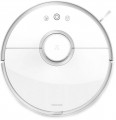 | 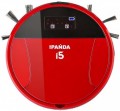 |
|---|---|---|
| Roborock S5 | Clever Panda i5 | |
from $254.99 | from $294.70 up to $325.54 | |
| User reviews | ||
| TOP sellers | ||
Wet cleaning. Washable HEPA filter. Overcoming thresholds up to 20 mm. Zoning cleaning using the application on the phone. Protection against jamming under furniture. | Camera with the ability to record on a memory card. Night observation. The ability to view video and photos from the camera on the phone in real time. | |
| Type | robot vacuum cleaner | robot vacuum cleaner |
| Cleaning | dry and wet side brush turbo brush wiping with a cloth | dry and wet 2 side brushes wiping with a cloth |
Robot vacuum cleaner | ||
| Suction power | 2000 Pa | |
| Dust container capacity | 480 ml | 500 ml |
| Water tank capacity | 150 ml | 280 ml |
| Fine filter | HEPA | HEPA |
| Building a room map | rangefinder (laser) | camera |
| Cleaning area limitation | via the app | |
Features | ||
| Control via smartphone |  | |
| Voice assistant | Google Assistant, Amazon Alexa | |
| Scheduled cleaning | | |
| Memory of several maps (floors) | |  |
| Remote control | | |
| Surveillance camera | | |
Battery | ||
| Battery capacity | 5.2 Ah | 7 Ah |
| Operating time | 150 min | 140 min |
| Charging time | 3 h | |
General | ||
| Cleaning area | 250 m² | 140 m² |
| Threshold clearance | 20 mm | 25 mm |
| Noise level | 67 dB | 60 dB |
| Dimensions (HxWxD) | 9.65x35x35.3 cm | 6x35x35 cm |
| Weight | 3.5 kg | 3 kg |
| Color | ||
| Added to E-Catalog | march 2018 | june 2017 |


Compare Roborock S5 and Clever Panda i5
The Roborock S5 and Clever Panda i5 robot vacuums offer both dry and wet cleaning functions, yet their performance and features differ. The Roborock S5 stands out with its 2000 Pa suction power and the ability to map rooms using a laser, which ensures more precise navigation and efficient cleaning. Users note its good performance in corners and the ability to control it via an app, making it convenient to use. Meanwhile, the Clever Panda i5 has lower suction power and less advanced navigation, leading to frequent getting stuck and inefficient cleaning in larger spaces. However, it is quieter and has a longer battery life. Overall, the Roborock S5 receives more positive reviews for its cleaning quality and functionality, while the Clever Panda i5 may be suitable for small apartments but struggles with more complex tasks.
You may be interested in
My comparisons
Roborock S5 often compared


Clever Panda i5 often compared


Glossary
Cleaning
The cleaning method determines whether the robot can only collect dry debris or also wipe the floor covering with water, as well as which methods are available for this.
— Dry. The robot cleans the floor with brushes and airflow, directing dust, crumbs, hair and pet fur into the dust container. This option is suitable for carpets and hard floors, but does not remove stains and marks from the floor.
— Dry and wet. The device combines debris suction with wiping the floor using a damp attachment. Depending on the design, this can be a simple cloth or an active washing module that handles fresh stains and shoe marks more effectively.
— Side brushes. Small rotating elements that sweep debris along walls, near furniture and from corners towards the main suction opening. One side brush on the edge of the body sweeps debris along walls, near furniture and from corners into the central suction channel. This design is usually sufficient, since the robot most often moves along obstacles with one particular side. Two brushes work on both sides of the body and cover a wider strip of floor in one pass. This setup is especially convenient when moving along walls and between furniture, although on smooth floors fast brushes can sometimes scatter light debris.
— Extendable brush. A movable side brush automatically extends beyond the body when cleaning corners and areas near walls. Compared with a regular fixed design, it reduces uncleaned areas where the robot body cannot get close enough.
— Turbo brush.... A motorized module on the bottom of the robot that picks up debris and directs it into the suction channel. The working part may consist of a roller with bristles, rubber blades or a combined coating. This system collects pet fur, hair and dirt from carpets more effectively than a simple suction opening, but bristled elements need regular cleaning to remove tangled hair.
— Floor scrubber. An active washing module with rotating mops or a roller that does not simply glide over the floor, but mechanically scrubs away dirt. This system removes stains and marks better than a regular cloth.
— Extendable floor scrubber. One of the rotating mops shifts to the side and extends beyond the robot body. This allows the floor to be wiped closer to skirting boards, furniture legs and corners, where a regular fixed floor scrubber leaves a narrow dry strip.
— Vibration wiping. The washing platform rapidly moves the cloth back and forth, increasing friction against the surface. In terms of effectiveness, this option falls between a passive cloth and rotating mops, removing light stains and marks well.
— Cloth wiping. A damp fabric attachment is fixed under the body and pulled across the floor while the robot moves. This simple solution is suitable for regularly removing fine dust and fresh marks, but hardly scrubs off dried-on dirt.
— Dry. The robot cleans the floor with brushes and airflow, directing dust, crumbs, hair and pet fur into the dust container. This option is suitable for carpets and hard floors, but does not remove stains and marks from the floor.
— Dry and wet. The device combines debris suction with wiping the floor using a damp attachment. Depending on the design, this can be a simple cloth or an active washing module that handles fresh stains and shoe marks more effectively.
— Side brushes. Small rotating elements that sweep debris along walls, near furniture and from corners towards the main suction opening. One side brush on the edge of the body sweeps debris along walls, near furniture and from corners into the central suction channel. This design is usually sufficient, since the robot most often moves along obstacles with one particular side. Two brushes work on both sides of the body and cover a wider strip of floor in one pass. This setup is especially convenient when moving along walls and between furniture, although on smooth floors fast brushes can sometimes scatter light debris.
— Extendable brush. A movable side brush automatically extends beyond the body when cleaning corners and areas near walls. Compared with a regular fixed design, it reduces uncleaned areas where the robot body cannot get close enough.
— Turbo brush.... A motorized module on the bottom of the robot that picks up debris and directs it into the suction channel. The working part may consist of a roller with bristles, rubber blades or a combined coating. This system collects pet fur, hair and dirt from carpets more effectively than a simple suction opening, but bristled elements need regular cleaning to remove tangled hair.
— Floor scrubber. An active washing module with rotating mops or a roller that does not simply glide over the floor, but mechanically scrubs away dirt. This system removes stains and marks better than a regular cloth.
— Extendable floor scrubber. One of the rotating mops shifts to the side and extends beyond the robot body. This allows the floor to be wiped closer to skirting boards, furniture legs and corners, where a regular fixed floor scrubber leaves a narrow dry strip.
— Vibration wiping. The washing platform rapidly moves the cloth back and forth, increasing friction against the surface. In terms of effectiveness, this option falls between a passive cloth and rotating mops, removing light stains and marks well.
— Cloth wiping. A damp fabric attachment is fixed under the body and pulled across the floor while the robot moves. This simple solution is suitable for regularly removing fine dust and fresh marks, but hardly scrubs off dried-on dirt.
Suction power
Measured in Pa, this indicator describes the robot vacuum cleaner's suction pressure: the higher it is, the easier it is for the device to pick up heavy debris and clean carpet pile. Values around 2,000–4,000 Pa are usually sufficient for regular cleaning of smooth floors, while 6,000–10,000 Pa and above are better suited for collecting hair, sand, and dirt from carpets or floor joints.
Dust container capacity
The dustbin capacity indicates how much dry debris fits in the robot vacuum’s built-in container before it needs to be emptied. Models with a 200–300 ml capacity are suitable for a small apartment and frequent cleaning cycles, while a 400–600 ml capacity is more convenient for larger areas, pets, or lots of hair. For robots with a self-emptying station, the size of the internal container is less important, as debris is automatically transferred to the docking station’s collection bin.
Water tank capacity
The tank capacity determines the water supply for moistening the pad, rotating mops, or cleaning roller. Compact tanks of around 200 ml are suitable for regular wiping of small areas, while 300–500 ml tanks allow fewer interruptions for refilling during cleaning.
Building a room map
Map building allows the robot vacuum to remember the layout of the room, track covered areas, and plan a consistent cleaning route. The method used to create the map affects its accuracy, orientation speed, and the device’s ability to detect obstacles.
— With sensors. The robot creates an approximate map based on data from the gyroscope, motion sensors, wheels, and collisions with obstacles. This system is more affordable, but determines the exact position of walls and furniture less accurately, and accumulated errors may lead to repeated passes or missed areas.
— With a rangefinder. A laser rangefinder, or LiDAR, measures the distance to surrounding objects and creates an accurate map of the room before completing a full pass around it. It works reliably in low light, confidently detects walls and furniture, and supports room division and no-go zones.
— With a camera. The camera analyzes the surroundings and navigates using visual objects, helping refine the robot’s position and the room layout. Its advantage is the ability to distinguish individual objects, although performance depends more heavily on lighting.
— With a rangefinder and camera. The combined system uses LiDAR for accurate distance measurement and map building, and a camera to detect small objects on the floor. Such a robot not only navigates rooms confidently in any lighting, but also avoids cable...s, shoes, toys, and pet bowls more effectively.
— With sensors. The robot creates an approximate map based on data from the gyroscope, motion sensors, wheels, and collisions with obstacles. This system is more affordable, but determines the exact position of walls and furniture less accurately, and accumulated errors may lead to repeated passes or missed areas.
— With a rangefinder. A laser rangefinder, or LiDAR, measures the distance to surrounding objects and creates an accurate map of the room before completing a full pass around it. It works reliably in low light, confidently detects walls and furniture, and supports room division and no-go zones.
— With a camera. The camera analyzes the surroundings and navigates using visual objects, helping refine the robot’s position and the room layout. Its advantage is the ability to distinguish individual objects, although performance depends more heavily on lighting.
— With a rangefinder and camera. The combined system uses LiDAR for accurate distance measurement and map building, and a camera to detect small objects on the floor. Such a robot not only navigates rooms confidently in any lighting, but also avoids cable...s, shoes, toys, and pet bowls more effectively.
Cleaning area limitation
Cleaning area restriction lets you prevent the robot vacuum from entering certain rooms or selected floor areas. This is useful near pet bowls, fragile items, wires, children’s play areas, or surfaces that should not be wiped with a wet attachment. There are various methods.
— Laser sensor. A separate accessory that creates an invisible boundary — the robot detects it with its sensors and does not cross it. It can be moved between rooms, but the device takes up floor space and usually requires separate power.
— Magnetic tape. A strip is placed on the floor or under a thin covering, creating a physically defined no-go line. This is a simple and reliable method, but the tape may be noticeable in the interior and only restricts the area where it is laid.
— Mobile app. No-go zones and virtual walls are applied directly to the saved map of the room. This option does not require additional accessories, allows you to quickly change boundaries, and is usually the most convenient for regular use.
— Laser sensor. A separate accessory that creates an invisible boundary — the robot detects it with its sensors and does not cross it. It can be moved between rooms, but the device takes up floor space and usually requires separate power.
— Magnetic tape. A strip is placed on the floor or under a thin covering, creating a physically defined no-go line. This is a simple and reliable method, but the tape may be noticeable in the interior and only restricts the area where it is laid.
— Mobile app. No-go zones and virtual walls are applied directly to the saved map of the room. This option does not require additional accessories, allows you to quickly change boundaries, and is usually the most convenient for regular use.
Voice assistant
Voice assistant lets you control the robot vacuum with short commands through a compatible smart speaker, smartphone, or smart home system. You can use voice commands to start and stop cleaning, return the device to the docking station, and on some models select a room or operating mode. This feature is especially convenient when your phone is not within reach, but the set of available commands depends on the robot model and supported platform.
Memory of several maps (floors)
Multiple map memory allows the robot vacuum to save separate layouts for different floors or rooms. When the device is moved, it recognizes the required map and uses the already defined rooms, no-go zones, and cleaning settings. This feature is especially useful for multi-story homes, as it eliminates the need to rescan the space every time the robot is moved.
Remote control
Availability of a wireless controller for operating the robot vacuum cleaner without a smartphone or mobile app. With a remote control, you can usually start and stop cleaning, select a mode, change the direction of movement, or send the device to the docking station. This option is especially convenient for elderly users, children, or in rooms without Wi-Fi.