
Comparison Clever Panda i5 vs Panda X900
Add to comparison | 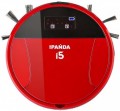 | 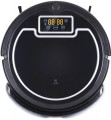 |
|---|---|---|
| Clever Panda i5 | Panda X900 | |
from $294.70 up to $325.54 | Outdated Product | |
| User reviews | ||
| TOP sellers | ||
Camera with the ability to record on a memory card. Night observation. The ability to view video and photos from the camera on the phone in real time. | Polisher mode. Ultraviolet lamp. Automatic power adjustment for the type of surface. | |
| Type | robot vacuum cleaner | robot vacuum cleaner |
| Cleaning | dry and wet 2 side brushes wiping with a cloth | dry and wet 2 side brushes wiping with a cloth |
Robot vacuum cleaner | ||
| Dust container capacity | 500 ml | 500 ml |
| Water tank capacity | 280 ml | |
| Fine filter | HEPA | HEPA |
| Building a room map | camera | |
| Cleaning area limitation | laser sensor | |
Features | ||
| Control via smartphone |  |  |
| Scheduled cleaning | | |
| UV lamp | | |
| Remote control | | |
| Surveillance camera | | |
Battery | ||
| Battery capacity | 7 Ah | 2 Ah |
| Operating time | 140 min | 90 min |
| Charging time | 3 h | 5 h |
General | ||
| Cleaning area | 140 m² | |
| Threshold clearance | 25 mm | |
| Noise level | 60 dB | 62 dB |
| Dimensions (HxWxD) | 6x35x35 cm | 9x34x34 cm |
| Weight | 3 kg | 3 kg |
| Color | ||
| Added to E-Catalog | june 2017 | december 2016 |


Compare Clever Panda i5 and Panda X900
Robotic vacuum cleaners Clever Panda i5 and Panda X900 offer similar features, such as dry and wet cleaning, as well as using a cyclone filtration system. However, according to user reviews, the Clever Panda i5 stands out for its quiet operation and quality cleaning, especially on hard surfaces, but it has navigation issues and can get stuck in complex areas. Meanwhile, the Panda X900 also performs well in cleaning, but its users note better navigation and the presence of a virtual wall mode, which helps prevent it from getting stuck. The Clever Panda i5 has a longer operation time (140 minutes) compared to 90 minutes for the Panda X900, but the latter has a longer charging time (5 hours versus 3 hours for the i5). Overall, both devices have their pros and cons, and the choice depends on user preferences: if autonomy and quiet operation are important, it's better to choose the i5, and if more advanced navigation and additional features are needed, the X900 is worth considering.
You may be interested in
Clever Panda i5 often compared


Panda X900 often compared


Glossary
Water tank capacity
The tank capacity determines the water supply for moistening the pad, rotating mops, or cleaning roller. Compact tanks of around 200 ml are suitable for regular wiping of small areas, while 300–500 ml tanks allow fewer interruptions for refilling during cleaning.
Building a room map
Map building allows the robot vacuum to memorize the room layout, track covered areas, and plan a systematic cleaning route. The mapping method affects its accuracy, orientation speed, and the device's ability to detect obstacles.
— With sensors. The robot creates an approximate map using data from the gyroscope, motion sensors, wheels, and obstacle collisions. This system is more affordable, but less accurate at determining the exact location of walls and furniture, while accumulated errors may lead to repeated passes or missed areas.
— With a rangefinder. A laser rangefinder, or lidar, measures the distance to surrounding objects and creates an accurate map of the room even before completing a full sweep. It works reliably in low light, confidently detects walls and furniture, and also supports room division and no-go zones.
— With a camera. The camera analyzes the surroundings and navigates using visual objects, helping refine the robot's position and the room layout. Its advantage is the ability to distinguish individual objects, although performance depends more heavily on lighting.
— With a rangefinder and camera. The combined system uses lidar for accurate distance measurement and map building, and a camera to recognize small objects on the floor. Such a robot not only navigates rooms confidently in any lighting but also avoids cables, shoes, toys, and pet...bowls more effectively.
— With sensors. The robot creates an approximate map using data from the gyroscope, motion sensors, wheels, and obstacle collisions. This system is more affordable, but less accurate at determining the exact location of walls and furniture, while accumulated errors may lead to repeated passes or missed areas.
— With a rangefinder. A laser rangefinder, or lidar, measures the distance to surrounding objects and creates an accurate map of the room even before completing a full sweep. It works reliably in low light, confidently detects walls and furniture, and also supports room division and no-go zones.
— With a camera. The camera analyzes the surroundings and navigates using visual objects, helping refine the robot's position and the room layout. Its advantage is the ability to distinguish individual objects, although performance depends more heavily on lighting.
— With a rangefinder and camera. The combined system uses lidar for accurate distance measurement and map building, and a camera to recognize small objects on the floor. Such a robot not only navigates rooms confidently in any lighting but also avoids cables, shoes, toys, and pet...bowls more effectively.
Cleaning area limitation
Cleaning area restriction lets you prevent the robot vacuum from entering certain rooms or selected floor areas. This is useful near pet bowls, fragile items, wires, children’s play areas, or surfaces that should not be wiped with a wet attachment. There are various methods.
— Laser sensor. A separate accessory that creates an invisible boundary — the robot detects it with its sensors and does not cross it. It can be moved between rooms, but the device takes up floor space and usually requires separate power.
— Magnetic tape. A strip is placed on the floor or under a thin covering, creating a physically defined no-go line. This is a simple and reliable method, but the tape may be noticeable in the interior and only restricts the area where it is laid.
— Mobile app. No-go zones and virtual walls are applied directly to the saved map of the room. This option does not require additional accessories, allows you to quickly change boundaries, and is usually the most convenient for regular use.
— Laser sensor. A separate accessory that creates an invisible boundary — the robot detects it with its sensors and does not cross it. It can be moved between rooms, but the device takes up floor space and usually requires separate power.
— Magnetic tape. A strip is placed on the floor or under a thin covering, creating a physically defined no-go line. This is a simple and reliable method, but the tape may be noticeable in the interior and only restricts the area where it is laid.
— Mobile app. No-go zones and virtual walls are applied directly to the saved map of the room. This option does not require additional accessories, allows you to quickly change boundaries, and is usually the most convenient for regular use.
Control via smartphone
Smartphone control allows you to configure and start the robot vacuum cleaner via the branded mobile app. It usually offers mode selection, power and water flow adjustment, cleaning schedules, map viewing, and no-go zone creation. The app also lets you send the robot to a specific room, check the status of consumables, or receive a notification when cleaning is complete. For remote control, most models connect to a home Wi-Fi network.
UV lamp
The built-in underside UV lamp is designed for contactless treatment of floor coverings with ultraviolet light after or simultaneously with debris collection. The function may be useful for regular cleaning of the kitchen, bathroom, area near the entrance door, or places where pets often stay. The radiation is most effective directly on a clean, open surface, while dirt, gaps, furniture, and moving too quickly reduce the dose received. The presence of a UV lamp should be considered an additional hygiene measure, not a guarantee of destroying all bacteria and viruses.
Surveillance camera
Built-in camera with remote access turns a robot vacuum cleaner into a mobile video surveillance device that can be controlled from a smartphone. It is convenient for checking your apartment while away, monitoring pets, or inspecting a hard-to-reach area, while some models allow voice transmission through the built-in speaker. Unlike an obstacle detection camera, this camera displays images to the user in real time or saves them in the app. Recording, night mode, and privacy features depend on the specific model.
Battery capacity
Battery capacity indicates the amount of charge available to the robot vacuum for navigation, motor operation, brushes, and the mopping system. A higher-capacity battery can potentially provide longer runtime, but it does not allow the exact cleaning time to be determined without considering the device's power consumption. Operating time is more strongly affected by the selected mode, suction power, floor type, use of mopping pads, and frequency of returns to the docking station.
Operating time
Battery life determines how much area the robot vacuum can clean before returning to the docking station. Actual performance depends on the selected mode, suction power, floor type, operation of the mops or roller, and layout complexity. Therefore, the stated maximum time is usually achieved in a gentle mode and will be noticeably shorter during intensive cleaning.
Charging time
Full charging cycle of the robot vacuum to restore the battery from the minimum level to 100%. The process usually takes several hours and depends on the battery capacity and charging system power. However, with regular returns to the base, this parameter rarely affects cleaning convenience.