
Comparison Havit G1 vs MIFO O5
Add to comparison | 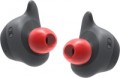 | 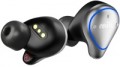 |
|---|---|---|
| Havit G1 | MIFO O5 | |
| Outdated Product | from $139.00 | |
| User reviews | ||
| TOP sellers | ||
The ability to use headphones both together and separately. Degree of protection IPX5. Calling the voice assistant. | They work separately from each other. Waterproof IPX67. Automatic connection. Supplied in two versions. Standard version — with dynamic sound driver, Professional — with armature sound driver. | |
Connection and design | ||
| Features | for active sports | |
| Design | in-ear | in-ear |
| Connection type | wireless | wireless |
| Connection | Bluetooth v5.0 | Bluetooth v5.0 |
| Range | 10 m | 20 m |
Specs | ||
| Impedance | 16 Ohm | |
| Frequency range | 20 – 20000 Hz | 20 – 20000 Hz |
| Sensitivity | 95 dB | |
| Speaker size | 5.8 mm | 6 mm |
| Emitter type | dynamic | dynamic |
Microphone specs | ||
| Microphone | built into the case | built into the case |
Features | ||
| Volume control |  |  |
| Codec support | AAC | |
Power supply | ||
| Power source | battery | battery |
| Headphone battery capacity | 60 mAh | 60 mAh |
| Charging time | 2 h | 2 h |
| Operating time (music) | 3.5 h | 7 h |
| Charging port | microUSB | microUSB |
General | ||
| Waterproof | IPX5 | IPX7 |
| Weight | 6 g | 5 g |
| In box | silicone tips charging case | silicone tips charging case |
| Color | ||
| Added to E-Catalog | may 2019 | may 2019 |


Compare Havit G1 and MIFO O5
You may be interested in
My comparisons
Havit G1 often compared


MIFO O5 often compared

Glossary
Features
This parameter is specified only for specialized models, not related to general-purpose earphones. Nowadays, headphones can be found with such specializations as: gaming, for active sports, office, monitor (aka studio), for DJs, for children, for sleeping. Here is a more detailed description of these varieties:
— Gaming. Headphones mainly intended for use in games, primarily with PCs and laptops (a separate variety is produced for consoles, see more about it below). They stand out externally primarily by their design, which is usually quite bright and aggressive. Most of these models have an overhead design, most often the full-size “Over Ear” format (see “Design”), which provides the maximum immersive effect in the game. Other designs are also available, though much less frequently. A microphone is practically an obligatory feature for voice communication in online games. Additionally, most multi-channel models belong to this category (see “Sound”), as such sound is particularly important for games.
— For active sports. Headphones well-suited for sports activities. Firstly, such devices must have additional fixation in the ears or on the head to keep their position during intense moveme...nts; secondly, they should be resistant to sweat (ideally to rain, snow, and other atmospheric conditions). With rare exceptions, sports headphones are wireless to avoid inconvenience during movement. Sport models usually refer to in-ear, earbuds, and some on-ear headphones. Their key common traits are a secure fit and some level of IP water resistance (see “Protection level (IP)”).
— Office. Office headphones are intended for consultants, support operators, and other employees who frequently engage in voice communication via phone or Internet. Therefore, one of the main features of such models is the presence of a microphone. Among office headphones, models for one ear (see “Sound — mono”) are quite popular, allowing the user to hear both the conversation and the surrounding environment simultaneously. Many of these headphones connect via USB (see “Connection”), considering that inexpensive office computers may lack specialized audio outputs. A small control panel for IP telephony may be included on the USB plug, allowing functions such as accepting and rejecting calls. There are also wireless models (usually connecting via a radio channel, less often via Bluetooth) and specialized solutions for connecting to telephones with specific connectors.
— Monitor (studio). Headphones designed for professional sound recording and sound equipment tuning. They are wired only. However, the key feature of these models lies elsewhere: they have a flat frequency response, providing nearly equal loudness across all frequency bands, and a wide working range, often exceeding the limits of the human-audible frequency range. As a result, these headphones can clearly reveal any audio signal flaws, including details unnoticeable with traditional headphones; these capabilities are invaluable in professional sound work. On the other hand, for this reason, there's no point in using monitor models for everyday music listening: they not only reveal different recording flaws but also impart a sound coloration that is unusual and even unpleasant for the average user.
— For DJs. Headphones initially designed for professional DJs to use when mixing tracks. They are quite similar to the monitor models described above - particularly featuring a very flat frequency response for accurate sound reproduction and a wide frequency range. In addition, DJ headphones are usually closed-back and generally have high sound isolation quality, ensuring good audibility even in quite noisy environments.
— For kids. They differ from “adult” models mainly in appearance - both in smaller sizes and (in most models) in distinctive bright designs. Additionally, children's hearing is more sensitive to loud sounds, and excessively high volume is highly undesirable for a child (including psychological reasons). In this light, children's headphones may have specific features - for instance, slightly reduced sensitivity to prevent high sound levels or a volume limiter that only adults can control.
— For sleeping. Miniature headphones with a special anatomical design, allowing comfortable sleep while lying on your side without ear discomfort. To reduce surrounding noise, passive noise cancellation is typically included in their design. Such headphones can be used for listening to music, broadcasting white noise, nature sounds, or waves. Advanced models also monitor sleep quality, and the alarm clock function plays a melody for waking up at a set time. These headphones are frequently called electronic earplugs.
— Gaming. Headphones mainly intended for use in games, primarily with PCs and laptops (a separate variety is produced for consoles, see more about it below). They stand out externally primarily by their design, which is usually quite bright and aggressive. Most of these models have an overhead design, most often the full-size “Over Ear” format (see “Design”), which provides the maximum immersive effect in the game. Other designs are also available, though much less frequently. A microphone is practically an obligatory feature for voice communication in online games. Additionally, most multi-channel models belong to this category (see “Sound”), as such sound is particularly important for games.
— For active sports. Headphones well-suited for sports activities. Firstly, such devices must have additional fixation in the ears or on the head to keep their position during intense moveme...nts; secondly, they should be resistant to sweat (ideally to rain, snow, and other atmospheric conditions). With rare exceptions, sports headphones are wireless to avoid inconvenience during movement. Sport models usually refer to in-ear, earbuds, and some on-ear headphones. Their key common traits are a secure fit and some level of IP water resistance (see “Protection level (IP)”).
— Office. Office headphones are intended for consultants, support operators, and other employees who frequently engage in voice communication via phone or Internet. Therefore, one of the main features of such models is the presence of a microphone. Among office headphones, models for one ear (see “Sound — mono”) are quite popular, allowing the user to hear both the conversation and the surrounding environment simultaneously. Many of these headphones connect via USB (see “Connection”), considering that inexpensive office computers may lack specialized audio outputs. A small control panel for IP telephony may be included on the USB plug, allowing functions such as accepting and rejecting calls. There are also wireless models (usually connecting via a radio channel, less often via Bluetooth) and specialized solutions for connecting to telephones with specific connectors.
— Monitor (studio). Headphones designed for professional sound recording and sound equipment tuning. They are wired only. However, the key feature of these models lies elsewhere: they have a flat frequency response, providing nearly equal loudness across all frequency bands, and a wide working range, often exceeding the limits of the human-audible frequency range. As a result, these headphones can clearly reveal any audio signal flaws, including details unnoticeable with traditional headphones; these capabilities are invaluable in professional sound work. On the other hand, for this reason, there's no point in using monitor models for everyday music listening: they not only reveal different recording flaws but also impart a sound coloration that is unusual and even unpleasant for the average user.
— For DJs. Headphones initially designed for professional DJs to use when mixing tracks. They are quite similar to the monitor models described above - particularly featuring a very flat frequency response for accurate sound reproduction and a wide frequency range. In addition, DJ headphones are usually closed-back and generally have high sound isolation quality, ensuring good audibility even in quite noisy environments.
— For kids. They differ from “adult” models mainly in appearance - both in smaller sizes and (in most models) in distinctive bright designs. Additionally, children's hearing is more sensitive to loud sounds, and excessively high volume is highly undesirable for a child (including psychological reasons). In this light, children's headphones may have specific features - for instance, slightly reduced sensitivity to prevent high sound levels or a volume limiter that only adults can control.
— For sleeping. Miniature headphones with a special anatomical design, allowing comfortable sleep while lying on your side without ear discomfort. To reduce surrounding noise, passive noise cancellation is typically included in their design. Such headphones can be used for listening to music, broadcasting white noise, nature sounds, or waves. Advanced models also monitor sleep quality, and the alarm clock function plays a melody for waking up at a set time. These headphones are frequently called electronic earplugs.
Range
Range of wireless-capable headphones (see "Connection type").
When evaluating the range, it should be taken into account that this parameter is rather conditional and the actual range may differ slightly from the claimed one (usually in a smaller direction). So, when connecting via a radio channel, the range is indicated for perfect conditions — without interference and obstacles in the signal path. For Bluetooth models, the range also depends on the power of the Bluetooth module in the device to which the “ears” are connected. And the effectiveness of the IR channel may be reduced in hot weather or in bright sunlight. So when choosing according to this indicator, it's ok to take a certain margin.
On the other hand, there are two points worth noting. Firstly, in general, the specified range accurately describes the capabilities of the headphones, and it is quite possible to evaluate and compare different models with each other. Secondly, even in the most modest wireless “ears”, the communication range is about 8–10 m, 11–20 m is considered an average, and a fairly large number of devices can operate at distances of tens and even hundreds of metres. So paying attention to the range makes sense mainly in cases where you plan to move away from the signal source at a considerable distance — from 5 m or more — or listen to sound through walls.
When evaluating the range, it should be taken into account that this parameter is rather conditional and the actual range may differ slightly from the claimed one (usually in a smaller direction). So, when connecting via a radio channel, the range is indicated for perfect conditions — without interference and obstacles in the signal path. For Bluetooth models, the range also depends on the power of the Bluetooth module in the device to which the “ears” are connected. And the effectiveness of the IR channel may be reduced in hot weather or in bright sunlight. So when choosing according to this indicator, it's ok to take a certain margin.
On the other hand, there are two points worth noting. Firstly, in general, the specified range accurately describes the capabilities of the headphones, and it is quite possible to evaluate and compare different models with each other. Secondly, even in the most modest wireless “ears”, the communication range is about 8–10 m, 11–20 m is considered an average, and a fairly large number of devices can operate at distances of tens and even hundreds of metres. So paying attention to the range makes sense mainly in cases where you plan to move away from the signal source at a considerable distance — from 5 m or more — or listen to sound through walls.
Impedance
Impedance refers to the headphone's nominal resistance to AC current, such as an audio signal.
Other things being equal, a higher impedance reduces distortion, but requires a more powerful amplifier — otherwise the headphones simply will not be able to produce sufficient volume. Thus, the choice of resistance depends primarily on which signal source you plan to connect the "ears". So, for a portable gadget (smartphone, pocket player), an indicator of 16 ohms or less is considered optimal, 17 – 32 ohms is not bad. Higher values — 33 – 64 ohms and 65 – 96 ohms — will require quite powerful amplifiers, like those used in computers and televisions. And models with a resistance of 96 – 250 ohms and above are designed mainly for Hi-End audio equipment and professional use; for such cases, detailed recommendations for selection can be found in special sources.
Other things being equal, a higher impedance reduces distortion, but requires a more powerful amplifier — otherwise the headphones simply will not be able to produce sufficient volume. Thus, the choice of resistance depends primarily on which signal source you plan to connect the "ears". So, for a portable gadget (smartphone, pocket player), an indicator of 16 ohms or less is considered optimal, 17 – 32 ohms is not bad. Higher values — 33 – 64 ohms and 65 – 96 ohms — will require quite powerful amplifiers, like those used in computers and televisions. And models with a resistance of 96 – 250 ohms and above are designed mainly for Hi-End audio equipment and professional use; for such cases, detailed recommendations for selection can be found in special sources.
Sensitivity
Rated headphone sensitivity. Technically, this is the volume at which they sound when a certain standard signal from the amplifier is connected to them. Thus, sensitivity is one of the parameters that determine the overall volume of the headphones: the higher it is, the louder the sound will be with the same input signal level and other things being equal. However, we must not forget that the volume level also depends on the resistance (impedance, see above); moreover, it is worth choosing “ears” for a specific device first by impedance, and only then by sensitivity. In this case, one parameter can be compensated for by another: for example, a model with high resistance and high sensitivity can work even on a relatively weak amplifier.
As for specific figures, headphones with indicators of 100 dB or less are designed mainly for use in a quiet environment (in some similar models, the sensitivity does not exceed 90 dB). For use on the street, in transport and other similar conditions, it is desirable to have more sensitive headphones — about 101 – 105 dB, or even 110 dB. And in some models, this figure can reach 116 – 120 dB. and even more.
It is also worth noting that this parameter is relevant only for a wired connection according to the analogue standard — for example, via a 3.5 mm mini-...jack. When using digital interfaces like USB and wireless channels like Bluetooth, the sound is processed in the built-in headphone converter, and if you plan to mainly use this kind of application, you can not pay much attention to sensitivity.
As for specific figures, headphones with indicators of 100 dB or less are designed mainly for use in a quiet environment (in some similar models, the sensitivity does not exceed 90 dB). For use on the street, in transport and other similar conditions, it is desirable to have more sensitive headphones — about 101 – 105 dB, or even 110 dB. And in some models, this figure can reach 116 – 120 dB. and even more.
It is also worth noting that this parameter is relevant only for a wired connection according to the analogue standard — for example, via a 3.5 mm mini-...jack. When using digital interfaces like USB and wireless channels like Bluetooth, the sound is processed in the built-in headphone converter, and if you plan to mainly use this kind of application, you can not pay much attention to sensitivity.
Speaker size
The diameter of the speaker installed in the headphones; models with multiple drivers (see "Number of drivers"), usually, the size of the largest speaker is taken into account, other dimensions can be specified in the notes.
In general, this parameter is relevant primarily for over-ear headphones (see "Design"). In them, emitters can have different sizes; the larger it is, the more saturated the sound is and the better the speaker reproduces the bass, however, large emitters have a corresponding effect on the dimensions, weight and price of the headphones. But in-ear "ears" and earbuds, by definition, have very small speakers, and rich bass in them is achieved due to other design features.
In general, this parameter is relevant primarily for over-ear headphones (see "Design"). In them, emitters can have different sizes; the larger it is, the more saturated the sound is and the better the speaker reproduces the bass, however, large emitters have a corresponding effect on the dimensions, weight and price of the headphones. But in-ear "ears" and earbuds, by definition, have very small speakers, and rich bass in them is achieved due to other design features.
Volume control
The headphones have their own volume control. Such a regulator can be placed both on the wire and on one of the cups (the latter is typical for wireless models). Anyway, this function allows you to easily adjust the volume: for this you do not need to go into the computer settings, press the buttons on the player or smartphone, etc., just use the control at hand. On the other hand, additional equipment complicates and increases the cost of the design, and also increases the likelihood of distortion. In light of the latter, volume control is almost never found in professional headphones.
Codec support
Codecs and additional audio processing technologies supported by Bluetooth headphones (see “Connection”). Initially, sound transmission via Bluetooth involves fairly strong signal compression; This is not critical when transmitting speech, but can greatly spoil the impression when listening to music. To eliminate this shortcoming, various technologies are used, in particular aptX, aptX HD, aptX Low Latency, aptX Adaptive, AAC, LDAC and LHDC. Of course, to use any of the technologies, it must be supported not only by the “ears”, but also by the Bluetooth device with which they are used. Here are the main features of each option:
- aptX. A Bluetooth codec designed to significantly improve the quality of audio transmitted over Bluetooth. According to the creators, it allows you to achieve quality comparable to Audio CD (16-bits/44.1kHz). The benefits of aptX are most noticeable when listening to high-quality content (such as lossless formats), but even on regular MP3 it can provide a noticeable sound improvement.
- aptX HD. Development and improvement of the original aptX, allowing for sound purity comparable to Hi-Res audio (24-bits/48kHz). As in the original, the benefits of aptX HD are noticeable mainly on high-quality...audio, although this codec will not be out of place for MP3.
- aptX Low Latency. A specific version of aptX described above, designed not so much to improve sound quality, but to reduce delays in signal transmission. Such delays inevitably occur when working via Bluetooth; They are not critical for listening to music, but when watching videos or playing games, there may be a noticeable desynchronization between the image and sound. The aptX LL codec eliminates this phenomenon, reducing latency to 32 ms - such a difference is imperceptible to human perception (although for serious tasks like studio audio work it is still too high). aptX LL support is found mainly in gaming headphones.
- aptX Adaptive. Further development of aptX; actually combines the capabilities of aptX HD and aptX Low Latency, but is not limited to this. One of the main features of this standard is the so-called adaptive bitrate: the codec automatically adjusts the actual data transfer rate based on the characteristics of the broadcast content (music, game audio, voice communications, etc.) and the congestion of the frequencies used. This, in particular, helps reduce energy consumption and increase communication reliability; and special algorithms allow you to broadcast sound quality comparable to aptX HD (24 bits/48 kHz), using several times less amount of transmitted data. And the minimum data transfer latency (at the aptX LL level) makes this codec excellent for games and movies.
- aptX Lossless. The next stage in the development of aptX technology, which involves transmitting CD-quality sound over a wireless Bluetooth network without loss or compression. Audio broadcasting with sampling parameters of 16 bits / 44.1 kHz is carried out with a bitrate of about 1.4 Mbit/s - this is about three times faster than it was in the aptX Adaptive edition (see above). Support for aptX Lossless began to be introduced at the end of 2021 as part of the Snapdragon Sound initiative from Qualcomm.
- A.A.C. A Bluetooth codec used primarily in portable Apple gadgets. In terms of capabilities, it is noticeably inferior to more advanced standards like aptX or LDAC: the sound quality when using AAC is comparable to an average MP3 file. However, for listening to the same MP3s, this is quite enough; the difference becomes noticeable only on more advanced formats. AAC hardware requirements are low, and its support in headphones is inexpensive.
— LDAC. Sony's proprietary Bluetooth codec. It surpasses even aptX HD in terms of bandwidth and potential sound quality, providing performance at the Hi-Res level of 24-bits/96kHz audio; there is even an opinion that this is the maximum quality that it makes sense to provide in wireless headphones - further improvement will simply be imperceptible to the human ear. On the other hand, supporting this standard is not cheap, and there are still quite a few gadgets with such support - these are, in particular, Sony smartphones, as well as mid- and high-end devices running Android 8.0 Oreo and later versions.
- LHDC. LHDC (Low latency High-Definition audio Codec) is a high-definition, low-latency codec developed by the Hi-Res Wireless Audio Alliance and Savitech. In the vast majority of cases, its support is implemented at the hardware level in Huawei and Xiaomi smartphones. The codec is also known as HWA (Hi-Res Wireless Audio). When using LHDC, signal transmission from the phone to the headphones is carried out with a bits rate of up to 900 kbps, a bits depth of up to 24 bits and a sampling frequency of up to 96 kHz. This ensures a stable and reliable communication with reduced latency. The codec is optimally suited for high-end wireless headphones and advanced digital audio formats.
- aptX. A Bluetooth codec designed to significantly improve the quality of audio transmitted over Bluetooth. According to the creators, it allows you to achieve quality comparable to Audio CD (16-bits/44.1kHz). The benefits of aptX are most noticeable when listening to high-quality content (such as lossless formats), but even on regular MP3 it can provide a noticeable sound improvement.
- aptX HD. Development and improvement of the original aptX, allowing for sound purity comparable to Hi-Res audio (24-bits/48kHz). As in the original, the benefits of aptX HD are noticeable mainly on high-quality...audio, although this codec will not be out of place for MP3.
- aptX Low Latency. A specific version of aptX described above, designed not so much to improve sound quality, but to reduce delays in signal transmission. Such delays inevitably occur when working via Bluetooth; They are not critical for listening to music, but when watching videos or playing games, there may be a noticeable desynchronization between the image and sound. The aptX LL codec eliminates this phenomenon, reducing latency to 32 ms - such a difference is imperceptible to human perception (although for serious tasks like studio audio work it is still too high). aptX LL support is found mainly in gaming headphones.
- aptX Adaptive. Further development of aptX; actually combines the capabilities of aptX HD and aptX Low Latency, but is not limited to this. One of the main features of this standard is the so-called adaptive bitrate: the codec automatically adjusts the actual data transfer rate based on the characteristics of the broadcast content (music, game audio, voice communications, etc.) and the congestion of the frequencies used. This, in particular, helps reduce energy consumption and increase communication reliability; and special algorithms allow you to broadcast sound quality comparable to aptX HD (24 bits/48 kHz), using several times less amount of transmitted data. And the minimum data transfer latency (at the aptX LL level) makes this codec excellent for games and movies.
- aptX Lossless. The next stage in the development of aptX technology, which involves transmitting CD-quality sound over a wireless Bluetooth network without loss or compression. Audio broadcasting with sampling parameters of 16 bits / 44.1 kHz is carried out with a bitrate of about 1.4 Mbit/s - this is about three times faster than it was in the aptX Adaptive edition (see above). Support for aptX Lossless began to be introduced at the end of 2021 as part of the Snapdragon Sound initiative from Qualcomm.
- A.A.C. A Bluetooth codec used primarily in portable Apple gadgets. In terms of capabilities, it is noticeably inferior to more advanced standards like aptX or LDAC: the sound quality when using AAC is comparable to an average MP3 file. However, for listening to the same MP3s, this is quite enough; the difference becomes noticeable only on more advanced formats. AAC hardware requirements are low, and its support in headphones is inexpensive.
— LDAC. Sony's proprietary Bluetooth codec. It surpasses even aptX HD in terms of bandwidth and potential sound quality, providing performance at the Hi-Res level of 24-bits/96kHz audio; there is even an opinion that this is the maximum quality that it makes sense to provide in wireless headphones - further improvement will simply be imperceptible to the human ear. On the other hand, supporting this standard is not cheap, and there are still quite a few gadgets with such support - these are, in particular, Sony smartphones, as well as mid- and high-end devices running Android 8.0 Oreo and later versions.
- LHDC. LHDC (Low latency High-Definition audio Codec) is a high-definition, low-latency codec developed by the Hi-Res Wireless Audio Alliance and Savitech. In the vast majority of cases, its support is implemented at the hardware level in Huawei and Xiaomi smartphones. The codec is also known as HWA (Hi-Res Wireless Audio). When using LHDC, signal transmission from the phone to the headphones is carried out with a bits rate of up to 900 kbps, a bits depth of up to 24 bits and a sampling frequency of up to 96 kHz. This ensures a stable and reliable communication with reduced latency. The codec is optimally suited for high-end wireless headphones and advanced digital audio formats.
Operating time (music)
The declared operating time of headphones with autonomous power supply (see above) when listening to music on a single battery charge or a set of batteries.
As a rule, the characteristics indicate a certain average operating time in music listening mode, for standard conditions; in practice, it will depend on the intensity of use, volume level and other operating parameters, and in models with replaceable batteries - also on the quality of specific batteries. However, based on the stated time, you can fairly reliably assess the autonomy of the selected headphones and compare them with other models. As for specific values, relatively “short-lived” devices have a battery life of up to 8 hours, a figure of 8 – 12 hours can be called quite good, 12 – 20 hours – very good, and in the most “long-lasting” headphones the operating time can exceed 20 hours.
As a rule, the characteristics indicate a certain average operating time in music listening mode, for standard conditions; in practice, it will depend on the intensity of use, volume level and other operating parameters, and in models with replaceable batteries - also on the quality of specific batteries. However, based on the stated time, you can fairly reliably assess the autonomy of the selected headphones and compare them with other models. As for specific values, relatively “short-lived” devices have a battery life of up to 8 hours, a figure of 8 – 12 hours can be called quite good, 12 – 20 hours – very good, and in the most “long-lasting” headphones the operating time can exceed 20 hours.
Waterproof
The headphones have special protection against moisture and dust; also, this clause may specify the level of such protection according to the IP standard.
Not all waterproof headphones allow complete immersion in water, but in this case this is usually not required — water protection is mainly intended for safe operation in the rain (or during sports activities when the user sweats a lot). But the specific degree of such protection in different models can vary markedly, and here it is most convenient to evaluate it by IP marking. This marking consists of the letters IP and two numbers; moisture resistance is described by the second, last digit, and in modern headphones you can find the following options:
— 2. Protection against vertical drops of water in the working position and when the device deviates up to 15 ° from this position. The minimum indicator that allows us to talk about resistance to rain (however, without strong winds).
— 3. Protection against splashes falling vertically or at an angle up to 60° from the vertical. Provides resistance to moderate rain and strong winds.
— 4. Splash proof from any direction. With such headphones, rain of medium intensity is not terrible, regardless of the strength of the wind.
— 5. Protected against water jets from any direction. Allows you to transfer already a combination of strong wind w...ith a downpour.
— 6. Protection against strong water jets. It is considered the minimum level that allows you to swim safely (with your head above the surface of the water) wearing headphones.
— 7. Possibility of short-term (less than half an hour) immersion under water to a shallow depth (less than 1 m); continuous operation in immersed mode is not expected. In such headphones, you can no longer only swim, but also dive under water to a shallow depth (plunge with your head), but they are not suitable for full-fledged diving.
— 8. The highest level of water protection actually found in modern headphones (although theoretically there is a higher level, level 9). Allows long-term (more than 30 minutes) immersion under water to a depth of 1 m or more, and even permanent work in a submerged position. And although the latter is not particularly relevant for headphones, however, this degree of protection makes it possible to swim and even dive safely. However, note that specific restrictions on use in such headphones may be different, they must be clarified according to the instructions.
As for protection against dust (it is indicated by the first digit in the IP marking), its level in modern “ears” is indicated mainly in cases where it corresponds to level 4 (protection against objects 1 mm thick or more), 5 (allowed a small amount of dust that does not affect the operation of the device) or 6 (complete protection against dust). Also note that this number can be replaced by the letter "X" — for example, IPX7; this means that no official dust certification has been carried out for this model. However, this resistance in many cases can be assessed by the degree of protection against moisture: for example, devices with a moisture resistance of 7 or 8, by definition, do not let water through — which means that they are also not afraid of dust.
Not all waterproof headphones allow complete immersion in water, but in this case this is usually not required — water protection is mainly intended for safe operation in the rain (or during sports activities when the user sweats a lot). But the specific degree of such protection in different models can vary markedly, and here it is most convenient to evaluate it by IP marking. This marking consists of the letters IP and two numbers; moisture resistance is described by the second, last digit, and in modern headphones you can find the following options:
— 2. Protection against vertical drops of water in the working position and when the device deviates up to 15 ° from this position. The minimum indicator that allows us to talk about resistance to rain (however, without strong winds).
— 3. Protection against splashes falling vertically or at an angle up to 60° from the vertical. Provides resistance to moderate rain and strong winds.
— 4. Splash proof from any direction. With such headphones, rain of medium intensity is not terrible, regardless of the strength of the wind.
— 5. Protected against water jets from any direction. Allows you to transfer already a combination of strong wind w...ith a downpour.
— 6. Protection against strong water jets. It is considered the minimum level that allows you to swim safely (with your head above the surface of the water) wearing headphones.
— 7. Possibility of short-term (less than half an hour) immersion under water to a shallow depth (less than 1 m); continuous operation in immersed mode is not expected. In such headphones, you can no longer only swim, but also dive under water to a shallow depth (plunge with your head), but they are not suitable for full-fledged diving.
— 8. The highest level of water protection actually found in modern headphones (although theoretically there is a higher level, level 9). Allows long-term (more than 30 minutes) immersion under water to a depth of 1 m or more, and even permanent work in a submerged position. And although the latter is not particularly relevant for headphones, however, this degree of protection makes it possible to swim and even dive safely. However, note that specific restrictions on use in such headphones may be different, they must be clarified according to the instructions.
As for protection against dust (it is indicated by the first digit in the IP marking), its level in modern “ears” is indicated mainly in cases where it corresponds to level 4 (protection against objects 1 mm thick or more), 5 (allowed a small amount of dust that does not affect the operation of the device) or 6 (complete protection against dust). Also note that this number can be replaced by the letter "X" — for example, IPX7; this means that no official dust certification has been carried out for this model. However, this resistance in many cases can be assessed by the degree of protection against moisture: for example, devices with a moisture resistance of 7 or 8, by definition, do not let water through — which means that they are also not afraid of dust.