
Comparison Parsun TE5.8BMS vs Parsun T5.8BMS
Add to comparison | 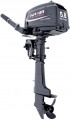 | 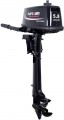 |
|---|---|---|
| Parsun TE5.8BMS | Parsun T5.8BMS | |
from $840.40 | from $819.12 up to $831.60 | |
| TOP sellers | ||
| Application | boat | boat |
| Motor type | propeller | propeller |
Motor | ||
| Engine type | petrol | petrol |
| Motor duty cycle | 2-stroke | 2-stroke |
| Maximum power | 5.8 hp | 5.8 hp |
| Maximum power | 4.33 kW | 4.3 kW |
| Maximum revolutions | 5500 rpm | 5500 rpm |
| Number of cylinders | 1 pcs | 1 pcs |
| Capacity | 102 cm3 | 102 cm3 |
| Piston diameter | 55 mm | 55 mm |
| Piston stroke | 43 mm | 43 mm |
| Cooling | liquid | liquid |
| Exhaust system | through the propeller | above propeller |
Fuel system | ||
| Fuel system type | carburetor | carburetor |
| Fuel tank | built-in | built-in |
| Fuel tank volume | 2.7 L | 2.7 L |
| Recommended fuel | AI-95 gasoline | AI-95 gasoline |
Drive unit | ||
| Gear ratio | 2.08 | 2.08 |
| Propeller screw | 3-bladed | 3-bladed |
| Gear | forward neutral reverse | forward neutral reverse |
Equipment | ||
| Transom height (deadwood) | 381 mm | 381 mm |
| Control system | tiller | tiller |
| Launch type | manual | manual |
| Leg lift (trim) | manual | manual |
General | ||
| Dimensions | 1014x700x343 mm | |
| Weight | 24 kg | 20 kg |
| Added to E-Catalog | march 2017 | june 2015 |


Compare Parsun TE5.8BMS and T5.8BMS
You may be interested in
My comparisons
Parsun TE5.8BMS often compared

Parsun T5.8BMS often compared


Glossary
Maximum power
The maximum operating power of the outboard motor, expressed in kilowatts.
The practical value of motor power is described in detail in “Maximum power" is higher. Here we note that the kilowatt (derivative of watt) is just one of the units of power used in fact along with horsepower (hp); 1 HP ≈ 735 W (0.735 kW). Watts are considered the traditional unit for electric motors (see "Engine Type"), but for a number of reasons, outboard motor manufacturers use this designation for gasoline models as well.
The practical value of motor power is described in detail in “Maximum power" is higher. Here we note that the kilowatt (derivative of watt) is just one of the units of power used in fact along with horsepower (hp); 1 HP ≈ 735 W (0.735 kW). Watts are considered the traditional unit for electric motors (see "Engine Type"), but for a number of reasons, outboard motor manufacturers use this designation for gasoline models as well.
Exhaust system
The design of the exhaust system in a gasoline outboard motor (see “Engine type”), more precisely, the method of exhaust gases used in this system.
— Above the screw. This category includes two types of engines. The simplest option is when exhaust gases are emitted directly into the air. Such systems are extremely simple and cheap, but the exhaust can create a noticeable inconvenience for people in the boat (not only because of the gases, but also because of the rather high noise level); therefore, they are found only in the simplest outboard motors, and even then quite rarely. A more common option is to release exhaust gases into the water above the propeller (most often through the so-called anti-cavitation plate — a flat ledge above the propeller). Such systems are more comfortable than "air" ones, while they are simpler and cheaper than propeller exhaust (see below), although they are still considered less technically advanced.
— Through the screw. In systems of this type, the exhaust is led into the water directly through the propeller hub; in fact, the position of the exhaust pipe coincides with the axis of rotation. This reduces the noise level compared to systems using exhaust over the propeller, and also slightly increases power and traction characteristics. The downside of these advantages is the design complexity and, accordingly, the high cost.
— Above the screw. This category includes two types of engines. The simplest option is when exhaust gases are emitted directly into the air. Such systems are extremely simple and cheap, but the exhaust can create a noticeable inconvenience for people in the boat (not only because of the gases, but also because of the rather high noise level); therefore, they are found only in the simplest outboard motors, and even then quite rarely. A more common option is to release exhaust gases into the water above the propeller (most often through the so-called anti-cavitation plate — a flat ledge above the propeller). Such systems are more comfortable than "air" ones, while they are simpler and cheaper than propeller exhaust (see below), although they are still considered less technically advanced.
— Through the screw. In systems of this type, the exhaust is led into the water directly through the propeller hub; in fact, the position of the exhaust pipe coincides with the axis of rotation. This reduces the noise level compared to systems using exhaust over the propeller, and also slightly increases power and traction characteristics. The downside of these advantages is the design complexity and, accordingly, the high cost.
Weight
The total weight of the outboard motor. This parameter is indicated, usually, only for the unit itself, without taking into account the fuel in the tank and the tank itself (if it is external, see "Fuel tank"), as well as additional equipment. Motor weight data can be useful in order to estimate the overall balance of the boat and the change in its payload capacity.