
Comparison Nux NPK-20 vs Yamaha P-45
Add to comparison |  | 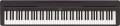 |
|---|---|---|
| Nux NPK-20 | Yamaha P-45 | |
from $699.00 | Compare prices 4 | |
| User reviews | ||
| TOP sellers | ||
| Body | portable | portable |
Keys | ||
| Number of keys | 88 шт | 88 шт |
| Size | full size | full size |
| Mechanics | active | malleus |
| Sensitivity adjustment |  | |
| Rigidity | semi-weighted | weighted |
Specs | ||
| Polyphony | 189 voices | 64 voices |
| Built-in timbres | 271 шт | 10 шт |
| Tempo change | 20 – 280 | 32 – 280 |
| Metronome | | |
| Built-in compositions | | |
Effects and control | ||
| Timbres layering | | |
| Keyboard split |  | |
| Reverberation | | |
| Chorus | | |
| Transposition | | |
| Fine tuning | | |
Connectors | ||
| Connectable pedals | 1 шт | 1 шт |
| Outputs | USB to host (type B) | USB to host (type B) |
| Headphone outputs | 1 шт | 1 шт |
| Linear outputs | 2 шт | |
General | ||
| Built-in acoustics | 20 W | 12 W |
| Number of bands | 1 | 1 |
| Display | colour | |
| Touch screen | | |
| Power consumption | 6 W | |
| Autonomous power supply | batteries type D | |
| Dimensions (WxHxD) | 1300x135x270 mm | 1326x154x295 mm |
| Weight | 12.2 kg | 11.5 kg |
| In box | music stand PSU | music stand PSU |
| Color | ||
| Added to E-Catalog | july 2024 | june 2017 |





Compare Nux NPK-20 and Yamaha P-45
Price comparison
You may be interested in
My comparisons
Nux NPK-20 often compared


Yamaha P-45 often compared


Glossary
Mechanics
Type of action used in digital piano keys.
— Hammer. A mechanic that mimics the feel of playing a real piano as closely as possible. Hammer action keyboards not only provide velocity and force-dependent sound dynamics, they also provide a distinctive response with each press. These mechanics are complex and expensive, but they are considered the most advanced and suitable for digital pianos, and therefore are used in most models.
— Active. In the case of digital pianos, the active keyboard can be described as a simplified version of the hammer action described above. The sound produced when pressing such keys also depends on the force and speed of pressing, however, the keys themselves have less rigidity and do not give the full feel of a piano keyboard. On the other hand, such mechanics are cheaper. As a result, it is found mainly in low-cost models, as well as some professional instruments, positioned more like electric organs.
The third type of mechanics — passive — assumes that each time you press a key, the volume will be the same, regardless of the strength and speed of pressing. Such keyboards are not used in digital pianos — they are too primitive and not very functional for this class of instruments; however, models with adjustable sensitivity may provide switching the keyboard to a "passive" format (see below for more details).
— Hammer. A mechanic that mimics the feel of playing a real piano as closely as possible. Hammer action keyboards not only provide velocity and force-dependent sound dynamics, they also provide a distinctive response with each press. These mechanics are complex and expensive, but they are considered the most advanced and suitable for digital pianos, and therefore are used in most models.
— Active. In the case of digital pianos, the active keyboard can be described as a simplified version of the hammer action described above. The sound produced when pressing such keys also depends on the force and speed of pressing, however, the keys themselves have less rigidity and do not give the full feel of a piano keyboard. On the other hand, such mechanics are cheaper. As a result, it is found mainly in low-cost models, as well as some professional instruments, positioned more like electric organs.
The third type of mechanics — passive — assumes that each time you press a key, the volume will be the same, regardless of the strength and speed of pressing. Such keyboards are not used in digital pianos — they are too primitive and not very functional for this class of instruments; however, models with adjustable sensitivity may provide switching the keyboard to a "passive" format (see below for more details).
Rigidity
Rigidity characterizes the force with which it is necessary to press the keys of a digital piano.
— Weighted. Weighted keyboards have high rigidity; if you are not used to them, they may not seem very comfortable. At the same time, such rigidity is an integral feature of the traditional piano keys. Therefore, all hammer action keyboards (see "Mechanics"), by definition, are made only weighted (and this is the type of mechanics that is typical for most digital pianos). Moreover, most models with simpler active mechanics have this rigidity — to ensure the greatest possible resemblance to traditional pianos.
— Semi-weighted. Keyboards of relatively low rigidity, which do not require such an effort when pressed, as weighted ones, however, are less reliable in response. They are found only in instruments with active mechanics, and even then rarely, mainly among low-cost-level models.
Technically, there is another type of keyboard — unweighted, in which each key, figuratively speaking, "falls through" under the finger, and the effort when pressed is almost imperceptible. However, such keyboards do not allow adequate pressure control, which is critical for more or less professional music performance. This is why digital pianos don't have unweighted keys.
— Weighted. Weighted keyboards have high rigidity; if you are not used to them, they may not seem very comfortable. At the same time, such rigidity is an integral feature of the traditional piano keys. Therefore, all hammer action keyboards (see "Mechanics"), by definition, are made only weighted (and this is the type of mechanics that is typical for most digital pianos). Moreover, most models with simpler active mechanics have this rigidity — to ensure the greatest possible resemblance to traditional pianos.
— Semi-weighted. Keyboards of relatively low rigidity, which do not require such an effort when pressed, as weighted ones, however, are less reliable in response. They are found only in instruments with active mechanics, and even then rarely, mainly among low-cost-level models.
Technically, there is another type of keyboard — unweighted, in which each key, figuratively speaking, "falls through" under the finger, and the effort when pressed is almost imperceptible. However, such keyboards do not allow adequate pressure control, which is critical for more or less professional music performance. This is why digital pianos don't have unweighted keys.
Polyphony
The number of voices supported by the digital piano — more precisely, the maximum number of voices that the instrument can play at the same time.
This parameter should not be confused with the number of notes that can be played simultaneously on the keyboard. The fact is that in many timbres, several voices (tone generators) are used for each note at once — this is the only way to achieve a more or less reliable sound. Thus, the required number of voices can be many times higher than the number of notes — for example, the simplest chord of 3 notes may require 9 or even 12 voices. In addition, tone generators are used to play auto accompaniment parts and built-in songs (see below), and here the number of voices can already be measured in tens.
In light of all this, polyphony of less than 90 voices is typical mainly for relatively simple and inexpensive instruments that are not designed for complex tasks. The smallest number found in modern digital pianos is 32 voices. It is desirable for a more or less solid instrument to have at least 96 voices, and in top models this figure can reach 256.
This parameter should not be confused with the number of notes that can be played simultaneously on the keyboard. The fact is that in many timbres, several voices (tone generators) are used for each note at once — this is the only way to achieve a more or less reliable sound. Thus, the required number of voices can be many times higher than the number of notes — for example, the simplest chord of 3 notes may require 9 or even 12 voices. In addition, tone generators are used to play auto accompaniment parts and built-in songs (see below), and here the number of voices can already be measured in tens.
In light of all this, polyphony of less than 90 voices is typical mainly for relatively simple and inexpensive instruments that are not designed for complex tasks. The smallest number found in modern digital pianos is 32 voices. It is desirable for a more or less solid instrument to have at least 96 voices, and in top models this figure can reach 256.
Built-in timbres
The number of built-in sounds provided by the Digital Piano.
Despite the name, digital pianos are extremely rarely designed to imitate the sound of only a piano — the electronic hardware allows them to provide other timbres of sound. In addition, even the piano has its own varieties — for example, among the grand pianos there are 6 main classes, from large concert to miniature. So the built-in sounds can cover different kinds of pianos, as well as other instruments and sound effects.
The abundance and variety of timbres in digital pianos as a whole is not as great as in synthesizers, however, in this category there are very “charged” models, with a hundred timbres or more (in the most multifunctional, this number can exceed 900). However, it is worth specifically looking for a “multi-instrumental” model if you do not intend to be limited to the sound of the piano and would like to have more freedom of choice. It is worth remembering that a specific set of timbres can be different.
If the instrument is bought exclusively as a piano, then here, on the contrary, it is worth paying attention primarily to solutions with a small number of timbres. Such models are not only cheaper than "universals" — they can also sound better (due to the fact that there are few timbres and the manufacturer can carefully approach the sound quality of each built-in "instrument").
Despite the name, digital pianos are extremely rarely designed to imitate the sound of only a piano — the electronic hardware allows them to provide other timbres of sound. In addition, even the piano has its own varieties — for example, among the grand pianos there are 6 main classes, from large concert to miniature. So the built-in sounds can cover different kinds of pianos, as well as other instruments and sound effects.
The abundance and variety of timbres in digital pianos as a whole is not as great as in synthesizers, however, in this category there are very “charged” models, with a hundred timbres or more (in the most multifunctional, this number can exceed 900). However, it is worth specifically looking for a “multi-instrumental” model if you do not intend to be limited to the sound of the piano and would like to have more freedom of choice. It is worth remembering that a specific set of timbres can be different.
If the instrument is bought exclusively as a piano, then here, on the contrary, it is worth paying attention primarily to solutions with a small number of timbres. Such models are not only cheaper than "universals" — they can also sound better (due to the fact that there are few timbres and the manufacturer can carefully approach the sound quality of each built-in "instrument").
Tempo change
The range over which the tempo of the sound played by the instrument can change. It can be either a built-in melody or a part recorded on a sequencer, or an auto accompaniment, a tutorial or a metronome. For more information on all of these features, see the corresponding glossary entries. Here we note that a change in tempo is often required in fact — for example, to speed up an initially "sluggish" accompaniment or slow down a training programme that is difficult to master at the original tempo.
Tempo is traditionally indicated in beats per minute. The classical, "academic" range covers options from 40 bpm ("grave", "very slow") to 208 bpm ("prestissimo", "very fast"), however, in modern digital pianos, the working range of tempos is often significantly wider.
Tempo is traditionally indicated in beats per minute. The classical, "academic" range covers options from 40 bpm ("grave", "very slow") to 208 bpm ("prestissimo", "very fast"), however, in modern digital pianos, the working range of tempos is often significantly wider.
Keyboard split
Possibility of dividing the keyboard into two parts so that the parts of the left and right hands are played in different timbres. This allows you to simultaneously play two disparate parts on the instrument — for example, accompany a piano melody with chords from a string orchestra or organ sounds. Specific combinations of timbres are most often pre-recorded in memory, however, there are models in which the musician himself can choose timbres for each part of the keyboard.
Chorus
The presence of the chorus effect in the digital piano.
Initially, this effect was developed as an attempt to simulate the choral sound of several instruments of the same type. Even a perfect choir never plays 100% in sync, which is what the creators of the chorus tried to reproduce. This effect works as follows: several copies are taken from the main signal, which are played along with it — but not strictly simultaneously, but with a small (up to 30 ms) delay, selected randomly for each individual signal. This really allows to imitate the effect of polyphony to a certain extent, however, such sound is still far from a full-fledged choir. However, the chorus itself is quite interesting as an additional effect.
Initially, this effect was developed as an attempt to simulate the choral sound of several instruments of the same type. Even a perfect choir never plays 100% in sync, which is what the creators of the chorus tried to reproduce. This effect works as follows: several copies are taken from the main signal, which are played along with it — but not strictly simultaneously, but with a small (up to 30 ms) delay, selected randomly for each individual signal. This really allows to imitate the effect of polyphony to a certain extent, however, such sound is still far from a full-fledged choir. However, the chorus itself is quite interesting as an additional effect.
Transposition
The ability to transpose sound on a digital piano.
Transposition is a translation into another key, when each note rises or falls by a certain number of semitones. Support for this function allows you to at least "relearn" the keyboard, which is indispensable if you need to quickly change from key to key — for example, if the vocalist does not "stretch" his part and the melody needs to be lowered by at least 1 – 2 semitones. In such cases, it is enough to turn on transposition with the necessary settings — and you can play a familiar part on the same keys without learning it in a different layout. Transposition can also be applied to built-in songs (to adjust to the key of the main part), to tracks that the sequencer works with (to mix two parts in different keys), and so on.
Transposition is a translation into another key, when each note rises or falls by a certain number of semitones. Support for this function allows you to at least "relearn" the keyboard, which is indispensable if you need to quickly change from key to key — for example, if the vocalist does not "stretch" his part and the melody needs to be lowered by at least 1 – 2 semitones. In such cases, it is enough to turn on transposition with the necessary settings — and you can play a familiar part on the same keys without learning it in a different layout. Transposition can also be applied to built-in songs (to adjust to the key of the main part), to tracks that the sequencer works with (to mix two parts in different keys), and so on.
Linear outputs
The number of line outputs provided in the design of the digital piano.
The line output allows you to send the sound from the instrument to external audio equipment. In this case, the sound is transmitted in an analogue format, and to play it, it is enough to pass it through a power amplifier; and active acoustics can generally be connected directly to the line output. The outputs themselves can use different types of connectors, but most often they are 3.5 mm mini-Jack or 6.35 mm Jack, compatible with most audio equipment either directly or through the simplest adapters.
Multiple line outputs allow you to connect multiple signal receivers to the instrument at once — for example, speakers with an amplifier for playback and an external recorder for recording. However, digital pianos rarely have more than 2 line outputs — more, taking into account the specifics of the use of such instruments, is simply not required.
The line output allows you to send the sound from the instrument to external audio equipment. In this case, the sound is transmitted in an analogue format, and to play it, it is enough to pass it through a power amplifier; and active acoustics can generally be connected directly to the line output. The outputs themselves can use different types of connectors, but most often they are 3.5 mm mini-Jack or 6.35 mm Jack, compatible with most audio equipment either directly or through the simplest adapters.
Multiple line outputs allow you to connect multiple signal receivers to the instrument at once — for example, speakers with an amplifier for playback and an external recorder for recording. However, digital pianos rarely have more than 2 line outputs — more, taking into account the specifics of the use of such instruments, is simply not required.