
Comparison Harley Benton Extreme-76 vs Harley Benton RX-10
Add to comparison |  | 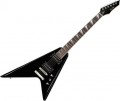 |
|---|---|---|
| Harley Benton Extreme-76 | Harley Benton RX-10 | |
| Outdated Product | Outdated Product | |
| TOP sellers | ||
| Type | electric guitar | electric guitar |
| Number of strings | 6 | 6 |
| Pickups | passive | passive |
| Pickup diagram | H-H | H-H |
Tone block | ||
| Type | passive | passive |
| Volume controls | 2 | 1 |
| Tone controls | 1 | 1 |
| Pickup switch | 3 position | 3 position |
Body | ||
| Type | monolith | monolith |
| Size | 4/4 | 4/4 |
| Shape | Explorer | Flying V |
| Cutaway | single | |
| Pickguard |  |  |
| Material | mahogany | linden |
| Bridge | Tune-o-Matic (fixed) | Tune-o-Matic (fixed) |
Neck | ||
| Mount type | pasted | bolted |
| Number of frets | 22 | 22 |
| Neck profile | C | C |
| Nut width | 42 mm | 42 mm |
| Fretboard radius | 15 " | |
| Anchor | single | double |
| Scale | 24.72 " | 24.72 " |
| Pegs | closed | closed |
| Neck material | mahogany | maple |
| Fretboard | amaranth | roseacer |
| Added to E-Catalog | october 2021 | september 2021 |


Compare Harley Benton Extreme-76 and RX-10
You may be interested in
My comparisons
Harley Benton RX-10 often compared


Glossary
Volume controls
The number of volume controls provided in an electric guitar.
If there is only one knob, this means that the musician can only adjust the overall volume of the instrument. However, there are models that have several volume control knobs — usually there are no less of them than pickups (2 or 3), which allows you to separately adjust the volume of each pickup. And since the characteristics of the sound depend on the type of the used pickup (see "Pickup Diagram") and even its location, then by changing the mutual volume of the individual pickups, you can achieve different coloring of the sound. At the same time, the design may also include a general volume control, which allows you to adjust it in the classical way and not mess with the settings of each pickup.
If there is only one knob, this means that the musician can only adjust the overall volume of the instrument. However, there are models that have several volume control knobs — usually there are no less of them than pickups (2 or 3), which allows you to separately adjust the volume of each pickup. And since the characteristics of the sound depend on the type of the used pickup (see "Pickup Diagram") and even its location, then by changing the mutual volume of the individual pickups, you can achieve different coloring of the sound. At the same time, the design may also include a general volume control, which allows you to adjust it in the classical way and not mess with the settings of each pickup.
Shape
The general shape of the body of an electric guitar.
The solid body of an electric guitar can be molded into almost any shape; hollow cases do not give such freedom, however, even among them, the options in shape can be very diverse. However, there are certain standard forms. It is not uncommon for these shapes to be named after a particular "legendary" guitar model, such as the "Les Paul" or "Stratocaster" (after Gibson and Fender instruments of the same name, respectively). It makes no sense to describe each standard form — it's easier to find an illustration in our catalog or on the Internet.
The main, and often the only point, which is affected by the shape of the body is the appearance of the guitar. Also, convenience for the musician to some extent depends on this parameter — for example, some models allow you to play while sitting, resting the instrument on your foot, for others this method is weak or not suitable at all. But whether the shape of the body affects the sound of an electric guitar is a moot point. There is an unequivocal dependence only in semi-acoustic models, but for solid bodies there is no clear answer to this question: some musicians claim the superiority of some forms over others, but this moment is largely subjective. In addition, other parameters (types and number of pickups, bridge design, etc.) greatly affect the sound quality.
Now on the market there are guitars with this body shape: Les Paul..., Superstrat, Stratocaster, Jazz Bass, Precision Bass, Telecaster, PRS Santana, Flying V, SG, however, there are also completely non-standard options.
The solid body of an electric guitar can be molded into almost any shape; hollow cases do not give such freedom, however, even among them, the options in shape can be very diverse. However, there are certain standard forms. It is not uncommon for these shapes to be named after a particular "legendary" guitar model, such as the "Les Paul" or "Stratocaster" (after Gibson and Fender instruments of the same name, respectively). It makes no sense to describe each standard form — it's easier to find an illustration in our catalog or on the Internet.
The main, and often the only point, which is affected by the shape of the body is the appearance of the guitar. Also, convenience for the musician to some extent depends on this parameter — for example, some models allow you to play while sitting, resting the instrument on your foot, for others this method is weak or not suitable at all. But whether the shape of the body affects the sound of an electric guitar is a moot point. There is an unequivocal dependence only in semi-acoustic models, but for solid bodies there is no clear answer to this question: some musicians claim the superiority of some forms over others, but this moment is largely subjective. In addition, other parameters (types and number of pickups, bridge design, etc.) greatly affect the sound quality.
Now on the market there are guitars with this body shape: Les Paul..., Superstrat, Stratocaster, Jazz Bass, Precision Bass, Telecaster, PRS Santana, Flying V, SG, however, there are also completely non-standard options.
Cutaway
A type of cutout provided in the construction of a guitar body.
The notch is located at the point where the neck is attached to the body and can be single or double. The single cutout for a standard guitar hold is on the bottom, under the neck. It is designed to allow the player to comfortably use the higher (closer to the bridge) frets without the body getting in the way of the left hand (or right, in a left-handed instrument). In models with a double cutout, there is also a notch above the neck, it may be smaller than the bottom one. The top notch is provided mainly for aesthetic purposes, to give the instrument a distinctive appearance, but it can also be useful in fact — for example, if the player uses his thumb to hold the frets.
Note that some variants of the body shape do not provide cutouts at all — this is simply not required. Flying B body guitars are an example.
The notch is located at the point where the neck is attached to the body and can be single or double. The single cutout for a standard guitar hold is on the bottom, under the neck. It is designed to allow the player to comfortably use the higher (closer to the bridge) frets without the body getting in the way of the left hand (or right, in a left-handed instrument). In models with a double cutout, there is also a notch above the neck, it may be smaller than the bottom one. The top notch is provided mainly for aesthetic purposes, to give the instrument a distinctive appearance, but it can also be useful in fact — for example, if the player uses his thumb to hold the frets.
Note that some variants of the body shape do not provide cutouts at all — this is simply not required. Flying B body guitars are an example.
Pickguard
The presence of a protective lining (pickguard) on the body of the guitar.
Such an overlay is located on the upper deck, most often made of durable plastic and differs markedly in colour, due to which it is clearly visible. Its main purpose is to protect the soundboard surface from pick strikes (for example, when playing with dynamic fighting), which could damage the varnished wooden surface. The specific shape and size of the fingerboard may vary, but anyway, it covers at least the surface below the strings (when looking at the guitar in the working position), and sometimes under the strings and even above them.
Such an overlay is located on the upper deck, most often made of durable plastic and differs markedly in colour, due to which it is clearly visible. Its main purpose is to protect the soundboard surface from pick strikes (for example, when playing with dynamic fighting), which could damage the varnished wooden surface. The specific shape and size of the fingerboard may vary, but anyway, it covers at least the surface below the strings (when looking at the guitar in the working position), and sometimes under the strings and even above them.
Material
The material from which the body of an electric guitar is made. For models with cutouts (semi-acoustic, see "Type"), in this case, only the material of the back deck and sides can be taken into account, and data on the top deck is given separately (for more details, see "Deck Cover Material").
Now on the market there are cases of such trees: red, maple, agatis, ash, alder.
It makes no sense to dwell on each of the materials found in modern electric guitars. Their variety is very large, however, unlike acoustic guitars, the body in this case does not play such a significant role in shaping the sound, and its material has a relatively small effect on the acoustic properties of the instrument (although the exact degree of such influence is a moot point). If you wish, you can find detailed data on a particular material in special sources, but in fact it makes sense to look primarily at the appearance of the instrument and its price category.
Now on the market there are cases of such trees: red, maple, agatis, ash, alder.
It makes no sense to dwell on each of the materials found in modern electric guitars. Their variety is very large, however, unlike acoustic guitars, the body in this case does not play such a significant role in shaping the sound, and its material has a relatively small effect on the acoustic properties of the instrument (although the exact degree of such influence is a moot point). If you wish, you can find detailed data on a particular material in special sources, but in fact it makes sense to look primarily at the appearance of the instrument and its price category.
Mount type
A method of attaching the neck to the body used in an electric guitar.
— Boltov. The most inexpensive and practical (in terms of production and repair technology) method of attachment: the neck is bolted to the body. Thanks to this, the assembly of the guitar is extremely simple, and the neck can be easily removed from the finished instrument for repair or even replacement with a new one. Note that although the bolt method is considered “low-cost” (and is found mainly in instruments of the corresponding level), it cannot be said that it is definitely worse than other options: guitars of this design have relatively weak sustain, but they give a bright, sharp tone with good attack. They can be used in almost any genre, but they are still considered the most suitable for heavy music.
— Pasted. A neck mounted in a recess in the body and secured to the recess with epoxy or other adhesive. This design does not allow for such a powerful attack as on bolt necks, but it provides excellent sustain and a pleasant coloration of the sound. And in general, the adhesive connection is considered more advanced, because. better reveals the acoustic properties of wood. On the other hand, such tools are more complicated and more expensive, both in production and in repair, than “bolted” ones.
— Through. The name of this method is due to the fact that the neck passes...through the body through and through, to the “lower” (from the side of the bridge) butt. Many instruments of this type, from the back, look as if two additional pieces were attached to the solid piece of wood from which the neck and middle part of the body were carved to give the body the desired shape and width (although the manufacturing technique is, of course, somewhat more complicated). It is believed that the neck-through mount maximizes the capabilities of the wood and allows you to achieve the highest quality sound, with a flat frequency response and excellent sustain. However, such designs are very expensive, and besides, they require extremely careful handling — especially since the repair of a through neck is at best difficult and expensive, and often impossible at all. Note that this option is used mainly in basses, electric guitars with a through mounting method are produced much less frequently.
— Boltov. The most inexpensive and practical (in terms of production and repair technology) method of attachment: the neck is bolted to the body. Thanks to this, the assembly of the guitar is extremely simple, and the neck can be easily removed from the finished instrument for repair or even replacement with a new one. Note that although the bolt method is considered “low-cost” (and is found mainly in instruments of the corresponding level), it cannot be said that it is definitely worse than other options: guitars of this design have relatively weak sustain, but they give a bright, sharp tone with good attack. They can be used in almost any genre, but they are still considered the most suitable for heavy music.
— Pasted. A neck mounted in a recess in the body and secured to the recess with epoxy or other adhesive. This design does not allow for such a powerful attack as on bolt necks, but it provides excellent sustain and a pleasant coloration of the sound. And in general, the adhesive connection is considered more advanced, because. better reveals the acoustic properties of wood. On the other hand, such tools are more complicated and more expensive, both in production and in repair, than “bolted” ones.
— Through. The name of this method is due to the fact that the neck passes...through the body through and through, to the “lower” (from the side of the bridge) butt. Many instruments of this type, from the back, look as if two additional pieces were attached to the solid piece of wood from which the neck and middle part of the body were carved to give the body the desired shape and width (although the manufacturing technique is, of course, somewhat more complicated). It is believed that the neck-through mount maximizes the capabilities of the wood and allows you to achieve the highest quality sound, with a flat frequency response and excellent sustain. However, such designs are very expensive, and besides, they require extremely careful handling — especially since the repair of a through neck is at best difficult and expensive, and often impossible at all. Note that this option is used mainly in basses, electric guitars with a through mounting method are produced much less frequently.
Fretboard radius
The radius of curvature of a fretboard mounted on the fretboard of an electric guitar.
The fingerboard is located directly under the strings, it is to it that the musician presses the strings when playing. If you look at the neck in cross section, its upper part with the overlay will have the shape of an arc; the radius of this arc is implied in this case. The smaller the radius, the more convex this arc will be, and vice versa, a large radius will correspond to an almost flat surface.
In general, it is believed that a smaller fingerboard radius is better for playing chords, and a more even, flat surface makes it easier to play technical passages with an abundance of special techniques such as bands. The average and, one might say, classic diameter value is 12", this is the most popular option among modern electric guitars. The smallest figure is just over 7", it is found in some guitars with Stratocaster bodies (both original Fender instruments and copies ). And the most flat pads have a diameter of 20" or more.
Note that there are often instruments with a variable fretboard radius — smaller at the headstock (where chords are played more often) and larger near the body (where solos are played by notes). In such cases, the radius at the nut is indicated.
The fingerboard is located directly under the strings, it is to it that the musician presses the strings when playing. If you look at the neck in cross section, its upper part with the overlay will have the shape of an arc; the radius of this arc is implied in this case. The smaller the radius, the more convex this arc will be, and vice versa, a large radius will correspond to an almost flat surface.
In general, it is believed that a smaller fingerboard radius is better for playing chords, and a more even, flat surface makes it easier to play technical passages with an abundance of special techniques such as bands. The average and, one might say, classic diameter value is 12", this is the most popular option among modern electric guitars. The smallest figure is just over 7", it is found in some guitars with Stratocaster bodies (both original Fender instruments and copies ). And the most flat pads have a diameter of 20" or more.
Note that there are often instruments with a variable fretboard radius — smaller at the headstock (where chords are played more often) and larger near the body (where solos are played by notes). In such cases, the radius at the nut is indicated.
Anchor
The type of truss provided in the design of the neck of an electric guitar.
The anchor has the form of an elastic metal rod installed along the neck and hidden inside. It reinforces the structure and prevents the neck from deforming from string tension. The truss rod can be made adjustable to suit the characteristics of the strings and compensate for the deformations that inevitably occur over time. The types of this detail can be as follows:
- Single. Anchor consisting of a single rod. The classic version used in most modern electric guitars, regardless of price category. Usually, the strength and rigidity of even a single rod is sufficient for normal applications and use.
- Double. Anchor, consisting, in accordance with the name, of two rods. It is distinguished by greater strength and reliability compared to a single one, in particular, it provides additional resistance to lateral deformations. On the other hand, the double construction is noticeably more expensive.
The anchor has the form of an elastic metal rod installed along the neck and hidden inside. It reinforces the structure and prevents the neck from deforming from string tension. The truss rod can be made adjustable to suit the characteristics of the strings and compensate for the deformations that inevitably occur over time. The types of this detail can be as follows:
- Single. Anchor consisting of a single rod. The classic version used in most modern electric guitars, regardless of price category. Usually, the strength and rigidity of even a single rod is sufficient for normal applications and use.
- Double. Anchor, consisting, in accordance with the name, of two rods. It is distinguished by greater strength and reliability compared to a single one, in particular, it provides additional resistance to lateral deformations. On the other hand, the double construction is noticeably more expensive.
Neck material
The material from which the neck of an electric guitar is made.
The most commonly used in the manufacture of the neck is mahogany. and maple. Theoretically, the acoustic properties of an instrument are determined by all its details, and even more so, these properties are affected by the quality of the fretboard. At the same time, we note that this influence is not so strong compared to other characteristics of the guitar (type and number of pickups, scale size, body type, etc.). So in this case, it makes no sense to describe in detail each type of material found in modern instruments — especially since the same term (for example, “mahogany”) can denote different types of wood that differ markedly in working properties and overall quality. When evaluating the material of the neck, it is quite possible to proceed from the fact that the manufacturer selects it in accordance with the price category and the general specialization of the guitar.
The most commonly used in the manufacture of the neck is mahogany. and maple. Theoretically, the acoustic properties of an instrument are determined by all its details, and even more so, these properties are affected by the quality of the fretboard. At the same time, we note that this influence is not so strong compared to other characteristics of the guitar (type and number of pickups, scale size, body type, etc.). So in this case, it makes no sense to describe in detail each type of material found in modern instruments — especially since the same term (for example, “mahogany”) can denote different types of wood that differ markedly in working properties and overall quality. When evaluating the material of the neck, it is quite possible to proceed from the fact that the manufacturer selects it in accordance with the price category and the general specialization of the guitar.