
Comparison A4Tech FBX51C vs A4Tech FX-51
Add to comparison | 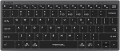 | 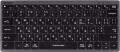 |
|---|---|---|
| A4Tech FBX51C | A4Tech FX-51 | |
from $29.99 | Outdated Product | |
| User reviews | ||
| TOP sellers | ||
| Connection | Bluetooth / radio | wired |
| Bluetooth version | v3.0 | |
| Multi-Device |  |  |
| Cable length | 1.5 m | |
| Form factor | 65% (ultra-compact, without F-series) | 75% (compact TKL, without Num-block) |
| Layout | ANSI | ANSI |
Keyboard | ||
| Key profile | low | low |
| Key type | island type | island type |
| Switch technology | scissor | scissor |
| Fn key | | |
| CMD / OPT keys | | |
Features | ||
| Volume control | fn | fn |
Connection and power supply | ||
| Cable | USB-A | |
| Power source | battery | |
| Port on the device | USB C | |
| Receiver (dongle) | USB A | |
General | ||
| Size | 285x124x17 mm | 285x124x17 mm |
| Weight | 303 g | |
| Color | ||
| Added to E-Catalog | april 2023 | october 2022 |


Compare A4Tech FBX51C and FX-51
Keyboards A4Tech FBX51C and A4Tech FX-51 have a similar ultra-compact format and low island-style keys with a scissor construction. However, FBX51C connects via Bluetooth or radio and supports Multi-Device, allowing it to be used with multiple devices simultaneously, whereas FX-51 is wired and does not support this feature. Both devices have volume control via the Fn key, but FBX51C runs on a battery with USB-C charging, while FX-51 connects directly via USB. Overall, the choice between them depends on the preference for connection type: wireless or wired.
You may be interested in
My comparisons
A4Tech FBX51C often compared


A4Tech FX-51 often compared
Glossary
Connection
— Wired. Connection using a cable with one or another type of connector — most often USB, less often PS/2 or a proprietary plug (see "Connection interface"). Wired keyboards are notable for their low cost and overall convenience — in the sense that they do not require batteries and the operating time is unlimited. However the wire limits mobility; however, given that most often the keyboard is used in close proximity to the computer, this shortcoming cannot be called critical.
— Radio. Wireless connection over the air, usually through a wireless adapter connected to a computer via a USB port. The main advantage of this option can be called the actual absence of a wire; while the communication range is usually several metres, which gives freedom of movement and even allows you to use the keyboard as a "computer remote control". On the other hand, wireless models are much more expensive than wired ones, and their operation requires separate power supply from batteries or a rechargeable battery, the charge of which is limited — accordingly, the continuous operation time is limited. Separately, we note that this option is designed mainly for stationary PCs; if a wireless keyboard is needed for a laptop, it is better to pay attention to Bluetooth models (see below).
— Bluetooth. Another way to wir...elessly connect keyboards. Technically, Bluetooth is based on radio waves, but this technology has its own characteristics, so it is listed separately from the "normal" radio connection (see above). The main one of these features is that many models of modern electronics (almost all laptops and tablets, some PCs, etc.) are equipped with built-in Bluetooth modules, which allows you to connect such keyboards without using additional adapters. In addition, the range of such a connection is officially at least 10 m (in fact, of course, it depends on obstacles, interference, etc.). It is this option that will be optimal if you need a wireless keyboard for a Bluetooth-enabled device.
— Bluetooth / radio. Wireless keyboards that can connect both via Bluetooth and radio. See above for more details on each of these options. Also note here that such a keyboard is usually connected directly to a Bluetooth device (for example, a laptop), and if the computer does not support Bluetooth, you can connect a USB adapter to it and use a radio connection. Thus, the keyboard is as versatile as possible in connection. However, such versatility significantly affects the cost, and is required not so often; so this option is not widely used.
— Bluetooth / radio / wired. Keyboards that support all three connection methods described above. This is the most versatile option, giving the user the freedom to choose for different situations. For example, while playing a game or watching a movie, you can sit in a comfortable chair away from the screen by connecting the device wirelessly, and when typing or surfing the Internet, you can move to the table and use the wire, saving battery power. At the same time, such versatility is not often required and is expensive, so models with this type of connection are not popular either.
— Radio. Wireless connection over the air, usually through a wireless adapter connected to a computer via a USB port. The main advantage of this option can be called the actual absence of a wire; while the communication range is usually several metres, which gives freedom of movement and even allows you to use the keyboard as a "computer remote control". On the other hand, wireless models are much more expensive than wired ones, and their operation requires separate power supply from batteries or a rechargeable battery, the charge of which is limited — accordingly, the continuous operation time is limited. Separately, we note that this option is designed mainly for stationary PCs; if a wireless keyboard is needed for a laptop, it is better to pay attention to Bluetooth models (see below).
— Bluetooth. Another way to wir...elessly connect keyboards. Technically, Bluetooth is based on radio waves, but this technology has its own characteristics, so it is listed separately from the "normal" radio connection (see above). The main one of these features is that many models of modern electronics (almost all laptops and tablets, some PCs, etc.) are equipped with built-in Bluetooth modules, which allows you to connect such keyboards without using additional adapters. In addition, the range of such a connection is officially at least 10 m (in fact, of course, it depends on obstacles, interference, etc.). It is this option that will be optimal if you need a wireless keyboard for a Bluetooth-enabled device.
— Bluetooth / radio. Wireless keyboards that can connect both via Bluetooth and radio. See above for more details on each of these options. Also note here that such a keyboard is usually connected directly to a Bluetooth device (for example, a laptop), and if the computer does not support Bluetooth, you can connect a USB adapter to it and use a radio connection. Thus, the keyboard is as versatile as possible in connection. However, such versatility significantly affects the cost, and is required not so often; so this option is not widely used.
— Bluetooth / radio / wired. Keyboards that support all three connection methods described above. This is the most versatile option, giving the user the freedom to choose for different situations. For example, while playing a game or watching a movie, you can sit in a comfortable chair away from the screen by connecting the device wirelessly, and when typing or surfing the Internet, you can move to the table and use the wire, saving battery power. At the same time, such versatility is not often required and is expensive, so models with this type of connection are not popular either.
Bluetooth version
A version of the "blue tooth" technology for connecting the wireless keyboard to other devices from the outside as a manipulator. The higher its serial number, the more stable and noise-proof connection is provided. At the moment, Bluetooth v 5 is the most advanced standard in keyboards.
Multi-Device
The keyboard's ability to quickly switch between multiple devices. Multi-Device allows you to simultaneously work with a tablet, TV, and other devices with one keyboard.
Cable length
The length of the cable that the keyboard is equipped with for wired connection (see "Connection type").
When choosing this parameter, you should first of all take into account the distance from the device to the connection port: a cable that is too short may simply not reach the connector, and a cable that is too long may get confused at hand and create inconvenience. As for specific values, the reference length is 1.8 m. However, there are cables both shorter and longer.
When choosing this parameter, you should first of all take into account the distance from the device to the connection port: a cable that is too short may simply not reach the connector, and a cable that is too long may get confused at hand and create inconvenience. As for specific values, the reference length is 1.8 m. However, there are cables both shorter and longer.
Form factor
— 100% (full-sized). Classic layout with 104/105 keys featuring a full NumPad, dedicated F1–F12 row, and navigation cluster including Insert/Delete, Home/End, PgUp/PgDn; this version is valued for its familiar geometry, typing speed, and ease of frequent number entry, making it optimal for work in Excel, accounting, IDEs, and editing programs, while in games, the NumPad is often used for binds and macros; compared to TKL/80% without a numeric block, as well as 96% and 1800-compact, the 100% format offers maximum comfort and requires less retraining, but takes up more desk space and pushes the mouse further away, so for compact workplaces, it might be wiser to consider smaller formats.
— 1800 (compact full-sized). A full-featured layout with a numeric block but in a narrower body: the NumPad is shifted closer to the main field, and navigation is often placed above it or compacted next to the arrow keys. It feels like "100%", but is shorter by a few centimeters, so the mouse is closer to the center, offering more comfort for wrists. Compared to TKL, you retain fast number entry, and against 96%, you gain a slightly more "airy" geometry with clear orientation. Note the non-standard sizes of some keys and the right block, which sometimes require special keycap sets. This format is convenient for Excel, accounting, IDEs, and editing, while offering gamers the NumPad for macros while saving desk space.
...r>
— 96% (compact full-sized). Keyboards that preserve all key zones of 100% (F1–F12 row, arrow keys, navigation, and NumPad) but place them in a tight "grid" layout, almost like TKL in width. The numeric block is shifted closer to the main area, while Insert/Home/End and PgUp/PgDn are often reduced to 1u and grouped above the arrows or next to the NumPad. Compared to the 1800 format, 96% is even more compact and visually "smoother," and against TKL, you do not lose the speed of number entry. Note the possible non-standard sizes of the right shift, zeros, and plus on the NumPad, requiring a more selective keycap choice. This format is chosen for Excel and accounting, editing and coding, while gamers use the NumPad for macros, gaining maximum functions with minimal table width.
— 80% (TKL, without Num-block). A full-featured keyboard without a numeric block: retains the F1–F12 row, arrow keys, and navigation Insert/Delete, Home/End, PgUp/PgDn, but is considerably narrower, bringing the mouse closer to the center, which is easier on the shoulders and wrists. Gamers and developers favor this format: there’s more desk space, while familiar keys and hotkeys remain in place. Compared to 100%, you only lose quick number entry, which can be supplemented with a separate wireless NumPad. In comparison to 75%, TKL is more readable and "airy" thanks to its separate navigation block; unlike 96%, it is more compact for mouse grip, though lacking a NumPad. The 80% (TKL) format is optimal for FPS, work in IDEs, editing, and everyday office tasks where numbers aren’t entered continuously.
— 75% (compact TKL, without Num-block). "Almost TKL," where all main keys are within reach, but the body is shorter by several centimeters due to a tight "staircase" arrangement of arrows and navigation. Compared to 80%, it decreases the distance between hands and mouse, enhancing ergonomics for prolonged use, and relative to 100% and 96%, you lose only the numeric block, gaining space for the mouse and a more neutral shoulder posture. This format is chosen for IDEs and design packages, FPS and MOBA, mobile setups with narrow desks, when numbers are entered infrequently or supplemented with an external NumPad. Note: 75% may have non-standard sizes in the right block and individual keys, which is important when selecting keycaps and stabilizers.
— 65% (ultra-compact, without F-row). "Condensed TKL": the alphanumeric block, arrow keys, and a pair of navigation keys remain in place, while the NumPad and the top F1–F12 row are accessed via Fn. This layout is significantly narrower in width, moving the mouse closer to the center, which reduces the spread of arms — ideal for narrow desks, when working on a laptop, and for travel. Compared to 60%, the 65% format is more practical thanks to dedicated arrows and Delete; against 75% and 80%, it is more compact but often requires getting accustomed to layers. Possible non-standard sizes of the right shift and navigation keys are important when choosing keycaps. In real-world scenarios, the 65% format is excellent for IDEs, streaming, and FPS/MOBA games, while regular number entry is complemented by an external wireless NumPad.
— 60% (mini). Classic "trimmed" layout with ~61/62 keys without NumPad, no F1–F12 top row, and no separate navigation cluster: all accessed through the Fn layer, with arrows usually assigned to combinations. Compared to 65%, this format is even more compact but often requires acclimatization to layers; against 75%/80%, you save desk width and achieve a more neutral shoulder posture, at the cost of losing "quick" F-keys. The strong points of 60% are portability, free space for the mouse and mat, and reduced arm movement between keyboard and mouse, making it popular with FPS gamers, streamers, and those working on laptops at narrow desks or traveling. If active number entry or "hot" F-keys are needed, an external wireless NumPad and well-thought-out layer layout help.
— 40% (ultra-mini). Radically compact layout with about 40–50 keys, lacking a number row, arrows, and F-keys: all are accessed via Fn layers, combined presses, and macros, often with an ortholinear matrix. Due to the minimal width, the mouse is closer to the center, reducing hand spread and freeing up desk space, appreciated by mobile users and minimalists. Compared to 60% and 65%, the 40% format requires more serious adaptation and thoughtful firmware (QMK/VIA, home-row mods, tap-dance), and keycap selection is more challenging due to non-standard sizes. The strong point is portability and speed after getting used to it; weakness — reliance on layers and inconvenience of frequent number entry and arrow navigation. The 40% format is practical for travel, work on laptops with docking stations, text editing with hotkeys, and streaming, while numbers are usually supplemented with an external NumPad.
— 1800 (compact full-sized). A full-featured layout with a numeric block but in a narrower body: the NumPad is shifted closer to the main field, and navigation is often placed above it or compacted next to the arrow keys. It feels like "100%", but is shorter by a few centimeters, so the mouse is closer to the center, offering more comfort for wrists. Compared to TKL, you retain fast number entry, and against 96%, you gain a slightly more "airy" geometry with clear orientation. Note the non-standard sizes of some keys and the right block, which sometimes require special keycap sets. This format is convenient for Excel, accounting, IDEs, and editing, while offering gamers the NumPad for macros while saving desk space.
— 80% (TKL, without Num-block). A full-featured keyboard without a numeric block: retains the F1–F12 row, arrow keys, and navigation Insert/Delete, Home/End, PgUp/PgDn, but is considerably narrower, bringing the mouse closer to the center, which is easier on the shoulders and wrists. Gamers and developers favor this format: there’s more desk space, while familiar keys and hotkeys remain in place. Compared to 100%, you only lose quick number entry, which can be supplemented with a separate wireless NumPad. In comparison to 75%, TKL is more readable and "airy" thanks to its separate navigation block; unlike 96%, it is more compact for mouse grip, though lacking a NumPad. The 80% (TKL) format is optimal for FPS, work in IDEs, editing, and everyday office tasks where numbers aren’t entered continuously.
— 75% (compact TKL, without Num-block). "Almost TKL," where all main keys are within reach, but the body is shorter by several centimeters due to a tight "staircase" arrangement of arrows and navigation. Compared to 80%, it decreases the distance between hands and mouse, enhancing ergonomics for prolonged use, and relative to 100% and 96%, you lose only the numeric block, gaining space for the mouse and a more neutral shoulder posture. This format is chosen for IDEs and design packages, FPS and MOBA, mobile setups with narrow desks, when numbers are entered infrequently or supplemented with an external NumPad. Note: 75% may have non-standard sizes in the right block and individual keys, which is important when selecting keycaps and stabilizers.
— 65% (ultra-compact, without F-row). "Condensed TKL": the alphanumeric block, arrow keys, and a pair of navigation keys remain in place, while the NumPad and the top F1–F12 row are accessed via Fn. This layout is significantly narrower in width, moving the mouse closer to the center, which reduces the spread of arms — ideal for narrow desks, when working on a laptop, and for travel. Compared to 60%, the 65% format is more practical thanks to dedicated arrows and Delete; against 75% and 80%, it is more compact but often requires getting accustomed to layers. Possible non-standard sizes of the right shift and navigation keys are important when choosing keycaps. In real-world scenarios, the 65% format is excellent for IDEs, streaming, and FPS/MOBA games, while regular number entry is complemented by an external wireless NumPad.
— 60% (mini). Classic "trimmed" layout with ~61/62 keys without NumPad, no F1–F12 top row, and no separate navigation cluster: all accessed through the Fn layer, with arrows usually assigned to combinations. Compared to 65%, this format is even more compact but often requires acclimatization to layers; against 75%/80%, you save desk width and achieve a more neutral shoulder posture, at the cost of losing "quick" F-keys. The strong points of 60% are portability, free space for the mouse and mat, and reduced arm movement between keyboard and mouse, making it popular with FPS gamers, streamers, and those working on laptops at narrow desks or traveling. If active number entry or "hot" F-keys are needed, an external wireless NumPad and well-thought-out layer layout help.
— 40% (ultra-mini). Radically compact layout with about 40–50 keys, lacking a number row, arrows, and F-keys: all are accessed via Fn layers, combined presses, and macros, often with an ortholinear matrix. Due to the minimal width, the mouse is closer to the center, reducing hand spread and freeing up desk space, appreciated by mobile users and minimalists. Compared to 60% and 65%, the 40% format requires more serious adaptation and thoughtful firmware (QMK/VIA, home-row mods, tap-dance), and keycap selection is more challenging due to non-standard sizes. The strong point is portability and speed after getting used to it; weakness — reliance on layers and inconvenience of frequent number entry and arrow navigation. The 40% format is practical for travel, work on laptops with docking stations, text editing with hotkeys, and streaming, while numbers are usually supplemented with an external NumPad.
Cable
Features of the cable with which the device is equipped. First of all, it's worth noting the connection interface used in a wired keyboard. Namely:
— USB-A. A standard universal port for connecting peripherals, present in almost all modern computers—from desktop PCs to microcomputers. USB keyboards are the most universal, so this option is the most common today. The main disadvantage of this option is that the USB port occupied by the keyboard might be needed for another peripheral device; however, this problem is easily solved—for example, by using a USB hub or purchasing a keyboard with its own hub (see below).
— USB-C. The USB-C plug is reversible, compact, and universal, so the keyboard easily connects to modern laptops, PCs, and docking stations. There is no difference in delay and functionality compared to USB-A: in both cases, the keyboard is recognized as a common USB-HID, NKRO, and high polling rate do not depend on the type of plug. Mechanically, USB-C is usually more durable for wear (up to ~10,000 insertion cycles compared to ~1,500 for USB-A), and it is also easier to insert "by feel". Compatibility is resolved with a cable or mini-adapter A↔C, which may be included. Bottom line: if you have a free USB-C port—opt for a keyboard/cable with USB-C; if there are few "C" ports or the PC is stationary—USB-A is just as good in operation.
— PS/2. A specialized round-shaped port used for connecting keyboards and mice; modern PCs may have either two ports, one for each, or a single universal port. In any case, this connection method is convenient because all USB ports remain free; this can be important when using a large number of USB peripherals. At the same time, the PS/2 port itself is quite large and not suitable for laptops and other compact equipment, and therefore is found only in desktop PCs. Even in these cases, it is advisable to confirm the availability of PS/2 before purchasing a keyboard with such a plug.
— USB or PS/2. Generally, this means USB keyboards equipped with an adapter for PS/2 ports. The features of both interfaces are described above; here we note that this option is the most versatile, allowing for a choice of connection method depending on the situation. Furthermore, it is convenient because there are relatively few PS/2 models, and it's easier to find a suitable USB keyboard equipped with an adapter. The adapters themselves are inexpensive and do not significantly affect the device's price; naturally, they are also sold separately, although a set is often a more preferable option.
— Brand-specific. Connection using a unique plug that is not among the standard (described above) interfaces and is mainly used in technology from a specific brand, at best in some devices from third-party manufacturers. This option is quite convenient for tablet accessories (see "By Direction").
In addition to connection, the keyboard cable may have additional properties:
— Detachable.... A cable that can be disconnected from the keyboard. Almost all devices with two connection options—wired and wireless—have this feature: in wireless mode, the cable can be removed so that it doesn't get in the way. Although, there are also purely wired devices with such a cable—mainly laptop ones, where the cable is removed for convenience during transport. It is also worth noting that a universal port is most often used to connect the cable, so if necessary, the cable can be replaced with another—e.g., a longer one.
— Braided. The presence of an additional braid on the cable makes it more durable, reliable, and resistant to bends. On the other hand, the braid tends to accumulate dirt and fray with wear; because of this, the cable's casing quickly loses its marketable appearance compared to keyboards without braiding. And such a cord costs more than a regular smooth one.
— USB-A. A standard universal port for connecting peripherals, present in almost all modern computers—from desktop PCs to microcomputers. USB keyboards are the most universal, so this option is the most common today. The main disadvantage of this option is that the USB port occupied by the keyboard might be needed for another peripheral device; however, this problem is easily solved—for example, by using a USB hub or purchasing a keyboard with its own hub (see below).
— USB-C. The USB-C plug is reversible, compact, and universal, so the keyboard easily connects to modern laptops, PCs, and docking stations. There is no difference in delay and functionality compared to USB-A: in both cases, the keyboard is recognized as a common USB-HID, NKRO, and high polling rate do not depend on the type of plug. Mechanically, USB-C is usually more durable for wear (up to ~10,000 insertion cycles compared to ~1,500 for USB-A), and it is also easier to insert "by feel". Compatibility is resolved with a cable or mini-adapter A↔C, which may be included. Bottom line: if you have a free USB-C port—opt for a keyboard/cable with USB-C; if there are few "C" ports or the PC is stationary—USB-A is just as good in operation.
— PS/2. A specialized round-shaped port used for connecting keyboards and mice; modern PCs may have either two ports, one for each, or a single universal port. In any case, this connection method is convenient because all USB ports remain free; this can be important when using a large number of USB peripherals. At the same time, the PS/2 port itself is quite large and not suitable for laptops and other compact equipment, and therefore is found only in desktop PCs. Even in these cases, it is advisable to confirm the availability of PS/2 before purchasing a keyboard with such a plug.
— USB or PS/2. Generally, this means USB keyboards equipped with an adapter for PS/2 ports. The features of both interfaces are described above; here we note that this option is the most versatile, allowing for a choice of connection method depending on the situation. Furthermore, it is convenient because there are relatively few PS/2 models, and it's easier to find a suitable USB keyboard equipped with an adapter. The adapters themselves are inexpensive and do not significantly affect the device's price; naturally, they are also sold separately, although a set is often a more preferable option.
— Brand-specific. Connection using a unique plug that is not among the standard (described above) interfaces and is mainly used in technology from a specific brand, at best in some devices from third-party manufacturers. This option is quite convenient for tablet accessories (see "By Direction").
In addition to connection, the keyboard cable may have additional properties:
— Detachable.... A cable that can be disconnected from the keyboard. Almost all devices with two connection options—wired and wireless—have this feature: in wireless mode, the cable can be removed so that it doesn't get in the way. Although, there are also purely wired devices with such a cable—mainly laptop ones, where the cable is removed for convenience during transport. It is also worth noting that a universal port is most often used to connect the cable, so if necessary, the cable can be replaced with another—e.g., a longer one.
— Braided. The presence of an additional braid on the cable makes it more durable, reliable, and resistant to bends. On the other hand, the braid tends to accumulate dirt and fray with wear; because of this, the cable's casing quickly loses its marketable appearance compared to keyboards without braiding. And such a cord costs more than a regular smooth one.
Power source
The type of power used in wireless keyboards. It can be a replaceable battery or its own built-in battery.
As replaceable batteries in modern keyboards, batteries or accumulators of the AA (“finger”) or AAA (“mini-finger”) format can be used. The main advantage of this power supply is the ability to quickly replace dead batteries with new ones — if there are any left, a few seconds are enough, and the keyboard is ready to work again. However, batteries are often not included and must be purchased separately. In addition, anyway, you have to buy new batteries as the old ones wear out — or fork out for rather expensive batteries and, possibly, a charger.
Built-in battery, in turn, relieves the user of the need to purchase batteries. On the other hand, in the event of a discharge, such a battery cannot be quickly replaced, and the only option to continue working is to charge it, which can take quite a long time.
As replaceable batteries in modern keyboards, batteries or accumulators of the AA (“finger”) or AAA (“mini-finger”) format can be used. The main advantage of this power supply is the ability to quickly replace dead batteries with new ones — if there are any left, a few seconds are enough, and the keyboard is ready to work again. However, batteries are often not included and must be purchased separately. In addition, anyway, you have to buy new batteries as the old ones wear out — or fork out for rather expensive batteries and, possibly, a charger.
Built-in battery, in turn, relieves the user of the need to purchase batteries. On the other hand, in the event of a discharge, such a battery cannot be quickly replaced, and the only option to continue working is to charge it, which can take quite a long time.
Port on the device
A connector in the keyboard case for attaching a removable cable, found in both wired models and wireless ones with a battery, where through this port the keyboard is charged and, if necessary, operates "wired" without delay.
— microUSB. One of the miniature versions of the USB connector, still popular in gadgets despite the emergence of the more advanced USB-C. It has comparatively modest capabilities (in particular, it is inferior to USB-C in terms of maximum possible charging power), but this rarely proves critical. Meanwhile, there is an abundance of microUSB cables and chargers.
— USB-C. The latest (as of the end of 2025) type of USB connector. It is symmetrical, allowing the cable to be inserted either way, eliminating the possibility of incorrect connection. USB-C is more reliable, has an extended lifespan, and supports higher data transfer and charging speeds. Additionally, it is compatible with modern devices and is gradually becoming a universal standard, making keyboards with this connector more convenient and relevant for users.
— microUSB. One of the miniature versions of the USB connector, still popular in gadgets despite the emergence of the more advanced USB-C. It has comparatively modest capabilities (in particular, it is inferior to USB-C in terms of maximum possible charging power), but this rarely proves critical. Meanwhile, there is an abundance of microUSB cables and chargers.
— USB-C. The latest (as of the end of 2025) type of USB connector. It is symmetrical, allowing the cable to be inserted either way, eliminating the possibility of incorrect connection. USB-C is more reliable, has an extended lifespan, and supports higher data transfer and charging speeds. Additionally, it is compatible with modern devices and is gradually becoming a universal standard, making keyboards with this connector more convenient and relevant for users.
Receiver (dongle)
A mini adapter that connects to a computer and provides a wireless keyboard connection via a 2.4 GHz radio channel with low latency and stable connectivity. They are distinguished by the connection method that describes the specific type of connector into which you insert the dongle.
— USB-A. A classic full-size rectangular plug used in desktop PCs, monitor hubs, and higher-end docking stations;
— USB-C. A compact reversible plug that is common in ultrabooks, tablets, and modern docks, can be inserted either way and is convenient in limited spaces.
Additionally, the set may include an adapter for converting one type of port to another.
— USB-A. A classic full-size rectangular plug used in desktop PCs, monitor hubs, and higher-end docking stations;
— USB-C. A compact reversible plug that is common in ultrabooks, tablets, and modern docks, can be inserted either way and is convenient in limited spaces.
Additionally, the set may include an adapter for converting one type of port to another.