Laptop Alternative: Best Tablets for Work

We independently test the products and technologies that we recommend.

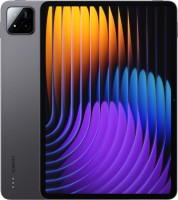
The Xiaomi brand tablet runs on Android 15 (and the proprietary HyperOS) and is positioned as a powerful solution. To ensure high performance, an 8-core Snapdragon 7s Gen 4 processor with Adreno 810 graphics engine and 6 GB of RAM is used. This setup is sufficient for various multimedia entertainment, as well as study, work, and even creative tasks. Specially for the last two scenarios, the model is compatible with both the Redmi Smart Pen stylus and the Redmi Pad 2 Keyboard.
Xiaomi Redmi Pad 2 Pro 128 GB / 5G supports two SIM cards (one e-SIM) and 5G technology, allowing you to connect to mobile internet and not depend on Wi-Fi coverage. This feature also offsets the lack of a GPS module for navigation.
The tablet is equipped with a 12.1-inch IPS screen with a refresh rate of 120 Hz and a resolution of 2560x1600 pixels. It also features not only a light sensor (maximum brightness of 600 nits), but also a color temperature sensor, designed to improve eye comfort. Overall eye safety is confirmed by TÜV Rheinland certification. Other features include a metal body, stereo acoustics, and a mini-Jack (3.5 mm) port in addition to USB-C, as well as the ability to expand storage using memory cards.
The model is powered by a 12000 mAh battery. With it, you can expect decent battery life, for example, up to 14 hours of video playback or 16 hours of reading. Accordingly, for typical tasks like business correspondence and internet surfing, the charge should last a full day. The battery capacity can be quickly replenished with Power Delivery technology up to 33 W. An additional bonus is reverse charging with 27 W, meaning the tablet can power a smartphone or other small gadgets when necessary.
A drawback is the not very convincing main camera capabilities, for example, only Full HD video recording at 30 fps, and a negative is the lack of a fingerprint scanner. Otherwise, the Xiaomi Redmi Pad 2 Pro 128 GB / 5G is a well-balanced tablet with an attractive price for its capabilities.

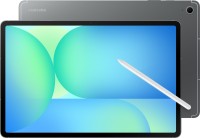
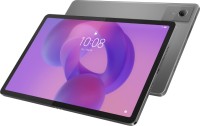
The device's display measures 12.7 inches diagonally. This is an LTPS display with a maximum resolution of 2944x1870 pixels, a refresh rate of 144 Hz, and approximately 96% DCI-P3 color space coverage. It supports 4096 levels of stylus pressure sensitivity with the Lenovo Tab Pen Plus, which is included with the tablet. Additionally, a detachable keyboard can be purchased separately, connected through a Pogo pin connector.
The device is based on the MediaTek Dimensity 8300 mobile processor, released in 2023. This flagship chip provides a high level of performance for the future. The device has 8 GB of RAM and 256 GB of built-in storage. Its analog on the Chinese market is the Lenovo Xiaoxin Pad Pro 12.7 2025.
The tablet is equipped with four JBL stereo speakers, a 13 MP main camera, and an 8 MP front-facing camera. For convenient unlocking, it has a side fingerprint scanner. Internet connectivity is provided by a Wi-Fi 6E module. The device runs on a 10200 mAh battery that supports 45 W fast wired charging with Power Delivery standard.

| Samsung.com | $699.99 | To Store |
| BestBuy.com | $848.53 | To Store |
| Newegg.com | $514.99 | To Store |
| BestBuy.com | $699.99 | To Store |
| BestBuy.com | $699.99 | To Store |
Original tablets from the Samsung Galaxy Tab S family have excess power for trivial tasks. For work tasks, web surfing, and leisure, the more affordable Tab S10 FE Plus from the Fan Edition tablet league will suffice.
The model features a large PLS screen measuring 13.1 inches diagonally and with a high resolution of 2880x1800 pixels. The display refresh rate is increased to 90 Hz, and the panel is suitable for drawing with the branded S Pen, which comes standard. A clip-on keyboard can be purchased separately — with it, the device becomes a compact laptop. With the keyboard attached, the tablet's interface automatically switches to DeX desktop mode.
The tablet uses the proprietary Exynos 1580 processor, borrowed from the mid-range smartphone Samsung Galaxy A56. It has enough performance for any day-to-day tasks. Even games can be played on medium graphics settings. The model's base configuration includes 8 GB of RAM and 128 GB of disk space. The device's software platform is filled with Galaxy AI features.
Samsung Galaxy Tab S10 FE Plus is equipped with AKG stereo speakers, a 13 MP rear autofocus camera, a 12 MP front camera, and a large 10900 mAh battery with 45 W wired charging capability. The tablet's body is just 6 mm thick and is reliably protected against dust and water according to IP68 standards.









| Newegg.com | $1,299.99 | To Store |
| Abt.com | $1,049.99 | To Store |
| Newegg.com | $1,199.99 | To Store |
| Newegg.com | $1,299.98 | To Store |
| Newegg.com | $1,199.99 | To Store |
A notable feature of the Microsoft brand tablet is its hardware, as it uses an ARM-based Snapdragon X Plus processor, usually found in laptops. The 8-core engine is supported by an Adreno X1-45 graphics chip and 16 GB of RAM, providing excellent performance comparable to many mid-range laptops. Plus, it runs on the full version of Windows 11, and when a keyboard like the Surface Pro 3 Type Cover and a mouse are connected, it practically becomes a full-fledged laptop.
The Microsoft Surface Pro 12 256 GB also benefits from stylus compatibility (with a magnetic mount) and the proprietary Surface Thunderbolt dock, along with sought-after interfaces including USB C and USB-A 5Gbps (3.2 gen1). These allow you to connect two 4K monitors or one 8K monitor for handling various professional tasks.
Thanks to the processor's high energy efficiency, the tablet offers extended battery life — up to 16 hours of video playback or 12 hours of internet surfing. It also supports fast charging via PD protocol at 45 W.
The model is equipped with a 12-inch PixelSense Flow display with 2196x1464 resolution, a 90 Hz refresh rate, and 400 nits of brightness, the latter regulated by a light sensor. The absence of a fingerprint scanner is offset by Windows Hello facial recognition and NFC-based authentication.
Additional features include a Wi-Fi 7 module for fast and stable internet connectivity and a kickstand. Besides stereo sound, there are also two microphones for better quality voice calls.
The downside is the high price, but if you need a tablet with key laptop features, including Windows OS, the Microsoft Surface Pro 12 256 GB is a justified choice.

| Amazon.com | $921.19 | To Store |
| BestBuy.com | $1,369.99 | To Store |
| HSN.com | $1,779.99 | To Store |
| eBay.com | $939.00 | To Store |
| eBay.com | $964.78 | To Store |
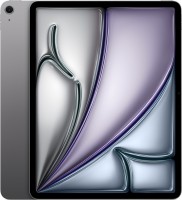
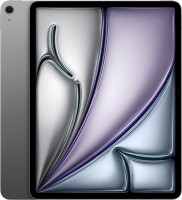
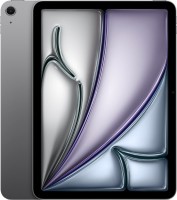
Unlike previous generations of iPad Pro, the 2024 version brings several major changes. For starters, Apple decided to leapfrog the evolutionary ladder and installed the brand-new Apple M4 processor in the iPad Pro instead of the recent M3. This is a 3-nanometer chip claimed by Apple to be one and a half times faster than the M2 processor used in the previous generation iPad Pro. Plus, it's much faster at handling tasks involving AI and machine learning. Apple released M4 in two configurations: 9-core, used in iPad Pro with 256 GB and 512 GB of memory, and the more powerful 10-core chip for top-tier "pros" with 1 TB and 2 TB of memory.
Significant updates were made to the screen: the iPad Pro 2024 became the company's first tablet with an OLED screen, which Apple traditionally called Ultra Retina XDR. Besides the 13-inch version, a similar model with an 11-inch screen is also available in stores. Both versions are equipped with a built-in light sensor, supporting HDR10 with Dolby Vision, and boast a 120 Hz refresh rate, full DCI-P3 color spectrum coverage, and a peak brightness of 1000 nits (or 1600 nits in HDR mode). The screen impresses with its specifications and looks equally impressive in real life, with little else to add.
The rest of the tablet is a familiar iPad Pro with FaceID, Wi-Fi 6E, quality stereo speakers, stylus support, USB4, and Thunderbolt. The difference is the front camera is now located on the side for more convenient video calls, and the main camera no longer has a wide-angle module. Apple also boasted that the use of an OLED matrix allowed the metal body to become even thinner and lighter (5.1 mm thick, weighing 579 g), making it almost the thinnest iPad in the brand's history. For comparison, the thickness of the iPad Pro 2022 was 6.4 mm.
Articles, reviews, useful tips
All materials