
Comparison HP FX900 Plus M.2 7F617AA 1 TB vs WD Black SN850X WDS100T2X0E 1 TB without radiator
Add to comparison | 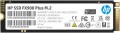 | 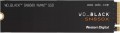 |
|---|---|---|
| HP FX900 Plus M.2 7F617AA 1 TB | WD Black SN850X WDS100T2X0E 1 TB without radiator | |
| Outdated Product | Compare prices 18 | |
| User reviews | ||
| TOP sellers | ||
| Placement | internal | internal |
| Volume | 1 TB | 1 TB |
| Form factor | M.2 | M.2 |
| M.2 interface | PCIe 4.0 4x | PCIe 4.0 4x |
Technical specs | ||
| Controller | SanDisk 20-82-20035-B2 | |
| Cache memory | 1000 MB | |
| Memory type | 3D TLC NAND | 3D TLC NAND |
| Number of 3D NAND layers | SanDisk 112-layer BiCS5 | |
| NVMe |  | |
| Write speed | 6300 MB/s | 6300 MB/s |
| Read speed | 7100 MB/s | 7300 MB/s |
| Shockproof | 100 G | |
| MTBF | 2 m h | |
| Write IOPS | 990 K | 1100 K |
| Read IOPS | 990 K | 800 K |
| TBW | 600 TB | 600 TB |
| DWPD | 0.3 times/day | 0.3 times/day |
| Manufacturer's warranty | 5 years | 5 years |
General | ||
| TRIM | | |
| M.2 cooling | graphene heatsink | |
| Size | 22x80 mm | 22x80 mm |
| Weight | 10 g | 8 g |
| Added to E-Catalog | august 2023 | september 2022 |





Compare HP FX900 Plus M.2 7F617AA and WD Black SN850X WDS100T2X0E
You may be interested in
My comparisons
HP FX900 Plus M.2 often compared


WD Black SN850X often compared


Glossary
Controller
Model of the controller installed in the SSD.
The controller is a control circuit, which, in fact, ensures the exchange of information between the memory cells and the computer to which the drive is connected. The capabilities of a particular SSD module (in particular, read and write speed) largely depend on this particular scheme. Knowing the controller model, you can find detailed data on it and evaluate the capabilities of the drive. For simple everyday use, this information is usually not needed, but for professionals and enthusiasts (modders, overclockers) it can come in handy.
Nowadays, high-end controllers are produced mainly under such brands: InnoGrit, Maxio, Phison, Realtek, Silicon Motion, Samsung.
The controller is a control circuit, which, in fact, ensures the exchange of information between the memory cells and the computer to which the drive is connected. The capabilities of a particular SSD module (in particular, read and write speed) largely depend on this particular scheme. Knowing the controller model, you can find detailed data on it and evaluate the capabilities of the drive. For simple everyday use, this information is usually not needed, but for professionals and enthusiasts (modders, overclockers) it can come in handy.
Nowadays, high-end controllers are produced mainly under such brands: InnoGrit, Maxio, Phison, Realtek, Silicon Motion, Samsung.
Cache memory
Buffer memory is a small chip on the SSD drive that acts as a data transit between the drive and the motherboard. In fact, it acts as a kind of intermediate link between the computer's RAM and the drive's own permanent memory. The buffer is used to store the most frequently requested data from the module, which reduces the access time to them — the information is sent from the cache, instead of being read from the magnetic media. Usually, the larger the buffer size, the higher the speed of the drive, all other things being equal. Also, drives with a large amount of buffer memory reduce the load on the processor.
Number of 3D NAND layers
The number of layers essentially reflects the generation of the flash memory itself. The more there are, the higher the data density, allowing the manufacturer to store more data in the same form factor and improve the energy efficiency of new chips. For the user, this is mainly important as an indication of a more modern platform: conditionally, memory with 176, 232, or 332 layers usually belongs to more recent generations than older solutions with fewer layers.
However, the number of 3D NAND layers should not be confused with the direct speed of the SSD, because overall performance is also significantly influenced by the controller, interface, and cache. For example, a drive with more modern multilayer memory may be more appealing in terms of technology and capacity, but the actual speed of operation still depends on the entire device design.
However, the number of 3D NAND layers should not be confused with the direct speed of the SSD, because overall performance is also significantly influenced by the controller, interface, and cache. For example, a drive with more modern multilayer memory may be more appealing in terms of technology and capacity, but the actual speed of operation still depends on the entire device design.
Read speed
The highest data exchange rate with a computer (or other external device) that the drive can provide in read mode; in other words — the highest speed of information output from the drive to an external device. This speed is limited both by the connection interface (see "Connector"), and by the characteristics of the device of the SSD itself. Its values can vary from 100 – 500 MB / s in the slowest models to 3 Gb / s and higher in the most advanced ones.
Shockproof
A parameter that determines the resistance of the drive to drops and shocks during operation. Measured in G — units of overload, 1 G corresponds to the usual force of gravity. The higher the G number, the more resistant the device is to various kinds of shocks and the less likely it is to damage the data in it, say, in the event of a fall. This parameter is especially important for external drives (see Type).
MTBF
The drive's time between failures is the time that it is able to continuously work without failures and malfunctions; in other words — the operating time, after which there is a high probability of failures, and even failure of the module.
Usually, the characteristics indicate some average time derived from the results of conditional testing. Therefore, the actual value of this parameter may differ from the claimed one in one direction or another; however, in fact, this moment is not particularly significant. The fact is that for modern SSDs, the MTBF is estimated at millions of hours, and 1 million hours corresponds to more than 110 years — while we are talking about pure operating time. So, from a practical point of view, the durability of a drive is often limited by more specific parameters — TBW and DPWD (see below); and the manufacturer's warranty generally does not exceed several years. However, data on the MTBF in hours can also be useful when choosing: other things being equal, more time means more reliability and durability of the SSD as a whole.
Usually, the characteristics indicate some average time derived from the results of conditional testing. Therefore, the actual value of this parameter may differ from the claimed one in one direction or another; however, in fact, this moment is not particularly significant. The fact is that for modern SSDs, the MTBF is estimated at millions of hours, and 1 million hours corresponds to more than 110 years — while we are talking about pure operating time. So, from a practical point of view, the durability of a drive is often limited by more specific parameters — TBW and DPWD (see below); and the manufacturer's warranty generally does not exceed several years. However, data on the MTBF in hours can also be useful when choosing: other things being equal, more time means more reliability and durability of the SSD as a whole.
Write IOPS
The IOPS provided by the drive in write mode.
The term IOPS refers to the highest number of I / O operations that an SSD module can perform per second, in this case, when writing data. By this indicator, the speed of the drive is often evaluated; however, this is not always true. Firstly, the IOPS values of different manufacturers can be measured in different ways — by the maximum value, by average, by random write, by sequential write, etc. Secondly, the benefits of high IOPS become noticeable only with some specific operations — in in particular, the simultaneous copying of numerous files. In addition, in fact, the speed of the drive may be limited by the system to which it is connected. In light of all this, it is generally acceptable to compare different SSD modules by IOPS, but the real difference in performance is likely not to be as noticeable as the difference in numbers.
As for specific values, for the write mode with IOPS up to 50K is considered relatively modest, 50 – 100K — medium, more than 100K — high.
The term IOPS refers to the highest number of I / O operations that an SSD module can perform per second, in this case, when writing data. By this indicator, the speed of the drive is often evaluated; however, this is not always true. Firstly, the IOPS values of different manufacturers can be measured in different ways — by the maximum value, by average, by random write, by sequential write, etc. Secondly, the benefits of high IOPS become noticeable only with some specific operations — in in particular, the simultaneous copying of numerous files. In addition, in fact, the speed of the drive may be limited by the system to which it is connected. In light of all this, it is generally acceptable to compare different SSD modules by IOPS, but the real difference in performance is likely not to be as noticeable as the difference in numbers.
As for specific values, for the write mode with IOPS up to 50K is considered relatively modest, 50 – 100K — medium, more than 100K — high.
Read IOPS
The IOPS provided by the drive in read mode.
The term IOPS refers to the maximum number of I / O operations that an SSD module can perform per second, in this case, when reading data from it. By this indicator, the speed of the drive is often evaluated; however, this is not always true. Firstly, the IOPS values of different manufacturers can be measured in different ways — by the maximum value, by the average, etc. Secondly, the advantages of high IOPS become noticeable only with some specific operations — in particular, when copying numerous files at the same time. In addition, in fact, the speed of the drive may be limited by the system to which it is connected. In light of all this, it is generally acceptable to compare different SSD modules by IOPS, but the real difference in performance is likely not to be as noticeable as the difference in numbers.
For modern SSDs in read mode, an IOPS value of less than 50K is considered a very limited indicator, in most models this parameter lies in the range of 50 – 100K, but there are also higher numbers.
The term IOPS refers to the maximum number of I / O operations that an SSD module can perform per second, in this case, when reading data from it. By this indicator, the speed of the drive is often evaluated; however, this is not always true. Firstly, the IOPS values of different manufacturers can be measured in different ways — by the maximum value, by the average, etc. Secondly, the advantages of high IOPS become noticeable only with some specific operations — in particular, when copying numerous files at the same time. In addition, in fact, the speed of the drive may be limited by the system to which it is connected. In light of all this, it is generally acceptable to compare different SSD modules by IOPS, but the real difference in performance is likely not to be as noticeable as the difference in numbers.
For modern SSDs in read mode, an IOPS value of less than 50K is considered a very limited indicator, in most models this parameter lies in the range of 50 – 100K, but there are also higher numbers.
M.2 cooling
The presence of a cooling radiator in the design of the M.2 form factor drive.
The heatsink is usually a metal plate attached to the drive board. It improves heat dissipation, which is especially important under high loads associated with handling large amounts of information. M.2 drives with a heatsink are intended mainly for high-performance systems, in particular gaming ones.
There is also a special type of thin and light graphene radiators. They are glued to the surface of the M.2 SSD, covering the key areas (controller and memory chips) that generate the most heat. This allows heat to be distributed more evenly and its accumulation to be minimized.
We also note that M.2 radiators are found as equipment on motherboards. So if the drive itself does not have this function, you can choose a “motherboard” with a radiator for it.
The heatsink is usually a metal plate attached to the drive board. It improves heat dissipation, which is especially important under high loads associated with handling large amounts of information. M.2 drives with a heatsink are intended mainly for high-performance systems, in particular gaming ones.
There is also a special type of thin and light graphene radiators. They are glued to the surface of the M.2 SSD, covering the key areas (controller and memory chips) that generate the most heat. This allows heat to be distributed more evenly and its accumulation to be minimized.
We also note that M.2 radiators are found as equipment on motherboards. So if the drive itself does not have this function, you can choose a “motherboard” with a radiator for it.