
Comparison Oukitel RT7 Titan 5G 256 GB / 12 GB vs Oukitel RT6 256 GB
Add to comparison | 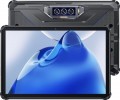 | 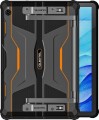 |
|---|---|---|
| Oukitel RT7 Titan 5G 256 GB / 12 GB | Oukitel RT6 256 GB | |
from $419.99 | from $224.49 | |
| TOP sellers | ||
12 GB RAM expansion function. Up to 180 days of standby time and up to 35 hours of video (manufacturer's info). Glove mode. Display with protective glass Dragontrail 596-673 hardness on the Vickers scale. Comes with metal carrying handle, wrist strap and shoulder strap. Operating temperature range -20°C – 55°C. | ||
| Operating system | Android 13 | Android 13 |
Screen | ||
| Screen | 10.1 " 1920x1200 px 224 ppi IPS 60 Hz light sensor | 10.1 " 1920x1200 px 224 ppi IPS 60 Hz light sensor |
| Brightness | 400 nit | 400 nit |
| Screen to body ratio | 71 % | 71 % |
Hardware | ||
| Processor (graphics) | Dimensity 720 (Mali-G57) | MediaTek MT8788 (Mali-G72) |
| CPU speed | 2 GHz | 2 GHz |
| CPU cores | 8 | 8 |
| RAM | 12 GB | 8 GB |
| RAM type | ||
| Storage capacity | 256 GB | 256 GB |
| Storage type | ||
| Card reader |  | |
| Max. memory card storage | 1024 GB | 1024 GB |
Test results | ||
| AnTuTu Benchmark | 401 000 points | 225 000 points |
Communication | ||
| SIM card | x2 nano-SIM | x2 nano-SIM |
| Communication standard | 5G | 4G (LTE) |
| Wi-Fi | Wi-Fi 5 (802.11aс) | Wi-Fi 5 (802.11aс) |
| Bluetooth | v5.1 | v4.2 |
| Connections | USB-C | USB-C |
Navigation | ||
| aGPS | |  |
| GPS | | |
| GLONASS | | |
| Galileo support | | |
| Digital compass | | |
Camera | ||
| Main | 3 modules 48 MP 20 MP autofocus flash | 16 MP autofocus flash |
| Full HD filming (1080p) | 1920x1080 px 30 fps | 1920x1080 px 30 fps |
| Camera (front) | 32 MP | 16 MP |
Features | ||
| More features | FM receiver gyroscope | |
| Acoustics | stereo | stereo |
Power source | ||
| Battery capacity | 32000 mAh | 20000 mAh |
| Operating time (PCMark) | 32.18 | |
| Fast charging | Power Delivery | + |
| Charger power | 33 W | 33 W |
General | ||
| Waterproof | IP68/IP69K | IP68/IP69K |
| Shockproof | MIL-STD-810 | MIL-STD-810 |
| Material | metal | metal |
| Size | 249.1x167.8x19.8 mm | 249.1x167.8x17.3 mm |
| Weight | 1212 g | |
| Added to E-Catalog | august 2023 | july 2023 |


Compare Oukitel RT7 Titan 5G and RT6
You may be interested in
Oukitel RT7 Titan 5G often compared


Oukitel RT6 often compared


Glossary
Processor (graphics)
The processor is the "heart" of the device. It is responsible for performing all computing operations necessary for the normal functioning of the tablet and largely determines its overall performance. By knowing the specific model name of the processor, you can easily find detailed information about it, including comparisons with other models.
Nowadays, the most popular chips are Qualcomm's Snapdragon (especially top solutions like the Snapdragon series 7 and Snapdragon series 8), MediaTek (budget and "mid-range" processors such as MediaTek Helio and the advanced chipset line MediaTek Dimensity with 5G support), Unisoc. Among Windows tablets, Intel processors are common (mostly from the Intel Core family). And we must not forget about Apple's powerful processors M3, M4, M5.
The model of the graphics card installed in the tablet is indicated in parentheses. In such devices, the graphics card is not a separate unit but part of the processor; nevertheless, it still has a clear specialization and is responsible for graphics.
Accordingly, the graphics capabilities of the tablet directly de...pend on the characteristics of the graphics accelerator. In theory, by knowing the name, you can find detailed specifications of the graphics card, reviews, test results, and other information to assess how well it suits your needs. At the same time, in most cases, delving into such details is unnecessary— all system components, including the graphics card, are usually selected to fit the overall class of the tablet and the necessary capabilities for that class.
Nowadays, the most popular chips are Qualcomm's Snapdragon (especially top solutions like the Snapdragon series 7 and Snapdragon series 8), MediaTek (budget and "mid-range" processors such as MediaTek Helio and the advanced chipset line MediaTek Dimensity with 5G support), Unisoc. Among Windows tablets, Intel processors are common (mostly from the Intel Core family). And we must not forget about Apple's powerful processors M3, M4, M5.
The model of the graphics card installed in the tablet is indicated in parentheses. In such devices, the graphics card is not a separate unit but part of the processor; nevertheless, it still has a clear specialization and is responsible for graphics.
Accordingly, the graphics capabilities of the tablet directly de...pend on the characteristics of the graphics accelerator. In theory, by knowing the name, you can find detailed specifications of the graphics card, reviews, test results, and other information to assess how well it suits your needs. At the same time, in most cases, delving into such details is unnecessary— all system components, including the graphics card, are usually selected to fit the overall class of the tablet and the necessary capabilities for that class.
RAM
The amount of random access memory (RAM) installed in the tablet. This memory is used for direct data processing, and therefore its volume is one of the main indicators of system speed and power. However note that the optimal amount of RAM strongly depends on the OS used — different systems and even different versions of the same "OS" can vary greatly in terms of consumed resources. But models on the same OS can be compared with each other in terms of the amount of RAM.
As for specific values, indicators in 1 GB or less in our time are definitely a sign of a weak tablet. 2 GB and 3 GB can be called the entry level, 4 GB and 6 GB are middle class, and in the most advanced models, 8 GB, or even 16 GB can be installed (or even more) RAM.
As for specific values, indicators in 1 GB or less in our time are definitely a sign of a weak tablet. 2 GB and 3 GB can be called the entry level, 4 GB and 6 GB are middle class, and in the most advanced models, 8 GB, or even 16 GB can be installed (or even more) RAM.
AnTuTu Benchmark
The result shown by a device when undergoing a performance test (benchmark) in the AnTuTu Benchmark.
AnTuTu Benchmark is a comprehensive test designed specifically for mobile devices, primarily smartphones and tablets. It evaluates the performance of the processor, memory, graphics, and input/output systems, providing a clear impression of the system's capabilities. The better the performance, the higher the score. According to AnTuTu, top models are those that score more than 1M points.
As with any benchmark, this test does not provide absolute precision; for more details on measurement inaccuracies, see the "3DMark Gamer's Benchmark" section.
AnTuTu Benchmark is a comprehensive test designed specifically for mobile devices, primarily smartphones and tablets. It evaluates the performance of the processor, memory, graphics, and input/output systems, providing a clear impression of the system's capabilities. The better the performance, the higher the score. According to AnTuTu, top models are those that score more than 1M points.
As with any benchmark, this test does not provide absolute precision; for more details on measurement inaccuracies, see the "3DMark Gamer's Benchmark" section.
Communication standard
— 3G. Support for third-generation mobile networks (3G) by the modem. Usually it means work in UMTS networks (development of the GSM standard); Depending on the data transfer technologies supported by the network and the tablet itself, the maximum connection speed can vary from 2 to 70 Mbps. This is comparable to the speed of terrestrial Internet connection channels, so 3G connection can be comfortably used for web surfing, downloading files, watching streaming video, video calling, etc. In many models, classic voice calls to mobile and landline numbers are also available; most often these are devices with a small diagonal, which allows you to hold the tablet to your ear like a regular phone.
— 4G (LTE). Tablet support for 4th generation mobile communications — 4G(LTE). Such a connection provides data transfer speeds up to 173 Mbps according to the official specification (1 Gbps in the future), which gives even more comfort when surfing the Internet and other similar tasks than in 3G networks. In many LTE-tablets, classic voice calls to mobile and landline numbers are also available; most often these are devices with a small diagonal, which allows you to hold the tablet to your ear like a regular phone.
Note that the implementation of LTE in different countries and even regions is uneven, so before buying a tablet with such a module, it's ok to clarify the availability of coverage.
<...br> — 5G. Further, after 4G, the development of mobile communication standards. In the official specifications of this generation, a peak speed of 20 Gbps for reception and 10 Gbps for transmission, guaranteed reception and transmission speeds (at high network load) of 100 and 50 Mbps, respectively, as well as a number of solutions aimed at increasing reliability and overall communication quality. A set of such solutions includes, in particular, multi-element antenna arrays (Massive MIMO) and beamforming technologies (Beamforming) at base stations, as well as the possibility of direct communication between subscriber devices. With all this, this standard allows to reduce energy consumption in comparison with its predecessors.
Separately, it is worth touching on rumors about the dangers of 5G communications for health. According to modern scientific data, such a connection does not pose a danger to the human body, and the rumors mentioned are conspiracy theories that are not supported by any weighty arguments.
— 4G (LTE). Tablet support for 4th generation mobile communications — 4G(LTE). Such a connection provides data transfer speeds up to 173 Mbps according to the official specification (1 Gbps in the future), which gives even more comfort when surfing the Internet and other similar tasks than in 3G networks. In many LTE-tablets, classic voice calls to mobile and landline numbers are also available; most often these are devices with a small diagonal, which allows you to hold the tablet to your ear like a regular phone.
Note that the implementation of LTE in different countries and even regions is uneven, so before buying a tablet with such a module, it's ok to clarify the availability of coverage.
<...br> — 5G. Further, after 4G, the development of mobile communication standards. In the official specifications of this generation, a peak speed of 20 Gbps for reception and 10 Gbps for transmission, guaranteed reception and transmission speeds (at high network load) of 100 and 50 Mbps, respectively, as well as a number of solutions aimed at increasing reliability and overall communication quality. A set of such solutions includes, in particular, multi-element antenna arrays (Massive MIMO) and beamforming technologies (Beamforming) at base stations, as well as the possibility of direct communication between subscriber devices. With all this, this standard allows to reduce energy consumption in comparison with its predecessors.
Separately, it is worth touching on rumors about the dangers of 5G communications for health. According to modern scientific data, such a connection does not pose a danger to the human body, and the rumors mentioned are conspiracy theories that are not supported by any weighty arguments.
Bluetooth
Bluetooth version supported by the tablet.
Bluetooth itself is a technology for direct wireless communication between various electronic devices. It can be used for various purposes, in particular, exchanging files with another Bluetooth device (laptop, mobile phone), connecting wireless headphones and headsets, peripheral devices (keyboards, mice), etc. The Bluetooth connection does not require both devices to be in line of sight and is stable as they move within range. The range and additional features depend on the connection version:
Bluetooth itself is a technology for direct wireless communication between various electronic devices. It can be used for various purposes, in particular, exchanging files with another Bluetooth device (laptop, mobile phone), connecting wireless headphones and headsets, peripheral devices (keyboards, mice), etc. The Bluetooth connection does not require both devices to be in line of sight and is stable as they move within range. The range and additional features depend on the connection version:
- 2.0. The earliest of the Bluetooth variations used in today's tablets. Provides a data transfer rate of about 2.1 Mbps.
- 2.1. This version differs from 2.0 in a number of improvements: enhanced security, reduced power consumption and compatibility with NFC technology.
- 3.0. This version is a combination of a Bluetooth 2.1 module and a high-speed add-on that allows you to transfer data at speeds up to 24 Mbps. Thanks to this, the connection is able to automatically adapt to the situation: for small amounts of data, a slow channel is used that does not consume much energy, and for large volumes, the high-speed part is used.
- 4.0. June 2010 version. It is notable for the fact that it combines three protocols: classic, high-speed and BLE (low power consumption). The latter is the most economical at the time of release - the power consumption is so low that the CR2032 "tablet" batteries la...st for several years of operation. The data transfer rate via the BLE protocol is up to 1 Mbps. According to the classical and high-speed protocol, Bluetooth 4.0 is almost the same as version 3.0 (see above).
- 4.1. Development of the version 4.0 described above. One of the key improvements was the optimization of collaboration with LTE cellular modules in order to avoid mutual interference. In addition, it became possible to operate Bluetooth devices simultaneously in several roles (for example, to broadcast audio to a headset and remotely control another device).
- 4.2. The next, after 4.1, is a key update to the Bluetooth standard. Introduced a number of key innovations for working in the "Internet of Things" (Internet of Things), as well as general improvements in speed and noise immunity.
- 5.0. Bluetooth version 5.0, introduced in 2016. In general, it continued the trend set by the 4.2 standard, has even more extensive opportunities for working with the Internet of Things. In particular, in the Bluetooth Low Energy protocol (see "4.0" above), it became possible to double the data transfer rate (up to 2 Mbps) at the cost of reducing the range, as well as quadruple the range at the cost of reducing the speed; in addition, a number of improvements have been introduced regarding simultaneous operation with a large number of connected devices.
- Bluetooth v 5.1. Update of the version described above v 5.0. In addition to general improvements in the quality and reliability of communication, this update has implemented such an interesting feature as determining the direction from which the Bluetooth signal is coming. Thanks to this, it becomes possible to determine the location of connected devices with an accuracy of a centimeter, which can be useful when searching for various accessories - for example, Bluetooth headphones or a wireless gamepad.
- Bluetooth v 5.2. The next, after 5.1, is the Bluetooth 5th generation update. The main innovations in this version are a number of security improvements, additional power optimization in LE mode, and a new audio signal format for synchronized parallel playback on multiple devices.
- Bluetooth v5.3. The Bluetooth v5.3 wireless protocol was introduced at the dawn of 2022. Among the innovations, it accelerated the process of negotiating the communication channel between the controller and the device, implemented the function of quickly switching between the state of operation in a small duty cycle and high-speed mode, improved the throughput and stability of the connection by reducing the susceptibility to interference. In case of unexpected interference in the Low Energy mode of operation, the procedure for selecting a communication channel for switching is now accelerated. There are no fundamental innovations in protocol 5.3, but a number of qualitative improvements are seen in it.
aGPS
Auxiliary function, the main purpose of which is the acceleration of the so-called "cold start" of the main GPS receiver of the device (see GPS module). A "cold start" is the launch of a GPS receiver from scratch, when no data on the location of satellites and other service information has yet been loaded into it. Obtaining this data in the classical way, directly from satellites, can take a significant amount of time (up to several minutes); the situation is especially complicated in areas with dense buildings, where the signal from satellites is subject to reflections and distortions. Devices equipped with aGPS (Assisted GPS) can receive service information from auxiliary sources such as mobile base stations or even Wi-Fi access points; this simplifies location determination and reduces the cold start time by several times.
Main
— The number of lenses. The characteristics of the main (rear) camera of the tablet are represented primarily by the number of modules, which in most cases are 1, but there are also tablets with a dual camera.
— Resolution. The second important factor of the camera is the number of megapixels. Many really believe that the more MP, the better the quality of filming. However, this is not entirely true: only the maximum resolution of the resulting images depends on the resolution of the matrix, and their quality is determined by many other parameters. However a large sensor resolution may be a sign of an advanced camera, but this is not necessary — two "eyes" with the same number of megapixels can radically differ in the quality of shooting. Rear cameras in tablets may well be used for photo and video shooting; therefore, they have cameras of 8 MP, 10 MP and even higher (12 and 13 MP).
— Autofocus. For focus in such cameras, a movable lens system controlled by automation is responsible. It takes some time for the automation to work, and the lenses themselves turn out to be more complicated and more expensive than optics with a fixed focus (fixed lenses that are initially set to a large range of distances). However, the quality of the pictures is disproportionate...ly higher than that of cameras without autofocus, and the systems themselves are constantly being improved, and their response time is increasingly approaching instantaneous.
— Flash. Flash significantly expands the capabilities of the camera. First of all, it allows you to shoot in low light conditions; in this case, the backlight, usually, can also be used in the constant glow mode — for video shooting. The second situation where a flash can come in handy is backlighting when the subject is in shadow. In addition, in many tablets, the flash LED can also be used as a regular flashlight, without a camera.
— Resolution. The second important factor of the camera is the number of megapixels. Many really believe that the more MP, the better the quality of filming. However, this is not entirely true: only the maximum resolution of the resulting images depends on the resolution of the matrix, and their quality is determined by many other parameters. However a large sensor resolution may be a sign of an advanced camera, but this is not necessary — two "eyes" with the same number of megapixels can radically differ in the quality of shooting. Rear cameras in tablets may well be used for photo and video shooting; therefore, they have cameras of 8 MP, 10 MP and even higher (12 and 13 MP).
— Autofocus. For focus in such cameras, a movable lens system controlled by automation is responsible. It takes some time for the automation to work, and the lenses themselves turn out to be more complicated and more expensive than optics with a fixed focus (fixed lenses that are initially set to a large range of distances). However, the quality of the pictures is disproportionate...ly higher than that of cameras without autofocus, and the systems themselves are constantly being improved, and their response time is increasingly approaching instantaneous.
— Flash. Flash significantly expands the capabilities of the camera. First of all, it allows you to shoot in low light conditions; in this case, the backlight, usually, can also be used in the constant glow mode — for video shooting. The second situation where a flash can come in handy is backlighting when the subject is in shadow. In addition, in many tablets, the flash LED can also be used as a regular flashlight, without a camera.
Camera (front)
Resolution of the front camera of the tablet.
There is an opinion that more megapixels means better quality of filming. However, this is not entirely true: only the maximum resolution of the resulting images depends on the resolution of the matrix, and their quality is determined by many other parameters. However a large sensor resolution may be a sign of an advanced camera, but this is not necessary — two "eyes" with the same number of megapixels can radically differ in the quality of shooting.
The main purpose of frontcameras in tablets is video communication, and for it high resolution is not critical. Therefore, the number of megapixels in such cameras is noticeably lower than in rear cameras — for example, 2 MP considered an acceptable value, 5 MP is not bad, 7 MP and 8 MP is good, 12MP — excellent.
There is an opinion that more megapixels means better quality of filming. However, this is not entirely true: only the maximum resolution of the resulting images depends on the resolution of the matrix, and their quality is determined by many other parameters. However a large sensor resolution may be a sign of an advanced camera, but this is not necessary — two "eyes" with the same number of megapixels can radically differ in the quality of shooting.
The main purpose of frontcameras in tablets is video communication, and for it high resolution is not critical. Therefore, the number of megapixels in such cameras is noticeably lower than in rear cameras — for example, 2 MP considered an acceptable value, 5 MP is not bad, 7 MP and 8 MP is good, 12MP — excellent.
More features
- FM receiver. A feature that allows you to listen to FM radio on your tablet. It should be borne in mind that for reliable reception, you may need to connect wired headphones (usually via a 3.5 mm mini-Jack connector) - their cable in this case will play the role of an antenna.
- Fingerprint scanner. Fingerprint sensor. Used to recognize the user in appropriate situations: when unlocking the tablet, when authorizing in different accounts, when confirming payments, etc. It can be located in different places on the tablet - in front, behind, on the side, on the screen. This authentication method is much more convenient and safer than passwords: they can be forgotten or accidentally opened to strangers, while the finger is not lost, and it is very difficult to fake a fingerprint.
- 3D face scanner. A special technology for recognizing the user's face - not just by photographing, but by building a three-dimensional model of the face based on data from a special module on the front panel. This technology is constantly being improved, in our time it is able to take into account the change in hairstyles and facial hair, the presence of glasses, makeup, etc. At the same time, the recognition of twins and children's faces still remains weak points (they have fewer individual features than adults ). The main use of a face scanner is...authentication when unlocking a tablet, entering applications, making payments, etc. At the same time, other, more original use cases are possible. For example, in some applications, the face scanner reads the user's facial expressions, and then this facial expression is repeated by a smiley on the screen.
- Gyroscope. A device that tracks the rotation of the tablet in space. Modern gyroscopes work on all three axes and are able to determine both the speed and the angle of deviation. This expands the control of the tablet, allowing you to give commands by tilting the device in one direction or another; This feature is especially popular in games.
- Fingerprint scanner. Fingerprint sensor. Used to recognize the user in appropriate situations: when unlocking the tablet, when authorizing in different accounts, when confirming payments, etc. It can be located in different places on the tablet - in front, behind, on the side, on the screen. This authentication method is much more convenient and safer than passwords: they can be forgotten or accidentally opened to strangers, while the finger is not lost, and it is very difficult to fake a fingerprint.
- 3D face scanner. A special technology for recognizing the user's face - not just by photographing, but by building a three-dimensional model of the face based on data from a special module on the front panel. This technology is constantly being improved, in our time it is able to take into account the change in hairstyles and facial hair, the presence of glasses, makeup, etc. At the same time, the recognition of twins and children's faces still remains weak points (they have fewer individual features than adults ). The main use of a face scanner is...authentication when unlocking a tablet, entering applications, making payments, etc. At the same time, other, more original use cases are possible. For example, in some applications, the face scanner reads the user's facial expressions, and then this facial expression is repeated by a smiley on the screen.
- Gyroscope. A device that tracks the rotation of the tablet in space. Modern gyroscopes work on all three axes and are able to determine both the speed and the angle of deviation. This expands the control of the tablet, allowing you to give commands by tilting the device in one direction or another; This feature is especially popular in games.