
Comparison Yamaha MODX6 vs Korg Krome-61
Add to comparison | 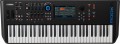 | 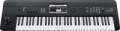 |
|---|---|---|
| Yamaha MODX6 | Korg Krome-61 | |
from $1,308.99 | from $1,356.60 up to $1,377.00 | |
| User reviews | ||
| TOP sellers | ||
| Type | synthesizer (rompler) | work station |
Keys | ||
| Number of keys | 61 | 61 |
| Size | full size | full size |
| Mechanics | active | active |
| Rigidity | semi-weighted | semi-weighted |
Specs | ||
| Polyphony | 128 voices | 120 voices |
| Built-in timbres | 2000 шт | 640 шт |
| Tempo change | 5 – 300 | 40 – 300 |
| Metronome |  |  |
| Sequencer (recording) | | |
| Sampling | | |
| Mixer | | |
| Built-in compositions | | |
Effects and control | ||
| Timbres layering | | |
| Keyboard split | | |
| Octave shift | | |
| Arpeggiator | | |
| Reverberation | | |
| Chorus | | |
| Transposition | | |
| Pitch controller | | |
| Modulation controller | | |
| Fine tuning | | |
Connectors | ||
| Inputs | Jack (6.35 mm) MIDI in USB to device (type A) | MIDI in USB to device (type A) card reader |
| Connectable pedals | 4 шт | 3 шт |
| Outputs | USB to host (type B) MIDI out headphones | USB to host (type B) MIDI out headphones |
| Linear outputs | 2 | 1 |
In box | ||
| In box | PSU | PSU disc |
General | ||
| Display | colour | colour |
| Touch screen | | |
| Power consumption | 16 W | 13 W |
| Dimensions (WxHxD) | 937x134x331 mm | 1027x93x313 mm |
| Weight | 6.6 kg | 7.2 kg |
| Color | ||
| Added to E-Catalog | june 2019 | november 2016 |


Compare Yamaha MODX6 and Korg Krome-61
Comparing Yamaha MODX6 and Korg Krome-61, several key differences can be highlighted. MODX6 offers polyphony of 128 voices and 2000 built-in timbres, while Krome-61 has 120 voices and 640 timbres. Additionally, MODX6 supports a sequencer and mixer, whereas Krome-61 additionally offers sampling. In terms of connectivity, Krome-61 has a card reader and fewer line outputs (1 compared to 2 on MODX6). Both synthesizers have touch screens and active mechanical keyboards, but Krome-61 is slightly heavier (7.2 kg compared to 6.6 kg on MODX6).
You may be interested in
Yamaha MODX6 often compared


Korg Krome-61 often compared


Glossary
Type
— Synthesizer. In this case, we are referring to classic digital synthesizers — keyboard musical instruments capable of reproducing the sound of various instruments and sound effects. The functionality of these models can vary greatly — from budget devices with minimal features to advanced instruments suitable even for professional musicians.
— Workstation. High-end synthesizers for professional use, capable of serving as not only a musical instrument but also as a control panel for recording and mixing sound. Therefore, a sequencer (see below) is a mandatory feature of such instruments. Additionally, workstations are characterized by advanced equipment appropriate to their class: it is among these instruments that you find models with full-sized hammer-action (see "Mechanics") 88-key keyboards, the user has access to a wealth of adjustments and connectors, and the sound quality and authenticity in low-cost models are good, while in advanced ones — nearly perfect. However, synthesizers of this type are quite expensive, so combined with their extensive capabilities, they are indispensable tools for composers, sound engineers, and other specialists engaged in both performance and music recording.
— Children's Synthesizer. The features of such instruments are generally clear from the name — these are synthesizers designed for children. Externally, these models differ from "adult" ones pr...imarily in the smaller number of keys (up to 49, often less) and the reduced size of the keys themselves for a child's hand. In addition, the performance characteristics and functionality of children's synthesizers are also, more often than not, more modest: for instance, the polyphony (see below) rarely exceeds 8 voices, and the overall sound authenticity is quite low. However, the educational capabilities of such instruments, on the other hand, can be very extensive, and in general, children's synthesizers are considered a good choice for initial learning.
— Analog Synthesizer. Instruments in which sound is created not through digital processing but by passing through a real electrical circuit. Very simply, the principle of operation of such an instrument can be described as follows: each key, when pressed, activates its sound generator at a certain frequency responsible for the desired note, and with additional settings (oscillators, envelope, filters), the musician gives this sound its color. From the user's perspective, the most noticeable difference in an analog synthesizer is the absence of built-in timbres — all details of the sound are manually adjusted by the musician. Analog instruments are more complex to operate, but on the other hand, they allow for effects that are not possible with "digital." Moreover, the coloration of the sound on analog synthesizers differs somewhat. Historically, instruments of this type appeared before digital ones; however, today, they are specialized solutions mainly intended for professional performers and used in specific musical directions.
— Workstation. High-end synthesizers for professional use, capable of serving as not only a musical instrument but also as a control panel for recording and mixing sound. Therefore, a sequencer (see below) is a mandatory feature of such instruments. Additionally, workstations are characterized by advanced equipment appropriate to their class: it is among these instruments that you find models with full-sized hammer-action (see "Mechanics") 88-key keyboards, the user has access to a wealth of adjustments and connectors, and the sound quality and authenticity in low-cost models are good, while in advanced ones — nearly perfect. However, synthesizers of this type are quite expensive, so combined with their extensive capabilities, they are indispensable tools for composers, sound engineers, and other specialists engaged in both performance and music recording.
— Children's Synthesizer. The features of such instruments are generally clear from the name — these are synthesizers designed for children. Externally, these models differ from "adult" ones pr...imarily in the smaller number of keys (up to 49, often less) and the reduced size of the keys themselves for a child's hand. In addition, the performance characteristics and functionality of children's synthesizers are also, more often than not, more modest: for instance, the polyphony (see below) rarely exceeds 8 voices, and the overall sound authenticity is quite low. However, the educational capabilities of such instruments, on the other hand, can be very extensive, and in general, children's synthesizers are considered a good choice for initial learning.
— Analog Synthesizer. Instruments in which sound is created not through digital processing but by passing through a real electrical circuit. Very simply, the principle of operation of such an instrument can be described as follows: each key, when pressed, activates its sound generator at a certain frequency responsible for the desired note, and with additional settings (oscillators, envelope, filters), the musician gives this sound its color. From the user's perspective, the most noticeable difference in an analog synthesizer is the absence of built-in timbres — all details of the sound are manually adjusted by the musician. Analog instruments are more complex to operate, but on the other hand, they allow for effects that are not possible with "digital." Moreover, the coloration of the sound on analog synthesizers differs somewhat. Historically, instruments of this type appeared before digital ones; however, today, they are specialized solutions mainly intended for professional performers and used in specific musical directions.
Polyphony
The polyphony supported by a synthesizer, in other words, is the number of “voices” (tone generators) that can simultaneously sound on it.
This parameter is often described as the number of notes that can be played simultaneously on the keyboard. However, this is not entirely true due to the fact that in many timbres one note can activate several tone generators. As a result, for example, to play a chord of 3 notes in a timbre with 4 tone generators per note, polyphony of at least 3 * 4=12 voices is required. In addition, Auto Accompaniment and Preset Songs (see related sections) also use tone generators, requiring even more voices to work effectively with these features.
The minimum value for a more or less functional modern synthesizer is polyphony for 32 voices — and even then such an instrument can be used mainly for initial training and simple melodies. For a more solid application, it is desirable to have at least 50 – 60 voices, and in professional models (in particular, workstations where you have to deal with several audio tracks at once), there are models with polyphony for 150 tone generators or more.
In general, a more advanced synthesizer is likely to have more extensive polyphony, however, it is only possible to evaluate the class of an instrument by this parameter very approximately — instruments with the same number of voices can differ greatly in level. The only exception to this rule are children's synthesizers (see "T...ype"), which support up to 20 voices.
This parameter is often described as the number of notes that can be played simultaneously on the keyboard. However, this is not entirely true due to the fact that in many timbres one note can activate several tone generators. As a result, for example, to play a chord of 3 notes in a timbre with 4 tone generators per note, polyphony of at least 3 * 4=12 voices is required. In addition, Auto Accompaniment and Preset Songs (see related sections) also use tone generators, requiring even more voices to work effectively with these features.
The minimum value for a more or less functional modern synthesizer is polyphony for 32 voices — and even then such an instrument can be used mainly for initial training and simple melodies. For a more solid application, it is desirable to have at least 50 – 60 voices, and in professional models (in particular, workstations where you have to deal with several audio tracks at once), there are models with polyphony for 150 tone generators or more.
In general, a more advanced synthesizer is likely to have more extensive polyphony, however, it is only possible to evaluate the class of an instrument by this parameter very approximately — instruments with the same number of voices can differ greatly in level. The only exception to this rule are children's synthesizers (see "T...ype"), which support up to 20 voices.
Built-in timbres
The number of built-in sounds provided in the synthesizer.
The number of timbres is often described as the number of instruments that a given model can imitate. However, this is not entirely true — rather, this parameter can be called "the number of instruments and sound effects." For example, the same instrument — an electric guitar — with different "gadgets" (distortion, overdrive) will sound differently, and in the synthesizer each such gadget will be considered a separate timbre. The “drums” timbre usually combines different types of drums and other percussion instruments — in other words, it allows you to portray both the “bass drum” and the cymbals without switching settings, just by pressing the desired keys. And some timbres may not have analogues among real instruments at all.
The more built-in timbres, the more extensive the possibilities of the synthesizer, the more diverse the sounds that can be extracted from it. At the same time, in high-end models like workstations (see "Type"), this number can reach 1000 or even more.
The number of timbres is often described as the number of instruments that a given model can imitate. However, this is not entirely true — rather, this parameter can be called "the number of instruments and sound effects." For example, the same instrument — an electric guitar — with different "gadgets" (distortion, overdrive) will sound differently, and in the synthesizer each such gadget will be considered a separate timbre. The “drums” timbre usually combines different types of drums and other percussion instruments — in other words, it allows you to portray both the “bass drum” and the cymbals without switching settings, just by pressing the desired keys. And some timbres may not have analogues among real instruments at all.
The more built-in timbres, the more extensive the possibilities of the synthesizer, the more diverse the sounds that can be extracted from it. At the same time, in high-end models like workstations (see "Type"), this number can reach 1000 or even more.
Tempo change
The range in which you can change the tempo of the programme played by the synthesizer — auto accompaniment, lesson tune (see above), metronome (see below), recorded sample, etc.
Pace is measured in beats per minute. Changing it allows you to adjust the speed of the synthesizer to the specifics of the situation — for example, slightly slow down the tutorial if it is too hard to master at the initial pace. The wider the range of tempo adjustment, the more options the musician has to choose from, especially in the area of very slow and very fast tempos.
Note that the traditional range of musical tempos covers values from 40 beats / min (“grave”, “very slowly”) to 208 beats / min (“prestissimo”, “very fast”), however, in synthesizers it can be more extensive — for example, 30 – 255 bpm.
Pace is measured in beats per minute. Changing it allows you to adjust the speed of the synthesizer to the specifics of the situation — for example, slightly slow down the tutorial if it is too hard to master at the initial pace. The wider the range of tempo adjustment, the more options the musician has to choose from, especially in the area of very slow and very fast tempos.
Note that the traditional range of musical tempos covers values from 40 beats / min (“grave”, “very slowly”) to 208 beats / min (“prestissimo”, “very fast”), however, in synthesizers it can be more extensive — for example, 30 – 255 bpm.
Metronome
The presence of a built-in metronome in the design of the synthesizer.
A metronome is a device that produces sharp sound signals (beats) at certain short intervals specified by the user. In music, such a device is used primarily to maintain a given tempo. A metronome can be useful both for a beginner musician, for developing a sense of rhythm, and for a professional, for example, when learning a new melody, especially if it is to be played without accompaniment and you will need to maintain the rhythm yourself. In addition, the sound of the metronome can also be used as an effect in musical compositions.
A metronome is a device that produces sharp sound signals (beats) at certain short intervals specified by the user. In music, such a device is used primarily to maintain a given tempo. A metronome can be useful both for a beginner musician, for developing a sense of rhythm, and for a professional, for example, when learning a new melody, especially if it is to be played without accompaniment and you will need to maintain the rhythm yourself. In addition, the sound of the metronome can also be used as an effect in musical compositions.
Sampling
Synthesizer support for sampling.
Samples are short sound fragments used in the creation of musical compositions. Such a fragment can contain almost any sound — from a note on a musical instrument or a fragment of a drum part to a siren signal, a bird's chirp, the sound of a mechanism, etc. Specifically, the sampling function implies the ability to use the synthesizer to record samples for further use. Recording can be done either through the built-in microphone or through the audio input (from an external microphone or other audio device). At the same time, many synthesizers with this function are able not only to keep the sound not only "as is", but also to pass the incoming signal through the processing circuits, adding various effects to it — echo, "wah-wah", metallic sound coloring, etc. And ready-made samples can usually be "bound" to individual synthesizer keys and played back in real time. Other functions are possible, depending on the level of the instrument.
Samples are short sound fragments used in the creation of musical compositions. Such a fragment can contain almost any sound — from a note on a musical instrument or a fragment of a drum part to a siren signal, a bird's chirp, the sound of a mechanism, etc. Specifically, the sampling function implies the ability to use the synthesizer to record samples for further use. Recording can be done either through the built-in microphone or through the audio input (from an external microphone or other audio device). At the same time, many synthesizers with this function are able not only to keep the sound not only "as is", but also to pass the incoming signal through the processing circuits, adding various effects to it — echo, "wah-wah", metallic sound coloring, etc. And ready-made samples can usually be "bound" to individual synthesizer keys and played back in real time. Other functions are possible, depending on the level of the instrument.
Chorus
The presence of a chorus effect in the synthesizer.
The word "chorus" comes from chorus, "chorus", and the purpose of this function is quite consistent with the origin of its name — it creates the effect of the choral sound of several instruments. To do this, the original sound signal is copied (one or more times) and the copies are added to the overall sound with a small, up to 30 ms, time shift, and this shift is constantly changing. In this way, a small but noticeable difference in individual "voices", characteristic of a real choir, is imitated. However it is worth noting that a full-fledged resemblance to a choral performance with the help of a chorus cannot be achieved even on the most advanced synthesizer; however, this effect in itself sounds very interesting, thanks to which it does not lose its popularity.
The word "chorus" comes from chorus, "chorus", and the purpose of this function is quite consistent with the origin of its name — it creates the effect of the choral sound of several instruments. To do this, the original sound signal is copied (one or more times) and the copies are added to the overall sound with a small, up to 30 ms, time shift, and this shift is constantly changing. In this way, a small but noticeable difference in individual "voices", characteristic of a real choir, is imitated. However it is worth noting that a full-fledged resemblance to a choral performance with the help of a chorus cannot be achieved even on the most advanced synthesizer; however, this effect in itself sounds very interesting, thanks to which it does not lose its popularity.
Fine tuning
The ability to fine-tune the synthesizer by sound frequencies. Often, such models also indicate the range in which such adjustment can be carried out.
The standard tuning, which is used by default in all synthesizers, is designated as “440 Hz” — this is the frequency of the “la” note of the first octave, as well as the standard frequency of the tuning fork, all other notes are tuned to it. With fine tuning, the musician can set a different base frequency, raising or lowering the overall tone of the synthesizer. At the same time, unlike the transposition described above, in this case the frequency does not change in steps (by tones-semitones), but smoothly, with an accuracy of a hertz or even a tenth of a hertz. Such an opportunity can be useful in some non-standard situations — for example, if you have to accompany a guitarist whose instrument is tuned slightly higher or lower than the standard, and for one reason or another it is impossible to change the guitar's tuning.
The standard tuning, which is used by default in all synthesizers, is designated as “440 Hz” — this is the frequency of the “la” note of the first octave, as well as the standard frequency of the tuning fork, all other notes are tuned to it. With fine tuning, the musician can set a different base frequency, raising or lowering the overall tone of the synthesizer. At the same time, unlike the transposition described above, in this case the frequency does not change in steps (by tones-semitones), but smoothly, with an accuracy of a hertz or even a tenth of a hertz. Such an opportunity can be useful in some non-standard situations — for example, if you have to accompany a guitarist whose instrument is tuned slightly higher or lower than the standard, and for one reason or another it is impossible to change the guitar's tuning.
Inputs
— mini-Jack (3.5 mm). Line-level analogue audio input using a 3.5mm mini-jack. The line input itself is used to connect an external analogue audio signal to the synthesizer — for example, from a computer sound card. The use of such a connection can be different: playing accompaniment through the built-in speakers of the instrument, switching the signal to an external amplifier with “mixing” the sound of the synthesizer itself into it, etc. Specifically, the 3.5 mm mini-Jack connector is small in size, it is popular mainly in portable equipment and inexpensive stationary devices — “serious” audio equipment is usually equipped with more reliable connectors, like Jack (see below). As a result, an input with this type of connector is typical mainly for entry-level synthesizers.
— Jack (6.35 mm). Line-level analogue audio input using a 6.35 mm jack. By purpose, such an input is completely similar to the input with a 3.5 mm mini-Jack jack described above, however, the Jack connector is larger, provides a more reliable and high-quality connection and is considered more suitable for stationary audio equipment, especially high-end ones. Therefore, in synthesizers of an average and advanced level, usually, this type of line input is used. At the same time, we note that a 3.5 mm plug can be connected to a 6.35 mm jack using a simple adapter.
— Digital. Input for connecting to a digital audio signal synthesizer. It is similar in purpose to the linear interfaces descri...bed above, but differs both in signal format and in connector type — most often it is a coaxial S / P-DIF interface using an RCA connector, although other options are possible. Digital outputs are quite popular both in professional audio equipment and in home appliances like PCs and even TVs, so such an input may be useful.
— MIDI. MIDI is originally a digital signal format used in electronic musical instruments. Each key pressed on the synthesizer gives just such a signal: it contains data on the duration, force and speed of pressing, as well as the note number, and based on the control signal (MIDI event), the “hardware” of the synthesizer generates the desired sound. Accordingly, the MIDI input allows the synthesizer to receive MIDI events from external electronic musical devices — other synthesizers, MIDI controllers, etc. This connection can be useful, for example, if the external instrument does not have the desired timbre; in addition, many synthesizers are capable of recording received MIDI signals. In some cases, the possibility of switching such a signal via MIDI thru may also be useful (see "Outputs").
— USB (type A). A classic USB connector that allows you to connect various external devices to the synthesizer — primarily flash drives and other drives, other peripherals are rarely supported. The features available when working with a flash drive depend on the general functionality of the synthesizer and may be different in different models. So, some instruments are capable of playing music from such a carrier, which plays the role of accompaniment for the main part — this can be more convenient than using auto accompaniment. Others are able to record music on a flash drive. It may also include updates to the Voice Set and/or Auto Accompaniment Styles (see above), firmware updates, etc.
— Card Reader. A slot for reading memory cards, most often SD: this is a universal format widely used in many types of modern electronics. Like a USB flash drive (see above), the card reader can be used for different purposes — most often for playing musical accompaniment or recording music, but there are other options (loading additional timbres, updating firmware, etc.).
— Jack (6.35 mm). Line-level analogue audio input using a 6.35 mm jack. By purpose, such an input is completely similar to the input with a 3.5 mm mini-Jack jack described above, however, the Jack connector is larger, provides a more reliable and high-quality connection and is considered more suitable for stationary audio equipment, especially high-end ones. Therefore, in synthesizers of an average and advanced level, usually, this type of line input is used. At the same time, we note that a 3.5 mm plug can be connected to a 6.35 mm jack using a simple adapter.
— Digital. Input for connecting to a digital audio signal synthesizer. It is similar in purpose to the linear interfaces descri...bed above, but differs both in signal format and in connector type — most often it is a coaxial S / P-DIF interface using an RCA connector, although other options are possible. Digital outputs are quite popular both in professional audio equipment and in home appliances like PCs and even TVs, so such an input may be useful.
— MIDI. MIDI is originally a digital signal format used in electronic musical instruments. Each key pressed on the synthesizer gives just such a signal: it contains data on the duration, force and speed of pressing, as well as the note number, and based on the control signal (MIDI event), the “hardware” of the synthesizer generates the desired sound. Accordingly, the MIDI input allows the synthesizer to receive MIDI events from external electronic musical devices — other synthesizers, MIDI controllers, etc. This connection can be useful, for example, if the external instrument does not have the desired timbre; in addition, many synthesizers are capable of recording received MIDI signals. In some cases, the possibility of switching such a signal via MIDI thru may also be useful (see "Outputs").
— USB (type A). A classic USB connector that allows you to connect various external devices to the synthesizer — primarily flash drives and other drives, other peripherals are rarely supported. The features available when working with a flash drive depend on the general functionality of the synthesizer and may be different in different models. So, some instruments are capable of playing music from such a carrier, which plays the role of accompaniment for the main part — this can be more convenient than using auto accompaniment. Others are able to record music on a flash drive. It may also include updates to the Voice Set and/or Auto Accompaniment Styles (see above), firmware updates, etc.
— Card Reader. A slot for reading memory cards, most often SD: this is a universal format widely used in many types of modern electronics. Like a USB flash drive (see above), the card reader can be used for different purposes — most often for playing musical accompaniment or recording music, but there are other options (loading additional timbres, updating firmware, etc.).