
Comparison Cort CR200 vs Cort CR100
Add to comparison | 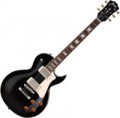 | 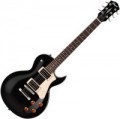 |
|---|---|---|
| Cort CR200 | Cort CR100 | |
from $623.00 | from $399.99 | |
| TOP sellers | ||
Quality build. Mahogany body. Glued neck. Quality Indonesian assembly. Warranty 12 months. D'addario strings. Weak electronics. | ||
| Type | electric guitar | electric guitar |
| Number of strings | 6 | 6 |
| Pickups | passive | passive |
| Pickup diagram | H-H | H-H |
Tone block | ||
| Type | passive | passive |
| Volume controls | 2 | 2 |
| Tone controls | 2 | 2 |
| Pickup switch | 3 position | 3 position |
Body | ||
| Type | monolith | monolith |
| Size | 4/4 | 4/4 |
| Shape | Les Paul | Les Paul |
| Cutaway | single | single |
| Pickguard |  | |
| Material | mahogany | mahogany |
| Body top | maple | maple |
| Bridge | Tune-o-Matic (fixed) | Tune-o-Matic (fixed) |
Neck | ||
| Mount type | bolted | bolted |
| Number of frets | 22 | 22 |
| Neck profile | C | C |
| Fretboard radius | 12 " | 12 " |
| Anchor | single | single |
| Scale | 24.75 " | 24.75 " |
| Pegs | closed | closed |
| Neck material | mahogany | maple |
| Fretboard | rosewood | rosewood |
| Color | ||
| Added to E-Catalog | september 2016 | september 2016 |


Compare Cort CR200 and CR100
Electric guitars Cort CR200 and Cort CR100 have similar characteristics, such as 6 strings, passive pickups with H-H configuration, and a passive tone block with two volume and tone controls. However, the main difference is in the neck material: the CR200 is made of mahogany, while the CR100 is made of maple. Both instruments have a solid body with a Les Paul shape and a fixed Tune-o-Matic bridge. The choice between them may depend on preferences in sound and playing feel.
You may be interested in
Cort CR200 often compared


Cort CR100 often compared


Glossary
Neck material
The material from which the neck of an electric guitar is made.
The most commonly used in the manufacture of the neck is mahogany. and maple. Theoretically, the acoustic properties of an instrument are determined by all its details, and even more so, these properties are affected by the quality of the fretboard. At the same time, we note that this influence is not so strong compared to other characteristics of the guitar (type and number of pickups, scale size, body type, etc.). So in this case, it makes no sense to describe in detail each type of material found in modern instruments — especially since the same term (for example, “mahogany”) can denote different types of wood that differ markedly in working properties and overall quality. When evaluating the material of the neck, it is quite possible to proceed from the fact that the manufacturer selects it in accordance with the price category and the general specialization of the guitar.
The most commonly used in the manufacture of the neck is mahogany. and maple. Theoretically, the acoustic properties of an instrument are determined by all its details, and even more so, these properties are affected by the quality of the fretboard. At the same time, we note that this influence is not so strong compared to other characteristics of the guitar (type and number of pickups, scale size, body type, etc.). So in this case, it makes no sense to describe in detail each type of material found in modern instruments — especially since the same term (for example, “mahogany”) can denote different types of wood that differ markedly in working properties and overall quality. When evaluating the material of the neck, it is quite possible to proceed from the fact that the manufacturer selects it in accordance with the price category and the general specialization of the guitar.