
Comparison Cort CR250 vs Cort CR200
Add to comparison | 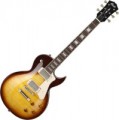 | 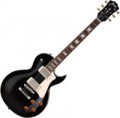 |
|---|---|---|
| Cort CR250 | Cort CR200 | |
| Compare prices 1 | from $623.00 | |
| TOP sellers | ||
Maple top. Reinforced NuBone Nut. | Quality build. Mahogany body. Glued neck. Quality Indonesian assembly. Warranty 12 months. D'addario strings. Weak electronics. | |
| Type | electric guitar | electric guitar |
| Number of strings | 6 | 6 |
| Pickups | passive | passive |
| Pickup diagram | H-H | H-H |
Tone block | ||
| Type | passive | passive |
| Volume controls | 2 | 2 |
| Tone controls | 2 | 2 |
| Pickup switch | 3 position | 3 position |
Body | ||
| Type | monolith | monolith |
| Size | 4/4 | 4/4 |
| Shape | Les Paul | Les Paul |
| Cutaway | single | single |
| Pickguard |  | |
| Material | mahogany | mahogany |
| Body top | maple | maple |
| Bridge | Tune-o-Matic (fixed) | Tune-o-Matic (fixed) |
Neck | ||
| Mount type | pasted | bolted |
| Number of frets | 22 | 22 |
| Neck profile | C | C |
| Fretboard radius | 12 " | 12 " |
| Anchor | single | single |
| Scale | 24.75 " | 24.75 " |
| Pegs | closed | closed |
| Neck material | mahogany | mahogany |
| Fretboard | rosewood | rosewood |
| Color | ||
| Added to E-Catalog | september 2016 | september 2016 |



Compare Cort CR250 and CR200
Electric guitars Cort CR250 and Cort CR200 have similar characteristics but differ in details that might influence your choice. The CR250 features a set neck and higher quality Alnico II pickups, providing soft and warm sound close to the original Gibson Les Paul. Meanwhile, the CR200 has a bolt-on neck and pickups that users often recommend replacing with higher quality ones. Both instruments have a mahogany body and a fixed Tune-o-Matic bridge, but the CR250 stands out with better mechanics and reliability. If you are looking for an affordable instrument with good sound, the CR250 might be a more preferable choice.
Price comparison
You may be interested in
My comparisons
Cort CR250 often compared


Cort CR200 often compared


Glossary
Mount type
A method of attaching the neck to the body used in an electric guitar.
— Boltov. The most inexpensive and practical (in terms of production and repair technology) method of attachment: the neck is bolted to the body. Thanks to this, the assembly of the guitar is extremely simple, and the neck can be easily removed from the finished instrument for repair or even replacement with a new one. Note that although the bolt method is considered “low-cost” (and is found mainly in instruments of the corresponding level), it cannot be said that it is definitely worse than other options: guitars of this design have relatively weak sustain, but they give a bright, sharp tone with good attack. They can be used in almost any genre, but they are still considered the most suitable for heavy music.
— Pasted. A neck mounted in a recess in the body and secured to the recess with epoxy or other adhesive. This design does not allow for such a powerful attack as on bolt necks, but it provides excellent sustain and a pleasant coloration of the sound. And in general, the adhesive connection is considered more advanced, because. better reveals the acoustic properties of wood. On the other hand, such tools are more complicated and more expensive, both in production and in repair, than “bolted” ones.
— Through. The name of this method is due to the fact that the neck passes...through the body through and through, to the “lower” (from the side of the bridge) butt. Many instruments of this type, from the back, look as if two additional pieces were attached to the solid piece of wood from which the neck and middle part of the body were carved to give the body the desired shape and width (although the manufacturing technique is, of course, somewhat more complicated). It is believed that the neck-through mount maximizes the capabilities of the wood and allows you to achieve the highest quality sound, with a flat frequency response and excellent sustain. However, such designs are very expensive, and besides, they require extremely careful handling — especially since the repair of a through neck is at best difficult and expensive, and often impossible at all. Note that this option is used mainly in basses, electric guitars with a through mounting method are produced much less frequently.
— Boltov. The most inexpensive and practical (in terms of production and repair technology) method of attachment: the neck is bolted to the body. Thanks to this, the assembly of the guitar is extremely simple, and the neck can be easily removed from the finished instrument for repair or even replacement with a new one. Note that although the bolt method is considered “low-cost” (and is found mainly in instruments of the corresponding level), it cannot be said that it is definitely worse than other options: guitars of this design have relatively weak sustain, but they give a bright, sharp tone with good attack. They can be used in almost any genre, but they are still considered the most suitable for heavy music.
— Pasted. A neck mounted in a recess in the body and secured to the recess with epoxy or other adhesive. This design does not allow for such a powerful attack as on bolt necks, but it provides excellent sustain and a pleasant coloration of the sound. And in general, the adhesive connection is considered more advanced, because. better reveals the acoustic properties of wood. On the other hand, such tools are more complicated and more expensive, both in production and in repair, than “bolted” ones.
— Through. The name of this method is due to the fact that the neck passes...through the body through and through, to the “lower” (from the side of the bridge) butt. Many instruments of this type, from the back, look as if two additional pieces were attached to the solid piece of wood from which the neck and middle part of the body were carved to give the body the desired shape and width (although the manufacturing technique is, of course, somewhat more complicated). It is believed that the neck-through mount maximizes the capabilities of the wood and allows you to achieve the highest quality sound, with a flat frequency response and excellent sustain. However, such designs are very expensive, and besides, they require extremely careful handling — especially since the repair of a through neck is at best difficult and expensive, and often impossible at all. Note that this option is used mainly in basses, electric guitars with a through mounting method are produced much less frequently.