
Comparison Amazfit GTR 47 vs Amazfit Verge 2
Add to comparison | 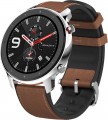 | 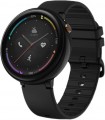 |
|---|---|---|
| Amazfit GTR 47 | Amazfit Verge 2 | |
from $120.50 up to $216.67 | from $68.19 | |
| TOP sellers | ||
There is a model with a basel decorated with Swarovski crystals. | ||
| Type | smartwatch | watch phone |
| Interface | Bluetooth v5.0 | Bluetooth v4.2 |
Telephony | ||
| SIM card support | e-SIM | |
| Calls and alerts | notifications vibration | notifications sound signal vibration |
Sports and tourism | ||
| Possible measurements | heart rate monitor number of steps distance traveled movement speed calories burned activity time sleep tracking sleep monitoring | heart rate monitor number of steps distance traveled movement speed calories burned activity time sleep tracking sleep monitoring |
| Navigation | GPS module barometer (pressure) | GPS module compass barometer (pressure) |
Display | ||
| Touch screen |  | |
| Type | colour | colour |
| Display type | Super AMOLED | AMOLED |
| Size | 1.39 " | 1.39 " |
| Screen resolution | 454x454 px | 454x454 px |
| PPI | 326 ppi | 462 ppi |
| Light sensor | |  |
| Watch face protection | Gorilla Glass 3 | glass |
Hardware | ||
| CPU model | Qualcomm Snapdragon Wear 2500 | |
| CPU frequency | 1100 MHz | |
| Processor cores | 2 | |
| RAM | 512 MB | |
| Memory storage | 4 GB | |
| Extra features | WiFi 4 (802.11n) 2.4GHz NFC contactless payment is not available accelerometer gyroscope | Wi-Fi NFC contactless payment is not available accelerometer gyroscope |
Power source | ||
| Device charging | magnetic | proprietary connector |
| Source of power | Li-Pol | Li-Pol |
| Battery capacity | 410 mAh | 420 mAh |
| Operating time (normal mode) | 17 days | |
| Operating time (active mode) | 28 h | |
Case and strap | ||
| Material | metal | plastic |
| Bezel | metal | |
| Strap | removable | quick release |
| Strap Options | leather rubber/silicone | rubber/silicone |
| Clasp options | classic buckle | classic buckle |
| Band Width | 22 mm | |
General | ||
| Protection rating | 50 WR (5 ATM) | 50 WR (5 ATM) |
| Dimensions (without strap) | 47.2×47.2×10.8 mm | |
| Weight | 40 g | 46 g |
| Color | ||
| Added to E-Catalog | july 2019 | june 2019 |


Compare Amazfit GTR 47 and Verge 2
You may be interested in
My comparisons
Amazfit GTR 47 often compared


Amazfit Verge 2 often compared
Glossary
Type
— Smartwatch. A wristwatch gadget designed to be used in conjunction with a smartphone, usually with a Bluetooth connection. Such a watch can be used to receive notifications of incoming calls or messages, to control various smartphone features; and the most advanced models even allow the installation of their own applications and differ from watch-phones only in the inability to make calls on their own. In turn, the difference from fitness trackers (see below) lies primarily in a more traditional design and broader specialization: smartwatches often have fitness sensors and support specialized data collecting, but their use is not limited to this.
— Watch-phone. Smartwatch with its own mobile communication module. Such devices are capable of making calls, sending messages, and in most cases even using the mobile Internet without connecting to a smartphone or other external device. However, a Bluetooth headset may be required for voice convenience, and smartphone connectivity is also available on many models. The specific features of such gadgets can be different, it should be specified separately.
— Fitness tracker. Specialized wearable gadgets designed mainly for sports. Typically, such a gadget has a long and narrow body, the width of which may not exceed the width of the strap; this arrangement is considered the mo...st convenient in view of the application. As for the features, fitness trackers mainly record various data about the state of the body and health of the user, ranging from heart rate to blood oxygen levels, sleep phases, and other specific parameters. In addition, traditional features such as call or SMS notifications can also be provided, but in this case they are of secondary importance. Displays in fitness trackers are usually the simplest, and in some models there is no screen at all — it is still more convenient to view detailed data on physical activity in the application on a smartphone.
— Beacon for children. Wearable devices to ensure the safety of children; most often — a specialized type of watch-phone (see above). The beacon performs primarily two main features: it allows parents to control where the child is, and provides communication between the child and the parent (including in emergency situations). Specific features may vary, for more details see "Parental Control". In addition, the design often provides for other features of smartwatches — from an alarm clock and time display to a pedometer, heart rate monitor and other special data collecting.
— For animals. Gadgets designed for pets — primarily dogs. Such a device is usually attached to a collar and can perform quite a variety of features: a beacon that transmits data about the location of the pet, a “calling card” with the owner’s contact information, and even a fitness tracker that tracks the activity of the animal and allows you to monitor its health.
— Smart glasses. Wearable smart gadgets made in the form of glasses. Usually, a camera is built into the frame of such a gadget, and the display is located opposite one of the user's eyes. Initially, smart glasses were considered quite a promising development, but in fact, for a number of reasons, they did not gain popularity, and nowadays they are almost never used.
— Watch-phone. Smartwatch with its own mobile communication module. Such devices are capable of making calls, sending messages, and in most cases even using the mobile Internet without connecting to a smartphone or other external device. However, a Bluetooth headset may be required for voice convenience, and smartphone connectivity is also available on many models. The specific features of such gadgets can be different, it should be specified separately.
— Fitness tracker. Specialized wearable gadgets designed mainly for sports. Typically, such a gadget has a long and narrow body, the width of which may not exceed the width of the strap; this arrangement is considered the mo...st convenient in view of the application. As for the features, fitness trackers mainly record various data about the state of the body and health of the user, ranging from heart rate to blood oxygen levels, sleep phases, and other specific parameters. In addition, traditional features such as call or SMS notifications can also be provided, but in this case they are of secondary importance. Displays in fitness trackers are usually the simplest, and in some models there is no screen at all — it is still more convenient to view detailed data on physical activity in the application on a smartphone.
— Beacon for children. Wearable devices to ensure the safety of children; most often — a specialized type of watch-phone (see above). The beacon performs primarily two main features: it allows parents to control where the child is, and provides communication between the child and the parent (including in emergency situations). Specific features may vary, for more details see "Parental Control". In addition, the design often provides for other features of smartwatches — from an alarm clock and time display to a pedometer, heart rate monitor and other special data collecting.
— For animals. Gadgets designed for pets — primarily dogs. Such a device is usually attached to a collar and can perform quite a variety of features: a beacon that transmits data about the location of the pet, a “calling card” with the owner’s contact information, and even a fitness tracker that tracks the activity of the animal and allows you to monitor its health.
— Smart glasses. Wearable smart gadgets made in the form of glasses. Usually, a camera is built into the frame of such a gadget, and the display is located opposite one of the user's eyes. Initially, smart glasses were considered quite a promising development, but in fact, for a number of reasons, they did not gain popularity, and nowadays they are almost never used.
Interface
The primary way to connect a wrist gadget with external devices. For smartwatches and fitness bands (see "Type"), it is assumed to be connected to a smartphone or tablet, while in the case of watch-phones, it's usually about headsets.
— Bluetooth. A wireless technology for direct communication between various devices. There are different versions that indicate the device's capabilities.
— Bluetooth. A wireless technology for direct communication between various devices. There are different versions that indicate the device's capabilities.
- — 5.0. The fifth generation of Bluetooth was released in 2016. The key innovation in version 5.0 was expanding the capabilities related to the "Internet of Things." For example, the Bluetooth Low Energy protocol introduced the ability to double data transfer speed (up to 2 Mbps) at the cost of reducing range, as well as quadruple the range at the cost of reducing speed; additionally, several improvements were introduced concerning simultaneous operation with a large number of connected devices.
- — v 5.1. An update of the version v 5.0 described above. In addition to general improvements in connection quality and reliability, this update implemented an interesting feature such as determining the direction from which the Bluetooth signal comes. This makes it possible to determine the location of connected devices with centimeter accuracy.
- — v 5.2. The update following 5.1 of the fifth-generation Bluetooth. The main innovations in this version included several security improvements, additional optimization of power consumption in LE mode, and a new audio signal format for synchronizing parallel playback on multiple devices.
- — v 5.3.... The Bluetooth v 5.3 wireless communication protocol was introduced in early 2022. Innovations included speeding up the process of coordinating the communication channel between the controller and the device, implementing a feature for rapid switching between low-duty cycle and high-speed modes, improved bandwidth and connection stability by reducing susceptibility to interference. In the event of unexpected interference in Low Energy mode, the procedure for selecting a communication channel for switching is sped up. There were no fundamental innovations in protocol 5.3; however, it is evident that there are several qualitative improvements.
- — v 5.4. The standard generation approved in 2023, which became an intermediate step before Bluetooth 6. The main innovation was the introduction of the PAwR (Periodic Advertising with Responses) mode, allowing watches and other devices to exchange data in large sensor networks with minimal power consumption. Also added was the Encrypted Advertising Data mechanism, enhancing protection against eavesdropping and packet forgery, which is important when using watches for contactless keys or payments. Compared to earlier versions 5.2 and 5.3, Bluetooth 5.4 focuses on security, energy efficiency, and operation in a "noisy" radio environment. In real-world use, this is manifested in more stable data transmission from sensors (heart rate, steps, sleep), battery savings with constant phone connection, and the reliability of functions like notifications or fitness tracking even with many connected devices around.
- — v 6.0. Bluetooth 6 has been officially approved by Bluetooth SIG and offers a number of significant benefits in smartwatches compared to version 5.4. Thanks to the improved Channel Sounding system and LE Audio optimization, such devices maintain connections faster and more stably, determine the distance to the smartphone more accurately (to centimeters), lose frames less frequently during calls or Auracast broadcasts, and provide longer battery life. In practice, this manifests in functions like unlocking a laptop upon approach, precise indoor watch search, reliable operation of heart rate sensors and sports sensors, as well as stable calls even in crowded gyms.
Naturally, to utilize all the capabilities of a particular Bluetooth version, it must be supported not only by the gadget itself but also by the smartphone/tablet to which it is connected.
SIM card support
Type of SIM card for which the gadget is designed. SIM cards are required for mobile communication modules, which are mainly found in watch phones and children's beacons (see "Type"). And their types can be:
— Micro-SIM. Reduced in size and improved, in comparison with the obsolete mini-SIM, a variety of SIM-cards: the dimensions were reduced to 15x12 mm, while the amount of built-in memory and the overall functionality of the chip were slightly expanded.
— Nano-SIM. The newest and smallest variety of replaceable SIM-cards: it has dimensions of only 12x9 mm.
It is worth noting that nowadays, most mobile operators sell SIM cards that are compatible with all three types of slots at once: the chip itself has a nano-SIM format, and such a card can be installed in a micro-SIM or mini-SIM slot using an adapter frame. So paying attention to the type of SIM card makes sense, first of all, if you already have a "sim card" of a strictly defined format and you do not want to change it.
A separate variety is represented by e-SIM(Embedded SIM) — non-removable modules that need to be programmed for a particular mobile operator. On the one hand, this creates some inconvenience: to change the number, changing the SIM card can be easier than reconfiguring the e-SIM. On the other hand, e-SIMs are more compact and...better suited for wearable gadgets, and when you change your number, you do not need to spend money on buying a new card. The compatibility of such a module with the network of a particular operator should be specified separately.
— Micro-SIM. Reduced in size and improved, in comparison with the obsolete mini-SIM, a variety of SIM-cards: the dimensions were reduced to 15x12 mm, while the amount of built-in memory and the overall functionality of the chip were slightly expanded.
— Nano-SIM. The newest and smallest variety of replaceable SIM-cards: it has dimensions of only 12x9 mm.
It is worth noting that nowadays, most mobile operators sell SIM cards that are compatible with all three types of slots at once: the chip itself has a nano-SIM format, and such a card can be installed in a micro-SIM or mini-SIM slot using an adapter frame. So paying attention to the type of SIM card makes sense, first of all, if you already have a "sim card" of a strictly defined format and you do not want to change it.
A separate variety is represented by e-SIM(Embedded SIM) — non-removable modules that need to be programmed for a particular mobile operator. On the one hand, this creates some inconvenience: to change the number, changing the SIM card can be easier than reconfiguring the e-SIM. On the other hand, e-SIMs are more compact and...better suited for wearable gadgets, and when you change your number, you do not need to spend money on buying a new card. The compatibility of such a module with the network of a particular operator should be specified separately.
Calls and alerts
Types of notifications, as well as basic voice communication features supported by the gadget.
- Notifications. In classic smart watches and fitness trackers, the specific functionality of such notifications can be different – from a regular sound or vibration signal to the ability to display on the screen and even respond. But in any case, such notifications are often more noticeable to the user than the own signal from a smartphone located deep in a pocket or bag.
— Voice control. The ability to control the device through voice commands. In order for a smartwatch or fitness tracker to perform some simple feature, it is enough to say its name aloud.
— Voice assistant. In watches with voice assistant support, the level of user interaction with the device is displayed in a new qualitative way. The most popular virtual assistants are Google Assistant and Amazon Alexa. In Apple devices, the role of an assistant is performed by Apple Siri, in Samsung wearable gadgets — a virtual assistant Bixby. Unlike the voice control function, the assistant does not just turn on this or that feature, but allows you to perform certain operations in applications that require feedback.
— Sound signal. The ability to give sound signals using the built-in speaker. This feature will be useful primarily in situations where the gadget is not on hand — for example, if it is used as an ala...rm clock and is removed at night.
— Vibration. Vibration signal similar to that used in mobile phones. In wearable gadgets, such a signal is especially convenient due to the fact that the device is constantly in contact with the wearer's skin, so that the vibration is perfectly felt — and regardless of the level of noise around. In addition, vibration mode is also useful in quiet environments where a loud sound signal is undesirable.
— Built-in microphone. Own microphone built into the body of the device. Such equipment can be used for different purposes, depending on the type and features of the gadget. First of all, voice communication is impossible without a microphone. Another feature for which a microphone is required is the voice assistant (see above). And in children's smartwatches, it may be possible to remotely turn on the microphone from the parent gadget and listen to what is happening around the child; see the relevant paragraph below for details.
— Speakerphone(speaker). The ability to work the gadget in hands-free mode, using the built-in speaker and microphone for conversation. In a conventional smartwatch (see "Type"), this feature allows you to talk through the watch without removing the smartphone from your pocket; in watch-phones, speakerphone allows you to do so without headphones and headsets, and for children's smartwatches, this feature is almost mandatory. However the volume of the built-in speaker is usually low, so in a noisy environment its power may not be enough.
- Notifications. In classic smart watches and fitness trackers, the specific functionality of such notifications can be different – from a regular sound or vibration signal to the ability to display on the screen and even respond. But in any case, such notifications are often more noticeable to the user than the own signal from a smartphone located deep in a pocket or bag.
— Voice control. The ability to control the device through voice commands. In order for a smartwatch or fitness tracker to perform some simple feature, it is enough to say its name aloud.
— Voice assistant. In watches with voice assistant support, the level of user interaction with the device is displayed in a new qualitative way. The most popular virtual assistants are Google Assistant and Amazon Alexa. In Apple devices, the role of an assistant is performed by Apple Siri, in Samsung wearable gadgets — a virtual assistant Bixby. Unlike the voice control function, the assistant does not just turn on this or that feature, but allows you to perform certain operations in applications that require feedback.
— Sound signal. The ability to give sound signals using the built-in speaker. This feature will be useful primarily in situations where the gadget is not on hand — for example, if it is used as an ala...rm clock and is removed at night.
— Vibration. Vibration signal similar to that used in mobile phones. In wearable gadgets, such a signal is especially convenient due to the fact that the device is constantly in contact with the wearer's skin, so that the vibration is perfectly felt — and regardless of the level of noise around. In addition, vibration mode is also useful in quiet environments where a loud sound signal is undesirable.
— Built-in microphone. Own microphone built into the body of the device. Such equipment can be used for different purposes, depending on the type and features of the gadget. First of all, voice communication is impossible without a microphone. Another feature for which a microphone is required is the voice assistant (see above). And in children's smartwatches, it may be possible to remotely turn on the microphone from the parent gadget and listen to what is happening around the child; see the relevant paragraph below for details.
— Speakerphone(speaker). The ability to work the gadget in hands-free mode, using the built-in speaker and microphone for conversation. In a conventional smartwatch (see "Type"), this feature allows you to talk through the watch without removing the smartphone from your pocket; in watch-phones, speakerphone allows you to do so without headphones and headsets, and for children's smartwatches, this feature is almost mandatory. However the volume of the built-in speaker is usually low, so in a noisy environment its power may not be enough.
Navigation
This block contains both various navigation systems ( GPS, Galileo) and auxiliary features for them ( aGPS, GPS tracking, maps, compass, altimeter , barometer). More about them:
— GPS module. GPS satellite navigation module built right into the watch/tracker. The initial purpose of such a module is to determine the current geographic coordinates; but how this information will be used depends on the specific type and model of the gadget. For example, in some devices GPS is used only for measuring the distance traveled and/or speed of movement, while more advanced models support full navigation and are equipped with built-in maps. In addition, this feature is almost mandatory in children's beacons (see "Type") — it is GPS that is responsible for determining the location of the child.
— aGPS. An auxiliary feature that allows you to speed up the start of the main GPS receiver. To work for its main purpose, such a receiver must update data on the location of navigation satellites; Obtaining this data in the classical way, directly from the satellites themselves, can take quite a long time (up to several minutes). This is especially true for the so-called "cold start" — when the receiver starts up after a long break in opera...tion, and the data stored in it has become completely outdated. aGPS (Assisted GPS) allows you to receive up-to-date service information from a mobile operator — from the nearest base station (this feature is supported by most operators nowadays). This can greatly speed up the startup process.
— GLONASS. This system is a Russian alternative to the American GPS. However it provides somewhat less accuracy, so GLONASS support is usually provided in addition to the GPS module. Simultaneous use of two systems, in turn, improves positioning accuracy.
— Galileo. European satellite navigation system, created as an alternative to the American GPS. Note that it is under the control of civilian departments, not the military. With a full fleet of 24 active satellites, the system gives an accuracy of up to 1 m in public mode and up to 20 cm with the GHA service. Working in conjunction with GPS, the Galileo system provides a more accurate position measurement, especially in densely populated areas.
— Maps. The feature of displaying topographic maps of the area with heights, relief and types of vegetation on the clock screen. Preinstalled maps are used for visual GPS navigation without being tied to a smartphone. Often, the ability to display maps is implemented in tactical smartwatches with a focus on tourism.
— GPS tracking. Many watches with the possibility of laying routes have the feature of guiding by the GPS track. At the same time, the wearable gadget acts as a navigator around the area, showing the route on the screen and suggesting where it is necessary to turn in one direction or another. Some smartwatches with a pronounced touristic bias also have a “Return Route” programme that allows you to go back along an already traveled route. In GPS tracker mode, trackpoints are usually recorded automatically based on the selected fixing interval. You can also mark a track point manually at any time.
— Compass. A classic compass is a device that indicates the direction to the cardinal points. Wearable gadgets usually use an electronic compass — a miniature magnetic sensor, the data from which, if necessary, are displayed on the display.
— Altimeter. A feature that allows you to determine the current altitude of the user's location. Note that the principle and format of the altimeter may be different. So, some models use barometer data for height measurements, others use information from a GPS sensor; the height itself can be determined relative to sea level, relative to some reference point, or in any of these ways, at the choice of the user. These details should be clarified separately.
— Barometer. A feature that allows you to determine the current atmospheric pressure. One of the applications of the barometer is weather forecasting: for example, a sharp drop in pressure usually signals the approach of bad weather. In addition, information from this sensor can be used to operate the altimeter (see above); and even if the gadget does not have an altimeter, the height difference between two points on the ground can be easily calculated from the pressure difference between them.
— GPS module. GPS satellite navigation module built right into the watch/tracker. The initial purpose of such a module is to determine the current geographic coordinates; but how this information will be used depends on the specific type and model of the gadget. For example, in some devices GPS is used only for measuring the distance traveled and/or speed of movement, while more advanced models support full navigation and are equipped with built-in maps. In addition, this feature is almost mandatory in children's beacons (see "Type") — it is GPS that is responsible for determining the location of the child.
— aGPS. An auxiliary feature that allows you to speed up the start of the main GPS receiver. To work for its main purpose, such a receiver must update data on the location of navigation satellites; Obtaining this data in the classical way, directly from the satellites themselves, can take quite a long time (up to several minutes). This is especially true for the so-called "cold start" — when the receiver starts up after a long break in opera...tion, and the data stored in it has become completely outdated. aGPS (Assisted GPS) allows you to receive up-to-date service information from a mobile operator — from the nearest base station (this feature is supported by most operators nowadays). This can greatly speed up the startup process.
— GLONASS. This system is a Russian alternative to the American GPS. However it provides somewhat less accuracy, so GLONASS support is usually provided in addition to the GPS module. Simultaneous use of two systems, in turn, improves positioning accuracy.
— Galileo. European satellite navigation system, created as an alternative to the American GPS. Note that it is under the control of civilian departments, not the military. With a full fleet of 24 active satellites, the system gives an accuracy of up to 1 m in public mode and up to 20 cm with the GHA service. Working in conjunction with GPS, the Galileo system provides a more accurate position measurement, especially in densely populated areas.
— Maps. The feature of displaying topographic maps of the area with heights, relief and types of vegetation on the clock screen. Preinstalled maps are used for visual GPS navigation without being tied to a smartphone. Often, the ability to display maps is implemented in tactical smartwatches with a focus on tourism.
— GPS tracking. Many watches with the possibility of laying routes have the feature of guiding by the GPS track. At the same time, the wearable gadget acts as a navigator around the area, showing the route on the screen and suggesting where it is necessary to turn in one direction or another. Some smartwatches with a pronounced touristic bias also have a “Return Route” programme that allows you to go back along an already traveled route. In GPS tracker mode, trackpoints are usually recorded automatically based on the selected fixing interval. You can also mark a track point manually at any time.
— Compass. A classic compass is a device that indicates the direction to the cardinal points. Wearable gadgets usually use an electronic compass — a miniature magnetic sensor, the data from which, if necessary, are displayed on the display.
— Altimeter. A feature that allows you to determine the current altitude of the user's location. Note that the principle and format of the altimeter may be different. So, some models use barometer data for height measurements, others use information from a GPS sensor; the height itself can be determined relative to sea level, relative to some reference point, or in any of these ways, at the choice of the user. These details should be clarified separately.
— Barometer. A feature that allows you to determine the current atmospheric pressure. One of the applications of the barometer is weather forecasting: for example, a sharp drop in pressure usually signals the approach of bad weather. In addition, information from this sensor can be used to operate the altimeter (see above); and even if the gadget does not have an altimeter, the height difference between two points on the ground can be easily calculated from the pressure difference between them.
Display type
— TFT. The simplest type of liquid crystal panel used in colour displays. They provide a relatively low, but generally sufficient image quality, while they are much cheaper than more advanced options. This type does not require backlight — more precisely, the backlight is part of the screen itself and turns on with it. Of the unequivocal disadvantages, it is worth noting that many TFT panels have rather limited viewing angles; however, as technology improves, this drawback is gradually eliminated.
— IPS. A variety of LCD panels created in an attempt to eliminate the shortcomings of TFT. There are many subspecies of IPS panels, but they all feature high colour reproduction quality, excellent brightness and wide viewing angles. The disadvantage of this option is the relatively high cost.
— OLED. In this case, we mean the technology used to create the simplest monochrome displays. In such screens, each segment that makes up the image is a separate LED, which eliminates the need for external illumination (and even the display itself can be used as a flashlight).
— AMOLED. Screens based on a panel of active organic light emitting diodes. Similar to various types of TFT, this technology allows the creation of high-resolution colour displays. Its key feature is that the screen doe...s not require a separate backlight system — in AMOLED panels, each pixel glows independently, resulting in somewhat lower power consumption. At the same time, such screens are distinguished by good colour reproduction quality, excellent brightness and wide viewing angles, however, they are much more expensive than TFT.
— Super AMOLED. An enhanced version of the AMOLED technology described above, delivering more expansive colour reproduction and brightness, as well as improved touch accuracy and speed, all at a thinner display and lower power consumption. In addition, the degree of reflection of external light is reduced, such a panel gives less glare and is better visible in sunlight.
— E-Ink (E-Paper). Displays made using "electronic paper" technology; in addition, this category also includes screens such as Memory LCD. The classic E-Ink screen is black and white, does not have a backlight (however, it can be built into particular gadgets), has a very low refresh rate and is poorly suited even for stopwatches, not to mention videos or animated pictures. On the other hand, "electronic paper" is perfectly visible in bright light and has a very low power consumption: it requires electricity only when the image is changed, while a still image remains visible even when the power is completely turned off. Memory LCD screens, in turn, with the same advantages, are almost as good as classic LCD panels in terms of refresh rate, but for a number of reasons they are not widely used.
— Transflective. A specific type of LCD panels that can work both due to its own backlight and due to reflected light. In bright external light (for example, in the sun), such a screen effectively reflects it and does not require a separate backlight — however, it is still included in the design and turns on in low light. This type of operation can significantly reduce power consumption compared to traditional LCD screens, where the image is not visible without backlight; in addition, good visibility in bright light is also an important advantage. The main disadvantage of panels of this type is their high cost; in addition, they are made mostly monochrome.
- LTPO. OLED and AMOLED matrices with an adaptive refresh rate that varies over a wide range based on the tasks performed. When rendering dynamic frames, screens with LTPO technology automatically raise the refresh rate to the maximum values, while viewing static images, they automatically reduce it to the minimum. At the heart of the technology is a traditional LTPS substrate with a thin TFT oxide film on top of the TFT base. Dynamic control of the refresh rate is provided by controlling the electron flow. The key benefit of LTPO screens is their reduced power consumption.
— IPS. A variety of LCD panels created in an attempt to eliminate the shortcomings of TFT. There are many subspecies of IPS panels, but they all feature high colour reproduction quality, excellent brightness and wide viewing angles. The disadvantage of this option is the relatively high cost.
— OLED. In this case, we mean the technology used to create the simplest monochrome displays. In such screens, each segment that makes up the image is a separate LED, which eliminates the need for external illumination (and even the display itself can be used as a flashlight).
— AMOLED. Screens based on a panel of active organic light emitting diodes. Similar to various types of TFT, this technology allows the creation of high-resolution colour displays. Its key feature is that the screen doe...s not require a separate backlight system — in AMOLED panels, each pixel glows independently, resulting in somewhat lower power consumption. At the same time, such screens are distinguished by good colour reproduction quality, excellent brightness and wide viewing angles, however, they are much more expensive than TFT.
— Super AMOLED. An enhanced version of the AMOLED technology described above, delivering more expansive colour reproduction and brightness, as well as improved touch accuracy and speed, all at a thinner display and lower power consumption. In addition, the degree of reflection of external light is reduced, such a panel gives less glare and is better visible in sunlight.
— E-Ink (E-Paper). Displays made using "electronic paper" technology; in addition, this category also includes screens such as Memory LCD. The classic E-Ink screen is black and white, does not have a backlight (however, it can be built into particular gadgets), has a very low refresh rate and is poorly suited even for stopwatches, not to mention videos or animated pictures. On the other hand, "electronic paper" is perfectly visible in bright light and has a very low power consumption: it requires electricity only when the image is changed, while a still image remains visible even when the power is completely turned off. Memory LCD screens, in turn, with the same advantages, are almost as good as classic LCD panels in terms of refresh rate, but for a number of reasons they are not widely used.
— Transflective. A specific type of LCD panels that can work both due to its own backlight and due to reflected light. In bright external light (for example, in the sun), such a screen effectively reflects it and does not require a separate backlight — however, it is still included in the design and turns on in low light. This type of operation can significantly reduce power consumption compared to traditional LCD screens, where the image is not visible without backlight; in addition, good visibility in bright light is also an important advantage. The main disadvantage of panels of this type is their high cost; in addition, they are made mostly monochrome.
- LTPO. OLED and AMOLED matrices with an adaptive refresh rate that varies over a wide range based on the tasks performed. When rendering dynamic frames, screens with LTPO technology automatically raise the refresh rate to the maximum values, while viewing static images, they automatically reduce it to the minimum. At the heart of the technology is a traditional LTPS substrate with a thin TFT oxide film on top of the TFT base. Dynamic control of the refresh rate is provided by controlling the electron flow. The key benefit of LTPO screens is their reduced power consumption.
PPI
The density of dots on the screen of the gadget, namely, the number of pixels that are on each inch of the panel vertically or horizontally.
The higher the PPI, the higher the detail of the screen, the clearer and smoother the image is. On the other hand, this indicator affects the price accordingly. Therefore, the higher the density of points, the more advanced, usually, this gadget is in terms of general capabilities. However, when choosing a screen, manufacturers take into account the general purpose and functionality of the device; so that even a small number of PPIs usually does not interfere with comfortable use.
The higher the PPI, the higher the detail of the screen, the clearer and smoother the image is. On the other hand, this indicator affects the price accordingly. Therefore, the higher the density of points, the more advanced, usually, this gadget is in terms of general capabilities. However, when choosing a screen, manufacturers take into account the general purpose and functionality of the device; so that even a small number of PPIs usually does not interfere with comfortable use.
Light sensor
A small sensor that helps watches and bracelets adapt to the surrounding environment, making the screen comfortable in all conditions while simultaneously extending battery life. Unlike a simple "fixed" brightness level, it reduces the risk of the display being too dim in sunlight or too bright in darkness, and compared to the "scheduled auto-brightness" mode, it works more accurately because it responds to the actual light around. Light sensor significantly influences convenience: there's less need to fiddle with settings, it's easier to read notifications on the go, and at night, the screen doesn't disturb you or those around you. An example is the quick brightness switch when entering a building after being outside or when checking the time in the bedroom when the light is almost off.
Watch face protection
The material from which the transparent cover of the display is made.
— Plastic. Inexpensive, moreover, quite durable and impact-resistant material: even with a strong impact, the plastic is more likely to crack than crumble into fragments. At the same time, scratches easily appear on such a surface, and over time it inevitably becomes cloudy. Because of this, plastic is found predominantly in inexpensive wearable gadgets.
— Glass. In this case, it can mean both classic silicate glass (the same as, for example, in windows), and some original types of impact-resistant glass that are not related to Gorilla Glass(see below). Regular glass costs more than plastic, but not by much, and it looks better and stays clear longer due to its scratch resistance. The main disadvantages of this material are fragility and a tendency to crumble into sharp fragments upon impact. Impact-resistant glass types are devoid of this drawback to one degree or another, but they are also more expensive. According to the price category of the gadget, you can quite accurately determine what kind of glass it uses — ordinary or shock-resistant.
— Sapphire. The coating made of synthetic sapphire is used exclusively in premium-class gadgets — this is due to the complexity of its production and, accordingly, the high cost. On the practical s...ide, sapphire is extremely scratch resistant (it is only possible to scratch such glass with a diamond or special tools), but at the same time it is fragile and easily breaks from impact.
— Gorilla glass. A family of shock-resistant glass types created by Corning and widely used in modern electronics, including wearable gadgets. In addition to strength, Gorilla Glass is also distinguished by good scratch resistance, while being relatively inexpensive (by the standards of such a coating), which has led to their popularity. However, the specific properties of such glass depend on its version; Here are the options that are relevant for modern wearable devices:
— Plastic. Inexpensive, moreover, quite durable and impact-resistant material: even with a strong impact, the plastic is more likely to crack than crumble into fragments. At the same time, scratches easily appear on such a surface, and over time it inevitably becomes cloudy. Because of this, plastic is found predominantly in inexpensive wearable gadgets.
— Glass. In this case, it can mean both classic silicate glass (the same as, for example, in windows), and some original types of impact-resistant glass that are not related to Gorilla Glass(see below). Regular glass costs more than plastic, but not by much, and it looks better and stays clear longer due to its scratch resistance. The main disadvantages of this material are fragility and a tendency to crumble into sharp fragments upon impact. Impact-resistant glass types are devoid of this drawback to one degree or another, but they are also more expensive. According to the price category of the gadget, you can quite accurately determine what kind of glass it uses — ordinary or shock-resistant.
— Sapphire. The coating made of synthetic sapphire is used exclusively in premium-class gadgets — this is due to the complexity of its production and, accordingly, the high cost. On the practical s...ide, sapphire is extremely scratch resistant (it is only possible to scratch such glass with a diamond or special tools), but at the same time it is fragile and easily breaks from impact.
— Gorilla glass. A family of shock-resistant glass types created by Corning and widely used in modern electronics, including wearable gadgets. In addition to strength, Gorilla Glass is also distinguished by good scratch resistance, while being relatively inexpensive (by the standards of such a coating), which has led to their popularity. However, the specific properties of such glass depend on its version; Here are the options that are relevant for modern wearable devices:
- Gorilla Glass v3. The oldest current version was released in 2013. Nevertheless, even such a coating is noticeably superior to traditional glass (not to mention plastic) in terms of transparency and scratch resistance.
- Gorilla Glass v4. Version released in 2014. A key feature was that the development of this coating focused on impact resistance (whereas previous generations focused mainly on scratch resistance). As a result, the glass turned out to be twice as strong as in version 3, despite the fact that its thickness was only 0.4 mm.
- Gorilla Glass SR+. The first version of Gorilla Glass, designed specifically for smartwatches and other miniature wearable gadgets; presented in 2016. According to the creators, the scratch resistance of such coatings approaches those of sapphire glass while maintaining the main advantages of Gorilla Glass — high strength and transparency. In general, for this material, superiority over "alternative options" is claimed by 70% in terms of strength specs and by 25% in terms of optical properties.
- Gorilla Glass DX. Another type of glass, specially designed for wearable devices. It was released in 2018 at the same time as the DX+ version (see below). Of the key improvements in Gorilla Glass DX, in particular, increased anti-reflective properties and an increase in the contrast level of the visible image by 50% are announced; the latter, among other things, allows you to reduce the actual brightness and, accordingly, the power consumption of screens without compromising image quality, which is especially important for miniature wearable devices. And this material differs from the DX+ type coating, on the one hand, by lower scratch resistance, and, on the other hand, by higher anti-reflective specs.
- Gorilla Glass DX+. Almost the same as the original version of DX, related to the same specialization — wearable wearable gadgets and other miniature devices. At the same time, DX + has a higher scratch resistance, but has slightly worse anti-reflective specs. Otherwise, these types of coverage are almost identical.