
Comparison Sony Gold Wireless Headset vs Sony Platinum Wireless Headset
Add to comparison | 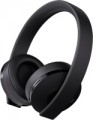 | 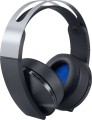 |
|---|---|---|
| Sony Gold Wireless Headset | Sony Platinum Wireless Headset | |
from $109.00 | Compare prices 1 | |
| User reviews | ||
| TOP sellers | ||
Headset for PlayStation. 2 microphones. | Headset for PlayStation | |
Connection and design | ||
| Features | gaming | gaming |
| Console compatibility | PlayStation 4, PlayStation VR | |
| Design | overhead, closed full size Over-Ear | overhead, closed full size Over-Ear headband auto-adjustment |
| Connection type | combined | combined |
| Connection | mini-Jack (3.5 mm) radio channel | mini-Jack (3.5 mm) radio channel |
| Plug | L-shaped | |
| Cable supply | single-sided | single-sided |
| Range | 10 m | 10 m |
| Cable type | round, braided | round, braided |
| Detachable cable |  | |
Specs | ||
| Sound | 7.1 (virtual) | 7.1 (virtual) |
| Speaker size | 40 mm | 50 mm |
| Emitter type | dynamic | dynamic |
Microphone specs | ||
| Microphone | built into the case | built into the case |
| Microphone noise canceling | ENC | ENC |
| Microphone mute |  | |
Features | ||
| Volume control | | |
Power supply | ||
| Power source | battery | battery |
| Headphone battery capacity | 570 mAh | |
| Operating time (music) | 8 h | |
General | ||
| Weight | 320 g | 320 g |
| In box | USB-A dongle | |
| Color | ||
| Added to E-Catalog | june 2019 | april 2017 |



Compare Sony Gold Wireless Headset and Platinum Wireless Headset
Price comparison
You may be interested in
My comparisons
Sony Gold Wireless Headset often compared


Glossary
Console compatibility
License binding of headphones to a specific model of the game console means full compatibility between devices and gives a 100% guarantee that all claimed functions will work. Note that in addition to the stated set-top box, such headphones can be safely used in conjunction with a computer, smartphone and other models of game consoles through suitable connection interfaces. However, the full potential of the headphones is revealed only in conjunction with a certain game console.
Design
This item primarily specifies the way headphones are mounted on the ears; by this parameter, modern headphones are divided into over-ear, in-ear, earbuds, open-ear types. For over-ear models, it may also specify the acoustic design (closed, semi-open, open), as well as the presence of features such as over-ear construction (in the absence of this feature such headphones are called on-ear, or just "on-ear"), swivel cups, auto headband adjustment or even the popular mid-2021 trend — Cat Ear Headphones (headphones with cat ears). Details such as a rigid band, over-the-ear mounting, neck mounting, and folding ability, can be combined with almost any method of ear placement (with some exceptions — for example, on-ear models cannot be worn on the neck).
Here is a more detailed description of different ear placement options:
— On-ear. On-ear headphones are placed outside the auditory pinnae, covering the ear from the side ("usual" on-ear models) or completely (full-size Over-Ear — see below). In any case, such models are fairly large. This, on the one hand, simplifies the creation of headphones w...ith advanced audio characteristics, and also allows using some specific tricks without much difficulty — for example, multiple drivers or multichannel surround sound support. On the other hand, the size of the "ears" complicates transportation and use on the go. Moreover, it should be noted that most on-ear models feature a headband, making them less compatible with complex hairstyles and some headgear. This disadvantage is absent in models with rigid bands and over-the-ear mounts, but they also have their specifics (see below).
On-ear headphones can have different acoustic designs:
— In-ear with a rigid band. In-ear headphones are placed inside the ear canals, allowing them to be most securely fixed in the ear and not fall out. The presence of a rigid band further increases the reliability of the headphones' fixation. This type of headphones is well-suited for sports. The rigid band and in-ear design of sound emitters allows the headphones to stay securely in place even during intensive running.
— Earbuds. Also colloquially known as "pills." Similar to in-ear models, such headphones are small and placed in the auditory pinna — but not deep in the ear canal, just at its entrance, almost outside. As a result, earbuds are somewhat simpler in construction and cheaper, but achieving rich sound and advanced acoustic characteristics is more challenging with them. Such models provide quite low sound isolation, but this can be either a downside or an advantage — depending on the situation. Some headphones of this type have an elongated shape, allowing them to sit deeper in the ears and approaching in-ear models in capabilities.
It is worth noting separately that in-ear models and earbuds don't use headbands — the headphones are made either completely separate or connected by a device such as a rigid band or neck mount. Thus, such headphones can easily be worn with almost any hairstyle or headgear.
— Earbuds with a rigid band. Earbuds are simply inserted into the ear canal entrance, not penetrating deeply. This is not the most reliable way to fix the headphones, but due to the presence of a rigid band, earbuds gain secure placement and reliable fixation. The headphones themselves have an open sound path design, which reproduces audio with noticeable distortion to the original sound signal. However, the open acoustic scheme allows clear hearing of the surrounding environment.
As for additional design features, they can be such:
— Full-size Over-Ear. On-ear headphones (see above) in which each cup completely covers the ear and fits tightly against the head. Cups in such models are made fairly large and equipped with characteristic soft "borders" along the inner side's perimeter — these borders fit tightly against the head, so the ear pinna is effectively inside the cup. The main advantage of such a design is that the headphones (with the right size) practically do not touch the user's ears and do not press on them — this is particularly comfortable for extended use. Furthermore, Over-Ear models facilitate achieving high-quality sound isolation (although among them it is possible to find models with semi-open and even completely open acoustic design). The main disadvantage of such devices is bulkiness and inconvenience in transport and on-the-go use. Additionally, when wearing glasses, Over-Ear cups usually press on the frames' sides — this can cause discomfort.
— Open-ear. A special variety of wireless true wireless headphones with open acoustic design. Unlike earbuds and in-ear models, open-ear headphones do not suggest partial or full closure of the auricle — this provides better perception of surrounding sounds. This is handy during walks and outdoor runs. Most often, such headphones have over-the-ear mounts (see below), and the drivers in their construction are directed straight into the ear canals but remain outside. Passive noise isolation in open-ear headphones is practically absent, and the playing music and phone conversations may be heard by those nearby — keep this in mind.
— Auto headband adjustment. A headband capable of automatically adjusting to the user's head size. Such a headband usually consists of two parts — a rigid, usually metallic, base and a soft inner part that fits directly against the head. The inner part is capable of stretching, and the user just needs to place the cups on the ears comfortably — and the headband will automatically adjust to the needed size.
— Rigid band. A band made of rigid material, connecting the two headphones and worn on the back of the head; in some models, it can also serve as a neck mount (see below). The advantage of such a device over a classic headband is that the band can be used with almost any hairstyle and headgear. On the other hand, in in-ear models and earbuds (see above), this feature makes the headphones bulkier, and in on-ear models, it makes sense to use it only with regular models, not belonging to full-size Over Ear. Consequently, for a range of reasons, the band is not particularly popular nowadays.
— Over-the-ear mounting. A mount that allows fixing each headphone directly on the auricle; it generally has the form of a characteristic band. This feature appears in all types of modern "ears," except Over Ear (see above), and its specific meaning depends primarily on the main method of placing the headphone on the ear. For in-ear models and earbuds, over-the-ear mounting provides additional retention reliability: the likelihood of the headphone falling out of the ear is practically reduced to zero due to such a mount. In on-ear "ears," this feature appears significantly less often, and its main purpose is to do without a headband or rigid band — in some cases, these construction elements are unnecessary.
— Neck mounting. A feature found exclusively in wireless and combined models (see "Connection Type") — and only in in-ear and earbuds (see above). Both headphones in such models are connected by either a regular wire with a thickened part or a special horseshoe-shaped band (to each end of this band, an individual "ear" is connected via a wire). In any case, during use, this wire or band is located behind the user's neck, ensuring additional convenience: removed from the ears (or fallen out), headphones do not drop to the ground but remain hanging on the mount. Some models also feature special magnets, enabling the removed headphones to "stick" together, turning the entire structure into a ring — reducing the risk of dropping the device even further.
— Folding ability. The ability to compactly fold headphones for storage and transportation. Note that this feature is listed only for on-ear models (see above) — in-ear headphones and earbuds are already quite portable by themselves, without a special folding design.
— Swivel cups. A design feature found in on-ear headphones (see above). Swivel means cups that, in working position, can rotate at a certain angle around the vertical axis. This allows headphones to further adjust to the user's head size and shape — thereby increasing comfort, especially during prolonged wear. On the other hand, the swivel mount slightly complicates the headphones' construction, increases the cost, and somewhat reduces reliability.
Here is a more detailed description of different ear placement options:
— On-ear. On-ear headphones are placed outside the auditory pinnae, covering the ear from the side ("usual" on-ear models) or completely (full-size Over-Ear — see below). In any case, such models are fairly large. This, on the one hand, simplifies the creation of headphones w...ith advanced audio characteristics, and also allows using some specific tricks without much difficulty — for example, multiple drivers or multichannel surround sound support. On the other hand, the size of the "ears" complicates transportation and use on the go. Moreover, it should be noted that most on-ear models feature a headband, making them less compatible with complex hairstyles and some headgear. This disadvantage is absent in models with rigid bands and over-the-ear mounts, but they also have their specifics (see below).
On-ear headphones can have different acoustic designs:
- Closed. Models with a high degree of sound isolation, maximally shielding the user from external sounds. This design contributes to rich sound (especially in the bass range) and provides a very powerful immersion effect, making it suitable for home use (including computer games) and noisy environments. However, using such "ears" on the street is not recommended: full isolation from surrounding sounds in such conditions can be unsafe. Besides, it is believed that a fully closed design slightly worsens sound fidelity.
- Open. Headphones with minimal sound isolation, allowing most external sounds through. They are less powerful and rich in sound compared to closed models and less effective in noisy environments; also, the sound from such headphones is easily heard by those around. On the other hand, open models generally provide more authentic sound and are better suited for situations where it's necessary to monitor the surrounding environment — for example, for use on the street.
- Semi-open. A kind of compromise between the above-described options: headphones with better sound isolation than open models but still not reaching the level of closed "ears." For some users, this intermediate option may be more comfortable. Additionally, semi-open headphones are valued in professional sound work: they retain bass richness and at the same time do not create the distortions characteristic of a fully closed design.
- With a rigid band. A rigid band allows the earbuds to be reliably fixed to the auditory pinnae. A close analogue of the rigid band is the headband of full-size headphones, but unlike that, the band is worn on the back of the head, not the top. For this reason, rigid bands are mostly made without soft padding, from bare plastic/metal. Headphones with a rigid band most often have a sporting focus, as being on the back of the head, they will not slip even during intense running. On-ear headphones are closely pressed to the auditory pinnae, but the speakers themselves are placed outside the ear canals.
- Cat Ear ("ears"). On-ear headphones in an interesting design — with imitation cat ears on the headband. This addition does not affect working characteristics but looks unusual and can be a great addition to the owner's vibrant, original style. Cat Ear Headphones are particularly popular among teenagers.
— In-ear with a rigid band. In-ear headphones are placed inside the ear canals, allowing them to be most securely fixed in the ear and not fall out. The presence of a rigid band further increases the reliability of the headphones' fixation. This type of headphones is well-suited for sports. The rigid band and in-ear design of sound emitters allows the headphones to stay securely in place even during intensive running.
— Earbuds. Also colloquially known as "pills." Similar to in-ear models, such headphones are small and placed in the auditory pinna — but not deep in the ear canal, just at its entrance, almost outside. As a result, earbuds are somewhat simpler in construction and cheaper, but achieving rich sound and advanced acoustic characteristics is more challenging with them. Such models provide quite low sound isolation, but this can be either a downside or an advantage — depending on the situation. Some headphones of this type have an elongated shape, allowing them to sit deeper in the ears and approaching in-ear models in capabilities.
It is worth noting separately that in-ear models and earbuds don't use headbands — the headphones are made either completely separate or connected by a device such as a rigid band or neck mount. Thus, such headphones can easily be worn with almost any hairstyle or headgear.
— Earbuds with a rigid band. Earbuds are simply inserted into the ear canal entrance, not penetrating deeply. This is not the most reliable way to fix the headphones, but due to the presence of a rigid band, earbuds gain secure placement and reliable fixation. The headphones themselves have an open sound path design, which reproduces audio with noticeable distortion to the original sound signal. However, the open acoustic scheme allows clear hearing of the surrounding environment.
As for additional design features, they can be such:
— Full-size Over-Ear. On-ear headphones (see above) in which each cup completely covers the ear and fits tightly against the head. Cups in such models are made fairly large and equipped with characteristic soft "borders" along the inner side's perimeter — these borders fit tightly against the head, so the ear pinna is effectively inside the cup. The main advantage of such a design is that the headphones (with the right size) practically do not touch the user's ears and do not press on them — this is particularly comfortable for extended use. Furthermore, Over-Ear models facilitate achieving high-quality sound isolation (although among them it is possible to find models with semi-open and even completely open acoustic design). The main disadvantage of such devices is bulkiness and inconvenience in transport and on-the-go use. Additionally, when wearing glasses, Over-Ear cups usually press on the frames' sides — this can cause discomfort.
— Open-ear. A special variety of wireless true wireless headphones with open acoustic design. Unlike earbuds and in-ear models, open-ear headphones do not suggest partial or full closure of the auricle — this provides better perception of surrounding sounds. This is handy during walks and outdoor runs. Most often, such headphones have over-the-ear mounts (see below), and the drivers in their construction are directed straight into the ear canals but remain outside. Passive noise isolation in open-ear headphones is practically absent, and the playing music and phone conversations may be heard by those nearby — keep this in mind.
— Auto headband adjustment. A headband capable of automatically adjusting to the user's head size. Such a headband usually consists of two parts — a rigid, usually metallic, base and a soft inner part that fits directly against the head. The inner part is capable of stretching, and the user just needs to place the cups on the ears comfortably — and the headband will automatically adjust to the needed size.
— Rigid band. A band made of rigid material, connecting the two headphones and worn on the back of the head; in some models, it can also serve as a neck mount (see below). The advantage of such a device over a classic headband is that the band can be used with almost any hairstyle and headgear. On the other hand, in in-ear models and earbuds (see above), this feature makes the headphones bulkier, and in on-ear models, it makes sense to use it only with regular models, not belonging to full-size Over Ear. Consequently, for a range of reasons, the band is not particularly popular nowadays.
— Over-the-ear mounting. A mount that allows fixing each headphone directly on the auricle; it generally has the form of a characteristic band. This feature appears in all types of modern "ears," except Over Ear (see above), and its specific meaning depends primarily on the main method of placing the headphone on the ear. For in-ear models and earbuds, over-the-ear mounting provides additional retention reliability: the likelihood of the headphone falling out of the ear is practically reduced to zero due to such a mount. In on-ear "ears," this feature appears significantly less often, and its main purpose is to do without a headband or rigid band — in some cases, these construction elements are unnecessary.
— Neck mounting. A feature found exclusively in wireless and combined models (see "Connection Type") — and only in in-ear and earbuds (see above). Both headphones in such models are connected by either a regular wire with a thickened part or a special horseshoe-shaped band (to each end of this band, an individual "ear" is connected via a wire). In any case, during use, this wire or band is located behind the user's neck, ensuring additional convenience: removed from the ears (or fallen out), headphones do not drop to the ground but remain hanging on the mount. Some models also feature special magnets, enabling the removed headphones to "stick" together, turning the entire structure into a ring — reducing the risk of dropping the device even further.
— Folding ability. The ability to compactly fold headphones for storage and transportation. Note that this feature is listed only for on-ear models (see above) — in-ear headphones and earbuds are already quite portable by themselves, without a special folding design.
— Swivel cups. A design feature found in on-ear headphones (see above). Swivel means cups that, in working position, can rotate at a certain angle around the vertical axis. This allows headphones to further adjust to the user's head size and shape — thereby increasing comfort, especially during prolonged wear. On the other hand, the swivel mount slightly complicates the headphones' construction, increases the cost, and somewhat reduces reliability.
Plug
The design of the plug provided in the headphones. This parameter is relevant primarily for models with a mini-Jack interface (see "Connection") — the rest of the plugs are made straight in most cases, exceptions are extremely rare.
— Direct. The traditional, most simple and unpretentious option is plugs that do not have any bends. Usually, they are compatible without restrictions with stationary audio equipment, PCs, laptops, etc. But for smartphones and other portable gadgets, this option is not always optimal — it all depends on how the gadget is located in your pocket or case. In some cases — for example, when carrying a smartphone in a regular pants pocket — such a wire can be strongly bent around the plug, which quickly becomes unusable; in such cases it is worth paying attention to L-shaped or curved plugs (see below).
— L-shaped. Plugs angled at 90° in the shape of the letter L. Designed primarily for use with smartphones and other handheld devices: such devices, when worn, can be positioned in such a way that a bent plug is more convenient than a straight one. However, the L-shaped design may also be the best choice for stationary equipment, where the headphone wire approaches the connector at a right angle — for example, this situation is often found in computers and laptops.
— At an angle of 45°. A variation of the L-shaped plug...described above, bent not at a straight line, but at a smaller angle (not necessarily exactly 45 °). It is also designed primarily for pocket equipment, and with such an application, such plugs are considered even more convenient and reliable than traditional L-shaped ones. But for stationary devices, it hardly makes sense to specifically look for a model with a similar connector (although such an application is technically quite possible).
— Direct. The traditional, most simple and unpretentious option is plugs that do not have any bends. Usually, they are compatible without restrictions with stationary audio equipment, PCs, laptops, etc. But for smartphones and other portable gadgets, this option is not always optimal — it all depends on how the gadget is located in your pocket or case. In some cases — for example, when carrying a smartphone in a regular pants pocket — such a wire can be strongly bent around the plug, which quickly becomes unusable; in such cases it is worth paying attention to L-shaped or curved plugs (see below).
— L-shaped. Plugs angled at 90° in the shape of the letter L. Designed primarily for use with smartphones and other handheld devices: such devices, when worn, can be positioned in such a way that a bent plug is more convenient than a straight one. However, the L-shaped design may also be the best choice for stationary equipment, where the headphone wire approaches the connector at a right angle — for example, this situation is often found in computers and laptops.
— At an angle of 45°. A variation of the L-shaped plug...described above, bent not at a straight line, but at a smaller angle (not necessarily exactly 45 °). It is also designed primarily for pocket equipment, and with such an application, such plugs are considered even more convenient and reliable than traditional L-shaped ones. But for stationary devices, it hardly makes sense to specifically look for a model with a similar connector (although such an application is technically quite possible).
Speaker size
The diameter of the speaker installed in the headphones; models with multiple drivers (see "Number of drivers"), usually, the size of the largest speaker is taken into account, other dimensions can be specified in the notes.
In general, this parameter is relevant primarily for over-ear headphones (see "Design"). In them, emitters can have different sizes; the larger it is, the more saturated the sound is and the better the speaker reproduces the bass, however, large emitters have a corresponding effect on the dimensions, weight and price of the headphones. But in-ear "ears" and earbuds, by definition, have very small speakers, and rich bass in them is achieved due to other design features.
In general, this parameter is relevant primarily for over-ear headphones (see "Design"). In them, emitters can have different sizes; the larger it is, the more saturated the sound is and the better the speaker reproduces the bass, however, large emitters have a corresponding effect on the dimensions, weight and price of the headphones. But in-ear "ears" and earbuds, by definition, have very small speakers, and rich bass in them is achieved due to other design features.
Microphone mute
The ability to turn off your own headphone microphone using a special button or switch.
This feature is relevant mainly for phone calls, Skype, etc. It is useful in situations where you need to distract from the main conversation and say something that the interlocutor does not need to hear. Disconnecting the microphone is easier and more reliable than covering it with your hand or disconnecting the headphones entirely.
Note that the ability to turn off the microphone may be provided in the communication programme itself (the same Skype, for example). However, again, using the switch on the headphones is more convenient.
This feature is relevant mainly for phone calls, Skype, etc. It is useful in situations where you need to distract from the main conversation and say something that the interlocutor does not need to hear. Disconnecting the microphone is easier and more reliable than covering it with your hand or disconnecting the headphones entirely.
Note that the ability to turn off the microphone may be provided in the communication programme itself (the same Skype, for example). However, again, using the switch on the headphones is more convenient.
Headphone battery capacity
The capacity of the battery installed in the headphones of the corresponding design (see "Power").
Theoretically, a higher capacity allows to achieve greater battery life, but in fact, the operating time also depends on the power consumption of the headphones — and it can be very different, depending on the characteristics and design features. So this parameter is secondary, and when choosing it is worth paying attention not so much to the battery capacity, but to the directly claimed operating time (see below).
Theoretically, a higher capacity allows to achieve greater battery life, but in fact, the operating time also depends on the power consumption of the headphones — and it can be very different, depending on the characteristics and design features. So this parameter is secondary, and when choosing it is worth paying attention not so much to the battery capacity, but to the directly claimed operating time (see below).
Operating time (music)
The declared operating time of headphones with autonomous power supply (see above) when listening to music on a single battery charge or a set of batteries.
As a rule, the characteristics indicate a certain average operating time in music listening mode, for standard conditions; in practice, it will depend on the intensity of use, volume level and other operating parameters, and in models with replaceable batteries - also on the quality of specific batteries. However, based on the stated time, you can fairly reliably assess the autonomy of the selected headphones and compare them with other models. As for specific values, relatively “short-lived” devices have a battery life of up to 8 hours, a figure of 8 – 12 hours can be called quite good, 12 – 20 hours – very good, and in the most “long-lasting” headphones the operating time can exceed 20 hours.
As a rule, the characteristics indicate a certain average operating time in music listening mode, for standard conditions; in practice, it will depend on the intensity of use, volume level and other operating parameters, and in models with replaceable batteries - also on the quality of specific batteries. However, based on the stated time, you can fairly reliably assess the autonomy of the selected headphones and compare them with other models. As for specific values, relatively “short-lived” devices have a battery life of up to 8 hours, a figure of 8 – 12 hours can be called quite good, 12 – 20 hours – very good, and in the most “long-lasting” headphones the operating time can exceed 20 hours.
In box
Among the equipment, it is worth highlighting silicone and polyurethane tips, relevant for in-ear headphones, additional fixation nozzles and behind-the- ear arms for better attachment in the ear, interchangeable ear pads, additional cable, dongle, aircraft adapter, case / case and docking station. There are also other accessories. More details about them:
- Silicone tips. Replaceable silicone tips used in in-ear headphones. Usually, several nozzles of different sizes are supplied in the kit, which allows you to adjust the headphones to a specific user. The practical advantages of silicone are softness, durability, general convenience and at the same time low cost.
- Polyurethane nozzles. Replacement tips for in-ear headphones made of foamed polyurethane. This material is somewhat more expensive than silicone, it requires regular cleaning and has a shorter service life - including due to deformation as it wears. On the other hand, polyurethane is ideal in terms of acoustics; it is these tips that are considered the best choice for lovers of in-ear “ears” with high-quality sound.
- Ear hooks. Removable devic...es designed to additionally secure each earpiece to the ear. Note that such devices should not be confused with behind-the-ear mounts (see above). The main difference is that the arms are used exclusively in some models of in-ear headphones and earbuds as an additional option. In other words, you can wear such headphones without a bow, while the behind-the-ear mount is usually made non-removable and, in principle, you can’t do without it.
— Nozzles of additional fixation. Auxiliary caps for a tighter fit of the in-ear headphones. They are used to provide better fixation of headphones during sports or provide additional volume to users with a large auricle.
- Replaceable ear pads. Comes with interchangeable ear tips. In general, the ear pads are the part with which the headphones come into contact with the listener's ears. In full-size and on-ear headphones, they are soft pads on the inside of the cups.
— Case (case) / cover. Covers are usually called soft rag bags, they protect the "ears" mainly from pollution and take up a minimum of space. Cases are made of hard materials, they are a little more bulky, but they protect well from shock, pressure and contact with sharp objects. In any case, the complete case or case is optimally suited for the headphones and is more convenient than an impromptu protective casing.
- Charging case. Case - a case made of hard material - simultaneously playing the role of a charger. This feature is very popular on true wireless models (see "Cable Type"). The charging case usually has its own battery and the headphones are already charged from this battery; this design provides additional convenience in several moments at once. Firstly, the case, in fact, also performs the function of a power bank - an autonomous power source; the capacity of such a “power bank” may be different, but it is usually enough for several full charges of the “ears” (for more details, see “Capacity of the case”). Secondly, the ability to charge the headphones directly in the case reduces the risk of losing them. Thirdly, the charging procedure itself is quite convenient - just connect the cable to the case.
- Dock station. Stationary stand with the possibility of placing headphones and contacts for charging them. Also, docking stations are often used to transfer the sound track to headphones - they are connected directly to the sound source via a wire, and the sound is transmitted to the ears wirelessly within a certain radius of action.
— Clip for carrying. A clip designed to fasten the wire to a pocket, collar, lapel of clothing, etc. It provides additional convenience: thanks to the clip, the wire does not hang out, the likelihood of touching it with careless movement or catching on the surrounding object is reduced.
- Additional cable. An additional cable provided in addition to the main one may have different features and specializations. So, complete cables can vary in length, connector type, wire type, additional equipment (microphone, volume control), etc. These details should be specified separately in each case. Here, we note that almost all headphones with this configuration have a detachable cable (it makes sense to supplement a non-detachable wire with an extension cable, and it is considered a separate accessory - see below).
- Extension. A type of additional cable designed solely to increase the overall length of the wire. Due to the extension cord, you can adjust the headphones to the specifics of the situation: for example, “build up” the cable if you need to switch from a laptop to a TV or a stationary audio system.
— Airplane adapter. Dedicated headphone adapter for use with modern airliner entertainment systems. In such systems, a special way of connecting headphones is used - through two 3.5 mm jacks (and we are talking about classic "ears", without a microphone). Models with a traditional single 3.5 mm plug can only be connected to this output through an adapter; such adapters may initially be included in the delivery.
- Windproof microphone. Devices in the form of a foam rubber or "shaggy" lining on the headphone microphone capsule. Cut off unnecessary ambient noise and minimize the effect of direct exposure to air currents on the microphone, which can cause interference in speech transmission.
— Dongle. The dongle is used to simplify the organization of connecting wireless headphones to other devices. In fact, this is a radio transmitter (less often a Bluetooth transmitter) that non-contactly broadcasts sound to headphones from a connected device.
This list is not exhaustive and may include other optional items.
- Silicone tips. Replaceable silicone tips used in in-ear headphones. Usually, several nozzles of different sizes are supplied in the kit, which allows you to adjust the headphones to a specific user. The practical advantages of silicone are softness, durability, general convenience and at the same time low cost.
- Polyurethane nozzles. Replacement tips for in-ear headphones made of foamed polyurethane. This material is somewhat more expensive than silicone, it requires regular cleaning and has a shorter service life - including due to deformation as it wears. On the other hand, polyurethane is ideal in terms of acoustics; it is these tips that are considered the best choice for lovers of in-ear “ears” with high-quality sound.
- Ear hooks. Removable devic...es designed to additionally secure each earpiece to the ear. Note that such devices should not be confused with behind-the-ear mounts (see above). The main difference is that the arms are used exclusively in some models of in-ear headphones and earbuds as an additional option. In other words, you can wear such headphones without a bow, while the behind-the-ear mount is usually made non-removable and, in principle, you can’t do without it.
— Nozzles of additional fixation. Auxiliary caps for a tighter fit of the in-ear headphones. They are used to provide better fixation of headphones during sports or provide additional volume to users with a large auricle.
- Replaceable ear pads. Comes with interchangeable ear tips. In general, the ear pads are the part with which the headphones come into contact with the listener's ears. In full-size and on-ear headphones, they are soft pads on the inside of the cups.
— Case (case) / cover. Covers are usually called soft rag bags, they protect the "ears" mainly from pollution and take up a minimum of space. Cases are made of hard materials, they are a little more bulky, but they protect well from shock, pressure and contact with sharp objects. In any case, the complete case or case is optimally suited for the headphones and is more convenient than an impromptu protective casing.
- Charging case. Case - a case made of hard material - simultaneously playing the role of a charger. This feature is very popular on true wireless models (see "Cable Type"). The charging case usually has its own battery and the headphones are already charged from this battery; this design provides additional convenience in several moments at once. Firstly, the case, in fact, also performs the function of a power bank - an autonomous power source; the capacity of such a “power bank” may be different, but it is usually enough for several full charges of the “ears” (for more details, see “Capacity of the case”). Secondly, the ability to charge the headphones directly in the case reduces the risk of losing them. Thirdly, the charging procedure itself is quite convenient - just connect the cable to the case.
- Dock station. Stationary stand with the possibility of placing headphones and contacts for charging them. Also, docking stations are often used to transfer the sound track to headphones - they are connected directly to the sound source via a wire, and the sound is transmitted to the ears wirelessly within a certain radius of action.
— Clip for carrying. A clip designed to fasten the wire to a pocket, collar, lapel of clothing, etc. It provides additional convenience: thanks to the clip, the wire does not hang out, the likelihood of touching it with careless movement or catching on the surrounding object is reduced.
- Additional cable. An additional cable provided in addition to the main one may have different features and specializations. So, complete cables can vary in length, connector type, wire type, additional equipment (microphone, volume control), etc. These details should be specified separately in each case. Here, we note that almost all headphones with this configuration have a detachable cable (it makes sense to supplement a non-detachable wire with an extension cable, and it is considered a separate accessory - see below).
- Extension. A type of additional cable designed solely to increase the overall length of the wire. Due to the extension cord, you can adjust the headphones to the specifics of the situation: for example, “build up” the cable if you need to switch from a laptop to a TV or a stationary audio system.
— Airplane adapter. Dedicated headphone adapter for use with modern airliner entertainment systems. In such systems, a special way of connecting headphones is used - through two 3.5 mm jacks (and we are talking about classic "ears", without a microphone). Models with a traditional single 3.5 mm plug can only be connected to this output through an adapter; such adapters may initially be included in the delivery.
- Windproof microphone. Devices in the form of a foam rubber or "shaggy" lining on the headphone microphone capsule. Cut off unnecessary ambient noise and minimize the effect of direct exposure to air currents on the microphone, which can cause interference in speech transmission.
— Dongle. The dongle is used to simplify the organization of connecting wireless headphones to other devices. In fact, this is a radio transmitter (less often a Bluetooth transmitter) that non-contactly broadcasts sound to headphones from a connected device.
This list is not exhaustive and may include other optional items.