
Comparison iRobot Roomba i7 vs iRobot Roomba 980
Add to comparison | 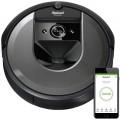 | 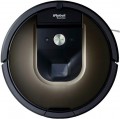 |
|---|---|---|
| iRobot Roomba i7 | iRobot Roomba 980 | |
from $279.99 | from $849.99 | |
| User reviews | ||
| TOP sellers | ||
Cartography system. Wi-Fi control. AeroForce three-stage cleaning system. Two rubber brushes. Dust container full indicator. Dirt Detect technology. Support for Google Assistant and Amazon Alexa voice assistants. | Camera for visual orientation. Increased suction power depending on the surface material. Wireless connection to a smartphone. Long battery life. There is no manual control mode. | |
| Type | robot vacuum cleaner | robot vacuum cleaner |
| Cleaning | dry side brush turbo brush | dry side brush turbo brush |
Robot vacuum cleaner | ||
| Dust container capacity | 400 ml | 1100 ml |
| Power auto-adjustment |  |  |
| Fine filter | HEPA | HEPA |
| Building a room map | camera | camera |
| Cleaning area limitation | laser sensor | laser sensor |
Features | ||
| Control via smartphone | | |
| Voice assistant | Google Assistant, Amazon Alexa | Google Assistant, Amazon Alexa |
| Scheduled cleaning | | |
Battery | ||
| Battery capacity | 1.85 Ah | 3.3 Ah |
| Operating time | 75 min | 120 min |
| Charging time | 3 h | |
General | ||
| Cleaning area | 150 m² | 100 m² |
| Threshold clearance | 20 mm | |
| Noise level | 60 dB | 60 dB |
| Dimensions (HxWxD) | 9x35x35 cm | 9x35x35 cm |
| Weight | 3.9 kg | |
| Color | ||
| Added to E-Catalog | november 2018 | january 2016 |


Compare iRobot Roomba i7 and Roomba 980
iRobot Roomba i7 and iRobot Roomba 980 — both are robot vacuums highly rated by users, but they have their differences. The Roomba i7 stands out with its mapping system and self-cleaning capability, making it more autonomous and convenient to use. Users note its excellent cleaning quality, especially on carpets and in hard-to-reach places, as well as its ability to be controlled via an app and voice assistants. Meanwhile, the Roomba 980 also performs well in cleaning and has similar features, but its users mention issues with service and reliability shortcomings. The dustbin capacity of the Roomba 980 is larger (1.1 L compared to 0.4 L for the i7), allowing it to work longer without needing to be emptied. However, the Roomba i7 has more advanced navigation and control, making it a more preferable choice for those seeking maximum autonomy and convenience.
You may be interested in
My comparisons
iRobot Roomba 980 often compared


Glossary
Dust container capacity
The dustbin capacity indicates how much dry debris fits in the robot vacuum’s built-in container before it needs to be emptied. Models with a 200–300 ml capacity are suitable for a small apartment and frequent cleaning cycles, while a 400–600 ml capacity is more convenient for larger areas, pets, or lots of hair. For robots with a self-emptying station, the size of the internal container is less important, as debris is automatically transferred to the docking station’s collection bin.
Power auto-adjustment
A function that automatically adjusts suction power based on the type of surface or the amount of detected debris. On carpets or heavily soiled areas, the robot increases power, while on smooth floors it reduces it to save battery life and reduce noise. Automatic power adjustment helps maintain cleaning quality without constantly selecting the mode manually.
Battery capacity
Battery capacity indicates the amount of charge available to the robot vacuum for navigation, motor operation, brushes, and the mopping system. A higher-capacity battery can potentially provide longer runtime, but it does not allow the exact cleaning time to be determined without considering the device's power consumption. Operating time is more strongly affected by the selected mode, suction power, floor type, use of mopping pads, and frequency of returns to the docking station.
Operating time
Battery life determines how much area the robot vacuum can clean before returning to the docking station. Actual performance depends on the selected mode, suction power, floor type, operation of the mops or roller, and layout complexity. Therefore, the stated maximum time is usually achieved in a gentle mode and will be noticeably shorter during intensive cleaning.
Charging time
Full charging cycle of the robot vacuum to restore the battery from the minimum level to 100%. The process usually takes several hours and depends on the battery capacity and charging system power. However, with regular returns to the base, this parameter rarely affects cleaning convenience.
Cleaning area
The cleaning area refers to the approximate room size the robot can cover on a single battery charge. In Eco mode, the device will cover more space than at maximum suction power or during intensive floor mopping. The value stated by the manufacturer is usually calculated for a relatively uncluttered room and may be lower in real conditions.
Threshold clearance
Threshold climbing indicates the maximum height of an obstacle that the robot vacuum can climb over on its own. A 15 mm level is usually sufficient for small floor covering joints, while 20 mm is better suited for standard interior door thresholds and carpets with a noticeable edge.