
Comparison Ibanez PF15ECE vs Cort AD880CE
Add to comparison | 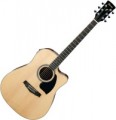 | 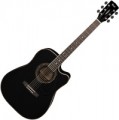 |
|---|---|---|
| Ibanez PF15ECE | Cort AD880CE | |
from $189.99 | from $218.40 up to $253.36 | |
| TOP sellers | ||
Performance Series. Pickguard. 3 colour options. Case. "Weak" preamp. Basic set of strings. | Dovetail neck mount. Failure at low frequencies. Basic set of strings. | |
| Type | electroacoustic | electroacoustic |
| Number of strings | 6 | 6 |
| Pickup |  | |
Tone block | ||
| Type | active | active |
| Equalizer | | |
| Tuner | | |
Body | ||
| Size | 4/4 | 4/4 |
| Shape | dreadnought (western) | dreadnought (western) |
| Cutaway | | |
| Pickguard | | |
| Top deck | spruce | spruce |
| Bottom deck | mahogany | mahogany |
| Shell | mahogany | mahogany |
| Bridge | rosewood | rosewood |
Neck | ||
| Number of frets | 20 | 20 |
| Anchor | single | single |
| Scale | 25.6 " | 25.6 " |
| Neck material | maple | mahogany |
| Fretboard | rosewood | rosewood |
In box | ||
| Case |  | |
| Color | ||
| Added to E-Catalog | july 2016 | july 2016 |


Compare Ibanez PF15ECE and Cort AD880CE
You may be interested in
My comparisons
Ibanez PF15ECE often compared


Cort AD880CE often compared


Glossary
Neck material
The material from which the neck of the guitar is made — more precisely, the base of the neck (the fretboard can be made from another material). Now the most commonly used materials are: nato, maple and mahogany. For the value of this parameter, see p. "Top deck".
Case
The presence of a case or cover in the tool delivery kit (what exactly is included in the kit must be specified in each case separately).
A case is called a case made of hard materials, a case is made of soft materials, this is the main difference between these types of accessories. Otherwise, they are similar: both the case and the cover are provided primarily for the convenience of transporting the tool. To do this, the design provides for handles, shoulder straps and other devices that facilitate carrying, as well as compartments for additional accessories (replaceable strings, tuners, etc.). However, it is desirable to store the tool in a case or case — to protect it from dust and other adverse factors.
The “native” case/case is good because it optimally fits a specific guitar model and is immediately sold with it, saving the owner from unnecessary searches. On the other hand, manufacturers often include the simplest types of cases in the kit, with minimal additional features and a very limited degree of protection. This is especially true for cases that can be made of thin material and are only suitable for short-distance movements in warm weather without rain. Therefore, sometimes it makes more sense to buy a case separately.
A case is called a case made of hard materials, a case is made of soft materials, this is the main difference between these types of accessories. Otherwise, they are similar: both the case and the cover are provided primarily for the convenience of transporting the tool. To do this, the design provides for handles, shoulder straps and other devices that facilitate carrying, as well as compartments for additional accessories (replaceable strings, tuners, etc.). However, it is desirable to store the tool in a case or case — to protect it from dust and other adverse factors.
The “native” case/case is good because it optimally fits a specific guitar model and is immediately sold with it, saving the owner from unnecessary searches. On the other hand, manufacturers often include the simplest types of cases in the kit, with minimal additional features and a very limited degree of protection. This is especially true for cases that can be made of thin material and are only suitable for short-distance movements in warm weather without rain. Therefore, sometimes it makes more sense to buy a case separately.