
Comparison Samsung EB-P3000 vs Huawei AP007
Add to comparison | 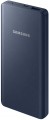 | 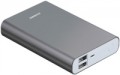 |
|---|---|---|
| Samsung EB-P3000 | Huawei AP007 | |
| Outdated Product | from $20.76 up to $31.96 | |
| User reviews | ||
| TOP sellers | ||
All-aluminium housing with sandblasting. Charging two devices. Two way fast charging. Auto power off. 10-level protection against electrical breakdowns. No deficiencies found. | ||
| Battery capacity | 10000 mAh | 13000 mAh |
| Battery type | Li-Ion | Li-Pol |
Charging gadgets / outputs | ||
| USB-A | 1 pcs | 2 pcs |
Power bank charging | ||
| Power bank charging inputs | microUSB | microUSB |
| Power bank charge power | 10 W | |
Features | ||
| Bundled cables (adapters) | microUSB | microUSB |
General | ||
| Body material | plastic | aluminium |
| Dimensions | 148x71x15 mm | 112x78x23 mm |
| Weight | 240 g | 325 g |
| Color | ||
| Added to E-Catalog | november 2017 | february 2017 |


Compare Samsung EB-P3000 and Huawei AP007
You may be interested in
My comparisons
Samsung EB-P3000 often compared


Huawei AP007 often compared


Glossary
Battery capacity
The capacity of a powerbank indicates the amount of energy it can store and is usually specified in two formats in the specifications — mAh and Wh. The mAh value is more familiar to most buyers and helps quickly understand the class of the model, while Wh more accurately reflects the total energy reserve and is more convenient for a more accurate comparison of devices.
For example, a powerbank with 10000 mAh usually has about 37 Wh, a model with 20000 mAh — approximately 74 Wh, and a version with 30000 mAh — about 111 Wh. The higher these values, the more charges for a smartphone, headphones, watch, or other devices can be expected, but the larger, heavier, and usually more expensive the device becomes.
At the same time, it is important to remember that the actual output is always lower than the nominal figures due to energy conversion losses. Therefore, capacity is one of the main parameters that immediately shows whether the powerbank is suitable for a day's backup or for more serious autonomous use.
Battery type
The type of own batteries installed in the power bank. Lithium-ion(Li-Ion) or lithium-polymer(Li-Pol) batteries are most commonly used today. Other options are less common — solutions based on nickel-metal hydride(Ni-Mh) batteries, as well as on LiFePO4 type cells. In addition, a rather promising development has appeared relatively recently — graphene batteries; however, as of early 2021, they are just beginning to be introduced into mass production. Here are the main features of each of these varieties:
— Li-Ion. Lithium-ion technology allows you to create quite capacious batteries of small dimensions and weight. In addition, such elements are easy to use (the main operating parameters are regulated by the built-in controller), have a high charge speed and are practically not affected by the "memory effect" (reduction in capacity when charging an incompletely discharged battery). The main disadvantage of lithium-ion batteries is a rather narrow range of permissible ambient temperatures. This is not a problem in urban usage, when the power bank is used mainly indoors and is carried in a pocket or in a bag; but for less favorable conditions (such as long hikes in the cold season), it is worth choosing models with good thermal insulation. You can also find information that lithium-ion batteries are prone to fires and even explosions; however, this is usually due to...failures in the embedded controllers, and these controllers are also constantly being improved, and nowadays the risk of such an accident is so low that it can actually be neglected.
— Li-pol. Further development and improvement of the lithium-ion technology described above; the main difference is the use of a solid polymer electrolyte instead of a liquid one (hence the name). This made it possible to achieve even greater capacity without increasing the dimensions, as well as to reduce the potential for fires and explosions during abnormal operation. On the other hand, lithium-polymer batteries are somewhat more expensive than lithium-ion batteries and are even more sensitive to temperature disturbances.
— Ni-Mh. Nickel-metal hydride batteries are distinguished by their reliability and a wide range of permissible temperatures, however, with the same dimensions, they are inferior in capacity to lithium-ion (and even more to lithium-polymer) batteries, and they also require certain specific operating rules to be observed. In addition, it is worth noting that Ni-Mh technology is well suited for removable batteries. It is in this format that such batteries are most often used: power banks of the Ni-Mh format are usually adapters with slots for several replaceable elements of a standard size (for example, AA). In this case, usually, several corresponding removable batteries are included in the kit, however, if desired, they can be replaced with other elements — these can even be disposable batteries from the nearest store. Such an opportunity can turn out to be very useful if the power bank is out of juice at an unfortunate moment, but there is no way to charge it; in addition, worn-out batteries can be replaced with fresh ones without changing the entire device.
— Li-FePO4. Another modified version of the Li-Ion batteries described above, the so-called "lithium iron phosphate". The advantages of such cells over classical lithium-ion ones are, first of all, a stable discharge voltage (until the energy is exhausted), high peak power, long service life, resistance to low temperatures, stability and safety. In addition, due to the use of iron instead of cobalt, such batteries are also safer to manufacture and easier to dispose of. At the same time, they are noticeably inferior to the classic lithium-ion ones in terms of capacity, and they are more expensive, which is why they are rarely used.
— Graphene. Batteries based on graphene — a carbon film one atom thick. The battery itself consists of a set of such films, between which silicon plates are laid, and lithium cobaltate or magnesium oxide is used as an anode. This design provides a number of advantages over the earlier batteries described above. First, graphene technology provides a high charge density, which allows you to create capacious and at the same time light and compact batteries. Secondly, for the production of such batteries, fewer rare resources are needed than for the same lithium ones; and the production itself is more environmentally friendly. Thirdly, such batteries are not prone to overheating and explosions when overloaded or damaged. On the other hand, graphene power supplies take a long time to charge and are not durable. However, this technology is still developing, and in the future it is likely that these shortcomings will be eliminated — completely or at least partially.
— Li-Ion. Lithium-ion technology allows you to create quite capacious batteries of small dimensions and weight. In addition, such elements are easy to use (the main operating parameters are regulated by the built-in controller), have a high charge speed and are practically not affected by the "memory effect" (reduction in capacity when charging an incompletely discharged battery). The main disadvantage of lithium-ion batteries is a rather narrow range of permissible ambient temperatures. This is not a problem in urban usage, when the power bank is used mainly indoors and is carried in a pocket or in a bag; but for less favorable conditions (such as long hikes in the cold season), it is worth choosing models with good thermal insulation. You can also find information that lithium-ion batteries are prone to fires and even explosions; however, this is usually due to...failures in the embedded controllers, and these controllers are also constantly being improved, and nowadays the risk of such an accident is so low that it can actually be neglected.
— Li-pol. Further development and improvement of the lithium-ion technology described above; the main difference is the use of a solid polymer electrolyte instead of a liquid one (hence the name). This made it possible to achieve even greater capacity without increasing the dimensions, as well as to reduce the potential for fires and explosions during abnormal operation. On the other hand, lithium-polymer batteries are somewhat more expensive than lithium-ion batteries and are even more sensitive to temperature disturbances.
— Ni-Mh. Nickel-metal hydride batteries are distinguished by their reliability and a wide range of permissible temperatures, however, with the same dimensions, they are inferior in capacity to lithium-ion (and even more to lithium-polymer) batteries, and they also require certain specific operating rules to be observed. In addition, it is worth noting that Ni-Mh technology is well suited for removable batteries. It is in this format that such batteries are most often used: power banks of the Ni-Mh format are usually adapters with slots for several replaceable elements of a standard size (for example, AA). In this case, usually, several corresponding removable batteries are included in the kit, however, if desired, they can be replaced with other elements — these can even be disposable batteries from the nearest store. Such an opportunity can turn out to be very useful if the power bank is out of juice at an unfortunate moment, but there is no way to charge it; in addition, worn-out batteries can be replaced with fresh ones without changing the entire device.
— Li-FePO4. Another modified version of the Li-Ion batteries described above, the so-called "lithium iron phosphate". The advantages of such cells over classical lithium-ion ones are, first of all, a stable discharge voltage (until the energy is exhausted), high peak power, long service life, resistance to low temperatures, stability and safety. In addition, due to the use of iron instead of cobalt, such batteries are also safer to manufacture and easier to dispose of. At the same time, they are noticeably inferior to the classic lithium-ion ones in terms of capacity, and they are more expensive, which is why they are rarely used.
— Graphene. Batteries based on graphene — a carbon film one atom thick. The battery itself consists of a set of such films, between which silicon plates are laid, and lithium cobaltate or magnesium oxide is used as an anode. This design provides a number of advantages over the earlier batteries described above. First, graphene technology provides a high charge density, which allows you to create capacious and at the same time light and compact batteries. Secondly, for the production of such batteries, fewer rare resources are needed than for the same lithium ones; and the production itself is more environmentally friendly. Thirdly, such batteries are not prone to overheating and explosions when overloaded or damaged. On the other hand, graphene power supplies take a long time to charge and are not durable. However, this technology is still developing, and in the future it is likely that these shortcomings will be eliminated — completely or at least partially.
USB-A
The number of USB-A ports available for charging smartphones, headphones, accessories, and other devices. This format is still in demand because USB-A is widely used and fits a large number of existing cables and devices, although it usually falls behind USB-C in terms of relevance and power. A single USB-A output is typically sufficient for basic everyday use, while two, three, four, or more are convenient for connecting multiple gadgets simultaneously.
Power bank charge power
The power in watts at which the power bank is charged under normal conditions.
The higher the charging power, the less time it takes to charge (given the same battery capacity). For example, fast charging of a power bank typically means a charging power of 30W or more. However, this parameter does not directly affect compatibility with charging devices: modern portable batteries can work with chargers of both higher and lower power. In the first case, the battery controller will automatically limit the charging current, while in the second case, charging will simply take more time.
The higher the charging power, the less time it takes to charge (given the same battery capacity). For example, fast charging of a power bank typically means a charging power of 30W or more. However, this parameter does not directly affect compatibility with charging devices: modern portable batteries can work with chargers of both higher and lower power. In the first case, the battery controller will automatically limit the charging current, while in the second case, charging will simply take more time.
Body material
The main material used in the the body of a power bank.
In addition to traditional plastic, nowadays, external batteries are produced in cases made of more advanced and/or "prestigious" materials. Of these materials, aluminium is the most widely used; also you can find products made of steel, zinc, leather, fabric and even wood. Here are the main features of each option:
— Plastic. The most popular material for the bodies of modern power banks. Plastic, on the one hand, is inexpensive, on the other hand, it is quite durable and has a small weight, on the third hand, it makes it easy to create cases of any shape and colour, which is especially important for devices with an unusual design. In terms of strength and reliability, ordinary plastic is somewhat inferior to metals; however, in everyday use, this difference is not critical — except that scratches on such a case will appear faster. And for extreme conditions, cases can be produced from special impact-resistant plastic.
— Aluminium. Aluminium alloy housings are highly durable and lightweight; in addition, they look stylish, and the appearance is retained for a long time due to scratch resistance. The main disadvantage of aluminium is that it is more expensive than plastic.
...— Steel. Steel is notable for its high durability and reliability; according to these indicators, it surpasses even aluminium, not to mention plastic. On the other hand, this material has a significant weight, and therefore is used much less frequently.
— Leather. Solid body (plastic or metal) with additional leather cover. Such a coating does not affect the functionality and plays a purely aesthetic role: it gives the device a stylish and eye-catching appearance, allowing you to turn the power bank into a stylish accessory. However, note that in the design of such products (especially inexpensive ones), artificial leather (leatherette) is often used, which is noticeably inferior to natural leather in reliability, durability, and sometimes in appearance. Genuine leather, on the other hand, significantly affects the price — its cost can be more than half of the total price of the entire power bank.
— Fabric. A hard case (usually plastic) with a fabric outer covering. Such a coating not only gives the device a rather original appearance, but also gives some practical advantages: the fabric is pleasant to the touch and does not slip in the hand, which reduces the risk of dropping the power bank. On the other hand, various contaminants are poorly removed from such a surface, it has no fundamental advantages over plastic or metal, but it costs much more. Therefore, fabric cases are not very popular.
— Wood. Another design material used mainly for its original appearance than practical advantages. Nevertheless, wood is not inferior to plastic; and some users also consider the natural origin of this material to be an important advantage. On the other hand, wooden cases do not have noticeable advantages over plastic ones, and they cost much more.
— Zinc. Zinc alloys are similar in most properties to the aluminium alloys described above, however, for a number of reasons (in particular, due to the greater complexity in production), they are used extremely rarely.
In addition to traditional plastic, nowadays, external batteries are produced in cases made of more advanced and/or "prestigious" materials. Of these materials, aluminium is the most widely used; also you can find products made of steel, zinc, leather, fabric and even wood. Here are the main features of each option:
— Plastic. The most popular material for the bodies of modern power banks. Plastic, on the one hand, is inexpensive, on the other hand, it is quite durable and has a small weight, on the third hand, it makes it easy to create cases of any shape and colour, which is especially important for devices with an unusual design. In terms of strength and reliability, ordinary plastic is somewhat inferior to metals; however, in everyday use, this difference is not critical — except that scratches on such a case will appear faster. And for extreme conditions, cases can be produced from special impact-resistant plastic.
— Aluminium. Aluminium alloy housings are highly durable and lightweight; in addition, they look stylish, and the appearance is retained for a long time due to scratch resistance. The main disadvantage of aluminium is that it is more expensive than plastic.
...— Steel. Steel is notable for its high durability and reliability; according to these indicators, it surpasses even aluminium, not to mention plastic. On the other hand, this material has a significant weight, and therefore is used much less frequently.
— Leather. Solid body (plastic or metal) with additional leather cover. Such a coating does not affect the functionality and plays a purely aesthetic role: it gives the device a stylish and eye-catching appearance, allowing you to turn the power bank into a stylish accessory. However, note that in the design of such products (especially inexpensive ones), artificial leather (leatherette) is often used, which is noticeably inferior to natural leather in reliability, durability, and sometimes in appearance. Genuine leather, on the other hand, significantly affects the price — its cost can be more than half of the total price of the entire power bank.
— Fabric. A hard case (usually plastic) with a fabric outer covering. Such a coating not only gives the device a rather original appearance, but also gives some practical advantages: the fabric is pleasant to the touch and does not slip in the hand, which reduces the risk of dropping the power bank. On the other hand, various contaminants are poorly removed from such a surface, it has no fundamental advantages over plastic or metal, but it costs much more. Therefore, fabric cases are not very popular.
— Wood. Another design material used mainly for its original appearance than practical advantages. Nevertheless, wood is not inferior to plastic; and some users also consider the natural origin of this material to be an important advantage. On the other hand, wooden cases do not have noticeable advantages over plastic ones, and they cost much more.
— Zinc. Zinc alloys are similar in most properties to the aluminium alloys described above, however, for a number of reasons (in particular, due to the greater complexity in production), they are used extremely rarely.