
Comparison Forte TC 200 vs Forte TC 250
Add to comparison | 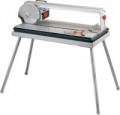 | 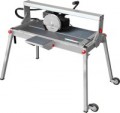 |
|---|---|---|
| Forte TC 200 | Forte TC 250 | |
from $176.00 up to $217.28 | from $314.00 up to $378.36 | |
| User reviews | ||
| TOP sellers | ||
| Type | electric stationary | electric stationary |
Specs | ||
| Power source | mains | mains |
| Power | 800 W | 1200 W |
| Disc diameter | 200 mm | 250 mm |
| Bore diameter | 25.4 mm | 25.4 mm |
| Cutting length | 520 mm | 1020 mm |
| Cutting depth | 36 mm | 50 mm |
Functions | ||
| Water cooling |  | |
| Disc/cutter feed | top | top |
| Mitre cutting | | |
| Folding table legs | | |
| Angle stop | | |
| Side platform |  | |
General | ||
| Transportation wheels | | |
| Table dimensions | 790x394 mm | 1060x468 mm |
| Weight | 28.5 kg | 46.4 kg |
| Added to E-Catalog | september 2015 | september 2015 |


Compare Forte TC 200 and TC 250
You may be interested in
My comparisons
Forte TC 200 often compared


Forte TC 250 often compared


Glossary
Power
Rated motor power of the electric tile cutter. The more powerful the engine — the more force it can give to the cutting tool, the higher the rotation speed and disc diameter can be. Accordingly, a more powerful tool is better suited for larger jobs and hard and/or thick materials. On the other hand, high power significantly affects the price, dimensions and weight of the tool, despite the fact that there is not always a real need for it.
In light of all this, it is necessary to choose a tile cutter in terms of power, taking into account the specifics of the intended use. So, in the case of a hand tool for simple household work, a power of 700 – 800 W is enough, more solid indicators may be required mainly for professional use. But in stationary units, where compactness does not really matter, you can not save on power — especially since such devices are usually used where performance is important.
In light of all this, it is necessary to choose a tile cutter in terms of power, taking into account the specifics of the intended use. So, in the case of a hand tool for simple household work, a power of 700 – 800 W is enough, more solid indicators may be required mainly for professional use. But in stationary units, where compactness does not really matter, you can not save on power — especially since such devices are usually used where performance is important.
Disc diameter
The nominal diameter of the cutting disc for which the electric tile cutter is designed. A disk of a larger diameter will simply not fit into the seat; but the use of smaller nozzles in some cases is allowed (but not recommended).
The depth of cut depends primarily on the diameter of the disc (see below). So, with ordinary tiles, having a thickness of up to 1.5 cm, almost any disc, even the smallest one, will cope; but for thicker materials (for example, paving slabs) and the appropriate tool will be needed. However it is worth noting that with the same diameter of the disc, the thickness of the cut may be different.
Also, the size of the cutting tool allows you to generally evaluate the class of the tool: the larger the disc, the more powerful and performant the tile cutter, usually.
The depth of cut depends primarily on the diameter of the disc (see below). So, with ordinary tiles, having a thickness of up to 1.5 cm, almost any disc, even the smallest one, will cope; but for thicker materials (for example, paving slabs) and the appropriate tool will be needed. However it is worth noting that with the same diameter of the disc, the thickness of the cut may be different.
Also, the size of the cutting tool allows you to generally evaluate the class of the tool: the larger the disc, the more powerful and performant the tile cutter, usually.
Cutting length
The longest cut that can be made with a tile cutter.
This parameter is relevant primarily for manual tile cutters, as well as for electric stationary units with a top disc feed. In such tools, the cutting element moves along the guide rail and has limited space for movement, and the length of the cut is, in fact, the length of the stroke of the cutting tool from one extreme point to the other. In fact, this is the maximum width of the material that can be cut with a tile cutter.
This parameter is relevant primarily for manual tile cutters, as well as for electric stationary units with a top disc feed. In such tools, the cutting element moves along the guide rail and has limited space for movement, and the length of the cut is, in fact, the length of the stroke of the cutting tool from one extreme point to the other. In fact, this is the maximum width of the material that can be cut with a tile cutter.
Cutting depth
The greatest depth to which the tool can cut through the material being processed, in other words, the maximum thickness of the tile that the tile cutter is guaranteed to be able to cut.
It is worth choosing a tool for this parameter taking into account the thickness of the material with which to work, plus some margin “just in case”. But this margin should not be too large: for a deep cut, large discs and high power are required, which accordingly affects the price, weight and dimensions of the tool.
It is worth choosing a tool for this parameter taking into account the thickness of the material with which to work, plus some margin “just in case”. But this margin should not be too large: for a deep cut, large discs and high power are required, which accordingly affects the price, weight and dimensions of the tool.
Side platform
The presence of a side platform in the design of the tile cutter.
Such a platform is found mainly in electrical stationary units (see "Type"). It looks like a small platform, "extending" the main working platform to the side of the cutting line. This provides additional support for the cut tile, which is especially important when cutting large pieces: without a side platform, such fragments have to be supported by hand in order to avoid falling and damage, and this is not very convenient.
Such a platform is found mainly in electrical stationary units (see "Type"). It looks like a small platform, "extending" the main working platform to the side of the cutting line. This provides additional support for the cut tile, which is especially important when cutting large pieces: without a side platform, such fragments have to be supported by hand in order to avoid falling and damage, and this is not very convenient.
Transportation wheels
The presence of transport rollers in the design of the tile cutter — small wheels for transportation from place to place.
This feature is found exclusively in electric stationary models (see "Type"): the weight of such units is estimated at tens of kilograms, and it would be very difficult to carry them on weight. In turn, the transport rollers allow one person to roll the tile cutter without much difficulty. At the same time, the design of the rollers is chosen in such a way that they do not affect the stability of the unit in the working position: for example, in some models the wheels can be removable, in others they are located only on one side, and to support the wheels, the unit must be raised in the manner of a garden wheelbarrow , etc.
This feature is found exclusively in electric stationary models (see "Type"): the weight of such units is estimated at tens of kilograms, and it would be very difficult to carry them on weight. In turn, the transport rollers allow one person to roll the tile cutter without much difficulty. At the same time, the design of the rollers is chosen in such a way that they do not affect the stability of the unit in the working position: for example, in some models the wheels can be removable, in others they are located only on one side, and to support the wheels, the unit must be raised in the manner of a garden wheelbarrow , etc.
Table dimensions
The size of the working surface of the stationary tile cutter (see "Type"). The larger the table, the lower the likelihood that the tiles will hang from it during operation.