
Comparison Parsun T2.6CBMS vs Yamarine T2.6BMS
Add to comparison | 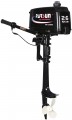 | 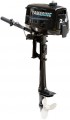 |
|---|---|---|
| Parsun T2.6CBMS | Yamarine T2.6BMS | |
from $322.92 | from $488.00 | |
| TOP sellers | ||
| Application | boat | boat |
| Motor type | propeller | propeller |
Motor | ||
| Engine type | petrol | petrol |
| Motor duty cycle | 2-stroke | 2-stroke |
| Maximum power | 2.6 hp | 2.6 hp |
| Maximum power | 1.9 kW | 1.91 kW |
| Maximum revolutions | 5500 rpm | 5000 rpm |
| Number of cylinders | 1 pcs | 1 pcs |
| Capacity | 50 cm3 | 62 cm3 |
| Piston diameter | 42 mm | |
| Piston stroke | 36 mm | |
| Cooling | liquid | liquid |
| Exhaust system | above propeller | above propeller |
Fuel system | ||
| Fuel system type | carburetor | carburetor |
| Fuel tank | built-in | built-in |
| Fuel tank volume | 1.2 L | 1.2 L |
| Recommended fuel | AI-95 gasoline | AI-95 gasoline |
Drive unit | ||
| Gear ratio | 2.08 | 2.08 |
| Propeller screw | 3-bladed | 3-bladed |
| Gear | forward | forward |
Equipment | ||
| Transom height (deadwood) | 381 mm | 381 mm |
| Control system | tiller | tiller |
| Launch type | manual | manual |
| Leg lift (trim) | manual | manual |
General | ||
| Dimensions | 920x597x234 mm | |
| Weight | 9.8 kg | 9.8 kg |
| Added to E-Catalog | june 2015 | february 2015 |


Compare Parsun T2.6CBMS and Yamarine T2.6BMS
You may be interested in
My comparisons
Parsun T2.6CBMS often compared


Glossary
Maximum power
The maximum operating power of the outboard motor, expressed in kilowatts.
The practical value of motor power is described in detail in “Maximum power" is higher. Here we note that the kilowatt (derivative of watt) is just one of the units of power used in fact along with horsepower (hp); 1 HP ≈ 735 W (0.735 kW). Watts are considered the traditional unit for electric motors (see "Engine Type"), but for a number of reasons, outboard motor manufacturers use this designation for gasoline models as well.
The practical value of motor power is described in detail in “Maximum power" is higher. Here we note that the kilowatt (derivative of watt) is just one of the units of power used in fact along with horsepower (hp); 1 HP ≈ 735 W (0.735 kW). Watts are considered the traditional unit for electric motors (see "Engine Type"), but for a number of reasons, outboard motor manufacturers use this designation for gasoline models as well.
Maximum revolutions
The highest shaft speed that the outboard motor is capable of developing.
Theoretically, the speed of rotation of the propeller (or turbine — see "Motor type") depends on the engine speed, and, accordingly, the speed that the boat is capable of developing. However, in addition to this indicator, many other factors also affect the performance of the motor — engine power (see above), gear ratio (see below), propeller design, etc. As a result, situations are quite normal when a more powerful and high-speed motor has lower revolutions than the weaker one. Therefore, this parameter is, in fact, a reference one, and has almost no practical value when choosing. Unless it can be noted that high-speed motors are more susceptible to noise and vibration than low-speed ones; however, this moment can be compensated by the use of various technical tricks.
Theoretically, the speed of rotation of the propeller (or turbine — see "Motor type") depends on the engine speed, and, accordingly, the speed that the boat is capable of developing. However, in addition to this indicator, many other factors also affect the performance of the motor — engine power (see above), gear ratio (see below), propeller design, etc. As a result, situations are quite normal when a more powerful and high-speed motor has lower revolutions than the weaker one. Therefore, this parameter is, in fact, a reference one, and has almost no practical value when choosing. Unless it can be noted that high-speed motors are more susceptible to noise and vibration than low-speed ones; however, this moment can be compensated by the use of various technical tricks.
Capacity
The working volume of a gasoline outboard engine (see "Engine type"). This term usually means the total working volume of the cylinders.
The larger this value, the higher the motor power, usually (see the relevant paragraph). At the same time, with an increase in the working volume, fuel consumption, weight and dimensions of the unit also increase; and power depends not only on this indicator, but also on a number of other factors — ranging from the number of strokes (see "Engine duty cycle") or the presence of turbocharging (see below) and ending with specific design features. Therefore, situations are not excluded when a smaller engine will have more power, and vice versa.
The larger this value, the higher the motor power, usually (see the relevant paragraph). At the same time, with an increase in the working volume, fuel consumption, weight and dimensions of the unit also increase; and power depends not only on this indicator, but also on a number of other factors — ranging from the number of strokes (see "Engine duty cycle") or the presence of turbocharging (see below) and ending with specific design features. Therefore, situations are not excluded when a smaller engine will have more power, and vice versa.
Piston diameter
The diameter of a single piston in a gasoline (see "Engine type") outboard motor. In most cases, this parameter is purely reference; situations where data on the piston diameter is really needed are extremely rare — usually during the repair or maintenance of the engine.
Piston stroke
The working stroke is the distance between the two extreme positions of the piston in a gasoline (see "Engine type") outboard motor. In most cases, this parameter is purely reference; situations where such data is really needed are extremely rare — usually during the repair or maintenance of the engine.