
Comparison Bark B-220CD vs Bark B-220C
Add to comparison | 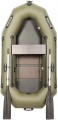 | 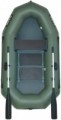 |
|---|---|---|
| Bark B-220CD | Bark B-220C | |
from $140.40 | from $135.76 up to $136.00 | |
| User reviews | ||
| TOP sellers | ||
| Type | rowing | rowing |
| Number of seats | 1 | 1 |
| Load capacity | 197 kg | 197 kg |
Equipment | ||
| Bottom type | flat | flat |
| Bottom cover | lath slate | lath slate |
| Transom | in absent | in absent |
| Seats | rigid and movable | rigid fixed |
| More features | carrying handles swivel oarlocks eye roller lifeline | carrying handles swivel oarlocks eye roller lifeline |
Specs | ||
| Number of pressurized compartments | 2 | 2 |
| Balloon diameter | 30 cm | 30 cm |
| Dimensions (LxW) | 220x115 cm | 220x115 cm |
| Dimensions (folded) | 80x40x30 cm | 80x40x30 cm |
| Fabric density | 850 g/m² | 850 g/m² |
| Weight | 12 kg | 12 kg |
Items in set | ||
| Paddles |  | |
| Pump | | |
| Repair kit | | |
| Boat bag | | |
| Added to E-Catalog | march 2017 | july 2014 |


Compare Bark B-220CD and B-220C
You may be interested in
Bark B-220C often compared


Glossary
Seats
— Rigid. Seats in the form of planks, usually attached to both sides across the boat. Considered more reliable than inflatables, they have a traditional flat surface and are cheaper due to their simple design. On the other hand, when folded, the hard seats take up more space, and the convenience for passengers is purely symbolic.
— Rigid sliding. The rigid bars described above with the ability to adjust the location along the boat. They allow you to change the distance between the seats, or even combine two into one.
— Inflatable. Inflatable seats are easy to use and quite comfortable. They usually do not require special fasteners, and by changing the degree of pumping, you can change the hardness, adjusting the properties of the surface to the preferences of a particular person. In addition, such seats, when deflated, take up a minimum of space. Their main disadvantage is their relatively high cost.
— Soft. A type of seat used primarily in kayaks (see "Type"). They have a rigid base covered with foam rubber or other similar material, often equipped with backs. This design provides comfort on long trips and at the same time allows you to maintain maximum control over the boat.
— None. Some boats may not come with seats at all. One of the varieties of such models is miniature rowing boats (see "T...ype"), designed for one or two people and equipped with an inflatable flat bottom (see "Bottom type"), which plays the role of a seat. The second option is multi-seat boats, for which "seats" must be purchased separately, depending on the features of the planned application.
— Rigid sliding. The rigid bars described above with the ability to adjust the location along the boat. They allow you to change the distance between the seats, or even combine two into one.
— Inflatable. Inflatable seats are easy to use and quite comfortable. They usually do not require special fasteners, and by changing the degree of pumping, you can change the hardness, adjusting the properties of the surface to the preferences of a particular person. In addition, such seats, when deflated, take up a minimum of space. Their main disadvantage is their relatively high cost.
— Soft. A type of seat used primarily in kayaks (see "Type"). They have a rigid base covered with foam rubber or other similar material, often equipped with backs. This design provides comfort on long trips and at the same time allows you to maintain maximum control over the boat.
— None. Some boats may not come with seats at all. One of the varieties of such models is miniature rowing boats (see "T...ype"), designed for one or two people and equipped with an inflatable flat bottom (see "Bottom type"), which plays the role of a seat. The second option is multi-seat boats, for which "seats" must be purchased separately, depending on the features of the planned application.