
Comparison Brig Baltic B350 vs Brig Baltic B310
Add to comparison | 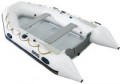 | 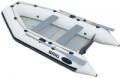 |
|---|---|---|
| Brig Baltic B350 | Brig Baltic B310 | |
from $1,296.88 up to $1,743.04 | from $1,245.48 up to $1,429.92 | |
| TOP sellers | ||
| Type | motor-rowing | motor-rowing |
| Number of seats | 4 | 4 |
| Load capacity | 650 kg | 500 kg |
Equipment | ||
| Bottom type | inflatable keel | inflatable keel |
| Bottom cover | rigid plywood flooring | rigid plywood flooring |
| Transom | built-in | built-in |
| Seats | rigid fixed | rigid fixed |
| More features | water release valve carrying handles swivel oarlocks eye roller water breaker lifeline | water release valve carrying handles swivel oarlocks eye roller water breaker lifeline |
Specs | ||
| Maximum motor power | 25 hp | 15 hp |
| Number of pressurized compartments | 4 | 4 |
| Balloon diameter | 44 cm | 40 cm |
| Dimensions (LxW) | 350x172 cm | 315x166 cm |
| Fabric density | 1100 g/m² | 1100 g/m² |
| Weight | 54 kg | 44 kg |
Items in set | ||
| Paddles |  | |
| Pump | | |
| Repair kit | | |
| Boat bag | | |
| Added to E-Catalog | july 2014 | july 2014 |


Compare Brig Baltic B350 and Baltic B310
You may be interested in
Brig Baltic B310 often compared

Glossary
Load capacity
The maximum weight of cargo that the boat is normally designed to carry. The cargo in this case includes both passengers and their luggage, as well as the engine and various additional equipment.
The carrying capacity stated in the characteristics clearly cannot be exceeded: although most inflatable boats are able to stay afloat even with severe overload, in such conditions controllability and stability noticeably deteriorate, wear increases and the likelihood of damage to the bottom or cylinder increases. We also note that there is no strict connection between the carrying capacity and the number of seats (see above): models with the same number of seats can differ significantly in permissible load. And it is important to take boats with a large carrying capacity if necessary, because this affects the density of materials, overall weight and price.
The carrying capacity stated in the characteristics clearly cannot be exceeded: although most inflatable boats are able to stay afloat even with severe overload, in such conditions controllability and stability noticeably deteriorate, wear increases and the likelihood of damage to the bottom or cylinder increases. We also note that there is no strict connection between the carrying capacity and the number of seats (see above): models with the same number of seats can differ significantly in permissible load. And it is important to take boats with a large carrying capacity if necessary, because this affects the density of materials, overall weight and price.
Maximum motor power
The maximum engine power allowed for this boat.
The power limitation is primarily due to the fact that not every boat normally tolerates high speeds. In addition, powerful motors and weigh a lot, which puts forward appropriate requirements for the strength of the transom. So it is extremely undesirable to exceed the permissible power: even at low thrust, the structure will be subjected to abnormal loads, and full thrust can lead to a rollover or damage to the boat.
The power limitation is primarily due to the fact that not every boat normally tolerates high speeds. In addition, powerful motors and weigh a lot, which puts forward appropriate requirements for the strength of the transom. So it is extremely undesirable to exceed the permissible power: even at low thrust, the structure will be subjected to abnormal loads, and full thrust can lead to a rollover or damage to the boat.
Balloon diameter
The diameter of the boat's balloon — the inflatable shell that forms the sides — in a fully inflated state. This parameter primarily affects the dimensions of the cockpit (see below): with the same dimensions of the boat, a thicker cylinder leaves less space in the cockpit. Also, the carrying capacity is somewhat related to the diameter — a large cylinder usually holds more air and gives more buoyancy; however, in fact, the possibilities for transporting goods are also highly dependent on the characteristics of the bottom and the overall strength of the structure.
Dimensions (LxW)
The dimensions of the inflated boat in length and width, along the outer edges (excluding oars, motor, etc.). This parameter allows you to estimate how much space the vessel will occupy in the working position. In addition, the first size value — length — indicates other parameters: the larger it is, the better the boat is suitable for gliding and, usually, its capacity is greater (see "Number of seats").
Weight
The total weight of the boat with oars and decking (if any), but excluding the motor and additional attachments. The lighter the boat, the more convenient it is to carry, however, a small weight can affect either the price or the quality (compared to analogues). Weight also affects speed characteristics — a lighter boat is easier to accelerate to high speed with the same motor power; however, do not forget that these characteristics also depend on the material, the shape of the bottom and many other parameters.