
Comparison ASRock B360 Pro4 vs Asus PRIME B360-PLUS
Add to comparison | 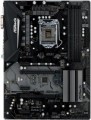 | 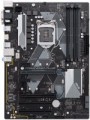 |
|---|---|---|
| ASRock B360 Pro4 | Asus PRIME B360-PLUS | |
| Compare prices 1 | Compare prices 1 | |
| TOP sellers | ||
| Features | gaming | gaming |
| Socket | LGA 1151 v2 | LGA 1151 v2 |
| Form factor | ATX | ATX |
| Power phases | 10 | 6 |
| VRM heatsink |  | |
| LED lighting |  | |
| Size (HxW) | 305x224 mm | 305x221 mm |
Chipset | ||
| Chipset | Intel B360 | Intel B360 |
| BIOS | Ami | Ami |
| UEFI BIOS | | |
RAM | ||
| DDR4 | 4 slot(s) | 4 slot(s) |
| Memory module | DIMM | DIMM |
| Operation mode | 2 channel | 2 channel |
| Max. clock frequency | 2666 MHz | 2666 MHz |
| Max. memory | 64 GB | 64 GB |
| XMP | | |
Drive interface | ||
| SATA 3 (6Gbps) | 6 | 6 |
| M.2 connector | 2 | 2 |
| M.2 | 1xSATA/PCIe 4x, 1xSATA/PCIe 2x | 1xSATA/PCIe 2x, 1xPCIe 4x |
Expansion slots | ||
| 1x PCIe slots | 3 pcs | 2 pcs |
| PCIe 16x slots | 2 pcs | 2 pcs |
| PCIe modes | 16x/4x | 16x/4x |
| PCIe support | 3.0 | 3.0 |
| PCI slots | 2 | |
| CrossFire (AMD) | | |
Internal connections | ||
| USB-A 2.0 | 2 pcs | 1 pcs |
| USB-A 5Gbps | 1 pcs | 1 pcs |
Video outputs | ||
| D-Sub output (VGA) | | |
| DVI output | DVI-D | DVI-D |
| HDMI output | | |
Integrated audio | ||
| Audiochip | Realtek ALC892 | Realtek ALC887 |
| Sound (channels) | 7.1 | 7.1 |
Network interfaces | ||
| LAN (RJ-45) | 1 Gbps | 1 Gbps |
| LAN ports | 1 | 1 |
| LAN controller | Intel I219V | Realtek RTL8111H |
External connections | ||
| USB-A 2.0 | 2 pcs | 4 pcs |
| USB-A 5Gbps | 2 pcs | 2 pcs |
| USB-A 10Gbps | 1 pcs | 2 pcs |
| USB-C 10Gbps | 1 pcs | |
| PS/2 | 1 | 1 |
Power connectors | ||
| Main power socket | 24-pin | 24-pin |
| CPU power | 8-pin | 8-pin |
| Fan power connectors | 4 | 3 |
| Added to E-Catalog | april 2018 | april 2018 |


Compare ASRock B360 Pro4 and Asus PRIME B360-PLUS
Price comparison
You may be interested in
ASRock B360 Pro4 often compared


Asus PRIME B360-PLUS often compared


Glossary
Power phases
The number of processor power phases provided on the motherboard.
Very simplistically, phases can be described as electronic blocks of a special design, through which power is supplied to the processor. The task of such blocks is to optimize this power, in particular, to minimize power surges when the load on the processor changes. In general, the more phases, the lower the load on each of them, the more stable the power supply and the more durable the electronics of the board. And the more powerful the CPU and the more cores it has, the more phases it needs; this number increases even more if the processor is planned to be overclocked. For example, for a conventional quad-core chip, only four phases are often enough, and for an overclocked one, at least eight may be needed. It is because of this that powerful processors can have problems when used on inexpensive low-phase motherboards.
Detailed recommendations on choosing the number of phases for specific CPU series and models can be found in special sources (including the documentation for CPU itself). Here we note that with numerous phases on the motherboard (more than 8), some of them can be virtual. To do this, real electronic blocks are supplemented with doublers or even triplers, which, formally, increases the number of phases: for example, 12 claimed phases can represent 6 physical blocks with doublers. However, virtual phases are much inferior to real ones in terms of capabilities — in fact, t...hey are just additions that slightly improve the characteristics of real phases. So, let's say, in our example, it is more correct to speak not about twelve, but only about six (though improved) phases. These nuances must be specified when choosing a motherboard.
Very simplistically, phases can be described as electronic blocks of a special design, through which power is supplied to the processor. The task of such blocks is to optimize this power, in particular, to minimize power surges when the load on the processor changes. In general, the more phases, the lower the load on each of them, the more stable the power supply and the more durable the electronics of the board. And the more powerful the CPU and the more cores it has, the more phases it needs; this number increases even more if the processor is planned to be overclocked. For example, for a conventional quad-core chip, only four phases are often enough, and for an overclocked one, at least eight may be needed. It is because of this that powerful processors can have problems when used on inexpensive low-phase motherboards.
Detailed recommendations on choosing the number of phases for specific CPU series and models can be found in special sources (including the documentation for CPU itself). Here we note that with numerous phases on the motherboard (more than 8), some of them can be virtual. To do this, real electronic blocks are supplemented with doublers or even triplers, which, formally, increases the number of phases: for example, 12 claimed phases can represent 6 physical blocks with doublers. However, virtual phases are much inferior to real ones in terms of capabilities — in fact, t...hey are just additions that slightly improve the characteristics of real phases. So, let's say, in our example, it is more correct to speak not about twelve, but only about six (though improved) phases. These nuances must be specified when choosing a motherboard.
LED lighting
The presence of its own LED backlight on the motherboard. This feature does not affect the functionality of the "motherboard", but gives it an unusual appearance. Therefore, it hardly makes sense for an ordinary user to specifically look for such a model (a motherboard without backlighting is enough for him), but for modding lovers, backlighting can be very useful.
LED backlighting can take the form of individual lights or LED strips, come in different colours (sometimes with a choice of colours) and support additional effects — flashing, flickering, synchronization with other components (see "Lightning synchronization"), etc. Specific features depend on the motherboard model.
LED backlighting can take the form of individual lights or LED strips, come in different colours (sometimes with a choice of colours) and support additional effects — flashing, flickering, synchronization with other components (see "Lightning synchronization"), etc. Specific features depend on the motherboard model.
Size (HxW)
Motherboard dimensions in height and width. It is assumed that the traditional placement of motherboards is vertical, so in this case one of the dimensions is called not the length, but the height.
Motherboard sizes are largely determined by their form factors (see above), however, the size of a particular motherboard may differ slightly from the standard adopted for this form factor. In addition, it is usually easier to clarify the dimensions according to the characteristics of a particular motherboard than to look for or remember general information on the form factor. Therefore, size data can be given even for models that fully comply with the standard.
The third dimension — thickness — is considered less important for a number of reasons, so it is often omitted.
Motherboard sizes are largely determined by their form factors (see above), however, the size of a particular motherboard may differ slightly from the standard adopted for this form factor. In addition, it is usually easier to clarify the dimensions according to the characteristics of a particular motherboard than to look for or remember general information on the form factor. Therefore, size data can be given even for models that fully comply with the standard.
The third dimension — thickness — is considered less important for a number of reasons, so it is often omitted.
M.2
Electrical (logical) interfaces implemented through physical M.2 connectors on the motherboard.
For more details about such connectors, see above. Here, we note that they can work with two types of interfaces:
For more details about such connectors, see above. Here, we note that they can work with two types of interfaces:
- SATA — a standard originally created for hard drives. Usually, the most recent version supported in M.2 is SATA 3; however, even it is significantly inferior to PCIe in terms of speed (600 MB/s) and functionality (only storage devices);
- PCIe — the most widespread modern interface for connecting internal peripherals (also known as NVMe). It is suitable for various expansion cards (such as wireless adapters) as well as storage devices, with PCIe speeds allowing for the full potential of modern SSDs to be realized. The maximum data transfer speed depends on the version of this interface and the number of lanes. In modern M.2 connectors, you can find PCIe versions 3.0 and 4.0, with speeds of approximately 1 GB/s and 2 GB/s per lane, respectively; and the number of lanes can be 1, 2, or 4 (PCIe 1x, 2x, and 4x, respectively)
1x PCIe slots
The number of PCIe (PCI Express) 1x slots installed on the motherboard. There are motherboards with 1 PCIe 1x slot, 2 PCIe 1x connectors, 3 PCIe 1x ports, and even more.
The PCI Express bus is used to connect various expansion cards—network and sound cards, video adapters, TV tuners, and even SSDs. The number in the name indicates the number of PCIe lanes (data transmission channels) supported by this slot; the more lanes, the higher the bandwidth. Accordingly, PCIe 1x is the basic, slowest variety of this interface. The data transfer rate for such slots depends on the PCIe version (see "PCI Express Support"): specifically, it's just under 1 GB/s for version 3.0 and just under 2 GB/s for version 4.0.
It is worth noting that the general rule for PCIe is this: the card should be connected to a slot with the same or greater number of lanes. Thus, only single-lane cards will be guaranteed to be compatible with PCIe 1x.
The PCI Express bus is used to connect various expansion cards—network and sound cards, video adapters, TV tuners, and even SSDs. The number in the name indicates the number of PCIe lanes (data transmission channels) supported by this slot; the more lanes, the higher the bandwidth. Accordingly, PCIe 1x is the basic, slowest variety of this interface. The data transfer rate for such slots depends on the PCIe version (see "PCI Express Support"): specifically, it's just under 1 GB/s for version 3.0 and just under 2 GB/s for version 4.0.
It is worth noting that the general rule for PCIe is this: the card should be connected to a slot with the same or greater number of lanes. Thus, only single-lane cards will be guaranteed to be compatible with PCIe 1x.
PCI slots
The number of PCI slots provided in the design of the motherboard.
These slots are used for expansion cards. At the same time, technically, this interface is considered obsolete — in particular, it is noticeably inferior to the newer PCIe in terms of data transfer speed (up to 533 MB / s). Nevertheless, for some types of components (for example, sound cards), such features are quite enough; and the use of PCI allows you to leave free PCIe slots that may be needed for more demanding peripherals. So even nowadays, both motherboards with PCI slots and components with such a connection can still be found on the market.
These slots are used for expansion cards. At the same time, technically, this interface is considered obsolete — in particular, it is noticeably inferior to the newer PCIe in terms of data transfer speed (up to 533 MB / s). Nevertheless, for some types of components (for example, sound cards), such features are quite enough; and the use of PCI allows you to leave free PCIe slots that may be needed for more demanding peripherals. So even nowadays, both motherboards with PCI slots and components with such a connection can still be found on the market.
USB-A 2.0
The number of USB 2.0 connectors provided on the motherboard.
USB connectors (of all versions) are used to connect USB ports located on the front panel of the case to the "motherboard." A special cable connects such a port to the connector, with one connector typically working with just one port. In other words, the number of connectors on the motherboard corresponds to the maximum number of front-facing USB ports that can be used with it.
Specifically, USB-A 2.0 is the oldest version among those widely used today. It provides data transfer speeds up to 480 Mbps and is considered outdated, gradually being replaced by more advanced standards, primarily USB-A 5Gbps, 10Gbps. Nonetheless, quite a bit of peripheral equipment is still being produced for USB-A 2.0 ports: this interface's capabilities are quite sufficient for most devices that do not require high connection speeds.
USB connectors (of all versions) are used to connect USB ports located on the front panel of the case to the "motherboard." A special cable connects such a port to the connector, with one connector typically working with just one port. In other words, the number of connectors on the motherboard corresponds to the maximum number of front-facing USB ports that can be used with it.
Specifically, USB-A 2.0 is the oldest version among those widely used today. It provides data transfer speeds up to 480 Mbps and is considered outdated, gradually being replaced by more advanced standards, primarily USB-A 5Gbps, 10Gbps. Nonetheless, quite a bit of peripheral equipment is still being produced for USB-A 2.0 ports: this interface's capabilities are quite sufficient for most devices that do not require high connection speeds.
Audiochip
The model of the audio chip (a module for processing and outputting sound) installed on the motherboard. Data on the exact name of the sound chip will be useful when looking for detailed information about it.
Modern "motherboards" can be equipped with fairly advanced audio modules, with high sound quality and extensive features, which makes them suitable even for gaming and multimedia PCs (although professional audio work will still most likely require a separate sound card). Here are the most popular modern audio chips: Realtek ALC887, Realtek ALC892, Realtek ALC1150, Realtek ALC1200, Realtek ALC1220, Realtek ALC4050, Realtek ALC4080, Supreme FX.
Modern "motherboards" can be equipped with fairly advanced audio modules, with high sound quality and extensive features, which makes them suitable even for gaming and multimedia PCs (although professional audio work will still most likely require a separate sound card). Here are the most popular modern audio chips: Realtek ALC887, Realtek ALC892, Realtek ALC1150, Realtek ALC1200, Realtek ALC1220, Realtek ALC4050, Realtek ALC4080, Supreme FX.
LAN controller
Model of the LAN controller installed in the motherboard.
The LAN controller provides data exchange between the card and the network port(s) of the computer. Accordingly, both general characteristics and individual features of the network functionality of the "motherboard" depend on the characteristics of this module: support for special technologies, connection quality in case of unstable communication, etc. Knowing the model of the LAN controller, you can find detailed data on it — including including practical reviews; this information is rarely needed by the average user, but it can be useful for online game enthusiasts and for some specific tasks.
Thus, the LAN controller model is specified mainly in cases where it is a rather advanced solution that is noticeably superior to standard models. Such solutions are currently produced mainly under the brands Intel(middle level), Realtek(relatively simple models), Aquntia and Killer(mostly advanced solutions).
The LAN controller provides data exchange between the card and the network port(s) of the computer. Accordingly, both general characteristics and individual features of the network functionality of the "motherboard" depend on the characteristics of this module: support for special technologies, connection quality in case of unstable communication, etc. Knowing the model of the LAN controller, you can find detailed data on it — including including practical reviews; this information is rarely needed by the average user, but it can be useful for online game enthusiasts and for some specific tasks.
Thus, the LAN controller model is specified mainly in cases where it is a rather advanced solution that is noticeably superior to standard models. Such solutions are currently produced mainly under the brands Intel(middle level), Realtek(relatively simple models), Aquntia and Killer(mostly advanced solutions).