
Comparison Knirps T.260 Medium Duomatic vs Knirps A.200 Medium Duomatic
Add to comparison | 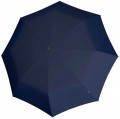 | 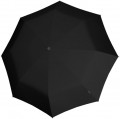 |
|---|---|---|
| Knirps T.260 Medium Duomatic | Knirps A.200 Medium Duomatic | |
| Compare prices 4 | Compare prices 1 | |
| TOP sellers | ||
| Type | folding | folding |
| Suitable for | man | unisex |
Specs | ||
| Anti-storm |  | |
| Mechanism | machine | machine |
| Frame material | aluminum | steel |
| Spoke material | fibreglass | fibreglass |
| Number of spokes | 8 pcs | 8 pcs |
| Dome diameter | 97 cm | 97 cm |
| Length (folded) | 33 cm | 28 cm |
| Dome material | polyester | polyester |
| Handle material | plastic | plastic |
| Handle shape | hook | straight |
| Weight | 395 g | 350 g |
| Color | ||
| Added to E-Catalog | may 2021 | may 2020 |

Compare Knirps T.260 Medium Duomatic and A.200 Medium Duomatic
Price comparison
You may be interested in
Knirps A.200 Medium Duomatic often compared


Glossary
Suitable for
The purpose determines the category of people for which the umbrella is designed.
— Male. Traditional men's umbrellas have a strict, discreet design, which usually goes well with a business style.
— Female. Umbrellas specially designed for women are usually designed to match, often with unusual colours, patterns, and the like.
— Children's. Children's umbrellas are distinguished primarily by their characteristic bright design with variegated colours; they can also carry drawings — for example, with popular cartoon or comic book characters. Also, many of these models are smaller than "adults" — otherwise it would be inconvenient for a child to use an umbrella.
— Unisex. Umbrellas without a pronounced "gender", equally well suited for both men and women. They can have a different design — from restrained to quite bright and catchy.
— Male. Traditional men's umbrellas have a strict, discreet design, which usually goes well with a business style.
— Female. Umbrellas specially designed for women are usually designed to match, often with unusual colours, patterns, and the like.
— Children's. Children's umbrellas are distinguished primarily by their characteristic bright design with variegated colours; they can also carry drawings — for example, with popular cartoon or comic book characters. Also, many of these models are smaller than "adults" — otherwise it would be inconvenient for a child to use an umbrella.
— Unisex. Umbrellas without a pronounced "gender", equally well suited for both men and women. They can have a different design — from restrained to quite bright and catchy.
Frame material
Material from which the umbrella frame is made. In this case, "frame" primarily refers to the central rod, although the ribs are often made of the same material if not specified otherwise (see "Rib Material").
— Steel. One of the most popular options among modern umbrellas. Steel offers good strength and elasticity. It's worth noting that different types and grades of this material can be used in umbrellas, so the actual characteristics of a specific steel frame are directly related to the price category of the product. Nevertheless, steel is used even in high-quality premium-class models. Among its "global" drawbacks is its rather considerable weight.
— Aluminum. Aluminum alloys used in umbrellas are noticeably lighter than steel but less durable. They can also have different characteristics, usually directly related to the price category of the respective model. However, in general, this material is considered less reliable and thus is mostly found in entry-level and mid-range umbrellas.
— Fiberglass. Fiberglass combines corrosion resistance, elasticity, and stable performance in cold conditions: in gusts of wind, such ribs spring back to give the canopy its shape without "bending memory," and they withstand moisture and salty mist without coatings.
— Carbon fiber. A carbon fiber frame provi...des maximum rigidity with minimal weight, precise maintenance of the canopy’s geometry, and resistance to moisture and salt mist. In gusty winds, such a frame sways less, quickly returns the canopy to its original position, and is therefore in demand in premium storm and golf umbrellas, as well as ultra-light travel models. The durability is directly dependent on the quality of the resin, the evenness of the coating, and the precision of the joints. Therefore, manufacturers use protective lacquer and UV stabilization; carbon is more sensitive to point impacts and stress concentrators, breaking "dry" without long warning bends.
— Wood. Wood has an attractive appearance but is weaker than metal. Therefore, it is mainly used as a design material in some cane umbrellas (see "Type")—even in such models, typically only the central rod is made of wood, while the other parts are metallic.
— Steel. One of the most popular options among modern umbrellas. Steel offers good strength and elasticity. It's worth noting that different types and grades of this material can be used in umbrellas, so the actual characteristics of a specific steel frame are directly related to the price category of the product. Nevertheless, steel is used even in high-quality premium-class models. Among its "global" drawbacks is its rather considerable weight.
— Aluminum. Aluminum alloys used in umbrellas are noticeably lighter than steel but less durable. They can also have different characteristics, usually directly related to the price category of the respective model. However, in general, this material is considered less reliable and thus is mostly found in entry-level and mid-range umbrellas.
— Fiberglass. Fiberglass combines corrosion resistance, elasticity, and stable performance in cold conditions: in gusts of wind, such ribs spring back to give the canopy its shape without "bending memory," and they withstand moisture and salty mist without coatings.
— Carbon fiber. A carbon fiber frame provi...des maximum rigidity with minimal weight, precise maintenance of the canopy’s geometry, and resistance to moisture and salt mist. In gusty winds, such a frame sways less, quickly returns the canopy to its original position, and is therefore in demand in premium storm and golf umbrellas, as well as ultra-light travel models. The durability is directly dependent on the quality of the resin, the evenness of the coating, and the precision of the joints. Therefore, manufacturers use protective lacquer and UV stabilization; carbon is more sensitive to point impacts and stress concentrators, breaking "dry" without long warning bends.
— Wood. Wood has an attractive appearance but is weaker than metal. Therefore, it is mainly used as a design material in some cane umbrellas (see "Type")—even in such models, typically only the central rod is made of wood, while the other parts are metallic.
Length (folded)
The length of the umbrella when folded. For the decomposed one, this parameter is not specified, because is not critical, but when transporting a closed umbrella, it is the length that is the most important dimension.
The length of cane umbrellas (see "Type") is, by definition, the same when open or closed; most often it is 60 – 90% of the dome diameter (see above). But folding models of the same diameter can vary markedly in length, and here the choice depends on the situation: on the one hand, more compact umbrellas are more convenient to carry, on the other hand, they are less reliable and more complex in design, and also cost more.
The length of cane umbrellas (see "Type") is, by definition, the same when open or closed; most often it is 60 – 90% of the dome diameter (see above). But folding models of the same diameter can vary markedly in length, and here the choice depends on the situation: on the one hand, more compact umbrellas are more convenient to carry, on the other hand, they are less reliable and more complex in design, and also cost more.
Handle shape
— Hook. The characteristic curved handle allows you to hang the umbrella on any suitable device - the back of a chair, a clothes hanger, etc. In addition, it is quite secure when held and provides a stylish appearance with a hint of traditional classics. On the other hand, a hook makes the entire product more bulky and inconvenient to transport - therefore, it is found mainly among canes (see “Type”), where the main inconvenience is due to the size of the umbrella itself and depends little on the shape of the handle. Also, some believe that “hooks” are more likely to get lost than models with other types of handles; and this opinion is not without foundation - for example, there is a high probability of forgetting about such an umbrella hung by the handle in an inconspicuous place.
- Direct. An elongated handle of a cylindrical (or close to it) shape; in some models it may be slightly bent - for example, to imitate the knob of a cane. Very comfortable to hold, but not as secure as a hook and less compact than a round one.
- Round. This category includes handles that are close in shape to either a ball or a very short cylinder (the height of which is comparable to the diameter). This option is the most compact and is considered optimal for folding umbrellas(see “Type”), created with ease of portability in mind. On the o...ther hand, in terms of reliability and ease of holding, round handles are inferior to the types described above; This is partly compensated for by the wrist strap provided in many similar models.
- C-shaped. A rather unusual type of handle is in the form of a loop with a small slot resembling the letter C. The slot is provided so that the umbrella can be hung on a rope or other similar device. In any case, this form provides two advantages over more traditional options. Firstly, it provides more grip options - you can grab the bottom of the loop, the side, between them, etc. Secondly, it allows you to free your hands when holding an open umbrella: the C-shaped handle can be put on the wrist, and The central rod should be rested on the shoulder; as a result, the hand will be free. On the other hand, this type of handle is quite bulky and expensive; It is because of this that they have not gained much popularity.
- Direct. An elongated handle of a cylindrical (or close to it) shape; in some models it may be slightly bent - for example, to imitate the knob of a cane. Very comfortable to hold, but not as secure as a hook and less compact than a round one.
- Round. This category includes handles that are close in shape to either a ball or a very short cylinder (the height of which is comparable to the diameter). This option is the most compact and is considered optimal for folding umbrellas(see “Type”), created with ease of portability in mind. On the o...ther hand, in terms of reliability and ease of holding, round handles are inferior to the types described above; This is partly compensated for by the wrist strap provided in many similar models.
- C-shaped. A rather unusual type of handle is in the form of a loop with a small slot resembling the letter C. The slot is provided so that the umbrella can be hung on a rope or other similar device. In any case, this form provides two advantages over more traditional options. Firstly, it provides more grip options - you can grab the bottom of the loop, the side, between them, etc. Secondly, it allows you to free your hands when holding an open umbrella: the C-shaped handle can be put on the wrist, and The central rod should be rested on the shoulder; as a result, the hand will be free. On the other hand, this type of handle is quite bulky and expensive; It is because of this that they have not gained much popularity.
Weight
Total weight of the umbrella.
All other things being equal, lighter umbrellas are more convenient to carry (both in the open and closed positions). On the other hand, such products are less reliable and/or more expensive than relatively heavy models of similar design and size. We also note that in some cases, significant weight can be an advantage. For example, in a strong wind, a massive umbrella does not “tear from your hands” as much, and when released, it does not fly as far as a lighter one.
All other things being equal, lighter umbrellas are more convenient to carry (both in the open and closed positions). On the other hand, such products are less reliable and/or more expensive than relatively heavy models of similar design and size. We also note that in some cases, significant weight can be an advantage. For example, in a strong wind, a massive umbrella does not “tear from your hands” as much, and when released, it does not fly as far as a lighter one.