
Comparison Yamaha NP-35 vs Yamaha P-125
Add to comparison | 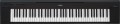 | 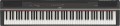 |
|---|---|---|
| Yamaha NP-35 | Yamaha P-125 | |
from $399.99 | from $1,099.99 | |
| User reviews | ||
| TOP sellers | ||
| Body | portable | portable |
Keys | ||
| Number of keys | 76 шт | 88 шт |
| Size | full size | full size |
| Mechanics | active | malleus |
| Sensitivity adjustment |  | |
| Rigidity | weighted | weighted |
Specs | ||
| Polyphony | 64 voices | 192 voices |
| Built-in timbres | 15 шт | 24 шт |
| Tempo change | 32 – 280 | 5 – 280 |
| Metronome | | |
| Sequencer (recording) | | |
| Built-in compositions | | |
Effects and control | ||
| Timbres layering | | |
| Keyboard split |  | |
| Octave shift | | |
| Reverberation | | |
| Transposition | | |
| Fine tuning | | |
| More features | sound management system | |
Connectors | ||
| Connectable pedals | 1 шт | 2 шт |
| Outputs | USB to host (type B) | USB to host (type B) |
| Headphone outputs | 1 шт | 2 шт |
| Linear outputs | 2 шт | |
General | ||
| Built-in acoustics | 12 W | 14 W |
| Number of bands | 1 | 2 |
| Power consumption | 18 W | 9 W |
| Autonomous power supply | aA batteries | |
| Operating hours | 7 h | |
| Dimensions (WxHxD) | 1260x104x260 mm | 1326x166x295 mm |
| Weight | 6 kg | 11.8 kg |
| In box | music stand PSU | |
| Color | ||
| Added to E-Catalog | august 2023 | november 2018 |


Compare Yamaha NP-35 and P-125
You may be interested in
Yamaha NP-35 often compared


Yamaha P-125 often compared


Glossary
Number of keys
The number of keys provided on the digital piano keyboard.
The immediate range of the instrument depends on the number of keys — that is, the set of notes that can be played on it without resorting to octave transfer or transposition (see below). Most digital pianos have 88 keys, the same number as a regular piano; thus, the ranges in electronic instruments most often match those of real pianos. However, smaller models are also produced — usually 61 or 73 keys (as in most synthesizers). This number of keys is found in two types of digital pianos — in inexpensive entry-level models and in some professional instruments designed mainly for "genre" music (rock, gospel, etc.), and not for classical piano parts.
The immediate range of the instrument depends on the number of keys — that is, the set of notes that can be played on it without resorting to octave transfer or transposition (see below). Most digital pianos have 88 keys, the same number as a regular piano; thus, the ranges in electronic instruments most often match those of real pianos. However, smaller models are also produced — usually 61 or 73 keys (as in most synthesizers). This number of keys is found in two types of digital pianos — in inexpensive entry-level models and in some professional instruments designed mainly for "genre" music (rock, gospel, etc.), and not for classical piano parts.
Mechanics
Type of action used in digital piano keys.
— Hammer. A mechanic that mimics the feel of playing a real piano as closely as possible. Hammer action keyboards not only provide velocity and force-dependent sound dynamics, they also provide a distinctive response with each press. These mechanics are complex and expensive, but they are considered the most advanced and suitable for digital pianos, and therefore are used in most models.
— Active. In the case of digital pianos, the active keyboard can be described as a simplified version of the hammer action described above. The sound produced when pressing such keys also depends on the force and speed of pressing, however, the keys themselves have less rigidity and do not give the full feel of a piano keyboard. On the other hand, such mechanics are cheaper. As a result, it is found mainly in low-cost models, as well as some professional instruments, positioned more like electric organs.
The third type of mechanics — passive — assumes that each time you press a key, the volume will be the same, regardless of the strength and speed of pressing. Such keyboards are not used in digital pianos — they are too primitive and not very functional for this class of instruments; however, models with adjustable sensitivity may provide switching the keyboard to a "passive" format (see below for more details).
— Hammer. A mechanic that mimics the feel of playing a real piano as closely as possible. Hammer action keyboards not only provide velocity and force-dependent sound dynamics, they also provide a distinctive response with each press. These mechanics are complex and expensive, but they are considered the most advanced and suitable for digital pianos, and therefore are used in most models.
— Active. In the case of digital pianos, the active keyboard can be described as a simplified version of the hammer action described above. The sound produced when pressing such keys also depends on the force and speed of pressing, however, the keys themselves have less rigidity and do not give the full feel of a piano keyboard. On the other hand, such mechanics are cheaper. As a result, it is found mainly in low-cost models, as well as some professional instruments, positioned more like electric organs.
The third type of mechanics — passive — assumes that each time you press a key, the volume will be the same, regardless of the strength and speed of pressing. Such keyboards are not used in digital pianos — they are too primitive and not very functional for this class of instruments; however, models with adjustable sensitivity may provide switching the keyboard to a "passive" format (see below for more details).
Polyphony
The number of voices supported by the digital piano — more precisely, the maximum number of voices that the instrument can play at the same time.
This parameter should not be confused with the number of notes that can be played simultaneously on the keyboard. The fact is that in many timbres, several voices (tone generators) are used for each note at once — this is the only way to achieve a more or less reliable sound. Thus, the required number of voices can be many times higher than the number of notes — for example, the simplest chord of 3 notes may require 9 or even 12 voices. In addition, tone generators are used to play auto accompaniment parts and built-in songs (see below), and here the number of voices can already be measured in tens.
In light of all this, polyphony of less than 90 voices is typical mainly for relatively simple and inexpensive instruments that are not designed for complex tasks. The smallest number found in modern digital pianos is 32 voices. It is desirable for a more or less solid instrument to have at least 96 voices, and in top models this figure can reach 256.
This parameter should not be confused with the number of notes that can be played simultaneously on the keyboard. The fact is that in many timbres, several voices (tone generators) are used for each note at once — this is the only way to achieve a more or less reliable sound. Thus, the required number of voices can be many times higher than the number of notes — for example, the simplest chord of 3 notes may require 9 or even 12 voices. In addition, tone generators are used to play auto accompaniment parts and built-in songs (see below), and here the number of voices can already be measured in tens.
In light of all this, polyphony of less than 90 voices is typical mainly for relatively simple and inexpensive instruments that are not designed for complex tasks. The smallest number found in modern digital pianos is 32 voices. It is desirable for a more or less solid instrument to have at least 96 voices, and in top models this figure can reach 256.
Built-in timbres
The number of built-in sounds provided by the Digital Piano.
Despite the name, digital pianos are extremely rarely designed to imitate the sound of only a piano — the electronic hardware allows them to provide other timbres of sound. In addition, even the piano has its own varieties — for example, among the grand pianos there are 6 main classes, from large concert to miniature. So the built-in sounds can cover different kinds of pianos, as well as other instruments and sound effects.
The abundance and variety of timbres in digital pianos as a whole is not as great as in synthesizers, however, in this category there are very “charged” models, with a hundred timbres or more (in the most multifunctional, this number can exceed 900). However, it is worth specifically looking for a “multi-instrumental” model if you do not intend to be limited to the sound of the piano and would like to have more freedom of choice. It is worth remembering that a specific set of timbres can be different.
If the instrument is bought exclusively as a piano, then here, on the contrary, it is worth paying attention primarily to solutions with a small number of timbres. Such models are not only cheaper than "universals" — they can also sound better (due to the fact that there are few timbres and the manufacturer can carefully approach the sound quality of each built-in "instrument").
Despite the name, digital pianos are extremely rarely designed to imitate the sound of only a piano — the electronic hardware allows them to provide other timbres of sound. In addition, even the piano has its own varieties — for example, among the grand pianos there are 6 main classes, from large concert to miniature. So the built-in sounds can cover different kinds of pianos, as well as other instruments and sound effects.
The abundance and variety of timbres in digital pianos as a whole is not as great as in synthesizers, however, in this category there are very “charged” models, with a hundred timbres or more (in the most multifunctional, this number can exceed 900). However, it is worth specifically looking for a “multi-instrumental” model if you do not intend to be limited to the sound of the piano and would like to have more freedom of choice. It is worth remembering that a specific set of timbres can be different.
If the instrument is bought exclusively as a piano, then here, on the contrary, it is worth paying attention primarily to solutions with a small number of timbres. Such models are not only cheaper than "universals" — they can also sound better (due to the fact that there are few timbres and the manufacturer can carefully approach the sound quality of each built-in "instrument").
Tempo change
The range over which the tempo of the sound played by the instrument can change. It can be either a built-in melody or a part recorded on a sequencer, or an auto accompaniment, a tutorial or a metronome. For more information on all of these features, see the corresponding glossary entries. Here we note that a change in tempo is often required in fact — for example, to speed up an initially "sluggish" accompaniment or slow down a training programme that is difficult to master at the original tempo.
Tempo is traditionally indicated in beats per minute. The classical, "academic" range covers options from 40 bpm ("grave", "very slow") to 208 bpm ("prestissimo", "very fast"), however, in modern digital pianos, the working range of tempos is often significantly wider.
Tempo is traditionally indicated in beats per minute. The classical, "academic" range covers options from 40 bpm ("grave", "very slow") to 208 bpm ("prestissimo", "very fast"), however, in modern digital pianos, the working range of tempos is often significantly wider.
Keyboard split
Possibility of dividing the keyboard into two parts so that the parts of the left and right hands are played in different timbres. This allows you to simultaneously play two disparate parts on the instrument — for example, accompany a piano melody with chords from a string orchestra or organ sounds. Specific combinations of timbres are most often pre-recorded in memory, however, there are models in which the musician himself can choose timbres for each part of the keyboard.
Octave shift
The presence of an octave shift function in the digital piano.
This function makes it possible to "shift" the sound by a certain number of octaves up or down — for example, in such a way that the bass register sounds on the keys of the first octave, or vice versa, the first octave "slid" lower, into the bass, and notes of the second sounded in its place or even the third octave.
This feature significantly expands the range of the instrument, allowing you to play notes that were not originally covered by the keyboard. This is especially important for instruments with 61 or 73 keys (see "Number of Keys"), but octave shifting is not uncommon in full-sized 88-key models — it can be useful when splitting the keyboard (see above), when available for each hand the range is noticeably reduced, and the batch can be very low or very high. However, there are other options for using transfer — for example, so that when playing an updated version of the melody, you do not have to move from the usual octaves.
This function makes it possible to "shift" the sound by a certain number of octaves up or down — for example, in such a way that the bass register sounds on the keys of the first octave, or vice versa, the first octave "slid" lower, into the bass, and notes of the second sounded in its place or even the third octave.
This feature significantly expands the range of the instrument, allowing you to play notes that were not originally covered by the keyboard. This is especially important for instruments with 61 or 73 keys (see "Number of Keys"), but octave shifting is not uncommon in full-sized 88-key models — it can be useful when splitting the keyboard (see above), when available for each hand the range is noticeably reduced, and the batch can be very low or very high. However, there are other options for using transfer — for example, so that when playing an updated version of the melody, you do not have to move from the usual octaves.
More features
Additional features and sound customization options provided by the instrument in addition to those listed above. In this paragraph, usually, various original proprietary technologies and solutions are indicated; the specific meaning of these functions is best specified in the documentation for the tool.
Connectable pedals
The largest number of pedals that can be connected to the Digital Piano at the same time.
Pedals are an indispensable element of equipping a traditional piano, respectively, they are also necessary for electronic analogues of this instrument. However, in stationary devices (see "Body") the pedals are made built-in (see above), so this option is found only in portable models. Also note that if a stationary digital piano has 3 pedals as standard — like in a real piano — then portable digital pianos often have fewer. This is due to the fact that a full set of three pedals is rarely required in fact, and in many cases just one is enough (especially since many instruments allow you to reconfigure its functions).
In general, it makes sense to specifically buy an instrument with three connected pedals mainly for demanding professional musicians who value the full functionality of the pedals (or the ability to tie an extended set of functions to the foot control). In other cases, this parameter is not particularly important.
Pedals are an indispensable element of equipping a traditional piano, respectively, they are also necessary for electronic analogues of this instrument. However, in stationary devices (see "Body") the pedals are made built-in (see above), so this option is found only in portable models. Also note that if a stationary digital piano has 3 pedals as standard — like in a real piano — then portable digital pianos often have fewer. This is due to the fact that a full set of three pedals is rarely required in fact, and in many cases just one is enough (especially since many instruments allow you to reconfigure its functions).
In general, it makes sense to specifically buy an instrument with three connected pedals mainly for demanding professional musicians who value the full functionality of the pedals (or the ability to tie an extended set of functions to the foot control). In other cases, this parameter is not particularly important.