
Comparison Yamaha P-125 vs Yamaha P-115
Add to comparison | 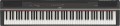 | 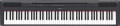 |
|---|---|---|
| Yamaha P-125 | Yamaha P-115 | |
from $1,099.99 | Compare prices 1 | |
| User reviews | ||
| TOP sellers | ||
| Body | portable | portable |
Keys | ||
| Number of keys | 88 шт | 88 шт |
| Size | full size | full size |
| Mechanics | malleus | malleus |
| Sensitivity adjustment |  | |
| Rigidity | weighted | weighted |
Specs | ||
| Polyphony | 192 voices | 192 voices |
| Built-in timbres | 24 шт | 14 шт |
| Tempo change | 5 – 280 | 5 – 280 |
| Metronome | | |
| Sequencer (recording) | | |
| Built-in compositions | | |
Effects and control | ||
| Timbres layering | | |
| Keyboard split | | |
| Reverberation | | |
| Transposition | | |
| Fine tuning | | |
| More features | sound management system | sound management system |
Connectors | ||
| Connectable pedals | 2 шт | 2 шт |
| Outputs | USB to host (type B) | USB to host (type B) |
| Headphone outputs | 2 шт | 2 шт |
| Linear outputs | 2 шт | 2 шт |
General | ||
| Built-in acoustics | 14 W | 14 W |
| Number of bands | 2 | 2 |
| Power consumption | 9 W | 6 W |
| Dimensions (WxHxD) | 1326x166x295 mm | 1326x163x295 mm |
| Weight | 11.8 kg | 11.8 kg |
| In box | PSU | |
| Color | ||
| Added to E-Catalog | november 2018 | june 2017 |



Compare Yamaha P-125 and P-115
Digital pianos Yamaha P-125 and Yamaha P-115 have similar features, such as 88 full-sized keys with hammer action and 192 voices polyphony. However, the P-125 offers more built-in tones — 24 compared to 14 on the P-115, which can be important for musicians looking for sound variety. Both instruments have built-in effects and recording support, but the P-115 consumes less power — 6 W compared to 9 W for the P-125. Otherwise, both pianos have similar dimensions and weight, making them convenient to carry.
Price comparison
You may be interested in
My comparisons
Yamaha P-125 often compared


Yamaha P-115 often compared


Glossary
Built-in timbres
The number of built-in sounds provided by the Digital Piano.
Despite the name, digital pianos are extremely rarely designed to imitate the sound of only a piano — the electronic hardware allows them to provide other timbres of sound. In addition, even the piano has its own varieties — for example, among the grand pianos there are 6 main classes, from large concert to miniature. So the built-in sounds can cover different kinds of pianos, as well as other instruments and sound effects.
The abundance and variety of timbres in digital pianos as a whole is not as great as in synthesizers, however, in this category there are very “charged” models, with a hundred timbres or more (in the most multifunctional, this number can exceed 900). However, it is worth specifically looking for a “multi-instrumental” model if you do not intend to be limited to the sound of the piano and would like to have more freedom of choice. It is worth remembering that a specific set of timbres can be different.
If the instrument is bought exclusively as a piano, then here, on the contrary, it is worth paying attention primarily to solutions with a small number of timbres. Such models are not only cheaper than "universals" — they can also sound better (due to the fact that there are few timbres and the manufacturer can carefully approach the sound quality of each built-in "instrument").
Despite the name, digital pianos are extremely rarely designed to imitate the sound of only a piano — the electronic hardware allows them to provide other timbres of sound. In addition, even the piano has its own varieties — for example, among the grand pianos there are 6 main classes, from large concert to miniature. So the built-in sounds can cover different kinds of pianos, as well as other instruments and sound effects.
The abundance and variety of timbres in digital pianos as a whole is not as great as in synthesizers, however, in this category there are very “charged” models, with a hundred timbres or more (in the most multifunctional, this number can exceed 900). However, it is worth specifically looking for a “multi-instrumental” model if you do not intend to be limited to the sound of the piano and would like to have more freedom of choice. It is worth remembering that a specific set of timbres can be different.
If the instrument is bought exclusively as a piano, then here, on the contrary, it is worth paying attention primarily to solutions with a small number of timbres. Such models are not only cheaper than "universals" — they can also sound better (due to the fact that there are few timbres and the manufacturer can carefully approach the sound quality of each built-in "instrument").
Power consumption
The power consumed by the tool during normal operation.
The cost of electricity, as well as connection requirements, depend on this indicator. At the same time, we note that digital pianos require relatively little energy — even in the most powerful and advanced models, consumption usually does not exceed 60 watts. So in fact, power consumption data is required mainly for specific cases — for example, to calculate the total load when connecting a tool to an autonomous generator along with other devices. In addition, this information may be useful when assessing the power of the built-in speaker, for more information, see "Built-in acoustics".
The cost of electricity, as well as connection requirements, depend on this indicator. At the same time, we note that digital pianos require relatively little energy — even in the most powerful and advanced models, consumption usually does not exceed 60 watts. So in fact, power consumption data is required mainly for specific cases — for example, to calculate the total load when connecting a tool to an autonomous generator along with other devices. In addition, this information may be useful when assessing the power of the built-in speaker, for more information, see "Built-in acoustics".
In box
Additional items included with the instrument.
— Music stand. A music stand mounted above the keyboard, in front of the musician's eyes. Note that in this case, only the detachable music rest supplied with the portable instrument is meant (see "Body"); in stationary digital pianos, by definition, such a stand is available; moreover, it is often a non-removable part of the body.
— Pedal. Only portable digital pianos (see Body) can be equipped with an external pedal. stationary are equipped with built-in pedals. Note that there is usually only one such item in the kit, even if there is more than one input for the pedals. However, this cannot be called a serious drawback: situations where a musician needs more than one pedal are extremely rare. For more information about the inputs and the pedals themselves, see Connectable Pedals.
— Power Supply. Power supply for connecting the tool to the network. Even for portable tools, an outlet is often the most convenient way to power; and in stationary cases, other options may not be provided at all. Therefore, the power supply is an almost indispensable element of the digital piano package. The absence of such a block in the kit, usually, indicates that it is made built-in; however, this is rare.
— Disk. An optical disc (CD or DVD) containing various digital piano supplements. These can be instructions and other documentation, drivers for connecting to a computer, specialized software for edit...ing music on a PC, etc. Such a medium can be very useful if you need access to information or specialized software, but there is no Internet connection at the moment or there is a problem with it.
— Rack. Stand for floor installation of the tool. It is used only in portable models (see "Chassis") — stationary, by definition, do not require additional stands. Such a device, usually, is made folding, which provides ease of storage and transportation. Racks are also sold separately, but in some cases it is more convenient to buy a stand immediately, along with the tool.
— Music stand. A music stand mounted above the keyboard, in front of the musician's eyes. Note that in this case, only the detachable music rest supplied with the portable instrument is meant (see "Body"); in stationary digital pianos, by definition, such a stand is available; moreover, it is often a non-removable part of the body.
— Pedal. Only portable digital pianos (see Body) can be equipped with an external pedal. stationary are equipped with built-in pedals. Note that there is usually only one such item in the kit, even if there is more than one input for the pedals. However, this cannot be called a serious drawback: situations where a musician needs more than one pedal are extremely rare. For more information about the inputs and the pedals themselves, see Connectable Pedals.
— Power Supply. Power supply for connecting the tool to the network. Even for portable tools, an outlet is often the most convenient way to power; and in stationary cases, other options may not be provided at all. Therefore, the power supply is an almost indispensable element of the digital piano package. The absence of such a block in the kit, usually, indicates that it is made built-in; however, this is rare.
— Disk. An optical disc (CD or DVD) containing various digital piano supplements. These can be instructions and other documentation, drivers for connecting to a computer, specialized software for edit...ing music on a PC, etc. Such a medium can be very useful if you need access to information or specialized software, but there is no Internet connection at the moment or there is a problem with it.
— Rack. Stand for floor installation of the tool. It is used only in portable models (see "Chassis") — stationary, by definition, do not require additional stands. Such a device, usually, is made folding, which provides ease of storage and transportation. Racks are also sold separately, but in some cases it is more convenient to buy a stand immediately, along with the tool.