
Comparison Cort X200 vs Cort X100
Add to comparison |  | 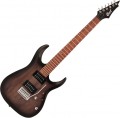 |
|---|---|---|
| Cort X200 | Cort X100 | |
| Outdated Product | from $249.99 | |
| TOP sellers | ||
| Type | electric guitar | electric guitar |
| Number of strings | 6 | 6 |
| Pickups | passive | passive |
| Pickup diagram | H-S-H | H-H |
| Coil cutoff |  |  |
Tone block | ||
| Type | passive | passive |
| Volume controls | 1 | 1 |
| Tone controls | 1 | 1 |
| Pickup switch | 5 position | 3 position |
Body | ||
| Type | monolith | monolith |
| Size | 4/4 | 4/4 |
| Shape | Superstrat | Superstrat |
| Cutaway | double | double |
| Material | poplar | meranti |
| Bridge | Vintage Tremolo | Vintage Tremolo |
| Through string attachment | | |
Neck | ||
| Mount type | bolted | bolted |
| Number of frets | 24 | 24 |
| Neck profile | U | |
| Nut width | 43 mm | |
| Fretboard radius | 15.75 " | 15.75 " |
| Anchor | single | single |
| Scale | 25.5 " | 25.5 " |
| Pegs | closed | closed |
| Neck material | maple | maple |
| Fretboard | jatoba | jatoba |
| Color | ||
| Added to E-Catalog | march 2025 | august 2018 |


Compare Cort X200 and X100
You may be interested in
My comparisons
Cort X200 often compared


Cort X100 often compared


Glossary
Pickup diagram
Electric guitar pickup layout diagram. The letters used in this diagram indicate the types of pickups:
- S - single. A single-coil pickup that looks like a narrow strip, often with a number of “buttons” (magnets) corresponding to the number of strings. Such modules provide clear and ringing sound, well suited for jazz, blues and other similar genres. On the other hand, the sound saturation from single-coils is not very high; they are poorly compatible with distortion and other similar effects, which is why they are poorly suited for “heavy” styles of music. In addition, such pickups are susceptible to external magnetic fields, which can degrade the sound.
- H - humbucker. A type of pickup with two coils, originally created to compensate for the shortcomings of single coils - in particular, to reduce the level of interference from external magnetic interference. However, in the end it turned out that humbuckers differ noticeably in the color of the sound: it turns out to be less expressive, but more dense and rich, making it excellent for playing “overload” (distortion, overdrive, etc.). A classic pickup of this type has two coils positioned side by side, making it noticeably wider than a single coil; and Standard class humbuckers generally look like two single coils installed close to each other. However, in addition to this, there are other design options - for example, a hamcanseller..., which has coils “on two levels” and is comparable in width to a single. Also note that there are humbuckers that can switch to single-coil mode (see “Coil Cutoff” for more details).
—J. A subtype of S-type pickups with one coil and an additional pole for each string. This variety first appeared on the legendary Fender Jazz Bass. J pickups have a versatile sound that suits almost any style of music.
—P. P pickups have two magnetized poles per string, but they have a unique feature: they are cut in half and wound in reverse. The advantage of this winding is the humbucker effect (see type “H”). The wide and long shape of the P pickup provides powerful and punchy sound in genres such as rock, metal, punk, etc.
- P90. A special type of single-spool single with a wider but shorter bobbin. These pickups are installed in the bridge or neck area of the guitar. Their distinctive feature is a characteristic “rock and roll” sound with warm, soft and rich timbres. Instruments with P90 pickups are often used in alternative rock, blues, indie, etc. styles.
The pickup diagram describes their types, number and relative positions. Our catalog uses a bridge-to-neck designation: for example, an HSS design means the guitar has one humbucker at the bridge and two single-coils near the neck.
This parameter determines, first of all, the overall color of the instrument’s sound. Thus, the above version of HSS will produce a sound that is quite clean and expressive, but at the same time a little denser and lower than on a purely “single-coil” electric guitar. There are many models available that are equipped with only one type of pickups. Moreover, the more pickups, the deeper and richer the sound, as a rule. In addition to all this, many other factors affect the sound of the instrument, so when choosing, you should not look only at the pickup circuit.
- S - single. A single-coil pickup that looks like a narrow strip, often with a number of “buttons” (magnets) corresponding to the number of strings. Such modules provide clear and ringing sound, well suited for jazz, blues and other similar genres. On the other hand, the sound saturation from single-coils is not very high; they are poorly compatible with distortion and other similar effects, which is why they are poorly suited for “heavy” styles of music. In addition, such pickups are susceptible to external magnetic fields, which can degrade the sound.
- H - humbucker. A type of pickup with two coils, originally created to compensate for the shortcomings of single coils - in particular, to reduce the level of interference from external magnetic interference. However, in the end it turned out that humbuckers differ noticeably in the color of the sound: it turns out to be less expressive, but more dense and rich, making it excellent for playing “overload” (distortion, overdrive, etc.). A classic pickup of this type has two coils positioned side by side, making it noticeably wider than a single coil; and Standard class humbuckers generally look like two single coils installed close to each other. However, in addition to this, there are other design options - for example, a hamcanseller..., which has coils “on two levels” and is comparable in width to a single. Also note that there are humbuckers that can switch to single-coil mode (see “Coil Cutoff” for more details).
—J. A subtype of S-type pickups with one coil and an additional pole for each string. This variety first appeared on the legendary Fender Jazz Bass. J pickups have a versatile sound that suits almost any style of music.
—P. P pickups have two magnetized poles per string, but they have a unique feature: they are cut in half and wound in reverse. The advantage of this winding is the humbucker effect (see type “H”). The wide and long shape of the P pickup provides powerful and punchy sound in genres such as rock, metal, punk, etc.
- P90. A special type of single-spool single with a wider but shorter bobbin. These pickups are installed in the bridge or neck area of the guitar. Their distinctive feature is a characteristic “rock and roll” sound with warm, soft and rich timbres. Instruments with P90 pickups are often used in alternative rock, blues, indie, etc. styles.
The pickup diagram describes their types, number and relative positions. Our catalog uses a bridge-to-neck designation: for example, an HSS design means the guitar has one humbucker at the bridge and two single-coils near the neck.
This parameter determines, first of all, the overall color of the instrument’s sound. Thus, the above version of HSS will produce a sound that is quite clean and expressive, but at the same time a little denser and lower than on a purely “single-coil” electric guitar. There are many models available that are equipped with only one type of pickups. Moreover, the more pickups, the deeper and richer the sound, as a rule. In addition to all this, many other factors affect the sound of the instrument, so when choosing, you should not look only at the pickup circuit.
Coil cutoff
The ability to disable one of the coils in a humbucking pickup.
Pickups with this feature are, in fact, universal modules that can operate in both humbucking and single-coil modes. See "Pickup Diagram" for details on both. And the ability to switch between these modes allows the musician to change the colour of the sound without resorting to external gadgets or changing instruments. For example, for a dynamic composition with rich overdrive, it is more convenient to use a classic humbucker, and for a slow, lyrical melody, just move the switch and you can enjoy all the advantages of a single-coil.
Pickups with this feature are, in fact, universal modules that can operate in both humbucking and single-coil modes. See "Pickup Diagram" for details on both. And the ability to switch between these modes allows the musician to change the colour of the sound without resorting to external gadgets or changing instruments. For example, for a dynamic composition with rich overdrive, it is more convenient to use a classic humbucker, and for a slow, lyrical melody, just move the switch and you can enjoy all the advantages of a single-coil.
Pickup switch
A type of pickup switch used on an electric guitar.
This switch is responsible for turning individual pickups on and off, and can also control coil cutoff (see above). Accordingly, the manufacturer chooses its type primarily depending on the number of pickups (see "Pickup Diagram"). So, 3-position switches are typical mainly for models with two pickups — they usually allow you to turn on each of them separately or use both at once. The 5-position controls are common on 3-pickup models with stratocaster or superstrat bodies (see “Shape (Appearance)”). Note that the specific combinations of pickups available in such instruments may be different, this point will not hurt to clarify separately. The most advanced option — a 6-position switch — is extremely rare, mainly in expensive custom class instruments.
A separate type of switch is the balance control, used mainly in bass guitars (see "Type"). They are not responsible for turning off individual pickups (there are usually two of them), but for changing their volume relative to each other. Roughly speaking, these are two volume controls for separate pickups, combined in one knob (of course, there are also two pickups in such instruments). In fact, the balance control in this case also provides a smooth change in timbre: the pickup near the bridge picks up high frequencies better, the pickup near the fretboard picks up lower frequencies, respectively, and the colour of the sound changes depending on which of t...hem sounds louder.
This switch is responsible for turning individual pickups on and off, and can also control coil cutoff (see above). Accordingly, the manufacturer chooses its type primarily depending on the number of pickups (see "Pickup Diagram"). So, 3-position switches are typical mainly for models with two pickups — they usually allow you to turn on each of them separately or use both at once. The 5-position controls are common on 3-pickup models with stratocaster or superstrat bodies (see “Shape (Appearance)”). Note that the specific combinations of pickups available in such instruments may be different, this point will not hurt to clarify separately. The most advanced option — a 6-position switch — is extremely rare, mainly in expensive custom class instruments.
A separate type of switch is the balance control, used mainly in bass guitars (see "Type"). They are not responsible for turning off individual pickups (there are usually two of them), but for changing their volume relative to each other. Roughly speaking, these are two volume controls for separate pickups, combined in one knob (of course, there are also two pickups in such instruments). In fact, the balance control in this case also provides a smooth change in timbre: the pickup near the bridge picks up high frequencies better, the pickup near the fretboard picks up lower frequencies, respectively, and the colour of the sound changes depending on which of t...hem sounds louder.
Material
The material from which the body of an electric guitar is made. For models with cutouts (semi-acoustic, see "Type"), in this case, only the material of the back deck and sides can be taken into account, and data on the top deck is given separately (for more details, see "Deck Cover Material").
Now on the market there are cases of such trees: red, maple, agatis, ash, alder.
It makes no sense to dwell on each of the materials found in modern electric guitars. Their variety is very large, however, unlike acoustic guitars, the body in this case does not play such a significant role in shaping the sound, and its material has a relatively small effect on the acoustic properties of the instrument (although the exact degree of such influence is a moot point). If you wish, you can find detailed data on a particular material in special sources, but in fact it makes sense to look primarily at the appearance of the instrument and its price category.
Now on the market there are cases of such trees: red, maple, agatis, ash, alder.
It makes no sense to dwell on each of the materials found in modern electric guitars. Their variety is very large, however, unlike acoustic guitars, the body in this case does not play such a significant role in shaping the sound, and its material has a relatively small effect on the acoustic properties of the instrument (although the exact degree of such influence is a moot point). If you wish, you can find detailed data on a particular material in special sources, but in fact it makes sense to look primarily at the appearance of the instrument and its price category.
Neck profile
Profile of a fretboard mounted on an electric guitar.
The profile of the neck is called its shape in section, more precisely, the shape of the back of the neck. This parameter practically does not affect the sound of the guitar, but it directly affects the convenience of playing. Ideally, the neck should “fill” the hand, but not be too large — otherwise it will not be possible to clasp it to the right extent.
Profiles are denoted by the letters C, D, V and U — depending on which letter the neck resembles in the section. Profile D is the flattest, C is slightly more convex, with almost uniform curvature along the entire length, U is more voluminous, with a wider profile in the area of the lining, and the V profile in its classic form has the form of an angle with a rounded top. There are also modifications of these options — for example, "thin", which provides for a reduced profile thickness, or "modern", with slightly improved (theoretically) ergonomics.
The most popular profile types are C, U and their "modern" (modern) modifications. The C profile is almost semi-circular, the U profile is more voluminous, at the fingerboard its edges are almost parallel and only closer to the back of the neck are sharply rounded. The terms modern C and modern U refer to various improved versions of these profiles, their f...orm may be different.
In fact, the choice of neck profile depends solely on the guitarist's personal preferences, the characteristics of his hands and his preferred playing technique. Thus, there is no "perfect" profile shape — in each case, the optimal choice will be different. The perfect option is to try several types of profile "live", decide which one will be more convenient, and choose an instrument with a neck of the same or similar profile shape.
The profile of the neck is called its shape in section, more precisely, the shape of the back of the neck. This parameter practically does not affect the sound of the guitar, but it directly affects the convenience of playing. Ideally, the neck should “fill” the hand, but not be too large — otherwise it will not be possible to clasp it to the right extent.
Profiles are denoted by the letters C, D, V and U — depending on which letter the neck resembles in the section. Profile D is the flattest, C is slightly more convex, with almost uniform curvature along the entire length, U is more voluminous, with a wider profile in the area of the lining, and the V profile in its classic form has the form of an angle with a rounded top. There are also modifications of these options — for example, "thin", which provides for a reduced profile thickness, or "modern", with slightly improved (theoretically) ergonomics.
The most popular profile types are C, U and their "modern" (modern) modifications. The C profile is almost semi-circular, the U profile is more voluminous, at the fingerboard its edges are almost parallel and only closer to the back of the neck are sharply rounded. The terms modern C and modern U refer to various improved versions of these profiles, their f...orm may be different.
In fact, the choice of neck profile depends solely on the guitarist's personal preferences, the characteristics of his hands and his preferred playing technique. Thus, there is no "perfect" profile shape — in each case, the optimal choice will be different. The perfect option is to try several types of profile "live", decide which one will be more convenient, and choose an instrument with a neck of the same or similar profile shape.
Nut width
The width of the fretboard of an electric guitar at the nut. Closer to the body, the neck may expand somewhat, but this is not necessary, and the expansion angle may be different. Therefore, the main size is considered to be the width in the region of the nut.
This parameter has two meanings. On the one hand, a wide neck is inconvenient for musicians with small hands and short fingers — it can be difficult to reach the far strings in such cases. On the other hand, a larger width means a greater distance between the individual strings, which reduces the likelihood of hitting an adjacent string when pressed incorrectly and can make playing easier (especially if the guitarist has large fat fingers). However, these moments are not absolute, and the convenience of playing is a very subjective matter, depending on many features of the musician and the technique he uses. Also, don't forget that necks can have different profiles (see above), and instruments with different neck profiles will feel differently in the hands even with the same width at the nut. Therefore, the most reliable method of selection is to try out the necks of different sizes and profiles “live”, decide on the best option and choose based on this.
The smallest neck width at the nut in modern electric guitars is about 39 mm. This size is found mainly in bass guitars (see “Type”), which have 4 strings and a neck that widens noticeably towards the body (due to which it can be made rather narr...ow from above, especially since when playing bass, notes are rarely clamped near the neck itself) . Electric guitars (including semi-acoustic) are somewhat wider — from 41 mm, an indicator of 43 – 48 mm is considered average, and in the largest instruments, the neck can be up to 55 mm wide (however, such dimensions are typical mainly for instruments with more than 6 strings) .
This parameter has two meanings. On the one hand, a wide neck is inconvenient for musicians with small hands and short fingers — it can be difficult to reach the far strings in such cases. On the other hand, a larger width means a greater distance between the individual strings, which reduces the likelihood of hitting an adjacent string when pressed incorrectly and can make playing easier (especially if the guitarist has large fat fingers). However, these moments are not absolute, and the convenience of playing is a very subjective matter, depending on many features of the musician and the technique he uses. Also, don't forget that necks can have different profiles (see above), and instruments with different neck profiles will feel differently in the hands even with the same width at the nut. Therefore, the most reliable method of selection is to try out the necks of different sizes and profiles “live”, decide on the best option and choose based on this.
The smallest neck width at the nut in modern electric guitars is about 39 mm. This size is found mainly in bass guitars (see “Type”), which have 4 strings and a neck that widens noticeably towards the body (due to which it can be made rather narr...ow from above, especially since when playing bass, notes are rarely clamped near the neck itself) . Electric guitars (including semi-acoustic) are somewhat wider — from 41 mm, an indicator of 43 – 48 mm is considered average, and in the largest instruments, the neck can be up to 55 mm wide (however, such dimensions are typical mainly for instruments with more than 6 strings) .