
Comparison Hidea HD3.0FHS vs Hidea HD5FHS
Add to comparison | 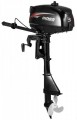 |  |
|---|---|---|
| Hidea HD3.0FHS | Hidea HD5FHS | |
| Outdated Product | from $719.96 up to $758.96 | |
| TOP sellers | ||
| Application | boat | boat |
| Motor type | propeller | propeller |
Motor | ||
| Engine type | petrol | petrol |
| Motor duty cycle | 2-stroke | 2-stroke |
| Maximum power | 3 hp | 5 hp |
| Maximum power | 2.2 kW | 3.68 kW |
| Maximum revolutions | 5500 rpm | 5500 rpm |
| Number of cylinders | 1 pcs | 2 pcs |
| Capacity | 61 cm3 | 112 cm3 |
| Piston diameter | 45 mm | 59 mm |
| Piston stroke | 38 mm | 41 mm |
| Cooling | liquid | liquid |
| Exhaust system | above propeller | above propeller |
Fuel system | ||
| Fuel system type | carburetor | carburetor |
| Fuel tank | built-in | built-in |
| Fuel tank volume | 1.1 L | 1.1 L |
| Recommended fuel | AI-92 gasoline | AI-92 gasoline |
Drive unit | ||
| Gear ratio | 2.08 | 2 |
| Propeller screw | 3-bladed | 3-bladed |
| Gear | forward | forward neutral reverse |
Equipment | ||
| Transom height (deadwood) | 381 mm | 381 mm |
| Control system | tiller | tiller |
| Launch type | manual | manual |
| Leg lift (trim) | manual | manual |
General | ||
| Weight | 10 kg | 22 kg |
| Added to E-Catalog | march 2018 | february 2015 |


Compare Hidea HD3.0FHS and HD5FHS
You may be interested in
My comparisons
Hidea HD3.0FHS often compared


Hidea HD5FHS often compared
Glossary
Maximum power
The maximum operating power of the outboard motor, expressed in horsepower.
Horsepower (hp) has traditionally been used primarily to refer to the power of internal combustion engines, including gasoline engines (see "Engine type"). However, in outboard motors, these units are also used for electric models (see ibid.). This is due to the fact that the majority of gasoline engines are on the market, and boat manufacturers prefer to indicate the maximum recommended engine power in “horses”.
The general patterns when choosing outboard motors in terms of power are as follows. On the one hand, a more powerful unit will allow you to develop more speed and is better suited for a heavy boat (see "Maximum boat weight"). On the other hand, weight, dimensions, cost and fuel/energy consumption also directly depend on power. Therefore, it does not always make sense to chase the maximum performance.
In addition, the choice of motor for maximum power also depends on the characteristics of the craft on which it is planned to be used. It is not worth exceeding the recommended power stated in the specifications — firstly, the boat transom may not be designed for a heavy large-sized unit, and secondly, the boat itself may not be suitable for acceleration to high speeds. There are also more specific recommendations. For example, from the point of view of efficiency and safety, the engine power at the level of 60 – 80% of the ma...ximum specified in the characteristics of the boat is considered optimal. Lower values may be useful if economy and low noise level are important to you, and higher values if high speed and acceleration dynamics are key points.
There is one more specific point associated with this parameter: most often, the characteristics indicate the power output directly to the propeller, however, some manufacturers (mostly east european) can go for a little trick, indicating the power on the main motor shaft. When power is transferred to the screw, losses inevitably occur, so the useful power of the motor in such a case will be less than claimed. Thus, when choosing and comparing, it's ok to clarify what kind of power is meant in the characteristics — on the propeller or on the shaft.
Horsepower (hp) has traditionally been used primarily to refer to the power of internal combustion engines, including gasoline engines (see "Engine type"). However, in outboard motors, these units are also used for electric models (see ibid.). This is due to the fact that the majority of gasoline engines are on the market, and boat manufacturers prefer to indicate the maximum recommended engine power in “horses”.
The general patterns when choosing outboard motors in terms of power are as follows. On the one hand, a more powerful unit will allow you to develop more speed and is better suited for a heavy boat (see "Maximum boat weight"). On the other hand, weight, dimensions, cost and fuel/energy consumption also directly depend on power. Therefore, it does not always make sense to chase the maximum performance.
In addition, the choice of motor for maximum power also depends on the characteristics of the craft on which it is planned to be used. It is not worth exceeding the recommended power stated in the specifications — firstly, the boat transom may not be designed for a heavy large-sized unit, and secondly, the boat itself may not be suitable for acceleration to high speeds. There are also more specific recommendations. For example, from the point of view of efficiency and safety, the engine power at the level of 60 – 80% of the ma...ximum specified in the characteristics of the boat is considered optimal. Lower values may be useful if economy and low noise level are important to you, and higher values if high speed and acceleration dynamics are key points.
There is one more specific point associated with this parameter: most often, the characteristics indicate the power output directly to the propeller, however, some manufacturers (mostly east european) can go for a little trick, indicating the power on the main motor shaft. When power is transferred to the screw, losses inevitably occur, so the useful power of the motor in such a case will be less than claimed. Thus, when choosing and comparing, it's ok to clarify what kind of power is meant in the characteristics — on the propeller or on the shaft.
Maximum power
The maximum operating power of the outboard motor, expressed in kilowatts.
The practical value of motor power is described in detail in “Maximum power" is higher. Here we note that the kilowatt (derivative of watt) is just one of the units of power used in fact along with horsepower (hp); 1 HP ≈ 735 W (0.735 kW). Watts are considered the traditional unit for electric motors (see "Engine Type"), but for a number of reasons, outboard motor manufacturers use this designation for gasoline models as well.
The practical value of motor power is described in detail in “Maximum power" is higher. Here we note that the kilowatt (derivative of watt) is just one of the units of power used in fact along with horsepower (hp); 1 HP ≈ 735 W (0.735 kW). Watts are considered the traditional unit for electric motors (see "Engine Type"), but for a number of reasons, outboard motor manufacturers use this designation for gasoline models as well.
Number of cylinders
The number of cylinders in a gasoline outboard engine (see "Engine type").
Usually, the optimal number of cylinders is selected by the manufacturer based on the working volume (see below) and the overall layout of the motor. Therefore, from a practical point of view, this parameter can be called secondary. At the same time, it can be a good indicator of the overall level of the engine: basic models have one cylinder, while top models can have 4 or more.
Usually, the optimal number of cylinders is selected by the manufacturer based on the working volume (see below) and the overall layout of the motor. Therefore, from a practical point of view, this parameter can be called secondary. At the same time, it can be a good indicator of the overall level of the engine: basic models have one cylinder, while top models can have 4 or more.
Capacity
The working volume of a gasoline outboard engine (see "Engine type"). This term usually means the total working volume of the cylinders.
The larger this value, the higher the motor power, usually (see the relevant paragraph). At the same time, with an increase in the working volume, fuel consumption, weight and dimensions of the unit also increase; and power depends not only on this indicator, but also on a number of other factors — ranging from the number of strokes (see "Engine duty cycle") or the presence of turbocharging (see below) and ending with specific design features. Therefore, situations are not excluded when a smaller engine will have more power, and vice versa.
The larger this value, the higher the motor power, usually (see the relevant paragraph). At the same time, with an increase in the working volume, fuel consumption, weight and dimensions of the unit also increase; and power depends not only on this indicator, but also on a number of other factors — ranging from the number of strokes (see "Engine duty cycle") or the presence of turbocharging (see below) and ending with specific design features. Therefore, situations are not excluded when a smaller engine will have more power, and vice versa.
Piston diameter
The diameter of a single piston in a gasoline (see "Engine type") outboard motor. In most cases, this parameter is purely reference; situations where data on the piston diameter is really needed are extremely rare — usually during the repair or maintenance of the engine.
Piston stroke
The working stroke is the distance between the two extreme positions of the piston in a gasoline (see "Engine type") outboard motor. In most cases, this parameter is purely reference; situations where such data is really needed are extremely rare — usually during the repair or maintenance of the engine.
Gear ratio
The gear ratio describes how fast the propeller of the outboard motor rotates relative to the speed of rotation of its shaft. For example, a gear ratio of 2 means that for each revolution of the shaft, the screw, in turn, makes two revolutions (that is, it rotates twice as fast). In modern outboard motors, this parameter, in fact, is purely reference, because. the practical characteristics of the unit (power, traction, etc.) depend on many design features and are practically not related to the gear ratio.
Gear
The types of gears provided in the design of the outboard motor are, in fact, the direction in which it can move the boat.
— Front. Standard gear for forward movement. Available in all outboard motors without exception, by definition.
— I'm neutral. In this case, neutral gear means the mode of operation of the motor, in which its shaft rotates idly, without transferring rotation to the propeller or water jet. Thanks to this, you can completely remove the thrust without turning off the motor and without lifting its “leg” out of the water. Considering that starting after a shutdown can be a rather troublesome procedure (especially if you have to do this often), and removing a spinning propeller from the water is generally undesirable — having a neutral gear is a very useful feature, and most gasoline engines (see "Engine type") have this mode. But in electric models (see ibid.), stopping and starting do not constitute a problem, so the role of the “neutral” in them is played by turning off the power and completely stopping the motor (and the neutral gear itself is not indicated in the specifications).
— Back (reverse). A mode of operation in which the engine pulls the entire vessel backwards; in propeller motors, it is implemented by rotating the propeller in the opposite direction, in jet engines, by using reverse dampers. The reverse functi...on greatly facilitates both manoeuvring in narrow spaces and emergency braking on the water, so it is found in the vast majority of gasoline engines and almost all electric ones.
Note that electric motors (see “Engine type”) can have several gears of the same type — for example, 5 forward and 3 reverse. In such models, each "gear" is a separate switch position corresponding to a certain engine power. In gasoline engines, power control is carried out smoothly, using a throttle, so they have less than one gear of each type.
— Front. Standard gear for forward movement. Available in all outboard motors without exception, by definition.
— I'm neutral. In this case, neutral gear means the mode of operation of the motor, in which its shaft rotates idly, without transferring rotation to the propeller or water jet. Thanks to this, you can completely remove the thrust without turning off the motor and without lifting its “leg” out of the water. Considering that starting after a shutdown can be a rather troublesome procedure (especially if you have to do this often), and removing a spinning propeller from the water is generally undesirable — having a neutral gear is a very useful feature, and most gasoline engines (see "Engine type") have this mode. But in electric models (see ibid.), stopping and starting do not constitute a problem, so the role of the “neutral” in them is played by turning off the power and completely stopping the motor (and the neutral gear itself is not indicated in the specifications).
— Back (reverse). A mode of operation in which the engine pulls the entire vessel backwards; in propeller motors, it is implemented by rotating the propeller in the opposite direction, in jet engines, by using reverse dampers. The reverse functi...on greatly facilitates both manoeuvring in narrow spaces and emergency braking on the water, so it is found in the vast majority of gasoline engines and almost all electric ones.
Note that electric motors (see “Engine type”) can have several gears of the same type — for example, 5 forward and 3 reverse. In such models, each "gear" is a separate switch position corresponding to a certain engine power. In gasoline engines, power control is carried out smoothly, using a throttle, so they have less than one gear of each type.
Weight
The total weight of the outboard motor. This parameter is indicated, usually, only for the unit itself, without taking into account the fuel in the tank and the tank itself (if it is external, see "Fuel tank"), as well as additional equipment. Motor weight data can be useful in order to estimate the overall balance of the boat and the change in its payload capacity.