
Comparison Hoco L20 Fair Type-C vs FIFINE M6
Add to comparison |  | 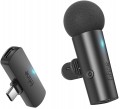 |
|---|---|---|
| Hoco L20 Fair Type-C | FIFINE M6 | |
| Outdated Product | from $109.99 | |
| User reviews | ||
| TOP sellers | ||
Built-in noise reduction, the ability to monitor via headphones with a USB-C connector. | ||
| Radio system |  | |
| Microphone | lavalier / for phone | kitchen hatchet |
Specs | ||
| Microphone directivity | omnidirectional | omnidirectional |
Functions and connectors | ||
| Features | wireless noise cancellation mute button | wireless noise cancellation mute button |
| Connection | USB-C | USB-C |
General | ||
| Range | 15 m | |
| Power source | battery | battery |
| Operating time | 4 h | 6 h |
| Material | plastic | plastic |
| Weight | 7 g | |
| In box | receiver transmitter | receiver transmitter windscreen |
| Color | ||
| Added to E-Catalog | november 2025 | march 2023 |


Compare Hoco L20 Fair Type-C and FIFINE M6
You may be interested in
My comparisons
Hoco L20 Fair Type-C often compared

FIFINE M6 often compared


Glossary
Microphone
— Vocal(for karaoke). In accordance with the name, such models are intended primarily for the transmission of the human voice — during singing, artistic reading, etc., when not only speech intelligibility is important, but also shades of intonation. It is these microphones that can be seen on stage during concerts and other similar events, in karaoke equipment, etc. This category also includes models that can also be used as instrumental ones (see below).
— Buttonhole. The name of this type of microphones is due to the traditional method of fastening — on the collar, where the buttonhole is usually located; they have miniature size and the presence of a clip for holding on clothes. Such devices are known primarily as television transmission equipment — they are used by participants in television programs so that they can speak without using their hands with larger microphones. And some devices of this type are actually a “headset blank”, which turns into a full-fledged headset when headphones are connected.
— For a computer. Microphones designed for use with full size PCs. Such microphones usually have a capsule on a long stem, sometimes flexible (see below) and a stand for placement on a table surface. Their main purpose is voice communication using a computer, where the most important thing is not so much the accuracy of the transfer of details, but...the data transfer rate and their small volumes — therefore, the sound quality, usually, is relatively low.
— For a laptop. Like the PC microphones described above, "laptop" models are designed mainly for voice communication and have rather modest characteristics. Their key difference is the focus on use with portable devices, which is expressed primarily in compact size. In addition, for many of these microphones, the connection port also acts as a mount for placement on a laptop case.
— Instrumental. Microphones designed to mimic musical instruments such as saxophones, acoustic guitars (not equipped with pickups), percussion kits, etc. Note that despite the outward resemblance of some models to the vocal ones described above, “purely instrumental” microphones for voice processing are poorly suited, it is not recommended to use them for this purpose.
— Studio. Microphones designed for use in recording studios. Usually, they are designed for recording vocals. Differ in high quality of a sound transmission and the corresponding cost.
— Head. Microphones designed to be worn on the head — like headsets (only in this case there is no earpiece in the design). They are miniature in size and are similar in application to lavaliers (see above), but are located closer to the mouth and do not depend on the speaker's clothing. This allows the use of such models in specific situations where a lavalier microphone is unsuitable — for example, for filming a video with a strong level of extraneous noise.
— For conferences. Microphones intended for use in conference rooms, huddle rooms, grandstands, and similar locations. The design of such models can be different — a capsule on a flexible leg (see below), a disc placed directly on the table, etc. However, anyway, this variety is optimized for speech transmission and is designed for the maximum convenience of the speaker — so that the user is not distracted by choosing the optimal position relative to the microphone and the distance to it.
— For a video camera. Microphones designed, as the name suggests, for use with video cameras, primarily professional ones. Note that technically, any microphone can be connected to the input of the video camera, matching the connectors and main characteristics; however, this category only includes models that are designed to mount directly into a special mount on the camera body.
— For a voice recorder. A specific type of microphone designed exclusively for use with voice recorders. Such equipment, usually, is equipped with its own built-in microphones, but their capabilities may not be enough in some cases; and among high-end professional voice recorders there are devices that do not have a microphone at all. External microphones are usually connected via a 3.5 mm mini-Jack interface or via a proprietary connector (see below), while one of their distinguishing features is the absence of a wire: the plug is mounted directly on the microphone body and plays the role of not only a connector, but also a mount. Of course, miniature sizes are also characteristic of such devices.
— For phone/tablet. This category includes specialized microphones, originally positioned as accessories for smartphones or tablets. Usually, they are similar to the voice recorders described above in the sense that they are attached directly to the body of the device without using additional wires. Their main specificity, compared to the same models for voice recorders, is the connection method — usually a universal connector is used for this, like 30pin / Lightning, microUSB or a proprietary interface (see below for more details).
— For video production. Microphones intended for use in video recording. In fact, this variety includes two subgroups, each with its own specialization. The first is microphones, which can be conditionally called "reporter's". Usually, these include dynamic (see "Type") models with all-round directivity (see below) and good sensitivity. These features allow you to "hear" not only the voice of the reporter, but also the sound background around him; in addition, you do not need to accurately maintain the position of the microphone relative to the face, which is especially useful when interviewing other people. Also, "reporter" models have durable cases and are generally well protected from various troubles (although they are not necessarily completely moisture and shock resistant). The second variety of models for video production is “sound operator”: such microphones can often be seen on film sets mounted on long rods. They, in turn, are usually made unidirectional or bidirectional (for maximum filtering of extraneous sounds), and most often they are condenser types and provide a fairly high quality and reliability of sound transmission.
— Suspended. Microphones designed to be suspended, such as from the ceiling. Such models are intended mainly for choir singing, theatrical performances and other situations in which other types of microphones (standing on a stand, held in the hand or even clinging to the head) are not very convenient.
— Measuring. Measuring microphones are designed to calibrate sound installations. With their help, you can quickly and accurately adjust the loudness for a musical instrument, loudspeaker, sound recording equipment, etc. The key features of measuring microphones are a wide frequency range (20 – 40,000 Hz) and high frequency response stability. The measuring microphone measures the noise level and detects sound anomalies. Properly tuned, with the help of a measuring microphone, the sound installation will fully correspond to the acoustic features of a particular room.
— Buttonhole. The name of this type of microphones is due to the traditional method of fastening — on the collar, where the buttonhole is usually located; they have miniature size and the presence of a clip for holding on clothes. Such devices are known primarily as television transmission equipment — they are used by participants in television programs so that they can speak without using their hands with larger microphones. And some devices of this type are actually a “headset blank”, which turns into a full-fledged headset when headphones are connected.
— For a computer. Microphones designed for use with full size PCs. Such microphones usually have a capsule on a long stem, sometimes flexible (see below) and a stand for placement on a table surface. Their main purpose is voice communication using a computer, where the most important thing is not so much the accuracy of the transfer of details, but...the data transfer rate and their small volumes — therefore, the sound quality, usually, is relatively low.
— For a laptop. Like the PC microphones described above, "laptop" models are designed mainly for voice communication and have rather modest characteristics. Their key difference is the focus on use with portable devices, which is expressed primarily in compact size. In addition, for many of these microphones, the connection port also acts as a mount for placement on a laptop case.
— Instrumental. Microphones designed to mimic musical instruments such as saxophones, acoustic guitars (not equipped with pickups), percussion kits, etc. Note that despite the outward resemblance of some models to the vocal ones described above, “purely instrumental” microphones for voice processing are poorly suited, it is not recommended to use them for this purpose.
— Studio. Microphones designed for use in recording studios. Usually, they are designed for recording vocals. Differ in high quality of a sound transmission and the corresponding cost.
— Head. Microphones designed to be worn on the head — like headsets (only in this case there is no earpiece in the design). They are miniature in size and are similar in application to lavaliers (see above), but are located closer to the mouth and do not depend on the speaker's clothing. This allows the use of such models in specific situations where a lavalier microphone is unsuitable — for example, for filming a video with a strong level of extraneous noise.
— For conferences. Microphones intended for use in conference rooms, huddle rooms, grandstands, and similar locations. The design of such models can be different — a capsule on a flexible leg (see below), a disc placed directly on the table, etc. However, anyway, this variety is optimized for speech transmission and is designed for the maximum convenience of the speaker — so that the user is not distracted by choosing the optimal position relative to the microphone and the distance to it.
— For a video camera. Microphones designed, as the name suggests, for use with video cameras, primarily professional ones. Note that technically, any microphone can be connected to the input of the video camera, matching the connectors and main characteristics; however, this category only includes models that are designed to mount directly into a special mount on the camera body.
— For a voice recorder. A specific type of microphone designed exclusively for use with voice recorders. Such equipment, usually, is equipped with its own built-in microphones, but their capabilities may not be enough in some cases; and among high-end professional voice recorders there are devices that do not have a microphone at all. External microphones are usually connected via a 3.5 mm mini-Jack interface or via a proprietary connector (see below), while one of their distinguishing features is the absence of a wire: the plug is mounted directly on the microphone body and plays the role of not only a connector, but also a mount. Of course, miniature sizes are also characteristic of such devices.
— For phone/tablet. This category includes specialized microphones, originally positioned as accessories for smartphones or tablets. Usually, they are similar to the voice recorders described above in the sense that they are attached directly to the body of the device without using additional wires. Their main specificity, compared to the same models for voice recorders, is the connection method — usually a universal connector is used for this, like 30pin / Lightning, microUSB or a proprietary interface (see below for more details).
— For video production. Microphones intended for use in video recording. In fact, this variety includes two subgroups, each with its own specialization. The first is microphones, which can be conditionally called "reporter's". Usually, these include dynamic (see "Type") models with all-round directivity (see below) and good sensitivity. These features allow you to "hear" not only the voice of the reporter, but also the sound background around him; in addition, you do not need to accurately maintain the position of the microphone relative to the face, which is especially useful when interviewing other people. Also, "reporter" models have durable cases and are generally well protected from various troubles (although they are not necessarily completely moisture and shock resistant). The second variety of models for video production is “sound operator”: such microphones can often be seen on film sets mounted on long rods. They, in turn, are usually made unidirectional or bidirectional (for maximum filtering of extraneous sounds), and most often they are condenser types and provide a fairly high quality and reliability of sound transmission.
— Suspended. Microphones designed to be suspended, such as from the ceiling. Such models are intended mainly for choir singing, theatrical performances and other situations in which other types of microphones (standing on a stand, held in the hand or even clinging to the head) are not very convenient.
— Measuring. Measuring microphones are designed to calibrate sound installations. With their help, you can quickly and accurately adjust the loudness for a musical instrument, loudspeaker, sound recording equipment, etc. The key features of measuring microphones are a wide frequency range (20 – 40,000 Hz) and high frequency response stability. The measuring microphone measures the noise level and detects sound anomalies. Properly tuned, with the help of a measuring microphone, the sound installation will fully correspond to the acoustic features of a particular room.
Range
This parameter directly affects the freedom of movement and ease of use: the farther the microphone can be taken from the signal receiver, the more convenient it is, especially when used in large spaces. At the same time, it should be taken into account that manufacturers indicate the distance under the most favorable conditions (no obstacles, the transmitter is fully charged, etc.).
Operating time
This parameter is relevant for wireless models of microphones and radio systems (with a transmitter and receiver).
Operating time refers to the duration of autonomous operation of the microphone on a fully charged battery or when using replaceable, non-rechargeable batteries. Exact operating time may depend on various factors, including the type of wireless technology, battery capacity, usage of the device, etc. In general, this parameter is used to roughly estimate the level of autonomy of the microphone; it is also intended to be used to compare the real capabilities of different models.
Operating time refers to the duration of autonomous operation of the microphone on a fully charged battery or when using replaceable, non-rechargeable batteries. Exact operating time may depend on various factors, including the type of wireless technology, battery capacity, usage of the device, etc. In general, this parameter is used to roughly estimate the level of autonomy of the microphone; it is also intended to be used to compare the real capabilities of different models.
In box
- Receiver. Receiver used on wireless models (see Features/Capabilities). The receiver, in essence, plays the role of a radio adapter: it connects to an amplifier or other audio equipment in the classic wired way and transmits the signal from the microphone to this equipment. For more information about the included receiver, see “Radio System”,
— Transmitter. A transmitter used in systems with a wireless connection (see “Functions/capabilities”), or more precisely, a transmitter designed as a separate device. Miniature microphones (primarily lavalier and headset) have this design, in which the housing dimensions do not allow the transmitter to be built directly into the device: the microphone is connected to an external transmitter using a wire, the latter is usually hung on the belt. The presence of a separate transmitter is usually a sign of a compact microphone; and one of the practical advantages of this design is that the microphone can be detached and connected to other equipment (not necessarily a transmitter).
— Monitor mount. A device for attaching a microphone to a computer monitor. For obvious reasons, it is used only in models for computers (see “Purpose”). This feature is especially useful in cases where there is very little free space on the table where the computer is located, or the microphone cannot be placed on the table in the optimal place. The mount can also be useful for working with a laptop, alt...hough specialized microphones are usually more convenient.
— Holder for stand. A mount in the form of a characteristic round cradle designed to place a microphone on a stand, tripod or other device. Used primarily with vocal and instrumental models (see “Purpose”), it allows you to quickly remove and install the microphone on a stand - which is useful, in particular, during concerts and other public performances. Holders are also sold separately, but buying a model with a complete mount is often more convenient - such a mount is optimally compatible with the microphone and does not require wasting time searching and selecting.
— Anti-shock suspension (“ spider ”). Special shock-absorbing suspension used with studio microphones (see “Purpose”); The slang name "spider" comes from its characteristic shape. The need to use such a suspension is due to the fact that on a regular stand, a microphone can experience various shocks and vibrations (from the operation of equipment nearby, from objects falling on the floor, and even from people’s steps), which create interference in the sound. “Spider” compensates for such shocks and reduces interference to almost zero; At the same time, a complete suspension is more convenient than one purchased separately due to the fact that it is, by definition, compatible with a microphone.
— Pop filter. Such a filter is a plate, usually round, installed in front of the microphone when working with voice - most often during recording; Accordingly, this function is used primarily with studio microphones (see “Purpose”). The protective screen allows sound to pass through well, but it blocks the flow of air that occurs during breathing - thus preventing the appearance of characteristic interference from “exhaling into the microphone.” Another purpose of pop filters is to protect against small splashes of saliva, which can cause corrosion and negatively affect the longevity of the microphone.
— Wind protection. The windscreen most often takes the form of a distinctive “tip,” usually foam, that fits over the microphone; at the same time, in miniature models (for example, head ones, see “Purpose”) the design may be different. However, in any case, the purpose of such devices corresponds to the name: to protect the microphone from exposure to intense air currents that can cause interference. Note that the matter is not limited to wind - a person’s breathing can also become a source of interference if the microphone is located close to the mouth.
— Detachable cable. The ability to detach the cable from the microphone not only makes storage and transportation easier, but also allows you to replace the supplied cable with another if circumstances require it (for example, to connect through a different interface, see above).
- Tripod. A tripod is essentially a portable tripod designed to mount a microphone on a table or other similar surface. This eliminates the need to hold the device in your hand or organize a stand “from scrap materials.” Such tripods are also sold separately, but it is usually more convenient to buy a set; For more details, see "Rack Holder".
- Power adapter. A device that allows you to supply a microphone of a condenser or electret type (see above) with the phantom power required for operation from a regular household 230 V outlet. Thanks to this, it becomes possible to connect the microphone even to tech amplifiers (receivers, players, etc.) that do not have phantom power inputs.
— Case/case. A case is usually called a container made of hard materials, while a cover is usually made of soft materials. The only key difference between them is the degree of protection - the cases are more shock-resistant. But the basic purpose is the same: storing and transporting a microphone in a case/cover is much more convenient than without such a device (in particular, because additional included accessories can usually also be placed inside).
— Charging case. A case is a case made of hard material that simultaneously plays the role of a charger. This feature is very popular in wireless models. The charging case usually has its own battery and the microphone (transmitter) and receiver are charged from this battery; This design provides additional convenience in several ways. Firstly, the case, in fact, also serves as a power bank - an autonomous power source; The capacity of such a “power bank” may vary, but it is usually enough for several full charges. Secondly, the ability to charge small microphones directly in the case reduces the risk of losing them. Thirdly, the charging procedure itself is quite convenient - you just need to connect the cable to the case.
Note that, in addition to the above, manufacturers may include other accessories in the kit - for example, separate clips for attaching lavalier microphones, battery chargers, cleaning wipes, etc.
— Transmitter. A transmitter used in systems with a wireless connection (see “Functions/capabilities”), or more precisely, a transmitter designed as a separate device. Miniature microphones (primarily lavalier and headset) have this design, in which the housing dimensions do not allow the transmitter to be built directly into the device: the microphone is connected to an external transmitter using a wire, the latter is usually hung on the belt. The presence of a separate transmitter is usually a sign of a compact microphone; and one of the practical advantages of this design is that the microphone can be detached and connected to other equipment (not necessarily a transmitter).
— Monitor mount. A device for attaching a microphone to a computer monitor. For obvious reasons, it is used only in models for computers (see “Purpose”). This feature is especially useful in cases where there is very little free space on the table where the computer is located, or the microphone cannot be placed on the table in the optimal place. The mount can also be useful for working with a laptop, alt...hough specialized microphones are usually more convenient.
— Holder for stand. A mount in the form of a characteristic round cradle designed to place a microphone on a stand, tripod or other device. Used primarily with vocal and instrumental models (see “Purpose”), it allows you to quickly remove and install the microphone on a stand - which is useful, in particular, during concerts and other public performances. Holders are also sold separately, but buying a model with a complete mount is often more convenient - such a mount is optimally compatible with the microphone and does not require wasting time searching and selecting.
— Anti-shock suspension (“ spider ”). Special shock-absorbing suspension used with studio microphones (see “Purpose”); The slang name "spider" comes from its characteristic shape. The need to use such a suspension is due to the fact that on a regular stand, a microphone can experience various shocks and vibrations (from the operation of equipment nearby, from objects falling on the floor, and even from people’s steps), which create interference in the sound. “Spider” compensates for such shocks and reduces interference to almost zero; At the same time, a complete suspension is more convenient than one purchased separately due to the fact that it is, by definition, compatible with a microphone.
— Pop filter. Such a filter is a plate, usually round, installed in front of the microphone when working with voice - most often during recording; Accordingly, this function is used primarily with studio microphones (see “Purpose”). The protective screen allows sound to pass through well, but it blocks the flow of air that occurs during breathing - thus preventing the appearance of characteristic interference from “exhaling into the microphone.” Another purpose of pop filters is to protect against small splashes of saliva, which can cause corrosion and negatively affect the longevity of the microphone.
— Wind protection. The windscreen most often takes the form of a distinctive “tip,” usually foam, that fits over the microphone; at the same time, in miniature models (for example, head ones, see “Purpose”) the design may be different. However, in any case, the purpose of such devices corresponds to the name: to protect the microphone from exposure to intense air currents that can cause interference. Note that the matter is not limited to wind - a person’s breathing can also become a source of interference if the microphone is located close to the mouth.
— Detachable cable. The ability to detach the cable from the microphone not only makes storage and transportation easier, but also allows you to replace the supplied cable with another if circumstances require it (for example, to connect through a different interface, see above).
- Tripod. A tripod is essentially a portable tripod designed to mount a microphone on a table or other similar surface. This eliminates the need to hold the device in your hand or organize a stand “from scrap materials.” Such tripods are also sold separately, but it is usually more convenient to buy a set; For more details, see "Rack Holder".
- Power adapter. A device that allows you to supply a microphone of a condenser or electret type (see above) with the phantom power required for operation from a regular household 230 V outlet. Thanks to this, it becomes possible to connect the microphone even to tech amplifiers (receivers, players, etc.) that do not have phantom power inputs.
— Case/case. A case is usually called a container made of hard materials, while a cover is usually made of soft materials. The only key difference between them is the degree of protection - the cases are more shock-resistant. But the basic purpose is the same: storing and transporting a microphone in a case/cover is much more convenient than without such a device (in particular, because additional included accessories can usually also be placed inside).
— Charging case. A case is a case made of hard material that simultaneously plays the role of a charger. This feature is very popular in wireless models. The charging case usually has its own battery and the microphone (transmitter) and receiver are charged from this battery; This design provides additional convenience in several ways. Firstly, the case, in fact, also serves as a power bank - an autonomous power source; The capacity of such a “power bank” may vary, but it is usually enough for several full charges. Secondly, the ability to charge small microphones directly in the case reduces the risk of losing them. Thirdly, the charging procedure itself is quite convenient - you just need to connect the cable to the case.
Note that, in addition to the above, manufacturers may include other accessories in the kit - for example, separate clips for attaching lavalier microphones, battery chargers, cleaning wipes, etc.