
Comparison ARCTIC P14 Pro PST CO vs ARCTIC P14 Pro
Add to comparison | 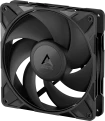 | 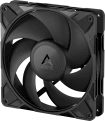 |
|---|---|---|
| ARCTIC P14 Pro PST CO | ARCTIC P14 Pro | |
from $12.99 | from $12.99 | |
| TOP sellers | ||
Main specs | ||
| Features | for case | for case |
| Product type | fan | fan |
Fan | ||
| Number of fans | 1 | 1 |
| Fan size | 140 mm | 140 mm |
| Fan thickness | 27 mm | 27 mm |
| Bearing | rolling (Dual Bearing) | Fluid Dynamic Bearing |
| Min. RPM | 400 rpm | 400 rpm |
| Max. RPM | 2500 rpm | 2500 rpm |
| Speed controller | auto (PWM) | auto (PWM) |
| Max. air flow | 110 CFM | 110 CFM |
| Static pressure | 5.2 mm H2O | 5.2 mm H2O |
| Starting voltage | 5 В | 5 В |
| Power source | 4-pin (daisy-chain) | 4-pin |
General | ||
| Mount type | bolts | bolts |
| Manufacturer's warranty | 6 years | 6 years |
| Dimensions | 140x140x27 mm | 140x140x27 mm |
| Weight | 242 g | 240 g |
| Added to E-Catalog | august 2025 | august 2025 |


Compare ARCTIC P14 Pro PST CO and P14 Pro
You may be interested in
My comparisons
ARCTIC P14 Pro PST CO often compared


ARCTIC P14 Pro often compared


Glossary
Bearing
The type of bearing used in the cooling fan(s).
The bearing is the piece between the rotating axle of the fan and the fixed base that supports the axle and reduces friction. The following types of bearings are found in modern fans:
— Sliding. The action of these bearings is based on direct contact between two solid surfaces, carefully polished to reduce friction. Such devices are simple, reliable and durable, but their efficiency is rather low — rolling, and even more so the hydrodynamic and magnetic principle of operation (see below), provide much less friction.
— Rolling. They are also called "ball bearings", since the "intermediaries" between the axis of rotation and the fixed base are balls (less often — cylindrical rollers) fixed in a special ring. When the axis rotates, such balls roll between it and the base, due to which the friction force is very low — noticeably lower than in plain bearings. On the other hand, the design turns out to be more expensive and complex, and in terms of reliability it is somewhat inferior to both the same plain bearings and more advanced hydrodynamic devices (see below). Therefore, although rolling bearings are quite widespread nowadays, however, in general, they are much less common than the mentioned varieties.
— Hydrodynamic. Bearings of this type are filled with a special liquid; when rotate...d, it creates a layer on which the moving part of the bearing slides. In this way, direct contact between hard surfaces is avoided and friction is significantly reduced compared to previous types. Also, these bearings are quiet and very reliable. Of their shortcomings, a relatively high cost can be noted, but in fact this moment often turns out to be invisible against the background of the price of the entire system. Therefore, this option is extremely popular nowadays, it can be found in cooling systems of all levels — from low-cost to advanced.
— Magnetic centering. Bearings based on the principle of magnetic levitation: the rotating axis is "suspended" in a magnetic field. Thus, it is possible (as in hydrodynamic ones) to avoid contact between solid surfaces and further reduce friction. Considered the most advanced type of bearings, they are reliable and quiet, but expensive.
The bearing is the piece between the rotating axle of the fan and the fixed base that supports the axle and reduces friction. The following types of bearings are found in modern fans:
— Sliding. The action of these bearings is based on direct contact between two solid surfaces, carefully polished to reduce friction. Such devices are simple, reliable and durable, but their efficiency is rather low — rolling, and even more so the hydrodynamic and magnetic principle of operation (see below), provide much less friction.
— Rolling. They are also called "ball bearings", since the "intermediaries" between the axis of rotation and the fixed base are balls (less often — cylindrical rollers) fixed in a special ring. When the axis rotates, such balls roll between it and the base, due to which the friction force is very low — noticeably lower than in plain bearings. On the other hand, the design turns out to be more expensive and complex, and in terms of reliability it is somewhat inferior to both the same plain bearings and more advanced hydrodynamic devices (see below). Therefore, although rolling bearings are quite widespread nowadays, however, in general, they are much less common than the mentioned varieties.
— Hydrodynamic. Bearings of this type are filled with a special liquid; when rotate...d, it creates a layer on which the moving part of the bearing slides. In this way, direct contact between hard surfaces is avoided and friction is significantly reduced compared to previous types. Also, these bearings are quiet and very reliable. Of their shortcomings, a relatively high cost can be noted, but in fact this moment often turns out to be invisible against the background of the price of the entire system. Therefore, this option is extremely popular nowadays, it can be found in cooling systems of all levels — from low-cost to advanced.
— Magnetic centering. Bearings based on the principle of magnetic levitation: the rotating axis is "suspended" in a magnetic field. Thus, it is possible (as in hydrodynamic ones) to avoid contact between solid surfaces and further reduce friction. Considered the most advanced type of bearings, they are reliable and quiet, but expensive.
Power source
Type of power connector for the cooling system. Power is usually output through the motherboard, for this the following connectors are most often used:
— 3-pin. Three-pin connector; Today it is considered obsolete, but it is still widely used.
— 4-pin. Plug with 4 pins. Its main advantage is the ability to automatically adjust the rotation speed via PWM (for more details, see "Speed controller").
These two standards are mutually compatible: a 3-pin fan can be connected to a 4-pin connector on the motherboard, and vice versa (unless PWM is available in both cases).
Much less common are options such as 2-pin, installed in some inexpensive fans; 6-pin, used in cooling systems with RGB backlighting, which requires a rather powerful additional power supply; 7-pin and 8-pin, similar in their specifics to a 6-pin connector; as well as power supply via a standard MOLEX plug provided in separate case fans.
— 3-pin. Three-pin connector; Today it is considered obsolete, but it is still widely used.
— 4-pin. Plug with 4 pins. Its main advantage is the ability to automatically adjust the rotation speed via PWM (for more details, see "Speed controller").
These two standards are mutually compatible: a 3-pin fan can be connected to a 4-pin connector on the motherboard, and vice versa (unless PWM is available in both cases).
Much less common are options such as 2-pin, installed in some inexpensive fans; 6-pin, used in cooling systems with RGB backlighting, which requires a rather powerful additional power supply; 7-pin and 8-pin, similar in their specifics to a 6-pin connector; as well as power supply via a standard MOLEX plug provided in separate case fans.