
Comparison Asus RT-BE55 vs TP-LINK Archer A6
Add to comparison |  | 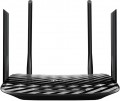 |
|---|---|---|
| Asus RT-BE55 | TP-LINK Archer A6 | |
| Compare prices 4 | Compare prices 5 | |
| User reviews | ||
| TOP sellers | ||
Supports beamforming technology. The router can be configured using the Tether mobile app available on iOS and Android. | ||
| Product type | router | router |
| Data input (WAN-port) | Ethernet (RJ45) | Ethernet (RJ45) |
Wireless Wi-Fi connection | ||
| Wi-Fi standards | Wi-Fi 3 (802.11g) Wi-Fi 4 (802.11n) Wi-Fi 5 (802.11ac) Wi-Fi 6 (802.11ax) Wi-Fi 6E (802.11ax) Wi-Fi 7 (802.11be) | Wi-Fi 3 (802.11g) Wi-Fi 4 (802.11n) Wi-Fi 5 (802.11ac) |
| Frequency band | 2.4GHz 5 GHz | 2.4GHz 5 GHz |
| Operating ranges | dual-band (2.4 GHz and 5 GHz) | dual-band (2.4 GHz and 5 GHz) |
| Wireless speed 2.4 GHz | 688 Mbps | 450 Mbps |
| Wireless speed 5 GHz | 2882 Mbps | 867 Mbps |
| Bandwidth | 160 MHz | |
Connection and LAN | ||
| WAN | 1 port 2.5 Gbps | 1 port 1 Gbps |
| LAN | 4 ports 1 Gbps | 4 ports 1 Gbps |
Antenna and transmitter | ||
| Number of antennas | 4 | 5 |
| Antenna type | external | external and internal |
| MU-MIMO |  | |
| Gain | 5 dBi | |
| 2.4 GHz antennas | 2 | |
| 5 GHz antennas | 2 | |
| Transmitter power | 23 dBm | |
| Signal strength 2.4 GHz | 20 dBm | |
| Signal strength 5 GHz | 23 dBm | |
Hardware | ||
| CPU cores | 4 | |
| Clock Speed | 2 GHz | |
| RAM | 512 MB | |
| Flash memory | 128 MB | |
Functions | ||
| Features | NAT MESH mode Beamforming firewall | NAT Beamforming firewall |
| More features | DHCP server VPN DDNS DMZ | DHCP server VPN DDNS DMZ |
Security | ||
| Safety standards | WPA WEP WPA2 WPA3 802.1x | WPA WEP WPA2 |
General | ||
| Operating temperature | 0 °C ~ +40 °C | |
| Dimensions | 238x193x59 mm | 230x144x35 mm |
| Weight | 446 g | |
| Color | ||
| Added to E-Catalog | december 2025 | may 2019 |




Compare Asus RT-BE55 and TP-LINK Archer A6
Price comparison
You may be interested in
My comparisons
Asus RT-BE55 often compared


TP-LINK Archer A6 often compared


Glossary
Wi-Fi standards
Wi-Fi standards supported by the equipment. Nowadays, in addition to modern standards Wi-Fi 4 (802.11n), Wi-Fi 5 (802.11ac), Wi-Fi 6 (802.11ax)(its variation Wi-Fi 6E), Wi-Fi 7 (802.11be) and WiGig (802.11ad), you can meet also support for earlier versions — Wi-Fi 3 (802.11g) and even Wi-Fi 1 (802.11b). Here is a more detailed description of each of these versions:
— Wi-Fi 3 (802.11g). An outdated standard, like Wi-Fi 1 (802.11b), which has sunk into oblivion. It was widely used before the advent of Wi-Fi 4, nowadays it is used mainly as an addition to newer versions — in particular, in order to ensure compatibility with outdated and low-cost equipment. Operates at a frequency of 2.4 GHz, the maximum data transfer rate is 54 Mbps.
— Wi-Fi 4 (802.11n). The first of the common standards that supports the frequency of 5 GHz; can operate in this range or in the classic 2.4 GHz. It is worth emphasizing that some models of Wi-Fi equipment for this standard use only 5 GHz, which is why they are incompatible with earlier versions of Wi-Fi. The maximum speed for Wi-Fi 4 is 600 Mbps; in modern wireless devices, this standard is very popular, only recently it began to be squeezed into this position by Wi-Fi 5.
— Wi-Fi 5...(802.11ac). The successor to Wi-Fi 4, which finally moved to the 5 GHz band, which had a positive effect on the reliability of the connection and data transfer rate: it is up to 1.69 Gbps per antenna and up to 6.77 Gbps in general. In addition, this is the first version to fully implement Beamforming technology (for more details, see "Functions and Capabilities").
— Wi-Fi 6, Wi-Fi 6E (802.11ax). The development of Wi-Fi 5, which introduced both an increase in speed to 10 Gbps, and a number of important improvements in the format of work. One of the most important innovations is the use of an extensive frequency range — from 1 to 7 GHz; this, in particular, allows you to automatically select the least loaded frequency band, which has a positive effect on the speed and reliability of the connection. At the same time, Wi-Fi 6 devices are capable of operating at classic frequencies of 2.4 GHz and 5 GHz, and a modification of the Wi-Fi 6E standard is capable of operating at frequencies from 5.9 to 7 GHz, it is generally accepted that devices with Wi-Fi 6E support operate on frequency of 6 GHz, while there is full compatibility with earlier standards. In addition, some improvements were introduced in this version regarding the simultaneous operation of several devices on one channel, in particular, we are talking about OFDMA technology. Thanks to this, Wi-Fi 6 gives the smallest of modern standards a drop in speed when the air is loaded, and the modification of Wi-Fi 6E operating at a frequency of 6 GHz has the least amount of interference.
— Wi-Fi 7 (802.11be). This Wi-Fi standard began to be implemented in 2023. Thanks to the use of 4096-QAM modulation, a maximum theoretical data rate of up to 46 Gb / s can be squeezed out of it. Wi-Fi 7 supports three frequency bands: 2.4 GHz, 5 GHz and 6 GHz. The maximum bandwidth in the standard has been increased from 160 MHz to 320 MHz - the wider the channel, the more data it can transmit overnight. Among the interesting innovations in Wi-Fi 7, the development of MLO (Multi-Link Operation) is noted - with its help, connected devices exchange data using several channels and frequency bands simultaneously, which is especially important for VR and online games. The Multiple Resource Unit technology is designed to minimize communication delays when there are many connected client devices. The new 16x16 MIMO protocol is also aimed at increasing throughput with a large number of simultaneous connections, doubling the number of spatial streams compared to the previous Wi-Fi 6 standard.
WiGig (802.11ad). Wi-Fi standard using an operating frequency of 60 GHz; data transfer rates can be up to 10 Gbps (depending on the specific version of WiGig). The 60 GHz channel is much less loaded than the more popular 2.4 GHz and 5 GHz, which has a positive effect on the reliability of data transmission and reduces latency; the latter is especially important in games and some other special tasks. On the other hand, the increase in frequency has significantly reduced the connection range (for more details, see "Frequency range"), so that in fact this standard is only suitable for communication within the same room.
Note that in fact, the data transfer rate is usually much lower than the theoretical maximum — especially when several Wi-Fi devices operate on the same channel. Also note that different standards are backwards compatible with each other (with a speed limit according to the slower one) provided that the frequencies match: for example, 802.11ac can work with 802.11n, but not with 802.11g.
— Wi-Fi 3 (802.11g). An outdated standard, like Wi-Fi 1 (802.11b), which has sunk into oblivion. It was widely used before the advent of Wi-Fi 4, nowadays it is used mainly as an addition to newer versions — in particular, in order to ensure compatibility with outdated and low-cost equipment. Operates at a frequency of 2.4 GHz, the maximum data transfer rate is 54 Mbps.
— Wi-Fi 4 (802.11n). The first of the common standards that supports the frequency of 5 GHz; can operate in this range or in the classic 2.4 GHz. It is worth emphasizing that some models of Wi-Fi equipment for this standard use only 5 GHz, which is why they are incompatible with earlier versions of Wi-Fi. The maximum speed for Wi-Fi 4 is 600 Mbps; in modern wireless devices, this standard is very popular, only recently it began to be squeezed into this position by Wi-Fi 5.
— Wi-Fi 5...(802.11ac). The successor to Wi-Fi 4, which finally moved to the 5 GHz band, which had a positive effect on the reliability of the connection and data transfer rate: it is up to 1.69 Gbps per antenna and up to 6.77 Gbps in general. In addition, this is the first version to fully implement Beamforming technology (for more details, see "Functions and Capabilities").
— Wi-Fi 6, Wi-Fi 6E (802.11ax). The development of Wi-Fi 5, which introduced both an increase in speed to 10 Gbps, and a number of important improvements in the format of work. One of the most important innovations is the use of an extensive frequency range — from 1 to 7 GHz; this, in particular, allows you to automatically select the least loaded frequency band, which has a positive effect on the speed and reliability of the connection. At the same time, Wi-Fi 6 devices are capable of operating at classic frequencies of 2.4 GHz and 5 GHz, and a modification of the Wi-Fi 6E standard is capable of operating at frequencies from 5.9 to 7 GHz, it is generally accepted that devices with Wi-Fi 6E support operate on frequency of 6 GHz, while there is full compatibility with earlier standards. In addition, some improvements were introduced in this version regarding the simultaneous operation of several devices on one channel, in particular, we are talking about OFDMA technology. Thanks to this, Wi-Fi 6 gives the smallest of modern standards a drop in speed when the air is loaded, and the modification of Wi-Fi 6E operating at a frequency of 6 GHz has the least amount of interference.
— Wi-Fi 7 (802.11be). This Wi-Fi standard began to be implemented in 2023. Thanks to the use of 4096-QAM modulation, a maximum theoretical data rate of up to 46 Gb / s can be squeezed out of it. Wi-Fi 7 supports three frequency bands: 2.4 GHz, 5 GHz and 6 GHz. The maximum bandwidth in the standard has been increased from 160 MHz to 320 MHz - the wider the channel, the more data it can transmit overnight. Among the interesting innovations in Wi-Fi 7, the development of MLO (Multi-Link Operation) is noted - with its help, connected devices exchange data using several channels and frequency bands simultaneously, which is especially important for VR and online games. The Multiple Resource Unit technology is designed to minimize communication delays when there are many connected client devices. The new 16x16 MIMO protocol is also aimed at increasing throughput with a large number of simultaneous connections, doubling the number of spatial streams compared to the previous Wi-Fi 6 standard.
WiGig (802.11ad). Wi-Fi standard using an operating frequency of 60 GHz; data transfer rates can be up to 10 Gbps (depending on the specific version of WiGig). The 60 GHz channel is much less loaded than the more popular 2.4 GHz and 5 GHz, which has a positive effect on the reliability of data transmission and reduces latency; the latter is especially important in games and some other special tasks. On the other hand, the increase in frequency has significantly reduced the connection range (for more details, see "Frequency range"), so that in fact this standard is only suitable for communication within the same room.
Note that in fact, the data transfer rate is usually much lower than the theoretical maximum — especially when several Wi-Fi devices operate on the same channel. Also note that different standards are backwards compatible with each other (with a speed limit according to the slower one) provided that the frequencies match: for example, 802.11ac can work with 802.11n, but not with 802.11g.
Wireless speed 2.4 GHz
The maximum speed provided by the device when communicating wirelessly in the 2.4 GHz band.
This range is used in most modern Wi-Fi standards (see above) - as one of the available or even the only one. The theoretical maximum for it is 600 Mbit. In reality, Wi-Fi at a frequency of 2.4 GHz is used by a large number of client devices, from which congestion of data transmission channels emerges. Also, the number of antennas affects the speed performance of the equipment. It is possible to achieve the speed declared in the specification only in an ideal situation. In practice, it can be noticeably smaller (often by several times), especially with an abundance of wireless technology simultaneously connected to the equipment. The maximum speed at 2.4 GHz is specified in the characteristics of specific models to understand the real capabilities of Wi-Fi equipment. As for the numbers, according to the capabilities in the 2.4 GHz band, modern equipment is conditionally divided into models with speeds up to 500 Mbit inclusive and over 500 Mbit.
This range is used in most modern Wi-Fi standards (see above) - as one of the available or even the only one. The theoretical maximum for it is 600 Mbit. In reality, Wi-Fi at a frequency of 2.4 GHz is used by a large number of client devices, from which congestion of data transmission channels emerges. Also, the number of antennas affects the speed performance of the equipment. It is possible to achieve the speed declared in the specification only in an ideal situation. In practice, it can be noticeably smaller (often by several times), especially with an abundance of wireless technology simultaneously connected to the equipment. The maximum speed at 2.4 GHz is specified in the characteristics of specific models to understand the real capabilities of Wi-Fi equipment. As for the numbers, according to the capabilities in the 2.4 GHz band, modern equipment is conditionally divided into models with speeds up to 500 Mbit inclusive and over 500 Mbit.
Wireless speed 5 GHz
The maximum speed supported by the device when communicating wirelessly in the 5 GHz band.
This range is used in Wi-Fi 4, Wi-Fi 6 and Wi-Fi 6E as one of the available bands, in Wi-Fi 5 as the only one (see "Wi-Fi Standards"). The maximum speed is specified in the specifications in order to indicate the real capabilities of specific equipment - they can be noticeably more modest than the general capabilities of the standard. Also, in fact, it all depends on the generation of Wi-Fi. For example, devices with Wi-Fi 5 support can theoretically deliver up to 6928 Mbit (using eight antennas), with Wi-Fi 6 support up to 9607 Mbit (using the same eight spatial streams). The maximum possible communication speed is achieved under certain conditions, and not every model of Wi-Fi equipment fully satisfies them. Specific figures are conditionally divided into several groups: the value up to 500 Mbit is rather modest, many devices support speeds in the range of 500 - 1000 Mbit, indicators of 1 - 2 Gbps can be attributed to the average, and the most advanced models in class provide a data exchange rate of over 2 Gbps.
This range is used in Wi-Fi 4, Wi-Fi 6 and Wi-Fi 6E as one of the available bands, in Wi-Fi 5 as the only one (see "Wi-Fi Standards"). The maximum speed is specified in the specifications in order to indicate the real capabilities of specific equipment - they can be noticeably more modest than the general capabilities of the standard. Also, in fact, it all depends on the generation of Wi-Fi. For example, devices with Wi-Fi 5 support can theoretically deliver up to 6928 Mbit (using eight antennas), with Wi-Fi 6 support up to 9607 Mbit (using the same eight spatial streams). The maximum possible communication speed is achieved under certain conditions, and not every model of Wi-Fi equipment fully satisfies them. Specific figures are conditionally divided into several groups: the value up to 500 Mbit is rather modest, many devices support speeds in the range of 500 - 1000 Mbit, indicators of 1 - 2 Gbps can be attributed to the average, and the most advanced models in class provide a data exchange rate of over 2 Gbps.
Bandwidth
- 160 MHz. The presence of a bandwidth of 160 MHz increases the throughput for data transmission and allows it to approach the maximum theoretical speed.
- 320 MHz. The bandwidth of 320 MHz was introduced in the Wi-Fi 7 standard (see the corresponding paragraph). It provides a significant increase in the speed of data exchange - twice as much compared to the width of the wireless channel of 160 MHz.
- 320 MHz. The bandwidth of 320 MHz was introduced in the Wi-Fi 7 standard (see the corresponding paragraph). It provides a significant increase in the speed of data exchange - twice as much compared to the width of the wireless channel of 160 MHz.
WAN
The WAN port characterizes the ability of the device to receive a wired signal. There may be models with both one port and two WAN ports, and in rare cases, more connected providers. Such an expanded number of WAN connectors affects the cost and, accordingly, is found in more part among professional-level routers.
In terms of speed, when choosing a device, the priority is the speed of the output LAN port or Wi-Fi. However, faster WAN ports ( 1 Gbps, 2.5 Gbps, 5 Gbps, 10 Gbps) allow you to divide the load on several outputs at once without reducing speed performance, as may be the case with WAN port 100 Mbps.
In terms of speed, when choosing a device, the priority is the speed of the output LAN port or Wi-Fi. However, faster WAN ports ( 1 Gbps, 2.5 Gbps, 5 Gbps, 10 Gbps) allow you to divide the load on several outputs at once without reducing speed performance, as may be the case with WAN port 100 Mbps.
Number of antennas
The total number of antennas (of all types — see below) provided in the design of the device.
In modern Wi-Fi equipment, this indicator can be different: in addition to the simplest devices with 1 antenna, there are models where this number is 2, 3, 4 and even more. The point of using multiple antennas is twofold. Firstly, if there are several external devices per antenna, they have to share the bandwidth among themselves, and the actual communication speed for each subscriber drops accordingly. Secondly, such a design may also be required when communicating with one external device — to work with MU-MIMO technology (see below), which allows you to fully realize the capabilities of modern Wi-Fi standards.
Anyway, more antennas, usually, means a more advanced and functional device. On the other hand, this parameter significantly affects the cost; so specifically looking for equipment with numerous antennas makes sense mainly when the speed and stability of communication are critical.
Note that antennas intended for mobile communications may also be considered in this clause. So when choosing a model with support for mobile networks, it's ok to clarify this point.
In modern Wi-Fi equipment, this indicator can be different: in addition to the simplest devices with 1 antenna, there are models where this number is 2, 3, 4 and even more. The point of using multiple antennas is twofold. Firstly, if there are several external devices per antenna, they have to share the bandwidth among themselves, and the actual communication speed for each subscriber drops accordingly. Secondly, such a design may also be required when communicating with one external device — to work with MU-MIMO technology (see below), which allows you to fully realize the capabilities of modern Wi-Fi standards.
Anyway, more antennas, usually, means a more advanced and functional device. On the other hand, this parameter significantly affects the cost; so specifically looking for equipment with numerous antennas makes sense mainly when the speed and stability of communication are critical.
Note that antennas intended for mobile communications may also be considered in this clause. So when choosing a model with support for mobile networks, it's ok to clarify this point.
Antenna type
— External. Outdoor antennas tend to be larger than indoor antennas, and they usually have swivel mounts that allow the rod to be placed in the optimal position, regardless of the position of the device itself. All this has a positive effect on signal strength. In addition, there are removable external antennas — if desired, they can be replaced with more powerful ones. The main disadvantage of this option can be called bulkiness.
— Internal. Antennas located inside the case are considered less advanced than external ones. In most cases, they are smaller, and the performance depends on the position of the device (although many manufacturers use technologies to compensate for this effect). At the same time, equipment with internal antennas has a neat appearance without unnecessary protruding parts.
— External / internal. The presence in the device at once of both types of antennas described above (in this case, there may be more than one of those and others). The presence of several antennas improves the quality of communication, but if they are all external, the device may turn out to be too bulky. Therefore, in some models of routers, a compromise is used: part of the antennas is hidden in the case, which has a positive effect on compactness and appearance.
— Internal. Antennas located inside the case are considered less advanced than external ones. In most cases, they are smaller, and the performance depends on the position of the device (although many manufacturers use technologies to compensate for this effect). At the same time, equipment with internal antennas has a neat appearance without unnecessary protruding parts.
— External / internal. The presence in the device at once of both types of antennas described above (in this case, there may be more than one of those and others). The presence of several antennas improves the quality of communication, but if they are all external, the device may turn out to be too bulky. Therefore, in some models of routers, a compromise is used: part of the antennas is hidden in the case, which has a positive effect on compactness and appearance.
Gain
Gain provided by each device antenna; if the design provides for antennas with different characteristics (a typical example is both external and internal antennas), then the information, usually, is indicated by the highest value.
Amplification of the signal in this case is provided by narrowing the radiation pattern — just as in flashlights with adjustable beam width, reducing this width increases the illumination range. The simplest omnidirectional antennas narrow the signal mainly in the vertical plane, "flattening" the coverage area so that it looks like a horizontal disk. In turn, directional antennas (mainly in specialized access points, see "Device type") create a narrow beam that covers a very small area, but provides a very solid gain.
Specifically, the gain describes how powerful the signal is in the main direction of the antenna compared to an perfect antenna that spreads the signal evenly in all directions. Together with the power of the transmitter (see below), this determines the total power of the equipment and, accordingly, the efficiency and range of communication. Actually, to determine the total power, it is enough to add the gain in dBi to the transmitter power in dBm; dBi and dBm in this case can be considered as the same units (decibels).
In general, such data is rarely required by the average user, but it can be useful in some specific situations that specialists have to deal with. Detailed calculation methods for suc...h situations can be found in special sources; here we emphasize that it does not always make sense to pursue a high antenna gain. First, as discussed above, this comes at the cost of narrowing the scope, which can be inconvenient; secondly, too strong a signal is also often undesirable, for more details see "Transmitter power".
Amplification of the signal in this case is provided by narrowing the radiation pattern — just as in flashlights with adjustable beam width, reducing this width increases the illumination range. The simplest omnidirectional antennas narrow the signal mainly in the vertical plane, "flattening" the coverage area so that it looks like a horizontal disk. In turn, directional antennas (mainly in specialized access points, see "Device type") create a narrow beam that covers a very small area, but provides a very solid gain.
Specifically, the gain describes how powerful the signal is in the main direction of the antenna compared to an perfect antenna that spreads the signal evenly in all directions. Together with the power of the transmitter (see below), this determines the total power of the equipment and, accordingly, the efficiency and range of communication. Actually, to determine the total power, it is enough to add the gain in dBi to the transmitter power in dBm; dBi and dBm in this case can be considered as the same units (decibels).
In general, such data is rarely required by the average user, but it can be useful in some specific situations that specialists have to deal with. Detailed calculation methods for suc...h situations can be found in special sources; here we emphasize that it does not always make sense to pursue a high antenna gain. First, as discussed above, this comes at the cost of narrowing the scope, which can be inconvenient; secondly, too strong a signal is also often undesirable, for more details see "Transmitter power".
2.4 GHz antennas
The total number of antennas in the router that are responsible for communication in the 2.4 GHz band. For details about the number of antennas, see "Total antennas", about the range — "Frequency range".