
Comparison Technics EAH-AZ100 vs Technics EAH-AZ80
Add to comparison |  | 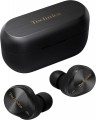 |
|---|---|---|
| Technics EAH-AZ100 | Technics EAH-AZ80 | |
| Compare prices 2 | Compare prices 2 | |
| User reviews | ||
| TOP sellers | ||
Adaptive noise cancellation, long battery life, LDAC codec support and Hi-Res Audio certification. | Active noise cancellation, 8 microphones, long battery life, LDAC codec support and Hi-Res Audio certification. | |
Connection and design | ||
| Design | in-ear | in-ear |
| Connection type | wireless | wireless |
| Connection | Bluetooth v5.3 | Bluetooth v5.3 |
| Range | 10 m | 10 m |
Specs | ||
| Sound | Dolby Atmos | |
| Hi-Res Audio |  | |
| Frequency range | 20 – 40000 Hz | 20 – 40000 Hz |
| Speaker size | 10 mm | 10 mm |
| Emitter type | dynamic | dynamic |
Microphone specs | ||
| Microphone | built into the case | built into the case |
| Microphone noise canceling | cVc | cVc |
Features | ||
| Mobile app | |  |
| Volume control | | |
| Noise cancellation | adaptive ANC | ANC |
| Transparent mode | | |
| Multipoint | | |
| Auracast | | |
| Codec support | LC3 (LE Audio) AAC LDAC | AAC LDAC |
| Voice assistant | Apple Siri / Google Assistant | Apple Siri / Google Assistant |
Power supply | ||
| Power source | battery | battery |
| Charging time | 2 h | 2 h |
| Operating time (music) | 7 h | 7 h |
| Operating time (no noise canceling) | 8 h | 8 h |
| Operating time (with case) | 28 h | 24 h |
| Battery life (with case, without ANC) | 29 h | 25 h |
| Fast charge | 15 minutes of charging for 90 minutes of use | 15 minutes of charging for 70 minutes of use |
| Wireless charger | | |
| Charging port | USB-C | USB-C |
General | ||
| Touch control | | |
| Waterproof | IPX4 | IPX4 |
| Weight | 6 g | 7 g |
| In box | silicone tips 5 pairs charging case | silicone tips 7 pairs charging case |
| Color | ||
| Added to E-Catalog | february 2025 | july 2023 |



Compare Technics EAH-AZ100 and AZ80
Price comparison
You may be interested in
My comparisons
Technics EAH-AZ100 often compared


Technics EAH-AZ80 often compared


Glossary
Sound
The audio format supported by the headphones.
— Stereo. Two-channel sound that allows you to create a surround sound effect to a certain extent (due to the difference in the right and left channels). The design of the headphones (two speakers, one for each ear) was originally “sharpened” specifically for stereo, so the vast majority of models support this particular sound format.
— Mono. Single-channel sound that does not create a surround effect. This marking means that this model is equipped with one earpiece ; At the same time, there are two types of such devices on the market. The first is headphones that initially have only one cup and are designed for situations where the second ear needs to be left open (for example, to work on the phone in the office). The second is true wireless devices (see Cable Type), sold singly to replace a lost earphone from the original pair.
— 5.1. Originally, 5.1 was designed to create surround sound that can come from any direction ("surround"). It assumes the presence of 5 main channels (centre, front left / right, rear left / right) and one bass. In headphones, the effect of this sound is achieved through the use of several speakers in each cup. Such models are very convenient when watching movies with multi-channel sound, as well as in games — they provide a powerful immersive effect. On the other hand, such headphones are not cheap, and besides, they require a specifi...c connection method (for example, via USB).
— 5.1 (virtual). Models with support for 5.1 surround sound (see above), in which the surround effect is achieved not due to the number of speakers, but due to special sound processing technologies. This somewhat reduces the accuracy compared to the "non-virtual" multi-channel, but it can significantly reduce the cost and weight of the headphones. However, there can also be several speakers in such models — for example, for separation by frequency.
— 7.1. The 7.1 format is the multi-channel 5.1 described above, supplemented by two more main channels. The localization of these channels depends on the specific variety of 7.1, but anyway they enhance the effect of volume. On the other hand, full support for this format significantly affects the dimensions, weight and price of the headphones, and content with 7.1 sound is produced much less than 5.1.
— 7.1 (virtual). A “virtual” version of the 7.1 format described above, in which the effect of surround sound is provided primarily through special signal processing, and not due to the presence of separate emitters for each channel. Similar to virtual 5.1, this format of operation somewhat reduces the reliability of the sound, but this difference is often imperceptible, and the headphones themselves turn out to be simpler and more inexpensive. Therefore, most modern 7.1 models support the virtual format of this sound.
— 9.1 (virtual). Further development of the idea of multi-channel sound: 5 channels, as in 5.1 (see above), supplemented by 4 more channels for more accurate localization of audible sound. As in other virtual formats, volume in this case is provided by special processing algorithms.
It is worth remembering that the actual sound will depend not only on the headphones, but also on the signal source: for example, a mono recording even in 9.1 “ears” will not become voluminous.
— 3D sound. Surround sound with the localization of sound sources in three-dimensional space allows you to deeply plunge into the atmosphere of films or immerse yourself in a virtual game world. The mechanics of spatial 3D-sound provides localization of sound sources around the listener and in the vertical scan plane. Algorithms for implementing 3D sound in headphones differ in terms of software and hardware support, but all of them are aimed at achieving the effect of realism of what is happening. Surround sound has long been the standard for movies, and in recent years, 3D sound has become increasingly common in games and music tracks.
— Stereo. Two-channel sound that allows you to create a surround sound effect to a certain extent (due to the difference in the right and left channels). The design of the headphones (two speakers, one for each ear) was originally “sharpened” specifically for stereo, so the vast majority of models support this particular sound format.
— Mono. Single-channel sound that does not create a surround effect. This marking means that this model is equipped with one earpiece ; At the same time, there are two types of such devices on the market. The first is headphones that initially have only one cup and are designed for situations where the second ear needs to be left open (for example, to work on the phone in the office). The second is true wireless devices (see Cable Type), sold singly to replace a lost earphone from the original pair.
— 5.1. Originally, 5.1 was designed to create surround sound that can come from any direction ("surround"). It assumes the presence of 5 main channels (centre, front left / right, rear left / right) and one bass. In headphones, the effect of this sound is achieved through the use of several speakers in each cup. Such models are very convenient when watching movies with multi-channel sound, as well as in games — they provide a powerful immersive effect. On the other hand, such headphones are not cheap, and besides, they require a specifi...c connection method (for example, via USB).
— 5.1 (virtual). Models with support for 5.1 surround sound (see above), in which the surround effect is achieved not due to the number of speakers, but due to special sound processing technologies. This somewhat reduces the accuracy compared to the "non-virtual" multi-channel, but it can significantly reduce the cost and weight of the headphones. However, there can also be several speakers in such models — for example, for separation by frequency.
— 7.1. The 7.1 format is the multi-channel 5.1 described above, supplemented by two more main channels. The localization of these channels depends on the specific variety of 7.1, but anyway they enhance the effect of volume. On the other hand, full support for this format significantly affects the dimensions, weight and price of the headphones, and content with 7.1 sound is produced much less than 5.1.
— 7.1 (virtual). A “virtual” version of the 7.1 format described above, in which the effect of surround sound is provided primarily through special signal processing, and not due to the presence of separate emitters for each channel. Similar to virtual 5.1, this format of operation somewhat reduces the reliability of the sound, but this difference is often imperceptible, and the headphones themselves turn out to be simpler and more inexpensive. Therefore, most modern 7.1 models support the virtual format of this sound.
— 9.1 (virtual). Further development of the idea of multi-channel sound: 5 channels, as in 5.1 (see above), supplemented by 4 more channels for more accurate localization of audible sound. As in other virtual formats, volume in this case is provided by special processing algorithms.
It is worth remembering that the actual sound will depend not only on the headphones, but also on the signal source: for example, a mono recording even in 9.1 “ears” will not become voluminous.
— 3D sound. Surround sound with the localization of sound sources in three-dimensional space allows you to deeply plunge into the atmosphere of films or immerse yourself in a virtual game world. The mechanics of spatial 3D-sound provides localization of sound sources around the listener and in the vertical scan plane. Algorithms for implementing 3D sound in headphones differ in terms of software and hardware support, but all of them are aimed at achieving the effect of realism of what is happening. Surround sound has long been the standard for movies, and in recent years, 3D sound has become increasingly common in games and music tracks.
Mobile app
The ability to operate the functions and settings of headphones through a mobile application for a smartphone or tablet. Communication between the device and gadgets is usually carried out via the Bluetooth wireless protocol. The mobile application may provide tools for flexible sound settings (equalizer, bass boost, etc.), switching noise reduction and transparency modes, reassigning buttons and gestures, finding lost headphones, etc. Also, the ability to update the headphone firmware is often implemented through the mobile application.
Noise cancellation
A system that reduces the influence of ambient noise on the audibility of sound through headphones. "Noise reduction" with the help of a separate microphone (or several micro) "listens" to external sounds and sends the same sounds to the headphones, but in antiphase. Due to this, the noise heard by the ears is attenuated almost to zero and the user can enjoy the sound of the headphones without interference even in a rather “loud” environment. For filtering in headphones, Active Noise Cancellation (ANC) and Environment Noise Cancellation (ENC) systems are used. The first suppresses all the noise around the listener, the second - reduces the noise level of the environment. Active noise cancellation affects the purity of the sound, but the noise from the outside spoils the picture when listening to audio tracks even more.
Also in the headphones there is an adaptive active noise reduction system Adaptive ANC, aimed at automatically adjusting the sound of the headphones depending on the level of ambient noise. In a noisy environment (for example, when traveling on the subway), the Adaptive ANC system enhances the work of “noise reduction”, in the absence of loud sounds from outside, it weakens the noise reduction.
Also in the headphones there is an adaptive active noise reduction system Adaptive ANC, aimed at automatically adjusting the sound of the headphones depending on the level of ambient noise. In a noisy environment (for example, when traveling on the subway), the Adaptive ANC system enhances the work of “noise reduction”, in the absence of loud sounds from outside, it weakens the noise reduction.
Auracast
Bluetooth LE Audio mode, where sound is broadcasted "over the air" and many headphones can connect at the same time without one-to-one pairing: you see the broadcast in the available list, join with a single tap, control the volume independently, and listen in sync. Compared to regular Bluetooth and branded "party" modes, Auracast is not tied to a brand and scales from one source to dozens of listeners; key requirements are support for LE Audio and LC3 codec in the headphones and the source (smartphone, TV, transmitter). Practice includes watching a movie together from a TV, audio tours in museums, announcements at the airport, workouts in the gym where everyone listens to the same stream at their own volume. If the device does not support LE Audio, connection works in the old way and broadcasting is unavailable.
Codec support
Codecs and additional audio processing technologies supported by Bluetooth headphones (see “Connection”). Initially, sound transmission via Bluetooth involves fairly strong signal compression; This is not critical when transmitting speech, but can greatly spoil the impression when listening to music. To eliminate this shortcoming, various technologies are used, in particular aptX, aptX HD, aptX Low Latency, aptX Adaptive, AAC, LDAC and LHDC. Of course, to use any of the technologies, it must be supported not only by the “ears”, but also by the Bluetooth device with which they are used. Here are the main features of each option:
- aptX. A Bluetooth codec designed to significantly improve the quality of audio transmitted over Bluetooth. According to the creators, it allows you to achieve quality comparable to Audio CD (16-bits/44.1kHz). The benefits of aptX are most noticeable when listening to high-quality content (such as lossless formats), but even on regular MP3 it can provide a noticeable sound improvement.
- aptX HD. Development and improvement of the original aptX, allowing for sound purity comparable to Hi-Res audio (24-bits/48kHz). As in the original, the benefits of aptX HD are noticeable mainly on high-quality...audio, although this codec will not be out of place for MP3.
- aptX Low Latency. A specific version of aptX described above, designed not so much to improve sound quality, but to reduce delays in signal transmission. Such delays inevitably occur when working via Bluetooth; They are not critical for listening to music, but when watching videos or playing games, there may be a noticeable desynchronization between the image and sound. The aptX LL codec eliminates this phenomenon, reducing latency to 32 ms - such a difference is imperceptible to human perception (although for serious tasks like studio audio work it is still too high). aptX LL support is found mainly in gaming headphones.
- aptX Adaptive. Further development of aptX; actually combines the capabilities of aptX HD and aptX Low Latency, but is not limited to this. One of the main features of this standard is the so-called adaptive bitrate: the codec automatically adjusts the actual data transfer rate based on the characteristics of the broadcast content (music, game audio, voice communications, etc.) and the congestion of the frequencies used. This, in particular, helps reduce energy consumption and increase communication reliability; and special algorithms allow you to broadcast sound quality comparable to aptX HD (24 bits/48 kHz), using several times less amount of transmitted data. And the minimum data transfer latency (at the aptX LL level) makes this codec excellent for games and movies.
- aptX Lossless. The next stage in the development of aptX technology, which involves transmitting CD-quality sound over a wireless Bluetooth network without loss or compression. Audio broadcasting with sampling parameters of 16 bits / 44.1 kHz is carried out with a bitrate of about 1.4 Mbit/s - this is about three times faster than it was in the aptX Adaptive edition (see above). Support for aptX Lossless began to be introduced at the end of 2021 as part of the Snapdragon Sound initiative from Qualcomm.
- A.A.C. A Bluetooth codec used primarily in portable Apple gadgets. In terms of capabilities, it is noticeably inferior to more advanced standards like aptX or LDAC: the sound quality when using AAC is comparable to an average MP3 file. However, for listening to the same MP3s, this is quite enough; the difference becomes noticeable only on more advanced formats. AAC hardware requirements are low, and its support in headphones is inexpensive.
— LDAC. Sony's proprietary Bluetooth codec. It surpasses even aptX HD in terms of bandwidth and potential sound quality, providing performance at the Hi-Res level of 24-bits/96kHz audio; there is even an opinion that this is the maximum quality that it makes sense to provide in wireless headphones - further improvement will simply be imperceptible to the human ear. On the other hand, supporting this standard is not cheap, and there are still quite a few gadgets with such support - these are, in particular, Sony smartphones, as well as mid- and high-end devices running Android 8.0 Oreo and later versions.
- LHDC. LHDC (Low latency High-Definition audio Codec) is a high-definition, low-latency codec developed by the Hi-Res Wireless Audio Alliance and Savitech. In the vast majority of cases, its support is implemented at the hardware level in Huawei and Xiaomi smartphones. The codec is also known as HWA (Hi-Res Wireless Audio). When using LHDC, signal transmission from the phone to the headphones is carried out with a bits rate of up to 900 kbps, a bits depth of up to 24 bits and a sampling frequency of up to 96 kHz. This ensures a stable and reliable communication with reduced latency. The codec is optimally suited for high-end wireless headphones and advanced digital audio formats.
- aptX. A Bluetooth codec designed to significantly improve the quality of audio transmitted over Bluetooth. According to the creators, it allows you to achieve quality comparable to Audio CD (16-bits/44.1kHz). The benefits of aptX are most noticeable when listening to high-quality content (such as lossless formats), but even on regular MP3 it can provide a noticeable sound improvement.
- aptX HD. Development and improvement of the original aptX, allowing for sound purity comparable to Hi-Res audio (24-bits/48kHz). As in the original, the benefits of aptX HD are noticeable mainly on high-quality...audio, although this codec will not be out of place for MP3.
- aptX Low Latency. A specific version of aptX described above, designed not so much to improve sound quality, but to reduce delays in signal transmission. Such delays inevitably occur when working via Bluetooth; They are not critical for listening to music, but when watching videos or playing games, there may be a noticeable desynchronization between the image and sound. The aptX LL codec eliminates this phenomenon, reducing latency to 32 ms - such a difference is imperceptible to human perception (although for serious tasks like studio audio work it is still too high). aptX LL support is found mainly in gaming headphones.
- aptX Adaptive. Further development of aptX; actually combines the capabilities of aptX HD and aptX Low Latency, but is not limited to this. One of the main features of this standard is the so-called adaptive bitrate: the codec automatically adjusts the actual data transfer rate based on the characteristics of the broadcast content (music, game audio, voice communications, etc.) and the congestion of the frequencies used. This, in particular, helps reduce energy consumption and increase communication reliability; and special algorithms allow you to broadcast sound quality comparable to aptX HD (24 bits/48 kHz), using several times less amount of transmitted data. And the minimum data transfer latency (at the aptX LL level) makes this codec excellent for games and movies.
- aptX Lossless. The next stage in the development of aptX technology, which involves transmitting CD-quality sound over a wireless Bluetooth network without loss or compression. Audio broadcasting with sampling parameters of 16 bits / 44.1 kHz is carried out with a bitrate of about 1.4 Mbit/s - this is about three times faster than it was in the aptX Adaptive edition (see above). Support for aptX Lossless began to be introduced at the end of 2021 as part of the Snapdragon Sound initiative from Qualcomm.
- A.A.C. A Bluetooth codec used primarily in portable Apple gadgets. In terms of capabilities, it is noticeably inferior to more advanced standards like aptX or LDAC: the sound quality when using AAC is comparable to an average MP3 file. However, for listening to the same MP3s, this is quite enough; the difference becomes noticeable only on more advanced formats. AAC hardware requirements are low, and its support in headphones is inexpensive.
— LDAC. Sony's proprietary Bluetooth codec. It surpasses even aptX HD in terms of bandwidth and potential sound quality, providing performance at the Hi-Res level of 24-bits/96kHz audio; there is even an opinion that this is the maximum quality that it makes sense to provide in wireless headphones - further improvement will simply be imperceptible to the human ear. On the other hand, supporting this standard is not cheap, and there are still quite a few gadgets with such support - these are, in particular, Sony smartphones, as well as mid- and high-end devices running Android 8.0 Oreo and later versions.
- LHDC. LHDC (Low latency High-Definition audio Codec) is a high-definition, low-latency codec developed by the Hi-Res Wireless Audio Alliance and Savitech. In the vast majority of cases, its support is implemented at the hardware level in Huawei and Xiaomi smartphones. The codec is also known as HWA (Hi-Res Wireless Audio). When using LHDC, signal transmission from the phone to the headphones is carried out with a bits rate of up to 900 kbps, a bits depth of up to 24 bits and a sampling frequency of up to 96 kHz. This ensures a stable and reliable communication with reduced latency. The codec is optimally suited for high-end wireless headphones and advanced digital audio formats.
Operating time (with case)
The maximum operating time of TWS headphones, taking into account recharging with a native case. But this time is not continuous use, it takes into account breaks for "refueling". Anyway, this parameter allows you to understand for how long you can leave the network (for example, how many nights to spend in a tent to the accompaniment of your favorite artist).
Battery life (with case, without ANC)
Total battery life of the set when active noise cancellation is turned off, considering charging from the case. To put it simply, it starts by calculating how many hours the headphones themselves can play music on a single charge, then how many times the charging case can fully "recharge" them, and as a result, the total reserve is obtained — for example, 20-30 hours or more. The indicator of operating time (with the case, without ANC noise cancellation) is important for those who frequently travel or don't like to constantly charge the headset: during trips, business trips, long walks, or days when music and calls play almost continuously. Compared to the mode with noise cancellation turned on, these values are usually noticeably higher, so this parameter helps to understand the maximum potential "range" of a model with more economical use.
Fast charge
The function reduces the charging time of the headphones compared to the duration of the standard procedure. For this, increased voltage and / or current strength is used, as well as a special "smart" process control. The capabilities and features of fast charging may vary depending on the specific implementation of the technology. Most often, accelerated charging implies the possibility of literally 5-10 minutes. extend the battery life of the headphones in the accompanying charging case by at least one hour of additional playback.
Weight
The total weight of the headphones; for true wireless models (see "Cable Type"), the weight of each individual earbud is listed.
This parameter is directly related to the design (see above) and some features of the functionality. Thus, the mentioned true wireless devices are very light, their weight does not exceed 25 g. More traditional in-ears and in-ears can be noticeably heavier, up to 50g for in-ears and up to 100g for most in-ears. Overhead models, for the most part, are quite massive: among them there are many models weighing 200 – 250 g, 250 – 300 g and even more than 300 g. It should be noted that a significant weight for false ears is often not a disadvantage, but an advantage: it allows them to stay on the head more securely, creates an impression of solidity and reliability, and most often does not create significant inconvenience.
This parameter is directly related to the design (see above) and some features of the functionality. Thus, the mentioned true wireless devices are very light, their weight does not exceed 25 g. More traditional in-ears and in-ears can be noticeably heavier, up to 50g for in-ears and up to 100g for most in-ears. Overhead models, for the most part, are quite massive: among them there are many models weighing 200 – 250 g, 250 – 300 g and even more than 300 g. It should be noted that a significant weight for false ears is often not a disadvantage, but an advantage: it allows them to stay on the head more securely, creates an impression of solidity and reliability, and most often does not create significant inconvenience.