
Comparison Microlab Solo 9C vs Edifier R2700
Add to comparison | 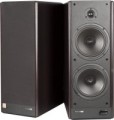 | 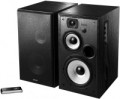 |
|---|---|---|
| Microlab Solo 9C | Edifier R2700 | |
from $269.36 up to $275.00 | from $159.96 up to $179.96 | |
| User reviews | ||
| TOP sellers | ||
3 speakers. Class D amplifier. Phase inverter. optical input. coaxial input. HDMI input/output. 2 pairs of RCAs. | 3 stripes. Class D amplifier. DSP processor. Phase inverter. optical input. coaxial input. 2 pairs of RCAs. Side entry indicator. Not all functions are controlled by the remote control. | |
| Speakers | kit 2.0 | kit 2.0 |
| Lines | 2.5 | 3 |
Specs | ||
| Signal-to-noise ratio | 80 dB | 85 dB |
| Frequency range | 50 – 20000 Hz | 50 – 20000 Hz |
| Impedance | 4 Ohm | 4 Ohm |
| Speaker output | 140 W | 128 W |
| Front | 70 W/channel | 64 W/channel |
| Speaker port tube |  | |
Features | ||
| Functions | treble control bass control | treble control bass control |
| Connection | RCA optical input coaxial input | RCA optical input coaxial input |
General | ||
| Detachable cable | sound | power and sound |
| Remote control | wireless | wireless |
| Volume control | side and remote | side and remote |
| Speaker material | MDF | MDF |
| Front speaker size (WxHxD) | 214x575x323 mm | 218x393x298 mm |
| Weight | 21.9 kg | |
| Color | ||
| Added to E-Catalog | october 2014 | september 2012 |


Compare Microlab Solo 9C and Edifier R2700
You may be interested in
My comparisons
Microlab Solo 9C often compared


Edifier R2700 often compared


Glossary
Lines
The number of individual frequency bands played by the speaker. At least one specialized speaker is allocated for each such band.
The point of using multiple frequency bands is that for different frequencies, the optimal design of the speakers will also be different (for example, it is better to make tweeters small, and woofers large). Thus, dividing the sound into bands improves the sound. In turn, the advantage of single-way speakers are compactness and lower cost.
Models for 2(LF / HF) or 3 bands(LF / MF / HF) are considered classic options for multi-band computer speakers. There are also 2.5 acoustics — it has 2 separate speakers for bass and treble plus a combined bass + midrange.
The point of using multiple frequency bands is that for different frequencies, the optimal design of the speakers will also be different (for example, it is better to make tweeters small, and woofers large). Thus, dividing the sound into bands improves the sound. In turn, the advantage of single-way speakers are compactness and lower cost.
Models for 2(LF / HF) or 3 bands(LF / MF / HF) are considered classic options for multi-band computer speakers. There are also 2.5 acoustics — it has 2 separate speakers for bass and treble plus a combined bass + midrange.
Signal-to-noise ratio
The ratio of the level of the useful signal (actually reproduced sound) to the level of extraneous noise provided by the speaker amplifier in normal mode.
Any amplifier inevitably creates its own noise; You can't get rid of them, but you can reduce their level. The higher the signal-to-noise ratio, the clearer the sound will be, the less noticeable extraneous interference will be. In modern computer speakers, this figure can vary from 52 – 55 dB (the minimum figure so that the noise does not cause much discomfort) to 90 – 95 dB (comparable to fairly advanced Hi-Fi equipment). However, note that the signal-to-noise ratio is far from the only parameter that affects the sound quality, and its high value does not guarantee a pleasant sound from the speakers.
Any amplifier inevitably creates its own noise; You can't get rid of them, but you can reduce their level. The higher the signal-to-noise ratio, the clearer the sound will be, the less noticeable extraneous interference will be. In modern computer speakers, this figure can vary from 52 – 55 dB (the minimum figure so that the noise does not cause much discomfort) to 90 – 95 dB (comparable to fairly advanced Hi-Fi equipment). However, note that the signal-to-noise ratio is far from the only parameter that affects the sound quality, and its high value does not guarantee a pleasant sound from the speakers.
Speaker output
Total speaker power rating — the sum of the power ratings of all components (front, rear, centre, etc.)
Rated usually means the highest average sound power that the speakers can produce without overloading and damage. Individual peaks of sound can significantly exceed this figure, but it is the average value that is key — in particular, it is it that determines the overall loudness of the acoustics. However it should be borne in mind here that in sets with a subwoofer, the latter can account for about half of the total power of the entire system, while the actual volume is determined mainly by the main speakers. In fact, this means that with equal total power, acoustics with a subwoofer can sound noticeably quieter than a model without a subwoofer: for example, a 2.0 system at 20 W will have 10 W per main channel, while in a 2.1 model at 20 W with 10- watt subwoofer on the main speakers will have only 5 watts.
As for specific values, in the quietest modern PC speakers, the power does not exceed 10 watts. An indicator of 10 – 25 W can be called relatively modest, 25 – 50 W — average, and values of 50 – 100 W and above are found mainly in sets with subwoofers, where a significant part of the power falls on the bass speaker (although there are also ordinary stereo speakers with similar features)....
Theoretically, the power of acoustics also affects its compatibility with a specific amplifier: speakers should not be inferior to it in terms of rated power, otherwise sound distortion and even equipment damage are possible. However, computer acoustics in the vast majority of cases are used with their own amplifiers, optimally matched to the speakers installed in the speakers. So this moment becomes relevant only in some very specific cases — for example, when replacing a complete external amplifier (see below) with another one.
Rated usually means the highest average sound power that the speakers can produce without overloading and damage. Individual peaks of sound can significantly exceed this figure, but it is the average value that is key — in particular, it is it that determines the overall loudness of the acoustics. However it should be borne in mind here that in sets with a subwoofer, the latter can account for about half of the total power of the entire system, while the actual volume is determined mainly by the main speakers. In fact, this means that with equal total power, acoustics with a subwoofer can sound noticeably quieter than a model without a subwoofer: for example, a 2.0 system at 20 W will have 10 W per main channel, while in a 2.1 model at 20 W with 10- watt subwoofer on the main speakers will have only 5 watts.
As for specific values, in the quietest modern PC speakers, the power does not exceed 10 watts. An indicator of 10 – 25 W can be called relatively modest, 25 – 50 W — average, and values of 50 – 100 W and above are found mainly in sets with subwoofers, where a significant part of the power falls on the bass speaker (although there are also ordinary stereo speakers with similar features)....
Theoretically, the power of acoustics also affects its compatibility with a specific amplifier: speakers should not be inferior to it in terms of rated power, otherwise sound distortion and even equipment damage are possible. However, computer acoustics in the vast majority of cases are used with their own amplifiers, optimally matched to the speakers installed in the speakers. So this moment becomes relevant only in some very specific cases — for example, when replacing a complete external amplifier (see below) with another one.
Front
The power rating of each individual front speaker provided in the speaker system. This parameter can be specified for a system with any number of speakers (see above) — all sound formats used in computer acoustics provide a pair of front speakers.
In the most general terms, the higher the power, the louder the speaker is capable of sounding. For more information about this parameter, see "Total power" above. Also note here that for stereo systems without a subwoofer, the power of one front channel is half of the total power; in more advanced acoustics, the power ratio between the channels may be different.
In the most general terms, the higher the power, the louder the speaker is capable of sounding. For more information about this parameter, see "Total power" above. Also note here that for stereo systems without a subwoofer, the power of one front channel is half of the total power; in more advanced acoustics, the power ratio between the channels may be different.
Detachable cable
The presence of detachable cables will save you from possible damage to the device associated with bending the wires. If such an incident occurs, an easy replacement of the wire with a new one allows you to continue using the speakers, and not carry them to a service centre. However, this solution is mainly used in higher-level models, which affects the cost. At the same time, not only audio cables can be removable, for which connectors are provided (according to the classics, this is RCA), but also the power cable.